
Best Scuba Diving in the Caribbean: 11 Sites for 2026
The best scuba diving in the Caribbean: 11 sites from the 310-foot RMS Rhone to Andros blue holes and Cozumel’s walls, with depths, seasons and skill levels.
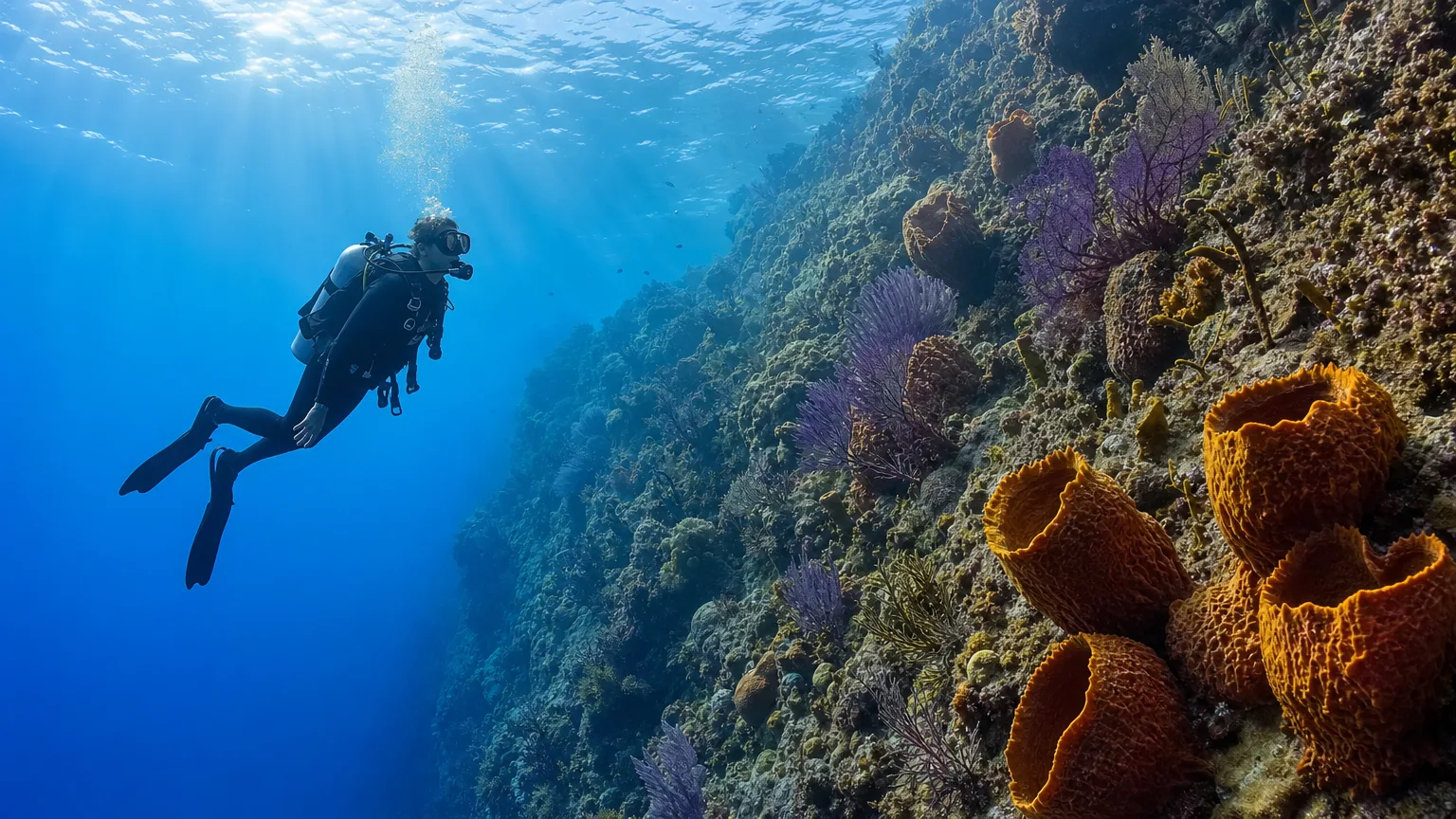
The best scuba diving in the Caribbean is not spread evenly across the map. Three pockets of this ocean hold most of the region’s headline sites: the wreck-and-pinnacle country of the Virgin Islands, the deep-water drama of the Bahamas, and the drift walls of Cozumel in the Western Caribbean.
Most “best of” dive lists treat the Caribbean as one destination. It isn’t. A week in the Virgin Islands and a week in Cozumel are different sports, and knowing which one you actually want is the difference between a great trip and a slightly disappointing one. Below are the eleven sites worth building a trip around. They’re grouped by where they sit and what they ask of you as a diver, drawn from the charter grounds we work every season plus the one Western Caribbean destination that earns its reputation.
What Makes the Best Scuba Diving in the Caribbean Different?
Caribbean visibility routinely runs 75 to 150 feet in the dry season, with water between roughly 72°F in winter and the mid-80s in late summer, which is why December through April is the region’s prime dive window. That mix of warm water, long sightlines and light current is unusual globally. It’s why the Caribbean is where most divers get certified, and why many keep coming back.
What varies is the type of diving. The Virgin Islands are shallow-to-mid-depth wreck and reef country. The Bahamas are about deep water arriving suddenly at your fins, blue holes and big animals. Cozumel is drift diving along a wall, where the current does the swimming and you just steer.
The Caribbean’s best scuba diving concentrates in three areas: the Virgin Islands for wrecks and pinnacles, the Bahamas for blue holes and shark encounters, and Cozumel for drift walls on the Mesoamerican Barrier Reef. Dry-season visibility across the region commonly reaches 75 to 150 feet, with the December to April window offering the calmest seas and clearest water.
If you’re weighing a dive-heavy itinerary against a broader trip, it’s worth reading how the crewed charter destinations across the Caribbean compare before you commit to one island group.
Where Is the Best Scuba Diving in the British Virgin Islands?
The BVI holds the Caribbean’s most famous wreck dive, and it’s protected inside the territory’s first marine national park, established in 1980 (Rhone National Park). What makes the BVI unusual isn’t any single site. It’s the density. You can dive a 19th-century steamship in the morning and a set of underwater pinnacles after lunch, with no long passage between them.
1. The RMS Rhone, Salt Island
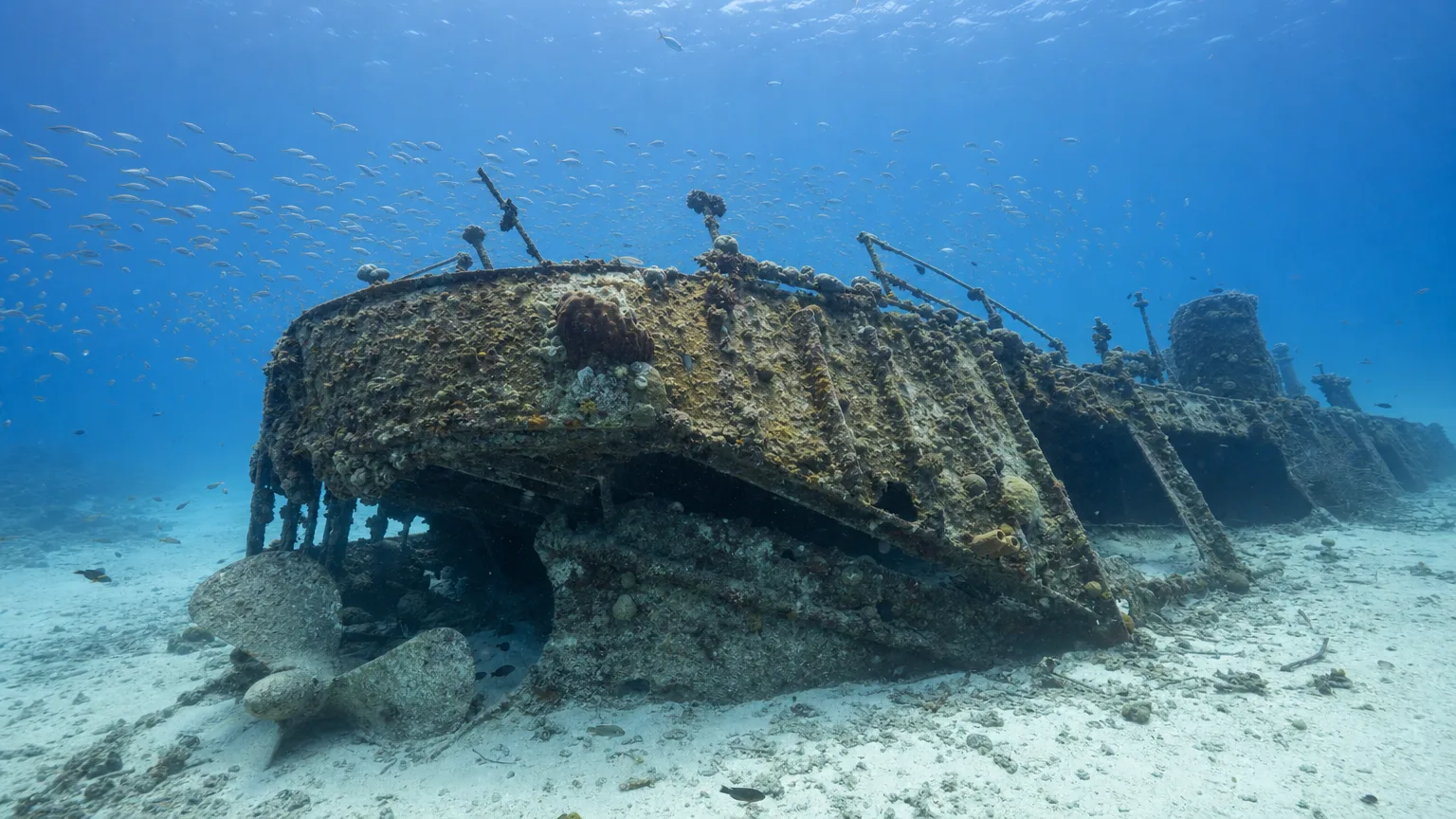
The RMS Rhone was a 310-foot Royal Mail steamer that went down off Salt Island on 29 October 1867 during the San Narciso Hurricane, killing 123 people (Wikipedia). She broke in two. The bow lies in about 80 feet of water and is still remarkably intact, while the stern sits at roughly 30 feet with the propeller and drive shaft exposed.
That split is what makes the Rhone so good. The stern is shallow enough for a newly certified diver, or even a strong snorkeler. The bow rewards anyone with more experience. Marine life has had over 150 years to move in, so the wreck is thoroughly encrusted with coral and patrolled by barracuda.
The RMS Rhone, a 310-foot Royal Mail steamer, sank off Salt Island in the British Virgin Islands on 29 October 1867 during the San Narciso Hurricane, with 123 lives lost. The wreck lies in two sections: the bow in roughly 80 feet of water and the stern at about 30 feet. The surrounding waters became the BVI’s first marine national park in 1980.
2. The Indians, Norman Island
The Indians off Norman Island are four rock pinnacles that rise from about 50 feet below the surface and break through above it. Divers and snorkelers share the site. The vertical structure means something interesting is happening at every depth, with sea fans, brain coral and dense schools of sergeant majors stacked up the rock faces.
It’s the most beginner-friendly of the BVI’s signature sites, and one of the few places where a certified diver and a snorkeling partner can genuinely do the same thing together.
3. The Chikuzen
The Chikuzen is a 246-foot steel refrigeration ship deliberately sunk in the 1980s, now sitting in 55 to 65 feet of water north of Tortola. She lies well offshore in open water, so she pulls in pelagic life the inshore sites don’t: big rays, jacks and the occasional shark.
The tradeoff is exposure. This one is weather dependent and better suited to divers with a few dozen logged dives, so treat it as a bonus rather than a fixed point in your plan.
4. The Kodiak Queen, Virgin Gorda
Sunk in March 2017, the Kodiak Queen is a former US Navy fuel barge and one of only five vessels known to have survived the attack on Pearl Harbor. She was placed off Virgin Gorda as an artificial reef and art installation, wrapped in a large mesh kraken sculpture. Maximum depth is about 57 feet.
Nine years on, the coral has taken hold and the structure has stopped looking like an installation and started looking like a reef. It’s the most photogenic dive in the territory.
Before we get into the US Virgin Islands and the Bahamas, here’s what’s actually available on the water for your dates.
Where Is the Best Scuba Diving in the US Virgin Islands?
The USVI’s headline dive asset is a National Park Service site: Buck Island Reef National Monument protects 19,015 acres off St. Croix, built around one of the few marked underwater trails in the entire US National Park System (NPS). President Kennedy proclaimed it a monument in 1961, calling it “one of the finest marine gardens in the Caribbean Sea.”
5. Buck Island Reef, St. Croix
Buck Island Reef sits about 1.5 miles off the northeast coast of St. Croix. The island itself is only 176 acres and uninhabited, so nearly the whole monument is underwater. Two thirds of the island is ringed by an elkhorn coral barrier reef. The marked trail threads through it, past coral heads and a grotto where blue tang gather.
It’s a no-take reserve, which is a large part of why the reef is still in the shape it’s in. The whole site is boat access only.
6. Cane Bay Wall, St. Croix
Cane Bay is the rare world-class wall you can reach by walking off a beach. The drop-off sits roughly 300 yards offshore and falls away to about 1,400 feet, hung with barrel sponges and sea fans. Seahorses tuck into the structure, if your guide knows where to look.
You dive the top of it. The floor is irrelevant, and that’s the point: the sensation of hanging over open blue is the whole experience.
7. Frederiksted Pier, St. Croix
Frederiksted Pier is one of the Caribbean’s best night dives and it runs just 10 to 40 feet deep. The pilings have become vertical gardens, and after dark they fill with seahorses, octopus, squid, frogfish and lobster. Macro photographers plan entire trips around it.
Where Is the Best Scuba Diving in the Bahamas?
Sharks became fully protected across all 243,000 square miles of the Bahamian archipelago in 2011, turning the entire country into a shark sanctuary where it is illegal to catch or harm any shark (The Islands of The Bahamas). That single policy is why Bahamian diving looks the way it does. The big animals are still there.
8. The Andros Barrier Reef and the Tongue of the Ocean
Andros carries the third-largest fringing barrier reef in the world, and its edge is the most dramatic feature in Caribbean diving (The Islands of The Bahamas). On the island side, the water is about eight feet deep. A short swim later, the reef wall drops away to roughly 6,000 feet into the trench known as the Tongue of the Ocean.
Standing on a sand flat and then looking over an edge into water a mile deep is not an experience most dive destinations can offer.
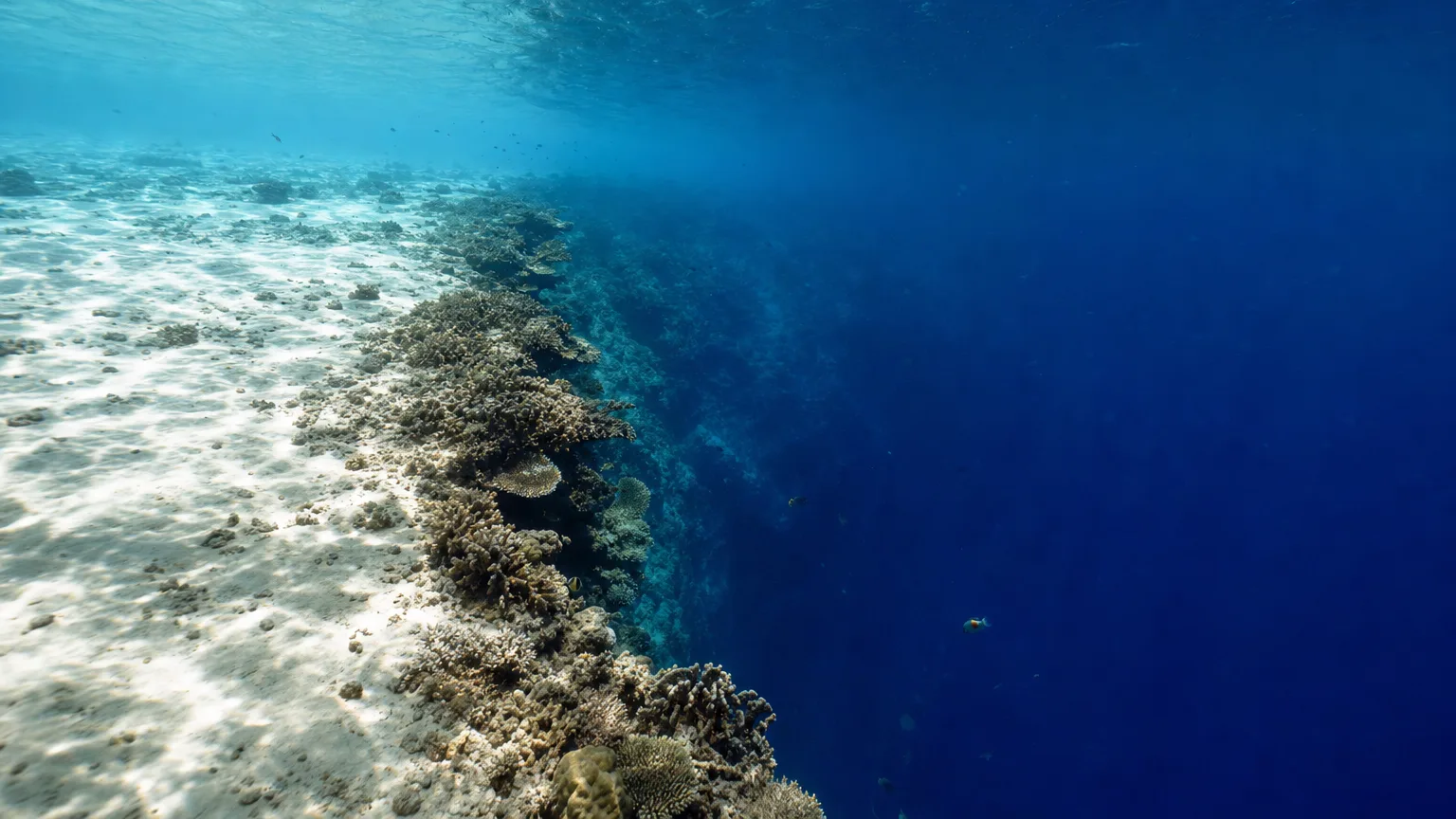
Andros Island in the Bahamas holds the world’s third-largest fringing barrier reef. Water on the island side is roughly eight feet deep before the reef edge drops to approximately 6,000 feet into the Tongue of the Ocean. Andros also has the highest concentration of blue holes on earth, with about 175 documented inland and roughly 50 offshore.
9. The Blue Holes of Andros
Andros has more blue holes than anywhere else on the planet: roughly 175 documented inland and about 50 offshore. These are flooded vertical cave systems, formed when sea levels were lower, and the offshore ones are the accessible version for recreational divers.
A word of realism here. Full blue-hole cave penetration is technical diving with its own training, and it is not something to attempt on a whim. The rewarding version for most divers is the entrance zone, where the water changes color and temperature abruptly and the walls fall away below you.
10. Exuma Cays Land and Sea Park
The Exuma Cays Land and Sea Park was created in 1958 as the first land-and-sea park in the world, covering 112,640 acres (Bahamas National Trust). No fishing or shelling of any kind is permitted inside it. Nearly seventy years of protection shows: fish are larger, more numerous and far less skittish than on comparable unprotected reef.
The park is also the easiest of the Bahamas’ great dive areas to reach by boat, which is why it anchors so many Exuma Cays itineraries. Just south of the park boundary sits Thunderball Grotto at Staniel Cay. It’s a snorkel-depth cave lit by shafts falling through holes in the roof, and probably the most photographed underwater scene in the Bahamas.
11. Bimini’s Great Hammerheads
Great hammerheads have become seasonal regulars off Bimini from December to April (The Islands of The Bahamas), with January and February the reliable peak. Bimini sits on the edge of the Grand Bahama Bank alongside the Gulf Stream, and that geography is what concentrates them. These are large animals, frequently over 12 feet, in clear water around 20 to 30 feet deep.
It is a seasonal, weather-dependent, guided experience, and it is not part of a normal charter week. If it’s your goal, build the trip around it rather than hoping to fit it in.
How Does Cozumel Compare to the Eastern Caribbean?
Cozumel’s reefs sit inside a national marine park declared on 19 July 1996, covering about 120 square kilometers and home to more than 1,000 marine species (Arrecifes de Cozumel National Park). It’s part of the Mesoamerican Barrier Reef System, which at over 1,000 km is the second-largest reef system in the world.
Cozumel’s reefs lie within Arrecifes de Cozumel National Park, declared in July 1996, which protects roughly 120 square kilometers and more than 1,000 marine species. The reefs form part of the Mesoamerican Barrier Reef System, the world’s second-largest reef system at over 1,000 km. Cozumel is a fly-in dive destination, not a crewed charter stop.
Here’s the honest comparison, and it matters if you’re choosing between trips.
What Cozumel does better. The diving is more consistently spectacular than anywhere in the Virgin Islands. Palancar Reef alone splits into four distinct dive sites (Gardens, Caves, Bricks and Horseshoe), and the Santa Rosa Wall is a genuine vertical face. Current does the work, so you fly along coral canyons at low effort, and visibility often exceeds 100 feet. Punta Sur and the Devil’s Throat swim-through are serious, advanced-only diving of a kind the Eastern Caribbean simply doesn’t have. You’ll also see the splendid toadfish, which lives nowhere else on earth.
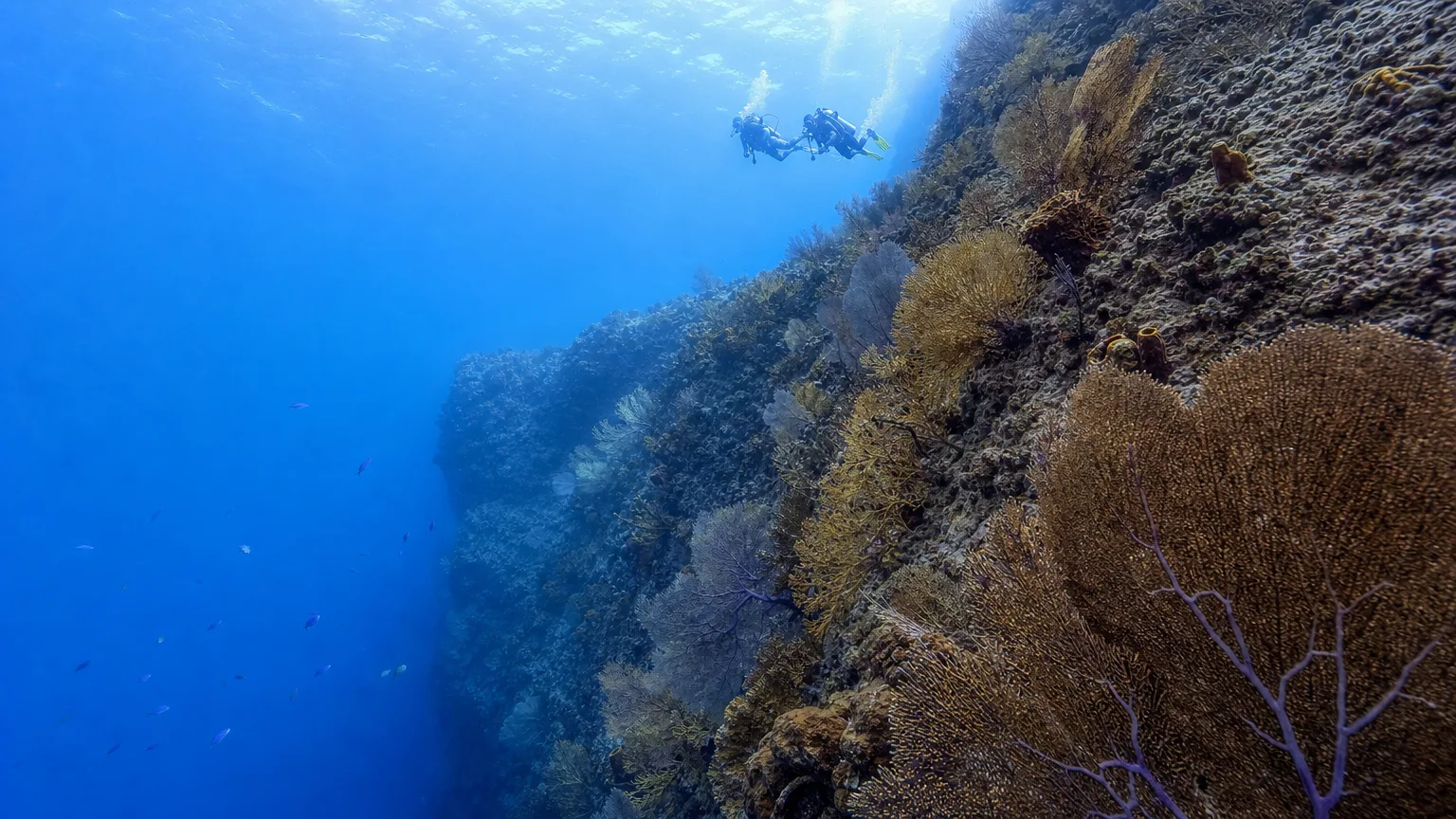
What a charter week does better. Cozumel is a dive holiday: you stay ashore or on a liveaboard, and you go diving, twice a day, from a dive boat. That’s the whole trip. A crewed charter is a different proposition. Diving becomes one thread among beaches, dinners ashore, snorkeling with people who don’t dive, and a new anchorage each day. Non-divers get a holiday instead of a wait.
The practical answer. Cozumel is not a crewed charter destination, and we don’t broker yachts there. It sits more than 1,200 nautical miles west of the Virgin Islands, in a different part of the sea entirely. If diving is the point of the trip and everyone in the party dives, Cozumel is hard to beat and you should fly there. If the trip has to work for a mixed group, the Virgin Islands and Bahamas win, and you’ll still get the Rhone, Buck Island and the Exumas out of it.
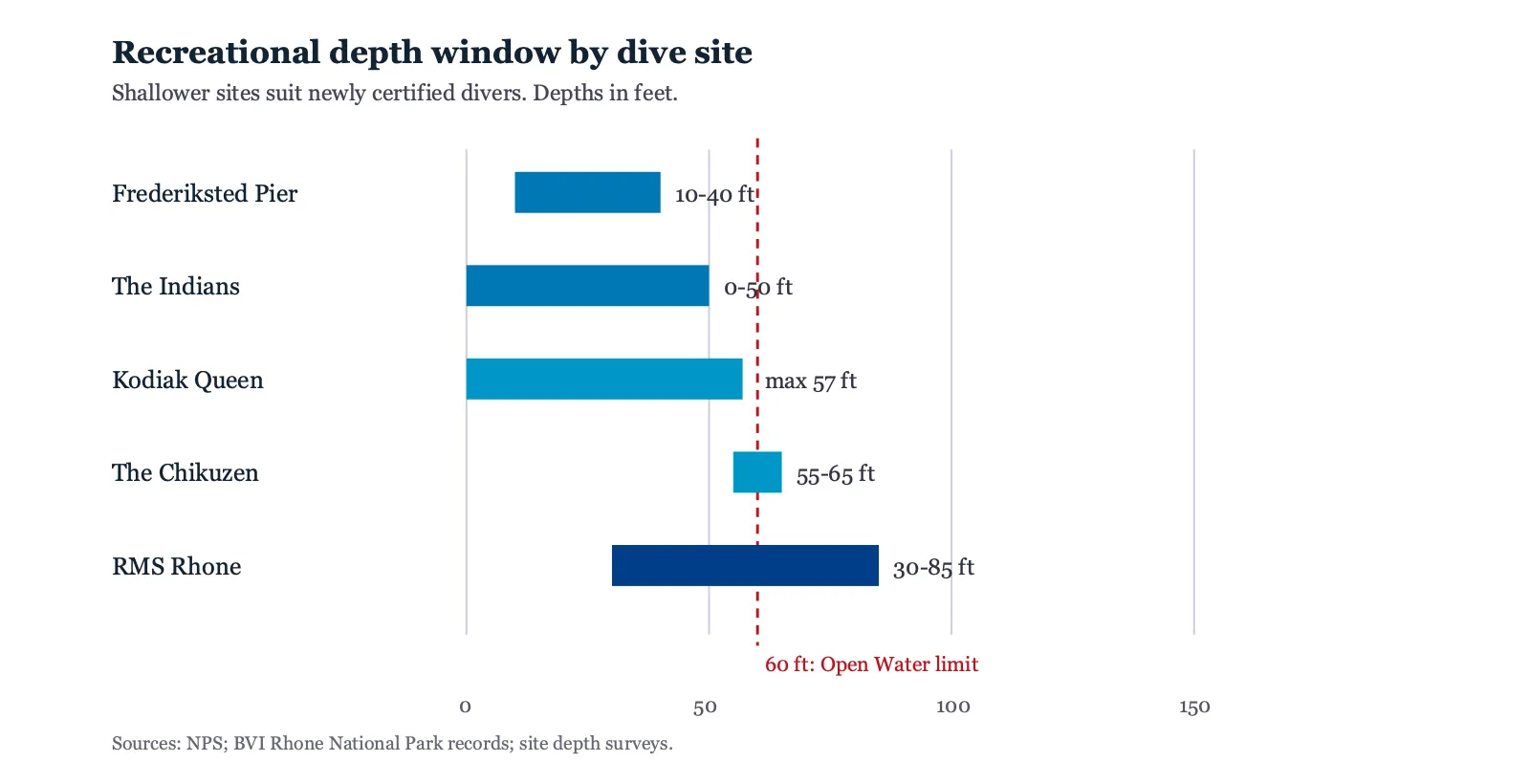
View data table
| Dive site | Location | Depth range | Suits |
|---|---|---|---|
| Frederiksted Pier | St. Croix, USVI | 10-40 ft | Open Water and up; premier night dive |
| The Indians | Norman Island, BVI | Surface to 50 ft | Open Water; snorkelers share the site |
| Kodiak Queen | Virgin Gorda, BVI | To 57 ft max | Open Water at the shallow end |
| The Chikuzen | North of Tortola, BVI | 55-65 ft | Advanced; exposed offshore site |
| RMS Rhone | Salt Island, BVI | 30-85 ft | Stern suits Open Water; bow needs Advanced |
The recreational Open Water certification limit is 60 feet (18 m); Advanced Open Water extends to 100 feet (30 m).
When Is the Best Time to Dive in the Caribbean?
December through April is the Caribbean’s prime dive season, combining the driest weather, the calmest seas and visibility that regularly reaches 75 to 150 feet. Water temperature across the region runs from about 72°F at the coolest point of winter to the mid-80s by late summer, so a 3mm wetsuit covers almost every situation.
Season also decides which animals you get. Bimini’s great hammerheads run December to April. Humpbacks pass through the wider region in late winter. Summer brings the warmest water and the longest days. The tradeoff is hurricane season, June through November, when trips are likelier to be disrupted.
Shoulder months are underrated. Late April and May give you settled seas, warm water and noticeably fewer people on the popular sites, which matters more than divers expect at somewhere like the Rhone.
How Does Diving Work on a Crewed Charter?
Open Water certification takes three to four days and clears you to 60 feet, which covers most of the sites on this list. You don’t need it to enjoy the week, but you do need to raise diving early, because dive-capable yachts are a subset of the fleet.
Crewed yachts handle it one of two ways. Some carry full scuba gear and a divemaster-qualified crew member, so you dive straight off the boat. Others arrange a rendezvous, where a local dive operator meets the yacht at the site. Our count of how the Caribbean fleet handles diving puts rendezvous at roughly three quarters of yachts.
Both work. The difference is spontaneity: onboard diving means you can decide at breakfast, while a rendezvous needs a day’s notice.
Diving on a Caribbean crewed yacht charter works two ways. Some yachts carry compressors, tanks and a divemaster-qualified crew member, allowing dives directly from the boat. Others arrange rendezvous diving, where a local operator meets the yacht on site. Open Water certification takes three to four days and permits dives to 60 feet.
Sort certification out before you travel rather than on arrival. And if you’re already certified but haven’t been in the water for a year or more, a refresher dive on day one is time well spent.
For anyone diving reefs this healthy, a few habits matter: nothing touched, nothing taken, and reef-safe sunscreen. It’s the same thinking behind lower-impact charter choices generally, and in no-take parks like Buck Island and the Exuma Cays it’s the law rather than etiquette.
Planning a Dive-Led Caribbean Trip
The short version: if you want a wreck with 150 years of history on it, dive the BVI. If you want to look over the edge of a mile-deep trench or swim with hammerheads, go to the Bahamas. If diving is the entire point and every person on the trip dives, fly to Cozumel.
For the first two, the boat is what makes it work, because the best sites are ones you reach from the water rather than from a dock. Our brokers know which yachts across the Caribbean charter destinations we cover carry compressors and dive-qualified crew. They also know which anchorages put you on top of the sites worth a morning. Tell us diving matters and we’ll build the shortlist around it. You can start a yacht search at Vital Charters whenever you’re ready, or read up on BVI crewed yacht charter itineraries and the turtles of the Tobago Cays if you’re still narrowing the field.
Frequently Asked Questions
Where is the best scuba diving in the Caribbean for beginners?
The British Virgin Islands are the strongest choice for new divers. The Indians at Norman Island start at the surface and only reach 50 feet, the stern section of the RMS Rhone sits at about 30 feet, and the water between the islands is protected and calm. Frederiksted Pier in St. Croix is another beginner-friendly standout at 10 to 40 feet.
Can you dive the RMS Rhone as a newly certified diver?
Yes, partly. The stern section lies at roughly 30 feet, comfortably inside the 60-foot Open Water limit, and it holds the propeller and drive shaft. The bow section sits at about 80 feet and needs an Advanced Open Water certification. Many operators run the Rhone as two separate dives for exactly this reason.
When is the best time of year to dive in the Caribbean?
December through April. That window has the driest weather, calmest seas and the clearest water, with visibility often between 75 and 150 feet. It also covers the Bimini hammerhead season, which runs December to April and peaks in January. Hurricane season runs June through November and carries a real risk of disrupted plans.
Is Cozumel part of a Caribbean yacht charter itinerary?
No. Cozumel sits in the Western Caribbean off Mexico’s Yucatán coast, more than 1,200 nautical miles from the Virgin Islands, and it’s a fly-in dive destination served by shore-based operators and liveaboards. Crewed yacht charters in the Caribbean operate in the Virgin Islands, the Leewards and Windwards, and the Bahamas.
Do you need your own dive gear for a Caribbean charter?
No. Yachts that carry dive equipment supply tanks, weights, BCDs and regulators, and rendezvous operators provide full kit as well. Most divers bring only their mask, and a computer if they own one. Bring your certification card, because you’ll be asked for it.
How many dives can you fit into a charter week?
Plan on one dive most days rather than two. A charter week has beaches, meals ashore and passages between anchorages competing for the same hours, so five to seven dives across a week is a realistic target. Groups where everybody dives can push higher by choosing anchorages with sites nearby.
Book a Week Underwater
Tell us your group size and dates, and we’ll shortlist crewed yachts that carry compressors, tanks and dive-qualified crew.