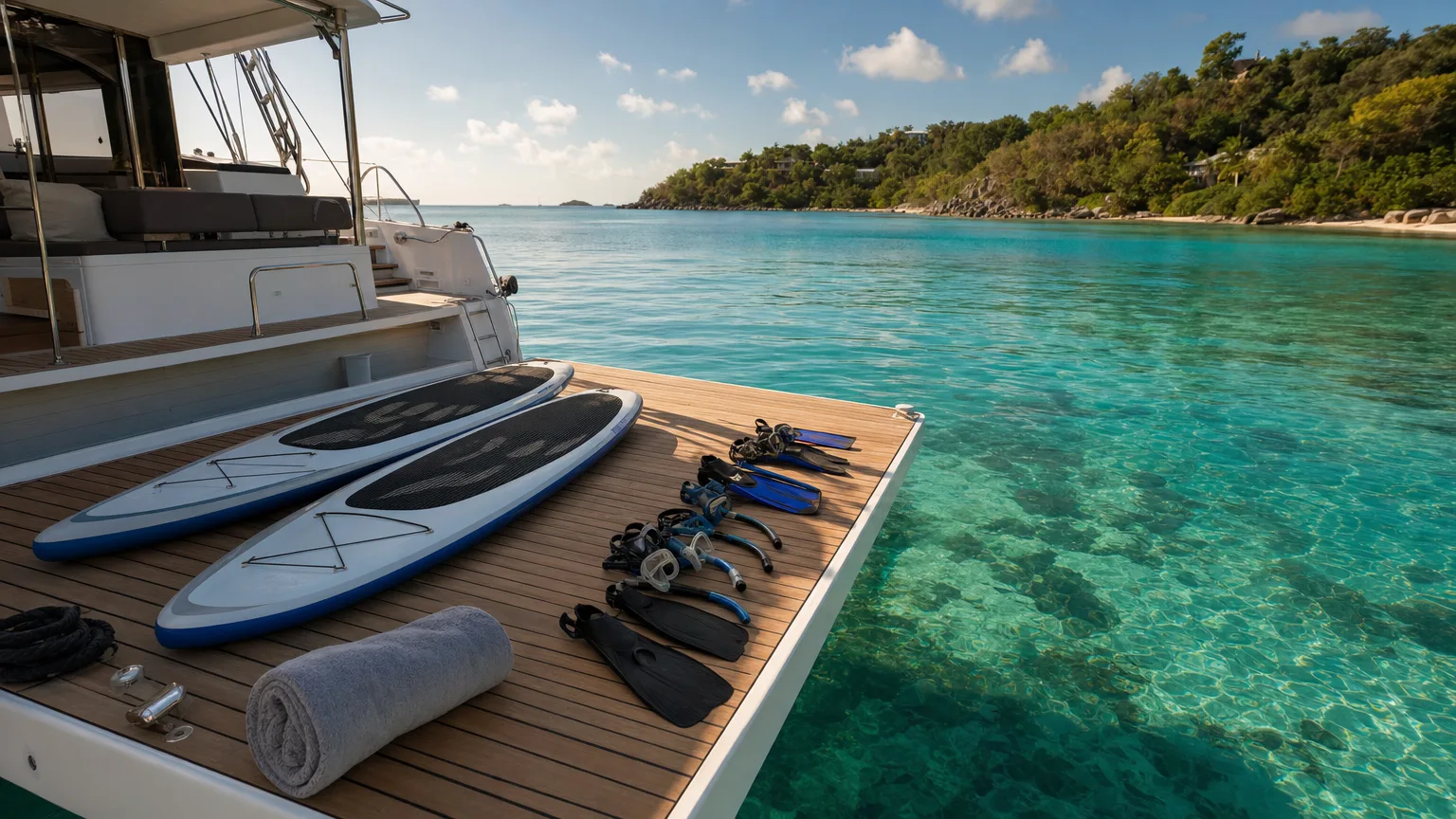

Exuma Cays Yacht Charter: Pigs, Grottos & 365 Islands (2026)
Charter the Exuma Cays by private crewed yacht: swim with the pigs, snorkel Thunderball Grotto, and reach anchorages no resort can. A broker’s 2026 guide.
Last Updated: September 8, 2026
The Exuma Cays string 365 islands across roughly 120 miles of the clearest water in the Bahamas, and a private crewed yacht is the only way to reach the best of them. Swimming pigs, a James Bond grotto, nurse sharks you can pet, and a 176-square-mile marine park where nothing is taken. They sit on cays with no airport, no resort, and often no other boat in sight. A week aboard a crewed Bahamas charter turns that scattered chain into one well-run trip.
Why charter the Exuma Cays?
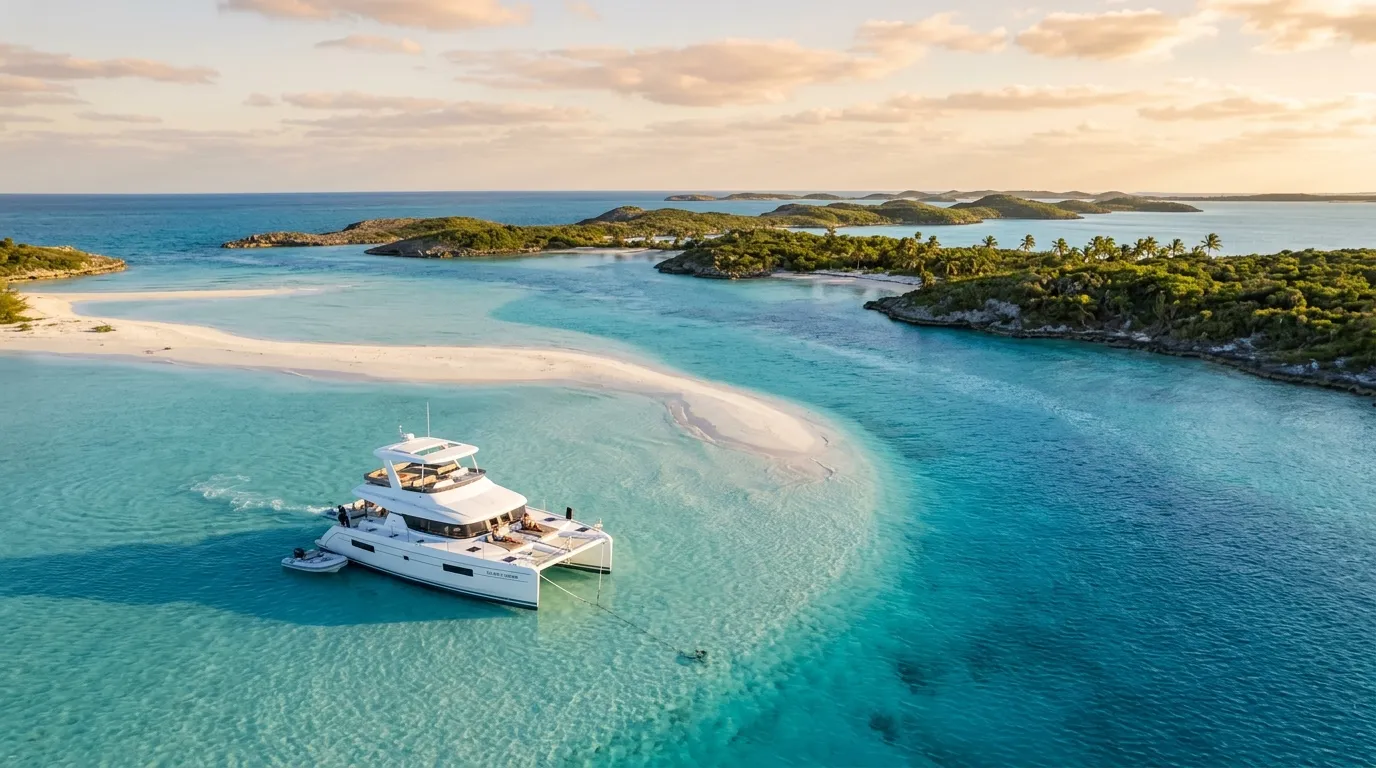
The Exuma Cays are a chain of 365 cays running about 120 miles from roughly 35 miles southeast of Nassau down to George Town on Great Exuma (Bahamas Ministry of Tourism, 2026). Most of those cays are uninhabited, privately owned, or protected, which is exactly why a yacht beats a resort here. You are not driving to a beach; you are anchoring off your own.
The heart of the chain is the Exuma Cays Land and Sea Park, established by the Bahamas National Trust in 1958 as the first land-and-sea park in the world. It covers 112,640 acres and has been a no-take marine reserve since 1986, the first in the wider Caribbean, so its conch, grouper, and lobster populations stay visibly healthy (Bahamas National Trust, 2026).
That protection shows up underwater. Reefs are denser, fish are bigger and less skittish, and the water clarity over the white-sand banks is the kind people fly across the world to see. And our Bahamas charter destinations reach well beyond this one chain: but the Exuma Cays are where most charter weeks are won.
How to get to your Exuma charter: Nassau is the gateway
Nearly every Exuma charter starts in Nassau, because there is no direct flight from the U.S. mainland into the Exuma Cays themselves (Bahamas Ministry of Tourism, 2026). Nassau’s Lynden Pindling International Airport (NAS) is where you clear customs and immigration, and from there you reach the yacht one of three ways. Knowing which embarkation point fits your group is the single most useful thing to settle before you book.
The three ways to board
- Board in Nassau and cruise down. The simplest logistics: you step aboard in Nassau and the crew runs the yacht across the bank to the northern cays. Plan on a transit day, but you get the full passage and zero extra flights.
- Fly Nassau → Staniel Cay (about 40 minutes). Small regional carriers like Flamingo Air and Titan Air hop you to Staniel Cay, the most popular embarkation point because it sits right next to Pig Beach, Thunderball Grotto, and Compass Cay (Staniel Cay Adventures, 2026). You meet the yacht mid-chain and start the highlights on day one.
- Fly Nassau → George Town (GGT). Exuma International Airport on Great Exuma anchors the southern end of the chain, a good embarkation or disembarkation point if you want to run the Exumas one direction.
Customs and immigration for the Exuma Cays are handled in Nassau on arrival, so guests are already cleared into the Bahamas before the short flight or cruise to the cays (Bahamas Ministry of Tourism, 2026). The common embarkation and disembarkation points are Nassau, Staniel Cay, and George Town, and many groups fly into one and out of another so they never backtrack.
One scheduling note: travelers routing through Fort Lauderdale can skip Nassau entirely on some days, with a roughly 90-minute direct flight to Staniel Cay on Makers Air. Most guests still overnight in Nassau on one end of the trip, and where to stay there depends on which airport and marina you’re using, enough of a topic that we’ll cover the best Nassau hotels by embarkation point in a separate guide.
Why power yachts rule the Exumas (and sailing rules the BVI)
Power catamarans and motor yachts dominate the Exuma charter fleet, while the British Virgin Islands lean heavily toward sailing yachts, and the reason is geography, not preference. The Exumas demand more boat speed and shallower draft than the compact, trade-wind BVI. Here’s what that changes about the trip you actually get.
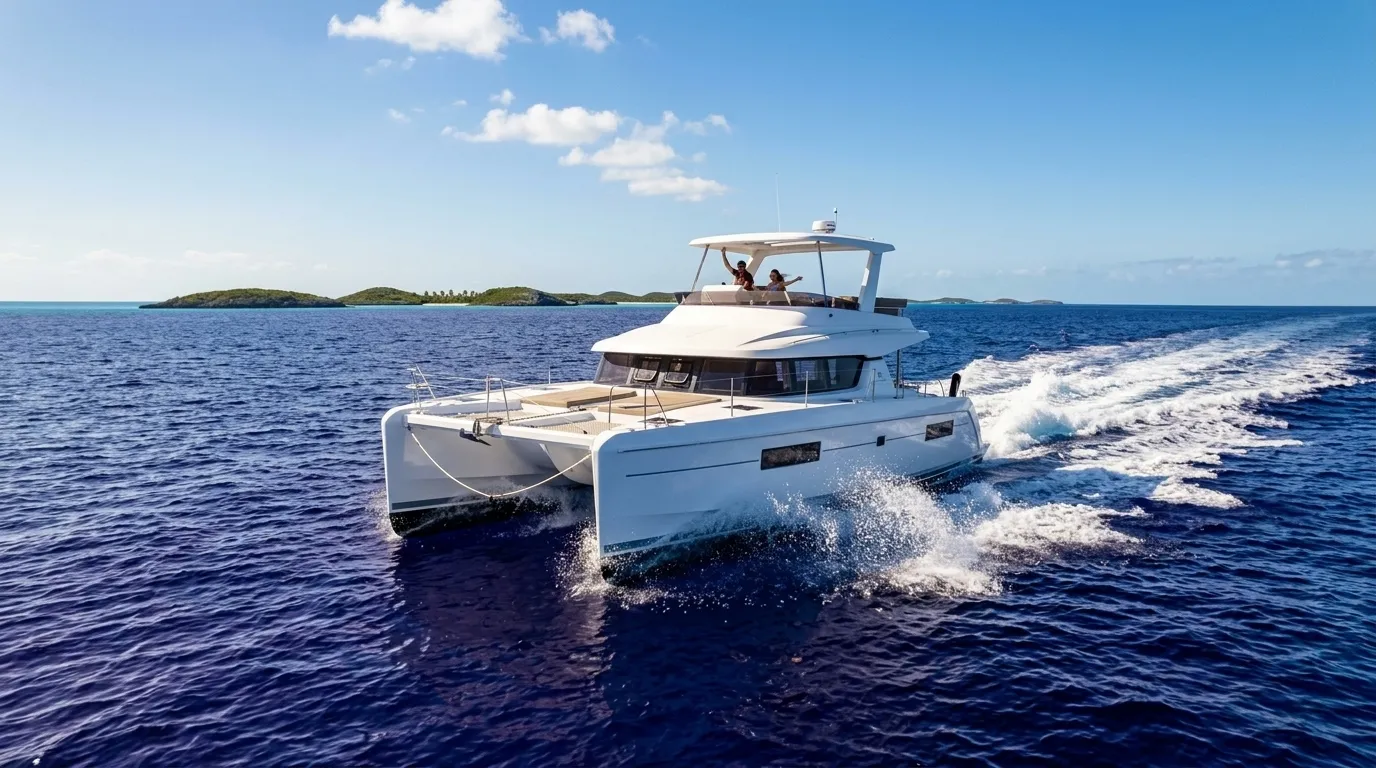
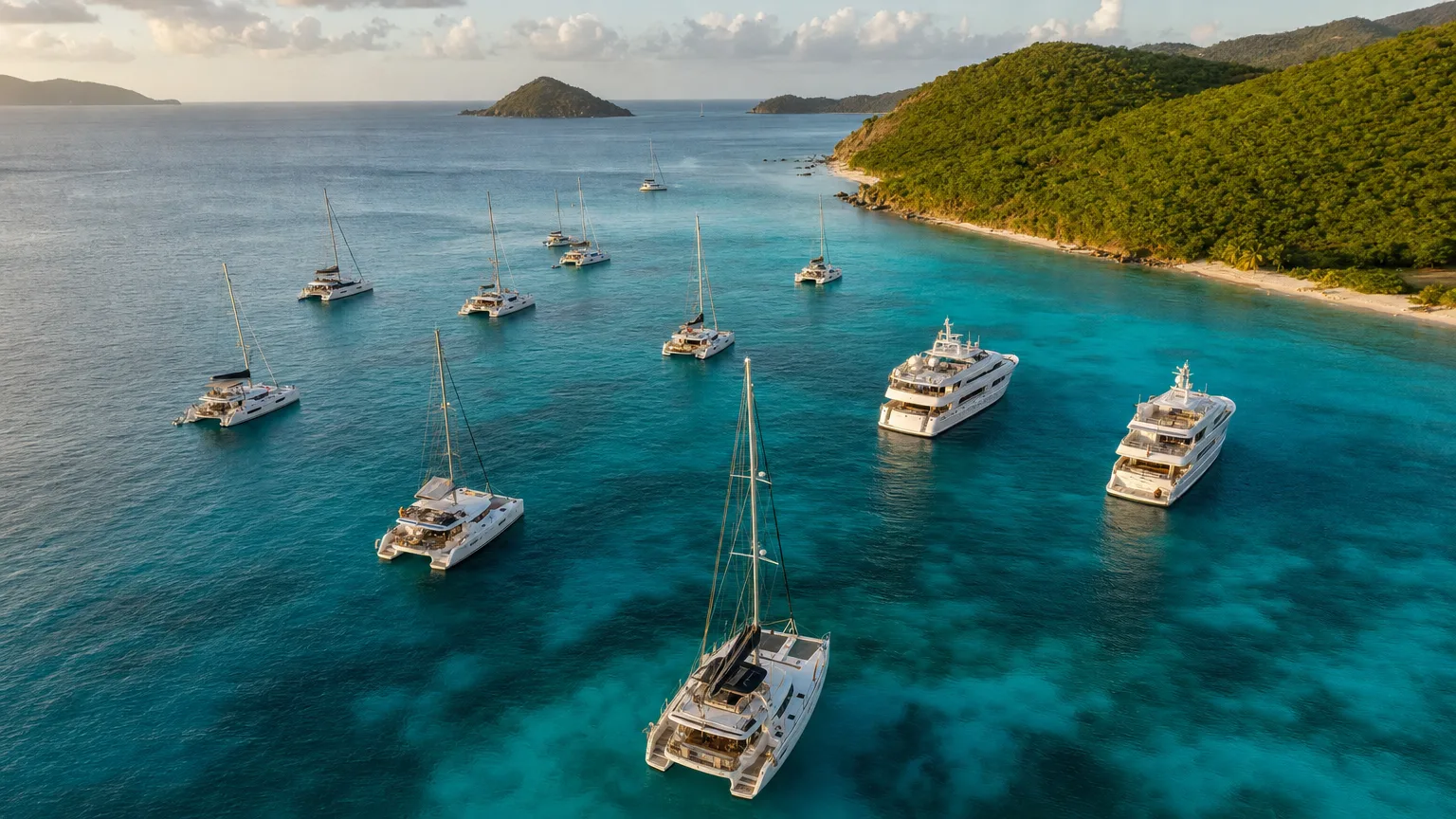
The cays are spread out, not line-of-sight. In the BVI you island-hop in short, sheltered legs you can practically see from one anchorage to the next, under steady trades. Sailing is the point. The Exumas run 120 miles with real open-water crossings: the bank crossing out of Nassau, the coral-studded Yellow Bank, and Exuma Sound on the ocean side. Speed is what lets a one-week charter actually reach Staniel, Compass Cay, and Warderick Wells and still get back.
The banks are shallow. The Great Bahama Bank averages only about 10–15 feet deep, and the sandbars and cuts are shallower still. A catamaran drawing 3–5 feet, or a power cat, tucks over sandbars and into bays that a deep-draft monohull simply can’t enter.
If you’re weighing hull types, our breakdown of a power catamaran versus a sailing catamaran goes deeper, and our BVI-versus-Bahamas comparison lays the two destinations side by side. The short version: pick the BVI to sail, pick the Exumas to explore.
Pig Beach, Thunderball Grotto and Staniel Cay: the signature stops you’re chartering for
The Exuma Cays Land and Sea Park alone spans 176 square miles, but the chain’s signature stops cluster within a day’s cruise of Staniel Cay (Bahamas National Trust, 2026). The swimming pigs at Big Major Cay, the Thunderball Grotto off Staniel Cay and the nurse sharks at Compass Cay all sit inside that cluster, and a crewed itinerary threads them together in a way day-trippers never see. These are the anchorages your captain will build the week around.
Big Major Cay: the swimming pigs
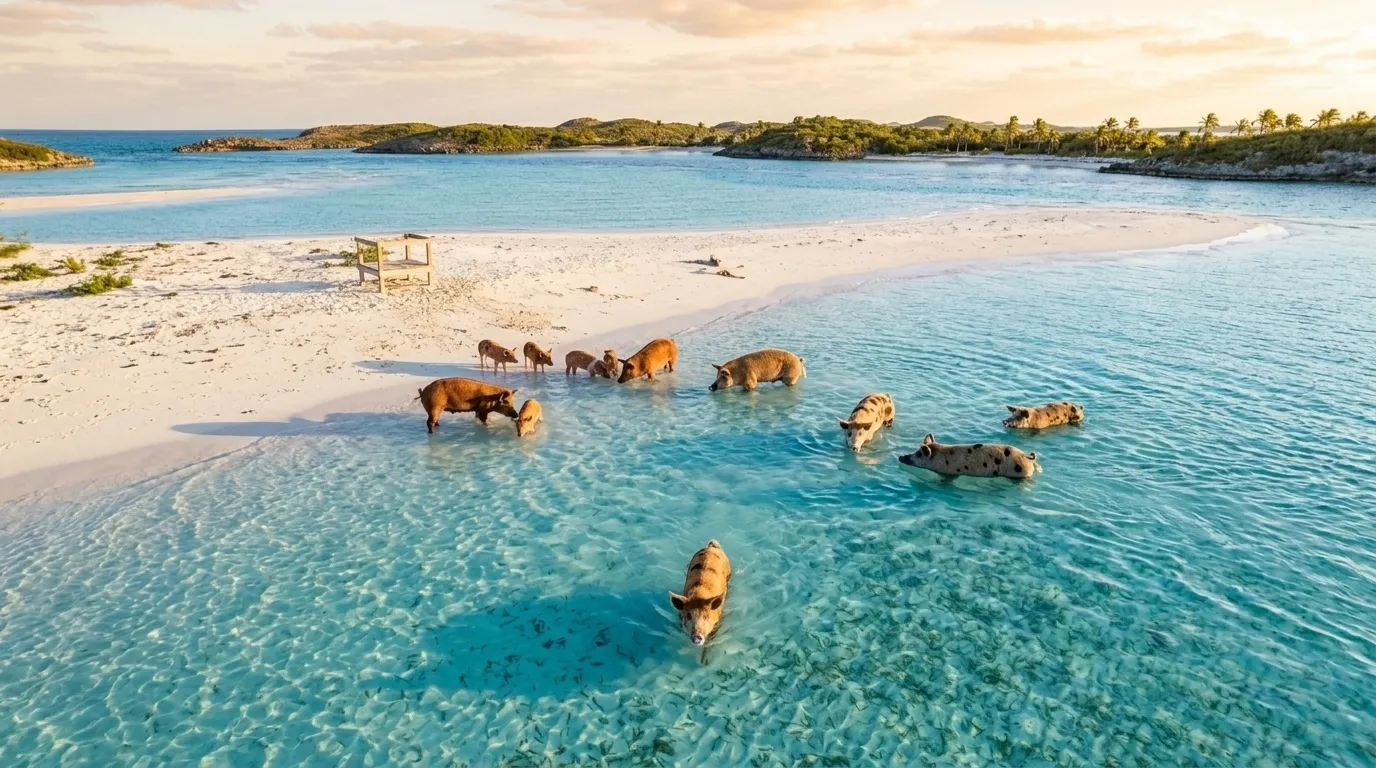
Pig Beach on Big Major Cay is home to around 20 free-roaming pigs and piglets that swim out to greet boats (Bahamas Ministry of Tourism, 2026). They are the most photographed residents of the Bahamas for good reason, but feed them only fruit and vegetables, and let them come to you. The crew handles the dinghy run and the etiquette.
Staniel Cay: Thunderball Grotto
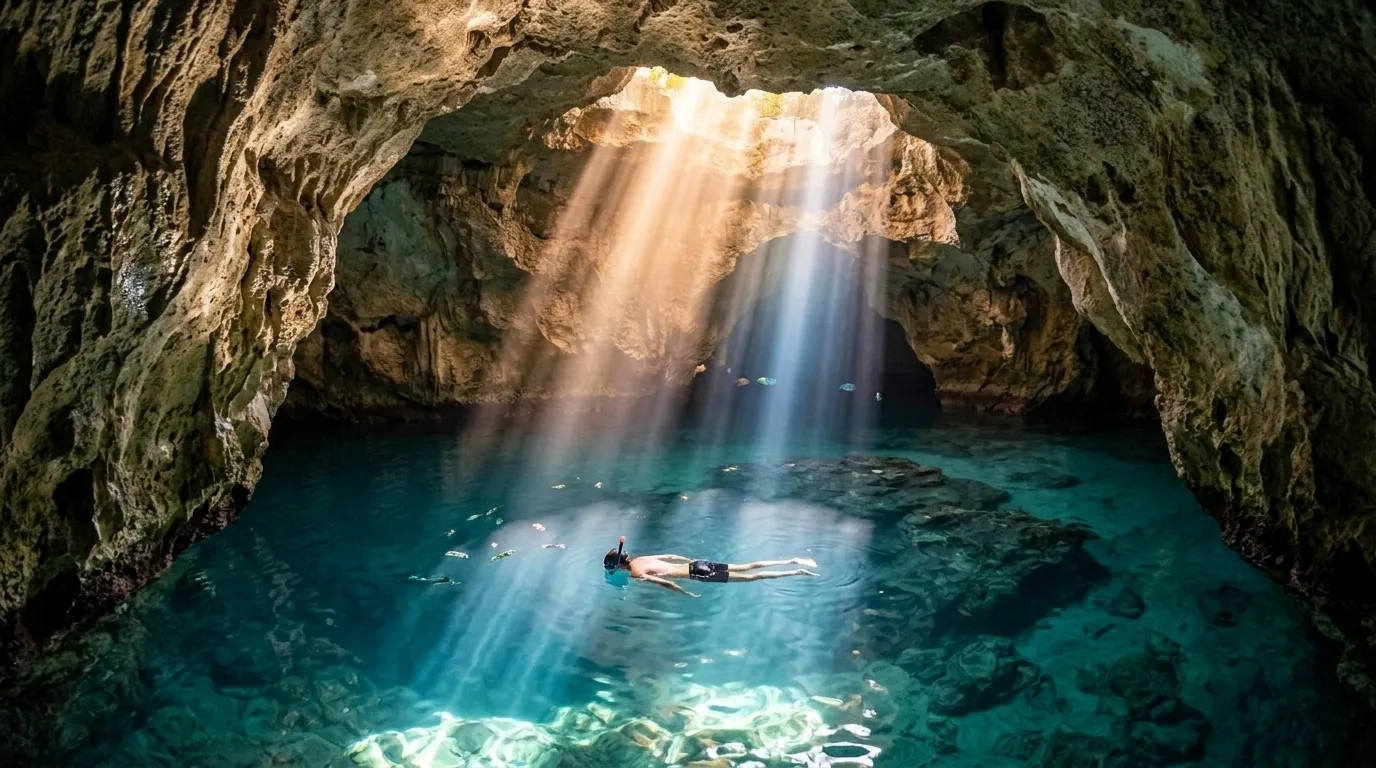
Thunderball Grotto, a sunlit underwater cave off Staniel Cay, was the dive set for the 1965 James Bond film Thunderball and again for Never Say Never Again (Staniel Cay Adventures, 2026). Snorkel it at low or slack tide, when the currents ease and the submerged entrances are easiest to reach. In our experience the safe window is short, often just the half-hour around slack, so the crew plans the day’s route to drop you there at exactly the right time.
Compass Cay: swim with nurse sharks
At Compass Cay Marina, habituated nurse sharks glide around the dock pilings and let visitors wade among them (Bahamas Ministry of Tourism). Nurse sharks are harmless bottom-dwellers, and it’s one of the most memorable hours of any Exuma week, especially for kids.
Warderick Wells & Shroud Cay: the park
Warderick Wells is the headquarters of the Exuma Cays Land and Sea Park, famous for the Boo Boo Hill driftwood-sign tradition and a beach displaying a pilot-whale skeleton (Lindblad Expeditions, 2023). Just north, Shroud Cay hides mangrove creeks and a natural current ride locals call “the Washing Machine.” This is the protected core of the chain, and your park fees go straight to keeping it that way.
Norman’s Cay & Highbourne Cay: the north
Norman’s Cay carries the Exumas’ strangest history: it was the Medellín Cartel’s Bahamian base around 1978–1982, and a Curtiss C-46 that crashed short of the runway in 1980 still sits in the shallows as a snorkel wreck (Out Island Life, 2025). Nearby Highbourne Cay makes an easy northern gateway, with snorkeling, fishing, and living stromatolites, among the oldest life forms on Earth.
A sample 7-day Exuma Cays itinerary
A classic Exuma Cays charter runs seven nights, threading the northern and central cays from Staniel Cay up to Warderick Wells and back. This is one realistic week aboard a crewed power catamaran, embarking at Staniel Cay to put the headliners first; your captain adjusts daily for weather, tide, and what your group loves.
Day 1: Staniel Cay, board and settle
Meet the yacht at Staniel Cay Yacht Club, get the safety and toy briefing, and ease into the first sunset with a swim off the swim platform.
Day 2: Big Major Cay & Thunderball Grotto
Morning at Pig Beach before the day boats arrive, then snorkel Thunderball Grotto at slack tide. Anchor overnight in the lee of Big Major.
Day 3: Compass Cay & Pipe Creek
Wade with the nurse sharks at Compass Cay, then gunkhole the sandbars of Pipe Creek, the kind of shallow maze only a shallow-draft boat reaches.
Day 4: Warderick Wells
Pick up a park mooring, hike to Boo Boo Hill, and snorkel the protected reefs. A quiet, no-take-reserve day.
Day 5: Shroud Cay
Run the mangrove creek by dinghy to the ocean-side beach and ride “the Washing Machine” on the incoming tide.
Day 6: Highbourne or Norman’s Cay
Snorkel the sunken plane at Norman’s Cay and toast the last full day at a northern anchorage.
Day 7: Cruise to Nassau or fly out
Disembark at Staniel Cay for the hop back to Nassau, or cruise north if you boarded in Nassau.
Best time to charter the Exuma Cays
The best time to visit the Exumas is mid-December to mid-April, when the weather is driest, the seas are calmest, and air temperatures sit around 75–85°F (DiscoverBahamas, 2025). That’s high season, so the best yachts book months out. Searches for the best time to visit Exuma have climbed sharply year over year, and the honest answer rewards a little flexibility.
March and April are the sweet spot: peak conditions with thinning crowds, especially after Easter. May, June, and November are strong shoulder months: warm water, fewer boats, and softer pricing. Hurricane season runs June 1 to November 30, with the real storm risk concentrated in August through October. For a region-wide view, see our month-by-month guide to the best time to charter in the Caribbean.
What an Exuma Cays charter costs
A crewed catamaran under 60 feet lists at a median of $26,000 per week in the Bahamas, middle half $22,500 to $32,000 across 30 yachts. Motor yachts run a median of $45,000 at 60 to 79 feet, $65,000 at 80 to 99, and $80,500 at 100 to 129 (Vital Charters rate analysis, September 2026). The fleet moves freely between Nassau, the Exumas and the Abacos, so the yacht does not change price by island. What changes with the Exumas is the park charges below.
View data table
| Vessel | Yachts | Median week | Middle half |
|---|---|---|---|
| Catamaran, under 60 ft | 30 | $26,000 | $22,500 to $32,000 |
| Catamaran, 60 to 79 ft | 13 | $49,500 | $45,500 to $80,500 |
| Motor yacht, 60 to 79 ft | 18 | $45,000 | $41,000 to $55,000 |
| Motor yacht, 80 to 99 ft | 39 | $65,000 | $50,000 to $90,000 |
| Motor yacht, 100 to 129 ft | 55 | $80,500 | $65,000 to $105,000 |
Source: Vital Charters rate analysis, September 2026. Listed base rates, one 2026-2027 high-season rate per yacht. Excludes 10 percent VAT, the 4 percent charter tax and a customary 15 to 20 percent crew gratuity.
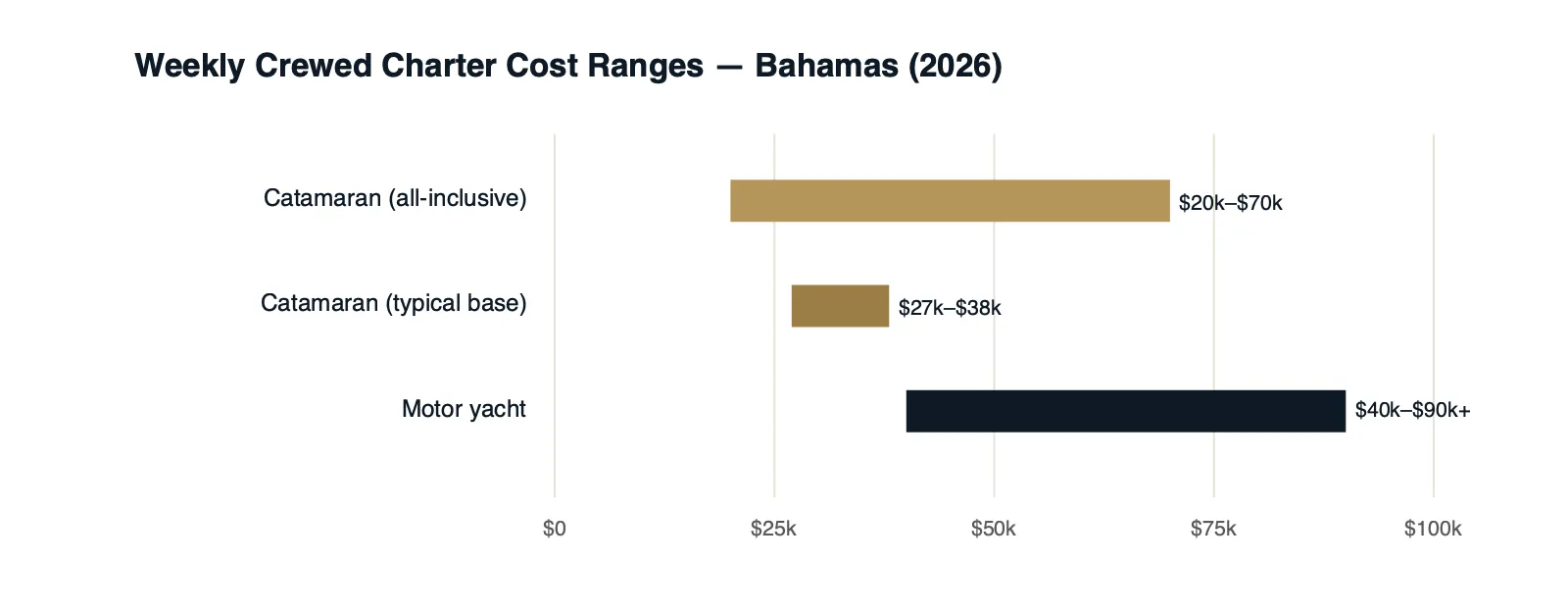
Most Exuma Cays crewed catamaran charters are quoted all-inclusive: the base fee already covers food, drinks, fuel, water toys, and dockage, with no separate provisioning or APA added on. You pay the base plus 10% VAT, a 4% charter tax, and a customary 15–20% crew gratuity at the end. A $26,000 all-inclusive week lands near $33,500 to $34,800 all in, and a $35,000 one near $45,200 to $47,000 (Vital Charters rate analysis, September 2026).
Some larger motor yachts still run on the traditional plus-expenses model, where an Advance Provisioning Allowance covers fuel, food and dockage on top of the base. Measured across the 152 plus-expenses Bahamas motor yachts, that allowance runs 30 to 40 percent of the base rate and averages 35. If that’s new to you, our explainer on how APA works and our take on all-inclusive charters are worth a read. One Exuma-specific line item the crew handles for you: the boat’s Bahamas cruising permit and the Land and Sea Park’s fees, inside the reserve, moorings start at $27.27 a night by vessel size with $12.73 per extra guest per day, which is the $14 a head you will see quoted once the 10 percent VAT is added, and park entrance moves to $15 per adult from 1 July 2026 (Bahamas National Trust). On an eight-guest week with three nights in the park that is a few hundred dollars, absorbed by the rate or the allowance in the vast majority of cases. For how the Bahamas compares on price to other regions, see our Caribbean charter cost breakdown by destination.
What lands on an Exuma charter invoice?
Everything below applies anywhere in the Bahamas; only the park line is specific to the Exumas. Full bands by hull and length, and a worked week with every line, are in our Bahamas yacht charter prices guide.
The 14 percent is two charges, not one: 10 percent VAT plus a 4 percent charter tax, collected together since January 2026, and never inside any charter rate. Exuma park fees ($12.73 per extra guest per day) ride inside the rate or the APA in the vast majority of cases. Budget a customary 15 to 20 percent crew gratuity.
| Line item | Typical amount | Who sets it | Source |
|---|---|---|---|
| APA (Advance Provisioning Allowance) | None mandatory on all-inclusive catamarans (about 2 percent of rates state around 5 percent). Plus-expenses charters add an APA, typically 30 to 35 percent of the base rate, intended to cover every running fee except government taxes, refunded where unspent | The charter contract; mechanics per MYBA | MYBA, Information for Charter Yacht Captains and Crew |
| Charter taxes (VAT + charter tax) | 14 percent of the charter fee: 10 percent VAT plus a 4 percent charter tax, collected together by the Port Department (S.I. No. 57 of 2025 rewrote Rule 6 so both are paid together from January 1, 2026; the percentages come from the VAT Act and the earlier Rule 6) | Government of The Bahamas (VAT Act Ch. 370A; Boat Registration (Yacht) Rules) | S.I. No. 57 of 2025 |
| Cruising permit (per vessel) and passenger tax | Paid by the yacht: $500 to $3,000 for 12 months by length (thresholds at 50 and 100 ft), or $150 to $600 for 30 days, inside the rate or the APA. If you enter aboard from Florida, a $30 passenger tax per non-resident passenger beyond three, ages 6 and up (regulation 91(5), 2025; Customs’ clearance page still shows $20), not charged again on departure | Bahamas Customs (Customs Management Regulations, reg. 91) | Bahamas Customs, Pleasure Vessel Clearance (tiers effective April 1, 2026) |
| Exuma Cays Land and Sea Park fees | Moorings from $27.27 per night by vessel size plus $12.73 per extra guest per day, 10 percent VAT added; park entrance $15 per adult from July 1, 2026 | Bahamas National Trust | BNT, Exuma Park fees |
| Crew gratuity | Customarily 15 to 20 percent of the charter fee in the Caribbean crewed fleet, the band CYBA’s Inclusive Agreement (Clause 2.B) calls the customary rate; MYBA’s 2026 guidelines publish no percentage, and both leave it at your discretion | Custom, written into the CYBA form | CYBA Inclusive Agreement, Clause 2.B (2020) |
Fees verified September 2026.
Start planning your Exuma Cays week
The Exuma Cays reward the travelers who arrive by sea, and the difference between a good week and a perfect one usually comes down to the right boat and the right embarkation plan. Tell us your dates and group size and we’ll match you to a power catamaran or motor yacht that fits, then handle the Nassau logistics end to end. Start a yacht search at Vital Charters, or read our full guide to planning a Caribbean charter first.
Frequently Asked Questions
Can you swim with the pigs in Exuma?
Yes. The swimming pigs live on Big Major Cay, often called Pig Beach, where around 20 pigs and piglets roam free and paddle out to boats (Bahamas Ministry of Tourism, 2026). Feed them only fruit or vegetables and let them approach you. A crewed charter reaches Pig Beach by dinghy, ideally early before the day boats arrive.
How do you get to the Exumas?
Fly into Nassau (NAS), where you clear customs, then either board your yacht and cruise down or take a roughly 40-minute hop to Staniel Cay or George Town (Staniel Cay Adventures, 2026). Travelers routing through Fort Lauderdale can also reach Staniel Cay by direct flight in about 90 minutes.
Do you need a yacht to see the Exuma Cays?
Not strictly, but a crewed yacht is by far the best way. The 365 cays spread across 120 miles (Bahamas Ministry of Tourism, 2026), and the iconic stops (Pig Beach, Thunderball Grotto, Compass Cay, and the marine park) are only reachable by boat. Day-trippers see a sliver; a charter opens up the whole chain on your own schedule.
Is Exuma better than the BVI?
They’re different. The British Virgin Islands suit travelers who want short, sheltered, line-of-sight sailing hops under steady trades. The Exumas suit those who want swimming pigs, sandbars, and protected marine-park water, reached by faster power yachts over longer open-water passages (Yacht Warriors, 2025).
Why are most Exuma charter yachts power instead of sail?
Longer passages, open crossings, and shallow banks reward fast, shallow-draft power catamarans and motor yachts that can cover ground and tuck over sandbars. The compact, trade-wind BVI is where sailing thrives; the spread-out Exumas favor power.
When is the best time to visit Exuma?
December through April delivers the best weather and calmest seas, with March and April the sweet spot for fewer crowds (DiscoverBahamas, 2025). May, June, and November are good-value shoulder months. Hurricane season runs June through November, peaking August to October.
How much does an Exuma Cays charter cost?
All-inclusive crewed catamarans run roughly $20,000–$70,000 per week, with most clustered around $27,000–$38,000 before tax; motor yachts start near $40,000 (Vital Charters rate analysis, 2026). Add 10% VAT, a 4% charter tax, and a customary 15–20% crew gratuity.
Sail the Exuma Cays Your Way
Tell us your dates and group size and we’ll match you to the right power catamaran or motor yacht, then handle the Nassau logistics end to end.