
The Indians: Best of the BVI
The Indians rank as the BVI’s second-best dive and snorkel site, four pinnacles off Norman Island, reachable only by boat. Visit calm and early by crewed yacht.
Last Updated: September 6, 2026
What are The Indians in the BVI?
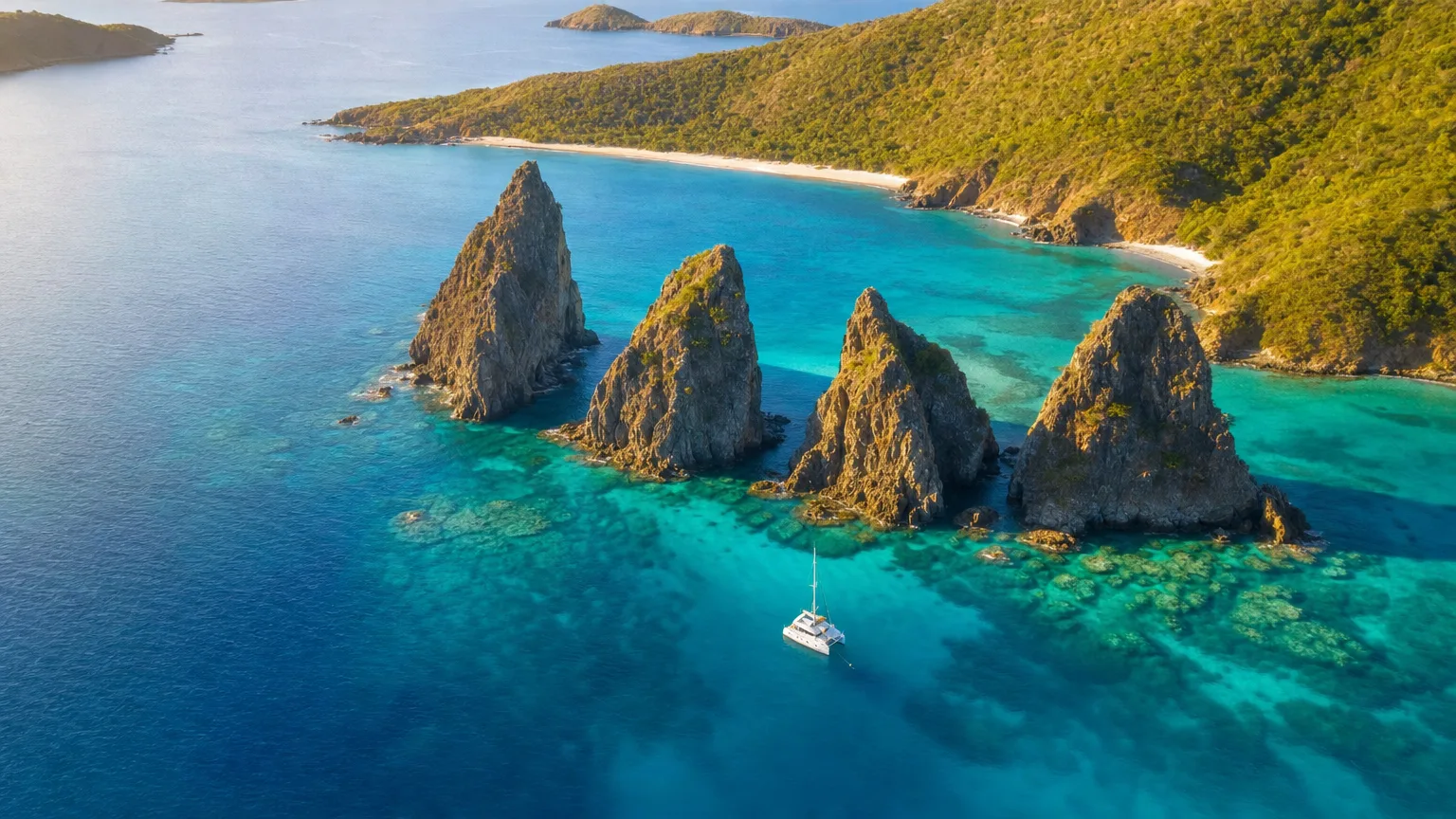
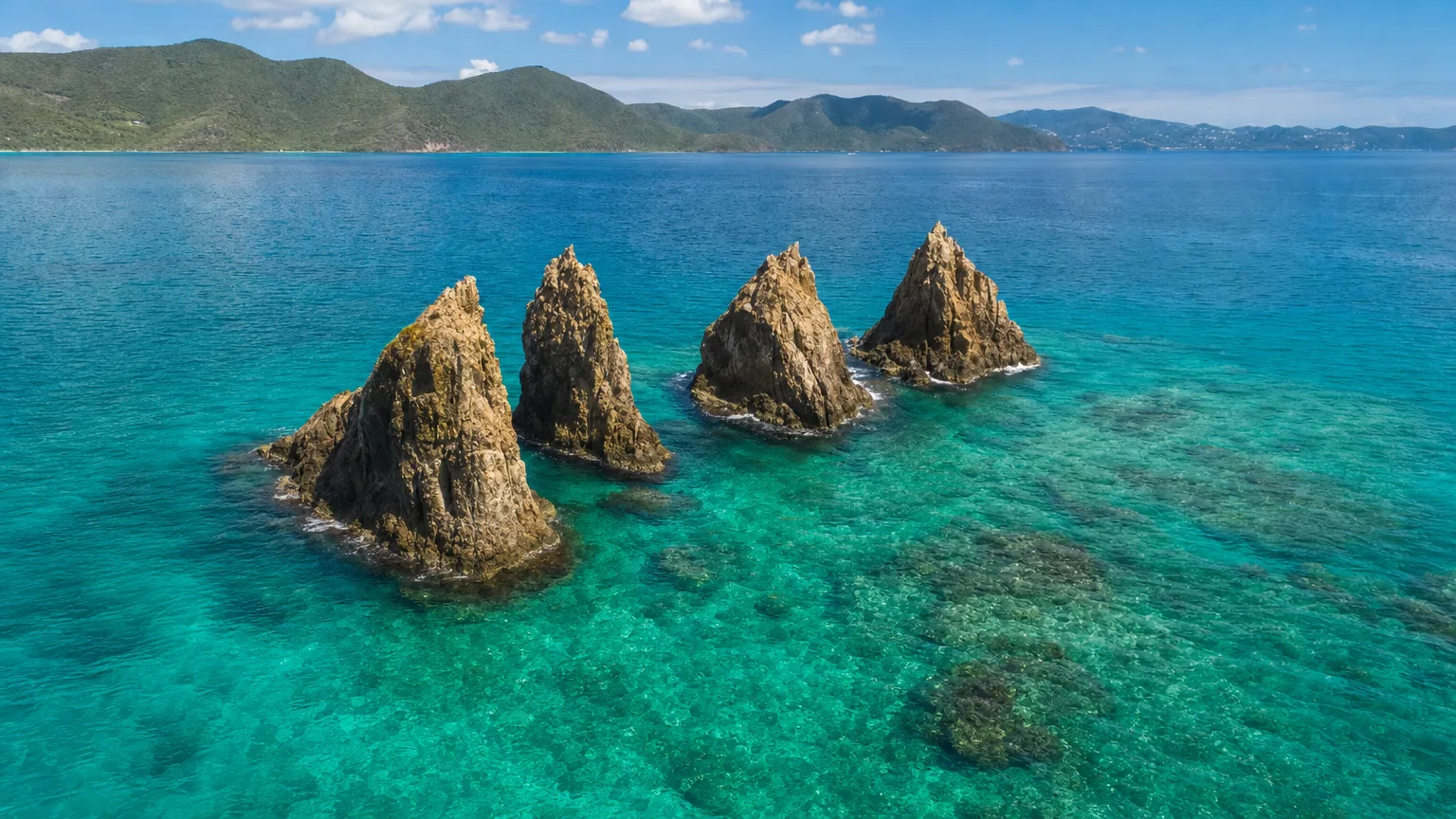
The Indians are a cluster of four rocky pinnacles rising about 50 feet above the sea just west of Pelican Island, off the western tip of Norman Island, and they sit inside a national park managed by the National Parks Trust of the Virgin Islands, and after the wreck of the RMS Rhone they are the BVI site most charter guests ask for by name. They were named because, from a distance, the jagged rocks were thought to resemble a Native American feathered headdress. Above the waterline they’re bare, wind-scoured stone; below it, they’re something else entirely. The pinnacles drop from shallow coral pools on the Pelican Island side to roughly 50 feet on the outer edge, so a single site gives you both a sun-lit reef garden and a proper wall. That range is exactly why The Indians shows up on both snorkeling shortlists and dive-site maps. Most spots are one or the other. The rocks sit in open water at the southwestern edge of the Sir Francis Drake Channel, a short hop from Norman Island’s main anchorage at The Bight. There’s no beach and nowhere to land: you come by boat, tie to a mooring, and get in the water. That’s the whole experience, and it’s a very good one.
Why do you need a crewed yacht to reach The Indians?
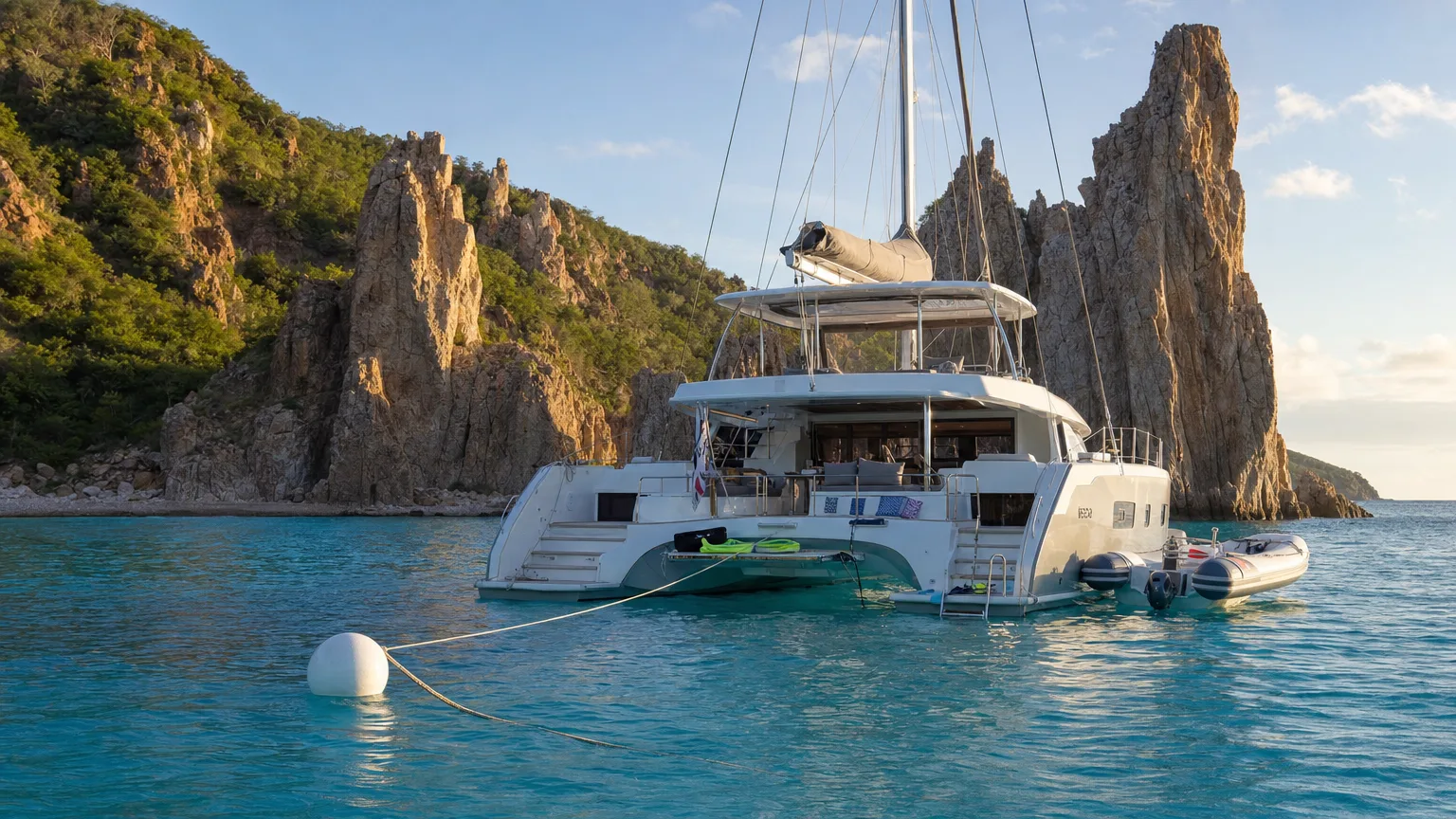
The Indians is a designated BVI marine park where anchoring is prohibited to protect the coral, so every boat must tie to one of only about a dozen National Parks Trust day-use moorings, first-come and often gone by mid-morning (BVI National Parks Trust). Using them requires a marine permit: around $55 per week as of 2025–2026. None of that is hard, but it’s a lot of small logistics for a first-timer to juggle: buy the right permit, find an open mooring at an exposed site, pick up the ball cleanly in a breeze, and watch the clock on the 90-minute limit. Get it wrong and you’re circling four rocks with the whole fleet, or worse, tempted to drop a hook where you shouldn’t. The moorings also close to overnight use, so timing matters. A crewed charter erases all of it. Your captain already holds the National Parks permit, knows which moorings tend to open and when, and reads the wind to pick the calm window before the crowd. The crew has snorkel gear sized and ready on deck, positions the tender to keep an eye on the exposed windward side, and shepherds first-timers and kids into the water. You swim; they handle the marine-park rulebook.
What will you see snorkeling The Indians?
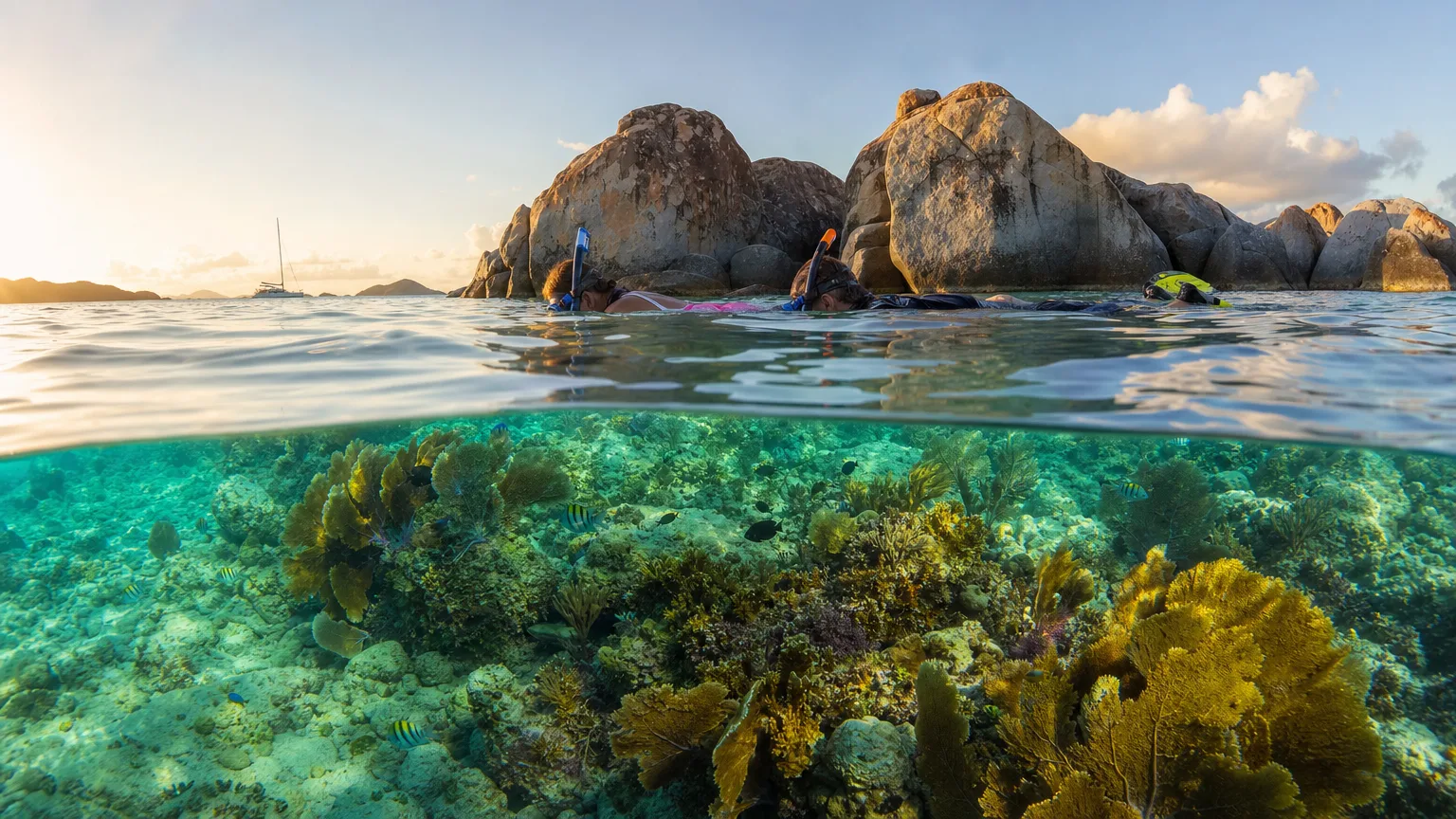
The Indians wrap coral gardens, sea fans, and brain coral around all four pinnacles, drawing dense schools of blue chromis, creole wrasse, sergeant majors, parrotfish, and angelfish, with a short swim-through tunnel and a shallow cave that shelters glassy sweepers near Pelican Island. Snorkelers get more than enough. The shallow, sheltered side near Pelican Island is a clear, calm coral garden you can circle in a slow loop, passing over fans and pillar coral with fish stacked in every crevice. The famous swim-through tunnel sits near the surface, so you don’t need a tank to glide through it, just a breath and a little nerve. Divers get the extras: the outer wall dropping to about 50 feet, the cave where glassy sweepers swirl in a silver cloud, and better odds at turtles and rays in the deeper water. The mix of shallow reef and modest wall in one compact site is why instructors rate it beginner-to-intermediate and why it’s such a reliable first dive of a charter week.
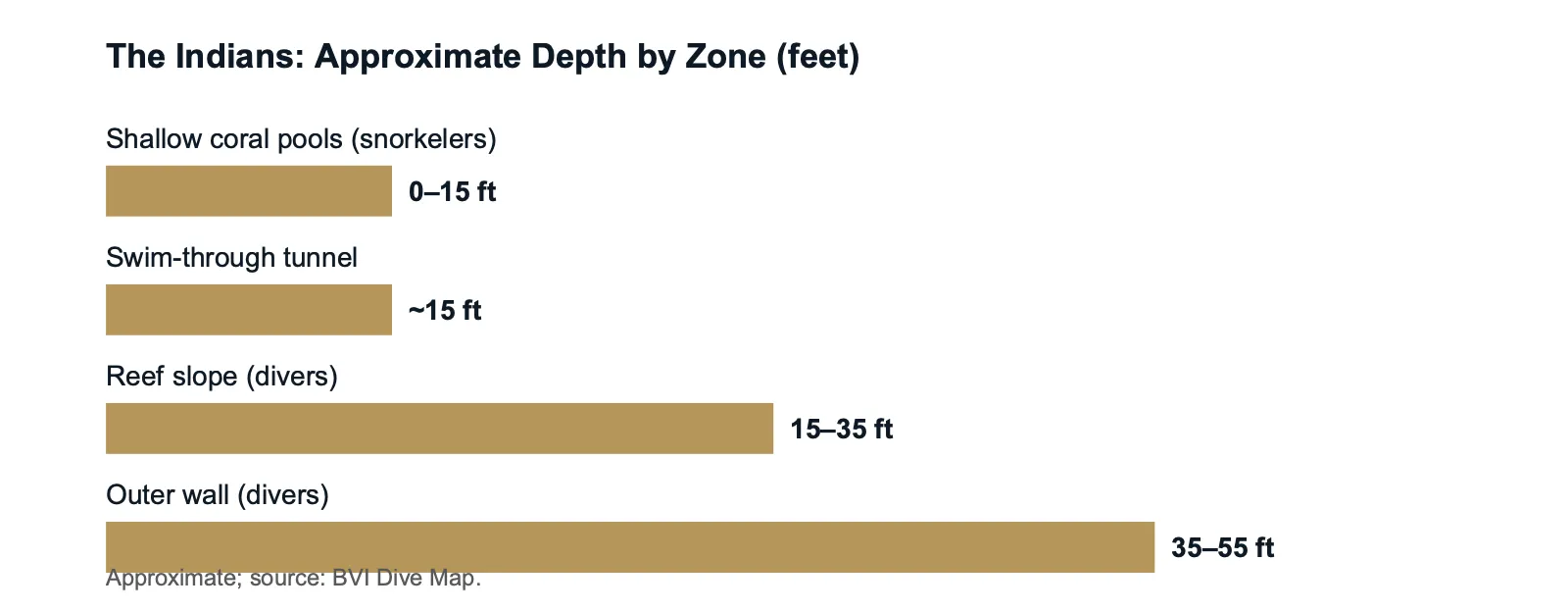
View data table
| Zone | Approx. depth | Best for |
|---|---|---|
| Shallow coral pools | 0–15 ft | Snorkelers |
| Swim-through tunnel | ~15 ft | Snorkelers & divers |
| Reef slope | 15–35 ft | Divers |
| Outer wall | 35–55 ft | Divers |
Snorkel or dive: which is better at The Indians?
The Indians is regarded as one of the best shallow dives in the BVI for snorkelers and beginners, because the reef side stays shallow and sheltered while the outer edge drops to around 50 feet (TripAdvisor). You don’t need a tank to enjoy the highlights, but a dive adds the wall, the cave, and the deeper marine life. If your group is mixed (some strong swimmers, some kids, a grandparent who just wants to float) snorkeling is the equalizer. The shallow, protected coral gardens on the Pelican Island side are calm and easy, and there’s enough life in the first ten feet of water to keep everyone happy for an hour. It’s a genuinely good site for beginners and children, with the main caution being the more exposed windward side, which a crew simply keeps you away from. If you’re certified and want the full site, dive it. The outer wall, the swim-through, and the glassy-sweeper cave are the payoff, and the modest depth keeps it relaxed rather than technical. Many crews will run snorkelers and divers on the same stop, so you don’t have to choose for the whole group, one boat, one mooring, two experiences.
When is the best time to visit The Indians?
The Indians is an exposed site open to the Sir Francis Drake Channel, so calm early mornings deliver the best visibility and flattest water, and arriving before noon gives the best shot at a limited mooring. By afternoon the wind and swell often build, and the moorings are usually taken. Because the pinnacles sit in open water, conditions here swing more with the wind than the sheltered anchorages do. A breezy afternoon can turn the surface choppy and cloud the visibility; a still morning turns it into an aquarium. That’s the real argument for a dawn or mid-morning visit, not just beating the crowd, but catching the water at its clearest and calmest. Peak charter season runs December through April, with reliable trade winds and warm, clear water. Whenever you sail, the move is the same: hit The Indians early in the day. On a crewed charter that’s automatic: the captain slots it into the morning and sequences the rest of the day around it, so you get the site at its best without watching a forecast.
How do The Indians fit into a BVI charter week?
The Indians pairs naturally with the Caves at Norman Island, about a mile away at The Bight, which makes the two a classic half-day combo near the start of a BVI charter week, and with the British Virgin Islands drawing a record 1,202,008 visitors in 2025 (BVI Government / BVI News, 2026), an early-morning visit is what keeps the pinnacles uncrowded. The standard crewed sequence is simple: snorkel or dive The Indians in the calm early morning, move to the Caves at Treasure Point, then drop the hook at The Bight for lunch and an easy afternoon. Norman Island is one of the busier corners of the territory, so getting in first often means you have the pinnacles nearly to yourself before the day-boats arrive. From The Bight it’s a short sail to the rest of a classic week across the British Virgin Islands cruising grounds. A seven-day route can string The Indians together with the famous Willy T floating bar right there at Norman Island, Peter Island across the channel, and The Baths on Virgin Gorda, the other must-do national-park snorkel stop. See how it all connects in our seven-day BVI itinerary. When you’re ready to build the trip, start a yacht search at Vital Charters and we’ll route the week so The Indians is a calm, easy morning, permit, mooring, and all.
Frequently Asked Questions
Where are The Indians in the BVI?
The Indians are four rocky pinnacles rising about 50 feet out of the Sir Francis Drake Channel, just off the western tip of Norman Island and immediately west of Pelican Island in the British Virgin Islands. They sit roughly a mile from Norman Island’s main anchorage at The Bight, so they’re an easy first stop on a charter day out.
Can you snorkel The Indians, or is it dive-only?
The Indians is one of the BVI’s best snorkeling sites, not dive-only. The reef side near Pelican Island is shallow and calm, so snorkelers can circle all four pinnacles, drift over coral gardens, and even pass through the swim-through tunnel near the surface. Scuba divers get the deeper outer wall and cave, but no tank is needed to enjoy the highlights.
Do you need a permit or mooring to visit The Indians?
Yes. The Indians is a protected BVI marine park, so anchoring is banned and boats must tie to one of only about a dozen National Parks Trust day-use moorings, with a 90-minute limit and no overnight use. A National Parks permit is required: around $55 per week as of 2025–2026. On a crewed charter, your captain handles both the permit and the mooring.
How deep is the water at The Indians?
Depths range from about 5 feet on the shallow reef side near Pelican Island to roughly 50 to 55 feet on the outer edge of the pinnacles. Snorkelers stay over the shallow coral gardens, while divers follow the slope down the outer wall. Having both shallow and deep water in one compact site is exactly why it’s so popular.
Is The Indians good for beginners and kids?
Yes. The sheltered reef side offers shallow, clear, calm water that suits beginners and children, while stronger swimmers and certified divers can explore the deeper outer edges. The main cautions are the more exposed windward side and staying off the fragile coral, both easily managed when a crew positions the tender and supervises first-timers.
Jason Acosta is co-founder and principal broker at Vital Charters.
Snorkel the BVI’s second-best site
A crewed captain buys the National Parks permit, grabs a mooring, and times the calm morning window, so The Indians is an easy stop, not a scramble.