
What Is a Yacht Charter? A Broker’s Plain-English Guide
What is a yacht charter? It’s a private yacht rental with crew, from $21,500/week for 8 guests. Learn types, costs, and how charters compare to resorts.
Last Updated: September 7, 2026
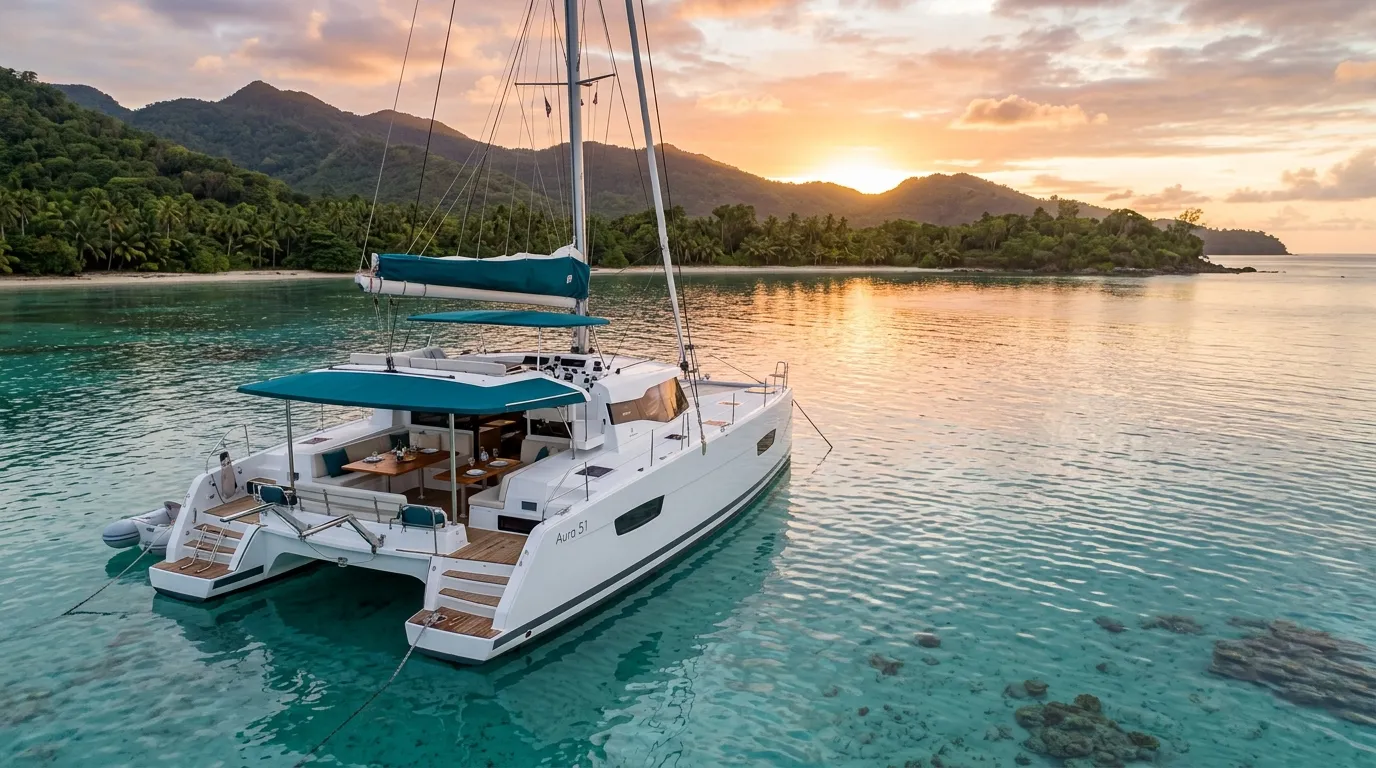
So what is a yacht charter, exactly? A yacht charter is the private rental of a yacht (captain, crew, and living quarters included) for a set period, typically one to two weeks. You’re not booking a cabin on someone else’s ship. You’re booking the entire vessel, choosing your itinerary, and traveling with only the people you invite.
The global yacht charter market hit USD 8.98 billion in 2025 and is growing at 8.19% annually (Fortune Business Insights, 2025). That growth isn’t coming from billionaires alone. Crewed charters now generate 61.58% of global charter revenue (Mordor Intelligence, 2025), and the average charterer’s age has dropped to 40–50, down ten years over the past two decades (SuperYacht Times).
At Vital Charters, we broker crewed yacht charters exclusively in the Caribbean and Bahamas. This guide covers what a charter actually involves, what it costs, and how to decide if it’s the right fit for your group.
What Does “Charter” Mean in Yachting?
A yacht charter is the private rental of a fully equipped yacht for the exclusive use of one group over a set period. Four words do most of the work in this business and they are worth having straight before you read another page about it.
- Crewed charter. The yacht comes with its captain and crew, who run the boat, cook and look after you. This is what almost the entire Caribbean fleet offers and what this guide covers.
- Bareboat charter. You rent the yacht alone and skipper it yourself, which requires sailing qualifications and experience. A different product with a different licence requirement; we do not broker it.
- APA, the advance provisioning allowance. On some contracts you pay a percentage of the charter fee up front to fund fuel, food and provisioning, and whatever is left is returned to you at the end of the week. On the rest it does not exist because everything is already in the price.
- MYBA and CYBA. The two trade associations whose standard contracts nearly every crewed charter runs on (MYBA, CYBA). Which of the two forms you sign decides whether an APA applies.
Unlike a cruise ship cabin or a hotel room, a charter gives your group sole access to the vessel and its itinerary. Nobody else is aboard.
Think of it this way: a cruise is a floating hotel with 3,000 strangers. A charter is your own floating villa that moves wherever you want it to go.
A yacht charter is different from:
- A cruise: shared ship, fixed itinerary, thousands of passengers
- A ferry or tour boat: public transport, no overnight accommodation
- A timeshare: ownership or fractional ownership structure
- A day boat rental: typically no crew, no overnight capability, limited range
How Does a Yacht Charter Work?
70% of cabin and crewed charter reservations now come through online channels (Mordor Intelligence, 2025). But behind every booking, there’s a straightforward five-step process, whether you’re working with a charter broker or booking directly.
- Pick the charter style. Crewed (captain + chef + steward), skippered (captain only), or bareboat (you’re the captain). Most first-timers choose crewed.
- Choose your yacht. Catamaran or motor yacht? How many cabins? What layout fits your group? A broker can narrow the fleet based on your dates, budget, and destination. Browse options on our crewed yacht fleet.
- Sign a charter agreement. This contract, often based on the MYBA Charter Agreement, outlines the base fee, cancellation policy, APA (advance provisioning allowance), and crew responsibilities.
- Share your preferences. Dietary needs, drink preferences, celebrations, must-visit anchorages, water sports priorities. Your crew builds the trip around this.
- Embark and go. Fly in, board at the marina, unpack once. The yacht is your home for the duration.
Our observation: Most of our clients spend about 20 minutes on a preference sheet, and that single form shapes their entire week. We’ve seen groups who listed “quiet mornings” end up with sunrise yoga on the foredeck. Others who wrote “we love to snorkel” hit three different reef systems in four days. The crew reads that sheet like a playbook.
Types of Yacht Charter
Crewed yacht charters account for 61.58% of all charter revenue globally, making them the dominant type by a wide margin (Mordor Intelligence, 2025). Weekly bookings hold a 54.63% share, though day charters are the fastest-growing segment at 10.82% CAGR. For first-time guests in the Caribbean, a crewed catamaran is the most common choice, catamarans increased 15% year-on-year in 2024. Here’s how the five main categories compare.
| Type | Crew Included | Typical Weekly Cost (Caribbean) | Best For | Experience Required |
|---|---|---|---|---|
| Crewed | Captain + chef + steward | $21,500–$59,000 | First-timers, families, luxury travelers | None |
| Skippered | Captain only | $12,000–$25,000 | Budget-conscious, smaller groups | None |
| Bareboat | None (you’re captain) | $5,000–$15,000 | Experienced sailors | ASA 104 or equivalent |
| Cabin | Shared vessel with crew | $2,000–$5,000/person | Solo travelers, couples on a budget | None |
| Day | Captain + optional crew | $2,500–$10,000/day | Special occasions, first-time trial | None |
Crewed Charter (Most Popular)
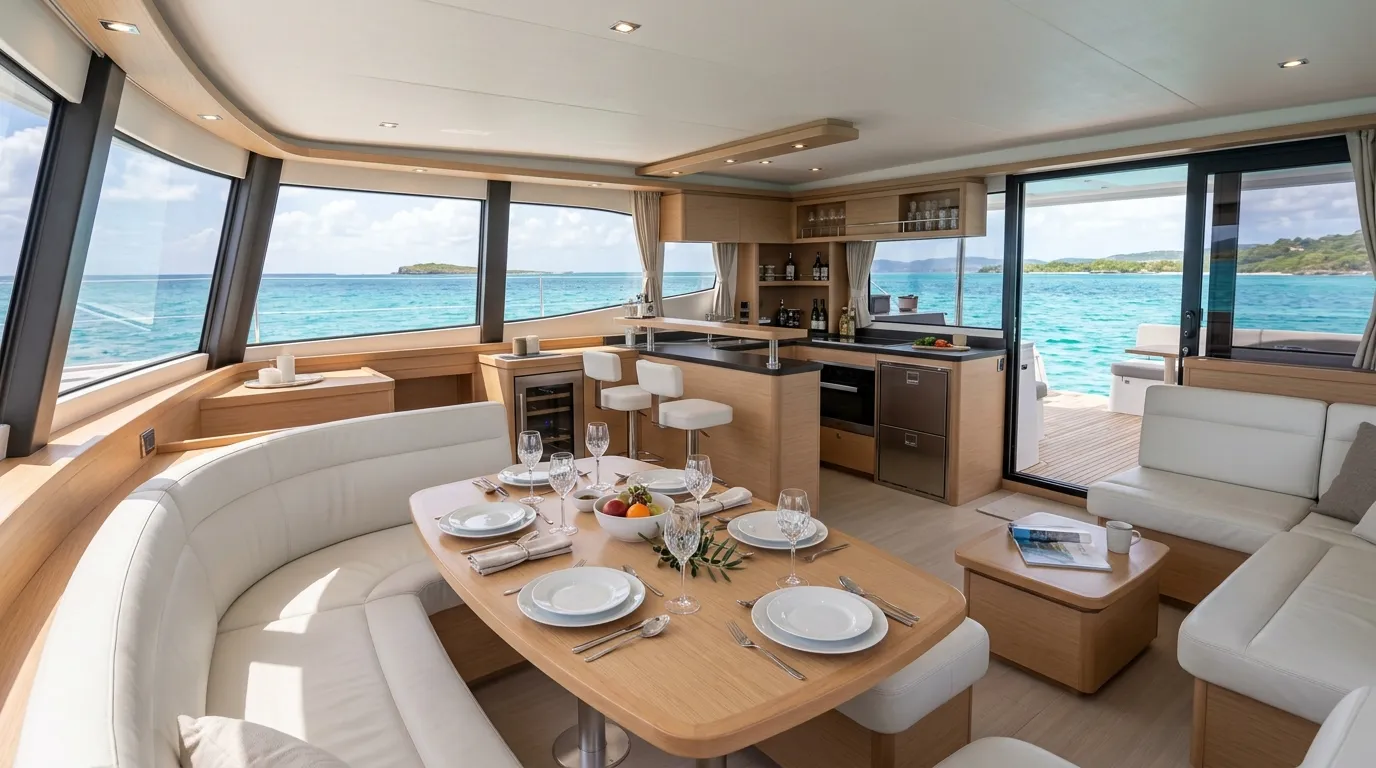
A crewed charter comes with a full professional team, captain, chef, and one or more stewards. You don’t navigate, cook, clean, or plan logistics. This is what most people picture when they hear “luxury yacht vacation.”
In the Caribbean, crewed bookings are overwhelmingly on catamarans, vessels increased 15% year-on-year in 2024. Brands like Lagoon, Leopard, and Fountaine Pajot dominate the fleet.
Skippered Charter
A skippered charter gives you a captain but not a full service crew. It’s a solid middle ground: professional navigation and local knowledge, but you might handle your own meals and basic upkeep. Lower cost than a full crew, more freedom than bareboat.
Bareboat Charter
A bareboat charter means you rent the yacht without crew. You (or someone in your group) acts as captain. Most destinations require proof of competency, an ASA 104 certification or equivalent is the typical minimum.
Bareboat suits experienced sailors who want total independence. But it’s less “vacation”, you’re responsible for navigation, anchoring, provisioning, and the vessel itself.
Cabin Charter
A cabin charter is more like a small-ship cruise: you book one cabin and share common areas with other guests. It’s the most affordable option, but it’s not private.
Day Charter
Day charters are the fastest-growing segment, expanding at 10.82% CAGR through 2031 (Mordor Intelligence, 2025). These are shorter experiences (4 to 8 hours) ideal for special occasions, corporate entertaining, or testing the charter lifestyle before committing to a full week.
How Much Does It Cost?
A crewed sailing catamaran, the boat most charter parties book, carries a median week of $32,000 all in across 316 yachts, and half the market falls between $25,000 and $44,125 (Vital Charters rate analysis, September 2026). By length: about $21,500 at 45-49 ft, $27,000 at 50-54 ft, $32,750 at 55-59 ft and $42,000 at 60-64 ft. A motor yacht of any size is a different bracket entirely, at a median of $106,433. Every cut and the exclusions behind them are published in the 2026 fleet rate report.
The base charter fee covers the yacht and crew. On top of that, you’ll typically pay an APA (Advance Provisioning Allowance) that covers fuel, food, drinks, and dockage. APA usually adds 30–35% to the base fee (multiple industry sources). Crew gratuity (customary at 15–20% of the base fee) is separate.
For a detailed breakdown of every cost line, see our guide on charter rates, APA, and add-ons.
What’s Typically Included
- Use of the yacht and all onboard amenities for the charter period
- Professional crew (captain, chef, steward on crewed charters)
- Standard water toys (paddleboards, snorkel gear, kayaks, tender)
- Linens, towels, and basic toiletries
- Insurance and required safety equipment
What’s Usually Extra
- Food and beverages (covered by APA)
- Fuel and dockage fees (covered by APA)
- Crew gratuity (15–20% of base fee, paid at trip’s end)
- Premium water sports equipment (jet skis, diving gear)
- Special requests (birthday cakes, floral arrangements, specific wines)
For full contract details, read our MYBA fee breakdown.
Our observation: The APA surprises a lot of first-timers, but it’s actually a transparency tool. Instead of rolling food and fuel into a higher base rate (which some operators do), the MYBA-standard APA lets you see exactly where every dollar goes. We’ve had clients get refunds of $500–1,000 when they spent less than estimated.
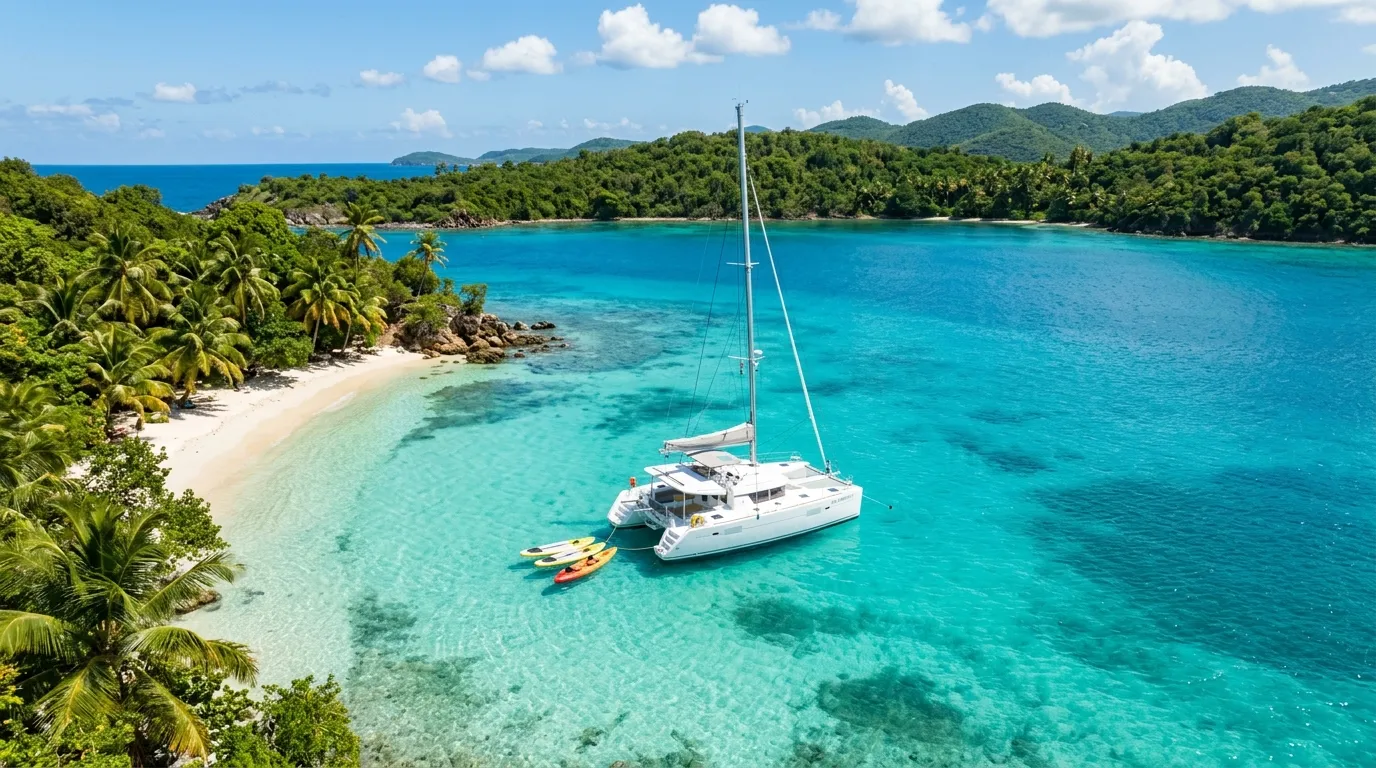
Charter vs. Resort: Why Groups Are Switching
Private and leisure charters represent 77.88% of global charter revenue, with corporate and MICE bookings growing fastest at 8.74% CAGR (Mordor Intelligence, 2025). Caribbean catamaran charters climbed 15% year-on-year in 2024 (Mordor Intelligence, 2025), and the shift from resort vacations to private vessel rentals is accelerating, especially among groups of six or more, where per-person costs often favor chartering over comparable luxury hotel stays.
| Factor | Yacht Charter | Luxury Resort |
|---|---|---|
| Per-person cost (8 guests, 7 nights) | ~$450/night (chef, bar, water sports included) | $500–$800/night (before excursions) |
| Privacy | Exclusive: your group only | Shared pools, beaches, dining |
| Flexibility | Itinerary changes daily | Fixed schedules, reservations |
| Logistics | Unpack once, vessel moves | Transfers, repacking between islands |
| Dining | Private chef, custom menus | Restaurant reservations, set hours |
| Activities | Water toys included, new anchorage daily | Excursions booked separately |
The shift is driven by three factors that matter most to groups.
The Per-Person Math Often Favors Charters
A crewed catamaran at USD 25,000 per week for 8 guests works out to roughly USD 450 per person per night, and that includes a private chef, open bar, water toys, and a new anchorage every day. A comparable Caribbean luxury resort runs USD 500–800 per person per night before excursions, private dining, or boat trips. For groups of 6 or more, the vessel rental frequently costs less per head than a resort with equivalent experiences.
We broke this down in detail in our yacht charter vs. luxury resort comparison.
Real Privacy, Not “Resort Private”
A resort’s “private beach” still has 200 other guests on it. A yacht charter means your group has exclusive use of the vessel, no shared pool, no lobby crowds, no fighting for lounge chairs. When you anchor in a quiet bay in the BVI or Exumas, that stretch of water is yours.
Flexibility That Resorts Can’t Match
Resorts run on set schedules: check-in at 3 PM, dinner reservations at 7, excursion bus leaves at 9. On a charter, the itinerary bends around your group’s energy. Feeling lazy? Stay anchored. Want to explore? The captain moves the yacht. It’s raining at one island? Sail 30 minutes to sunshine.
You Unpack Once
One underrated advantage: no repacking, no airport transfers between islands, no coordinating multiple hotel bookings. Your accommodations travel with you. For multi-stop Caribbean trips, that alone saves hours of logistics.
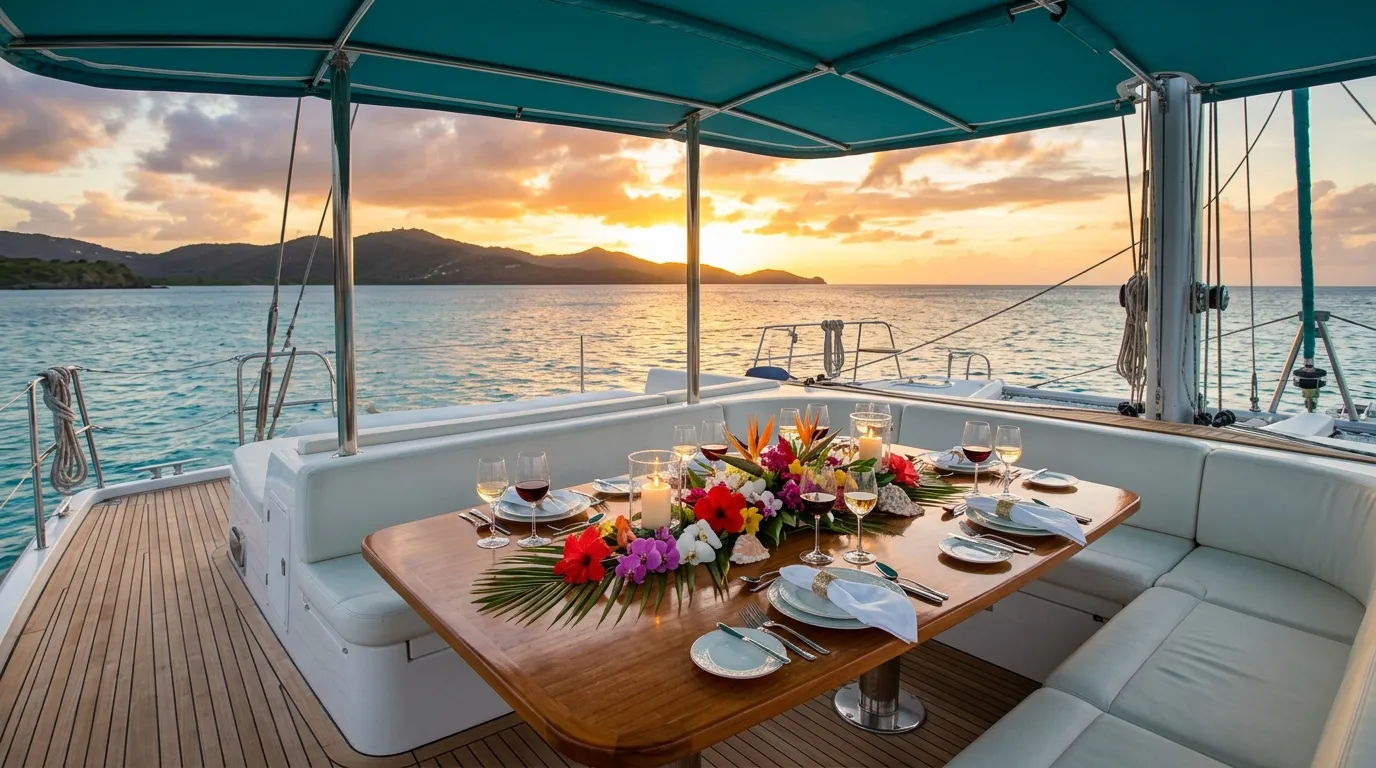
Who Books a Charter?
The average yacht charterer’s age has dropped to 40–50, down ten years over two decades (SuperYacht Times). Millennials are projected to account for 50% of global luxury spending by 2026 (SuperYacht Times). This isn’t your grandfather’s yacht club, here’s who we see booking.
Families
Multi-generational trips are one of the fastest-growing segments. Kids swim off the stern while grandparents read on the foredeck. Nobody has to commute anywhere. We’ve written about this trend in our guide on why families choose private yacht charters.
Friend Groups
Birthdays, milestone celebrations, reunions. A charter acts as a self-contained venue where everyone shares the same schedule without the logistical friction of coordinating across resort rooms and restaurant reservations.
Corporate Groups
Offsites, leadership retreats, client entertaining. The enclosed, distraction-light environment makes charters surprisingly effective for focused work sessions mixed with team bonding. No conference center required, just the salon table and a whiteboard.
Our observation: Corporate clients don’t just book for “fun.” We’ve brokered retreats where the CEO used the morning sail time for one-on-ones with each exec. The vessel’s layout (private cabins for calls, shared deck for group sessions) works better than most off-site venues we’ve seen.
What to Ask Before You Book
You don’t need nautical expertise to book well. These five questions will clarify 90% of what you need to know:
- Is this charter crewed, skippered, or bareboat? If you’ve never chartered before, crewed is almost always the right call.
- How many cabins and what’s the sleeping configuration? Cabin count sets how many couples get a private head; length does not.
- What does “all-inclusive” actually mean for this yacht? The term varies wildly. Some include everything; others only cover crew and the vessel. Get it in writing. Read our breakdown of all-inclusive yacht charters.
- What’s estimated separately? Fuel, food, dockage, gratuity, know the APA structure upfront.
- What’s the cancellation policy and is travel insurance recommended? Weather, flight disruptions, and illness happen. Know the terms before you sign.
Ready to Explore a Caribbean Charter?
If you’re curious what a charter looks like for your group, reach out to Vital Charters. Browse the featured yacht fleet, or tell us your dates, group size, and budget, we’ll match you with the right yacht and crew.
Frequently Asked Questions
What is a yacht charter in simple terms?
A yacht charter is renting a private yacht (usually with a captain and crew) for a set period. It’s a floating vacation home where your group controls the itinerary, meals, and pace.
How much does it cost to charter a yacht?
Caribbean crewed catamarans start around USD 21,500 per week for 6–8 guests. Larger or more luxurious vessels range from USD 48,900–100,000+ per week. The base fee covers the boat and crew; food, fuel, and extras are additional.
Do you need sailing experience to charter a yacht?
No, not for a crewed or skippered charter. The captain handles all navigation and seamanship. You only need certifications (like ASA 104) for bareboat charters where you operate the yacht yourself.
Is a yacht charter worth it compared to a resort?
For groups of 6 or more, a crewed charter often costs less per person per night than a comparable luxury resort, and includes a private chef, water sports, and a new destination every day. We compared the numbers in detail in our resort vs. charter cost breakdown.
What is the 10% rule for yachts?
The 10% rule is a rough guideline for yacht ownership: annual maintenance and operating costs typically run about 10% of the yacht’s purchase price. It’s one of the reasons many people choose to charter rather than buy. We explored this in yacht charter vs. ownership.
What does all-inclusive mean on a yacht charter?
It depends on the yacht and contract. Some all-inclusive charters cover meals, drinks, water sports, and fuel. Others only include the crew and vessel, with food and fuel as extras. Always confirm what’s covered in the charter agreement. Always confirm what’s covered in the charter agreement.
Skip the research. Talk to a broker.
Tell us your group size and dates and we’ll walk you through crewed Caribbean charter options, with real pricing, no jargon, and no pressure.