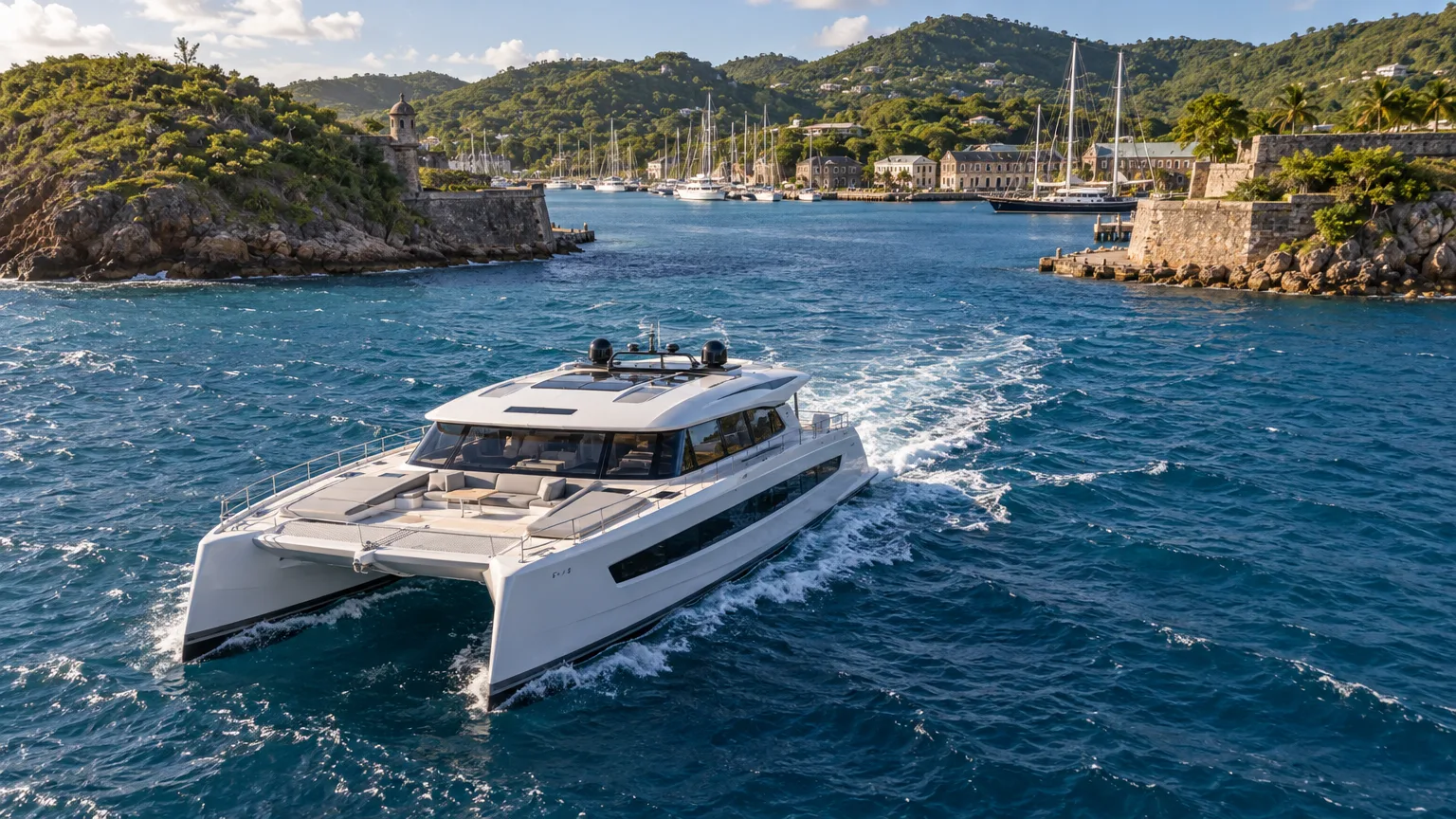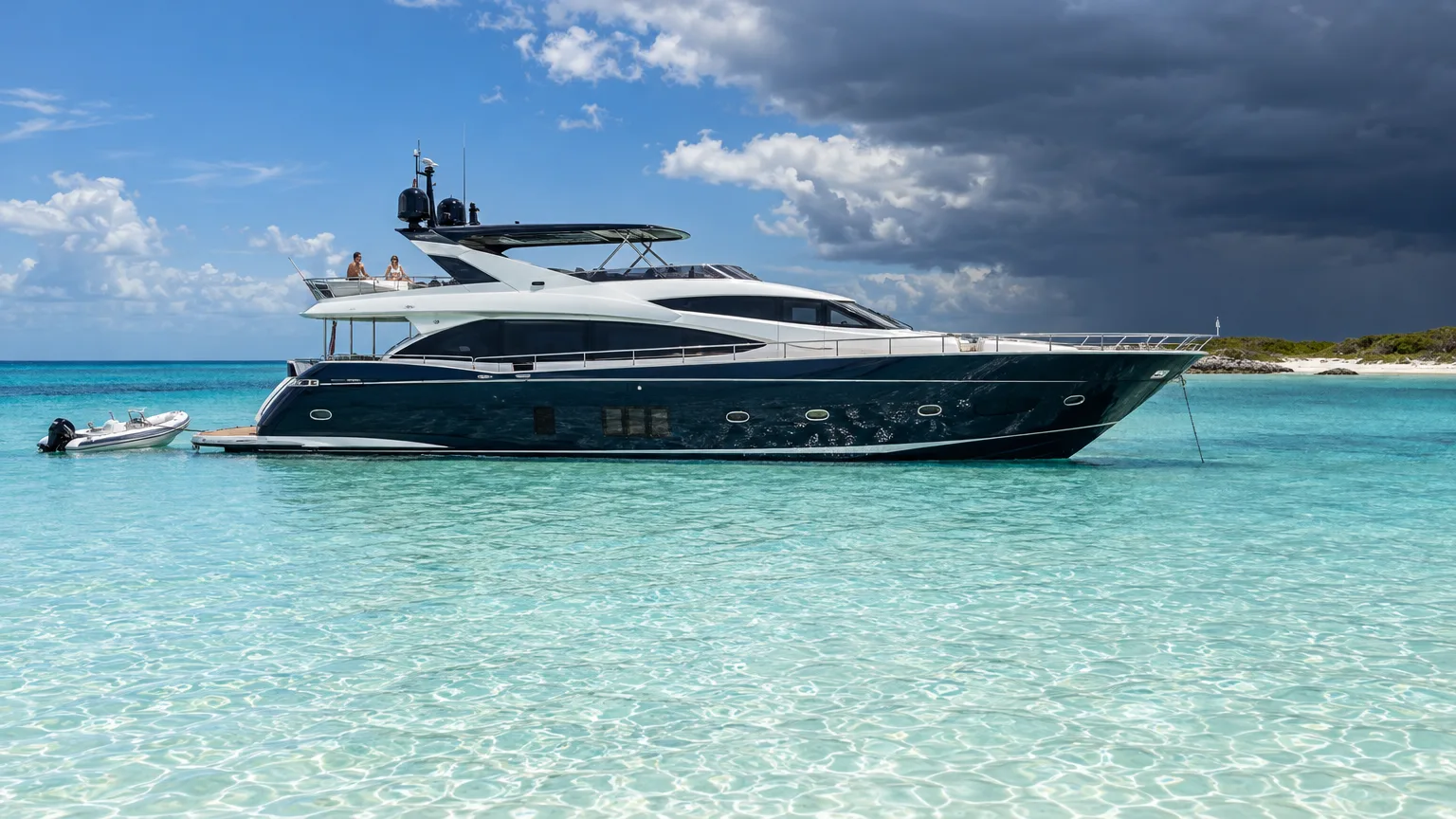

Crewed Yacht Charter: What It Includes and What It Costs in the Caribbean and Bahamas
A crewed yacht charter includes a captain and chef. A high-season Caribbean or Bahamas week lists at a median $39,000 before tax and tips. See what is covered.
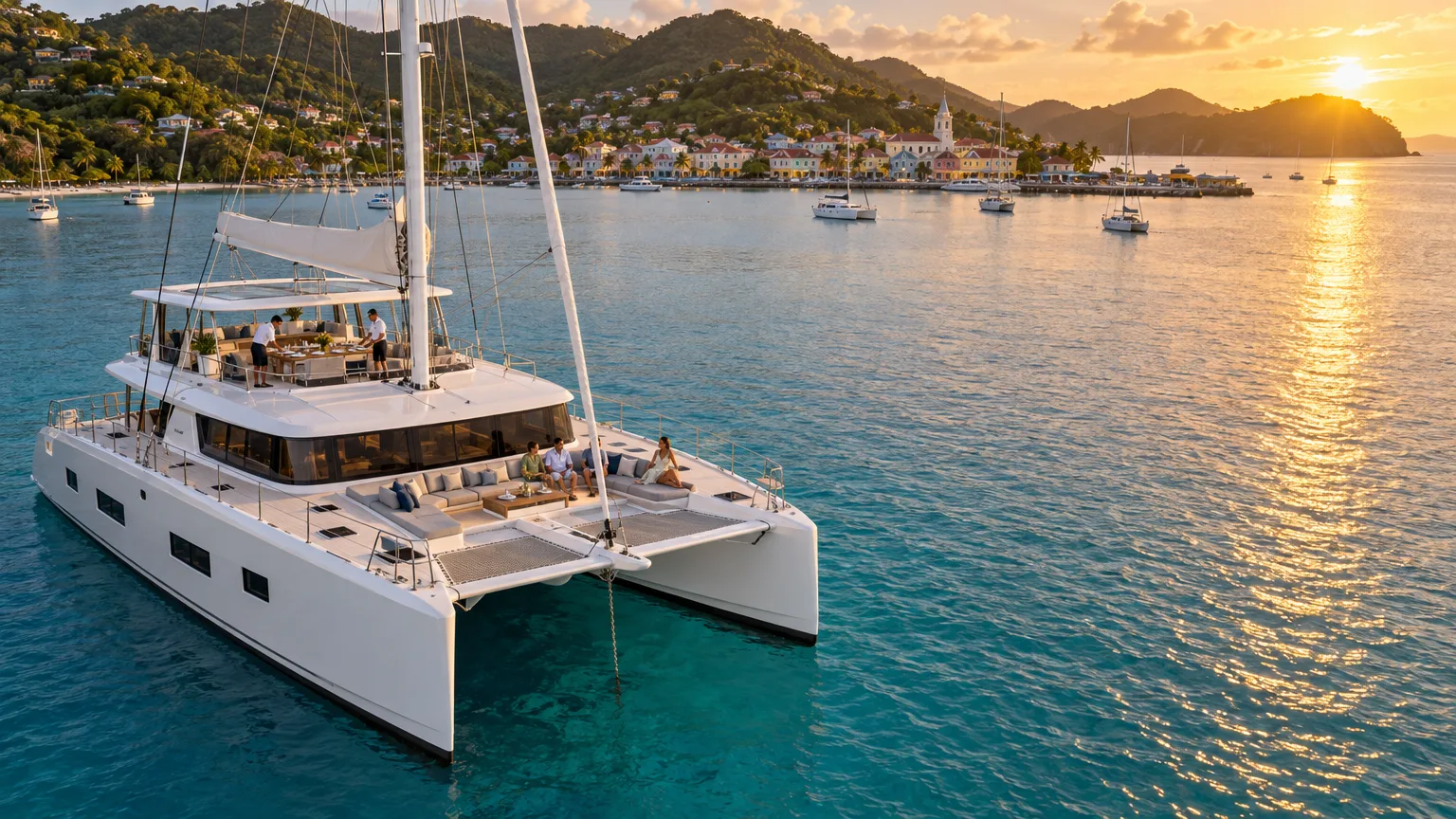
A crewed yacht charter is a private yacht booked with its own professional crew, who sail it, cook for you and plan each day around your group. Nobody in your party has to know how to handle a boat. In the Caribbean and the Bahamas it’s sold by the week, and the same weekly quote can cover two quite different things, depending on the contract behind it.
Each section below answers one question briefly and links the guide that covers it in full. Everything here is in the Caribbean and the Bahamas, where Vital Charters works, and if you haven’t picked an island group yet, our guide to Caribbean crewed charter destinations compares them.
What is a crewed yacht charter?
A crewed yacht charter is a week aboard a private yacht whose crew comes with it. On yachts under 60 feet that crew is usually two people: 218 of the 249 that state a crew size carry exactly two, and 158 of the 163 that list both crew members name a captain and a chef (Vital Charters listings analysis, October 2026).
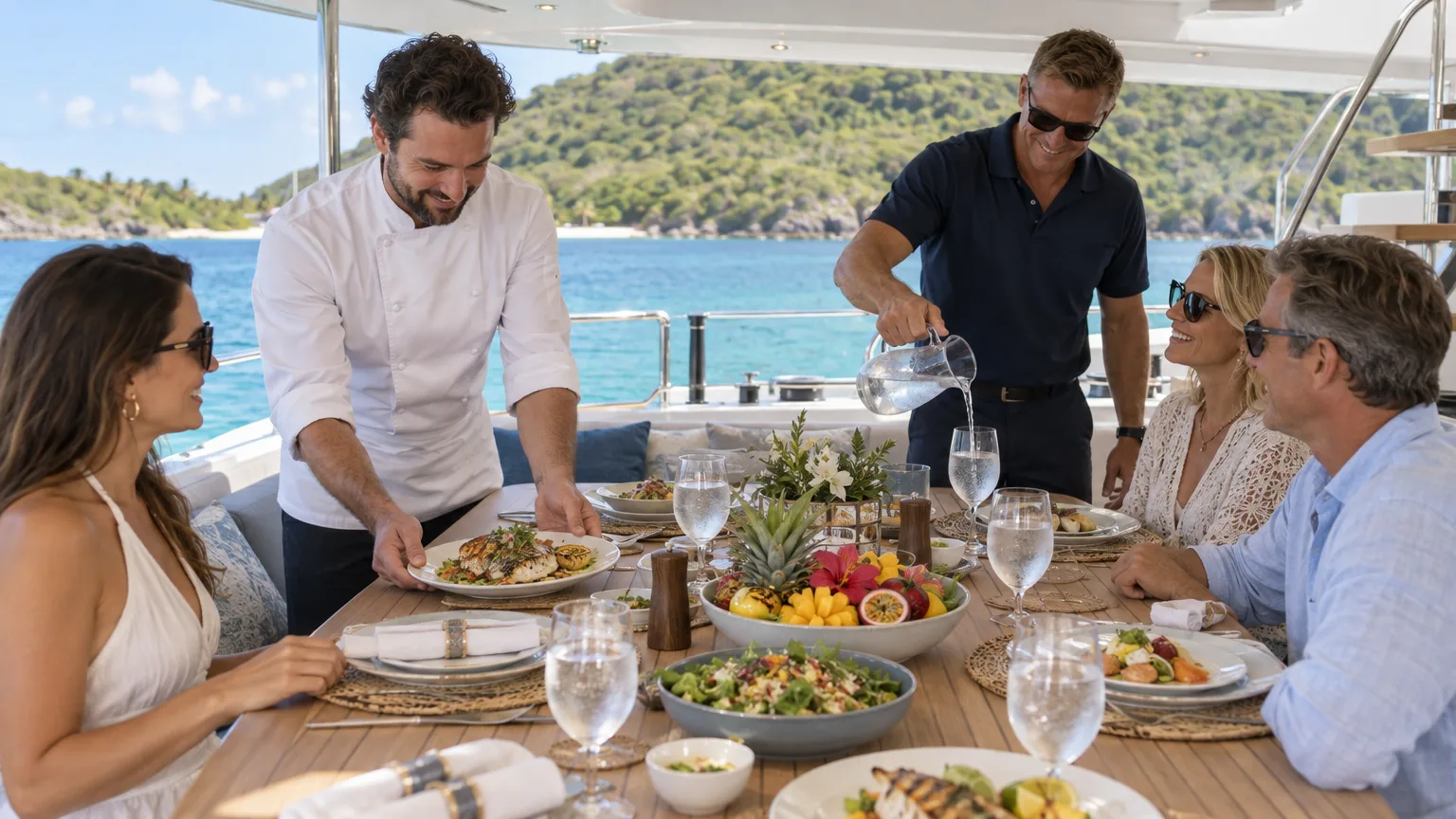
The captain holds the license and runs the boat, and each morning talks you through the day’s anchorages. The chef plans the menus around your group’s tastes, does the shopping and cooking, and often works as first mate too.
Bigger yachts carry more crew:
| Yacht length | Typical crew | Who’s usually aboard |
|---|---|---|
| 60 to 79 ft | 3 | Captain, chef and usually a stewardess, sometimes a mate or deckhand instead |
| 80 to 99 ft | 4 | Captain, chef, stewardess and a mate or deckhand |
| 100 ft and over | 6 | Captain, chef, stewards, a mate and deckhands, and on just over half an engineer |
Median crew size of active crewed yachts listing the Caribbean or Bahamas, by length, with roles from the crew lists the yachts publish. Vital Charters listings analysis, October 2026.
On the guest side, the typical charter yacht sleeps eight guests in four cabins (Vital Charters listings analysis, October 2026). Nearly all stop at 12, because the SOLAS convention treats a vessel carrying more than 12 passengers as a passenger ship. If your group is bigger, our guide to the 12-person yacht rule explains what that means for you.
Without a crew, the same kind of boat is a bareboat charter, and someone in your group skippers, cooks and handles the paperwork. The two are priced very differently; our guide to what crewed and bareboat quotes cover sets them side by side.
What does a crewed yacht charter include?
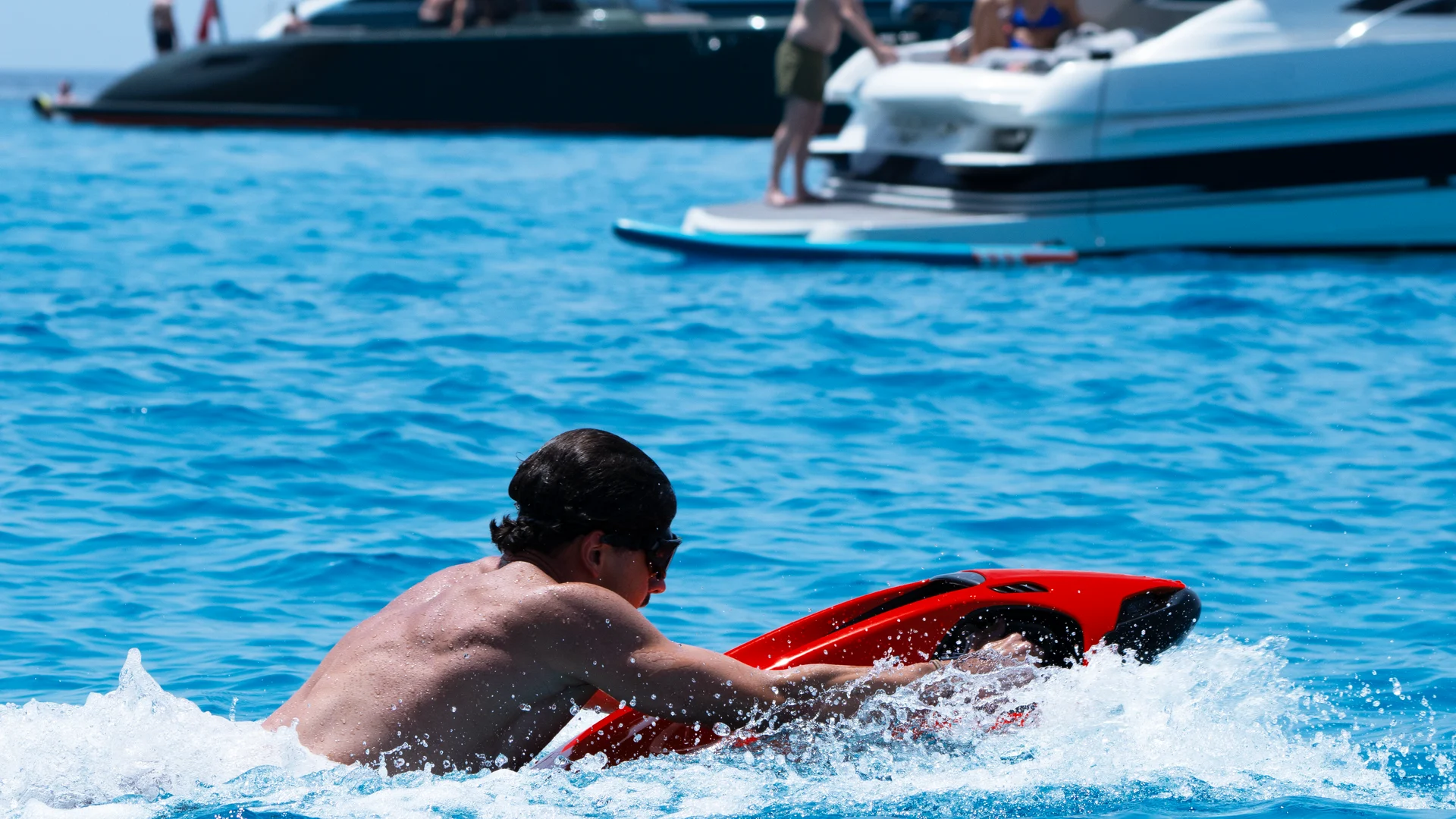
Every crewed yacht charter includes the yacht and its crew. An all-inclusive rate adds every meal, a standard bar, fuel and the water toys; a plus-expenses rate bills the food, drink and fuel against an advance paid on top. Of sailing catamarans with a Caribbean or Bahamas rate, 295 of 338 quote all-inclusive; of motor yachts, 207 of 219 quote plus expenses (Vital Charters rate analysis, October 2026).
That advance is the Advance Provisioning Allowance (APA), explained below. Charter taxes and the crew gratuity are yours to pay on either contract, and the table shows where everything else falls.
| What you’ll use | All-inclusive rate | Plus-expenses rate |
|---|---|---|
| Yacht and crew | In the rate | In the rate |
| Meals and drinks | In the rate; premium wines and spirits are extra | Paid from the APA |
| Fuel | A normal week’s cruising is in the rate | Paid from the APA |
| Moorings, park fees and permits | In the rate in the vast majority of cases | Paid from the APA |
| Water toys aboard | In the rate | Use is in the rate; their fuel comes from the APA |
| Charter taxes such as VAT | On top | On top |
| Crew gratuity | On top | On top |
What each contract covers on a typical Caribbean or Bahamas charter, from the Charter Yacht Brokers Association (CYBA) Inclusive Agreement and the MYBA Charter Agreement. The yacht’s own contract and rate notes are the final word.
For where the line falls item by item, including the catamarans that quote plus expenses, see our guide to how all-inclusive charters work.
Before the contracts and fees, see which crewed yachts fit your group.
What are MYBA terms on a yacht charter?
MYBA terms are the charter contract published by MYBA, the Worldwide Yachting Association. Under them, the charter fee pays for the yacht and its equipment, the crew’s wages and food, and the insurance of the yacht and crew (MYBA). Fuel, the guests’ food and drink, and berthing and harbor dues are paid at cost from the APA, an advance you send before the trip, and any VAT or charter tax the island levies is added on top.
The MYBA agreement is the usual form for plus-expenses yachts. Caribbean all-inclusive yachts are more often booked on the CYBA Inclusive Agreement, which was written for rates that already include meals, the bar, fuel, permits and moorings. The form your yacht uses sets the payment schedule, the cancellation terms and the cruising area, so read it before you sign. Our guide to what the MYBA charter fee includes goes through the contract clause by clause.
What is APA on a crewed charter?
APA, the Advance Provisioning Allowance, is money paid on top of a plus-expenses crewed charter rate, typically 30 to 35 percent of the base charter fee (Vital Charters rate analysis, October 2026). The captain spends it on fuel, food, drink and dockage during the week and accounts for it with receipts at the end. Anything left over is refunded to you.
The percentage comes from each yacht’s own rate; MYBA doesn’t set it. Almost no all-inclusive yacht charges one, because those costs are already in the rate. For how much to budget and what happens if the week runs over, see our guide to what APA covers on a yacht charter.
Do you pay VAT or charter tax on a yacht charter?
Tax on a crewed charter depends on the island. The US Virgin Islands charge guests no charter tax, while the Bahamas adds 14 percent of the charter fee: a 10 percent VAT plus a 4 percent charter tax, collected together since January 2026 (S.I. No. 57 of 2025). These percentage taxes are never inside a charter rate, all-inclusive or not.
Most other government charges aren’t a percentage of the fee. The BVI charges a cruising permit per guest per day, and marine parks such as the Tobago Cays and the Exuma Cays Land and Sea Park charge by the guest or by the mooring. An all-inclusive rate usually covers those, as the table above shows; on plus-expenses terms they come out of the APA. Our guide to Caribbean and Bahamas charter taxes and fees lists the amounts island by island.
How much do you tip the crew on a crewed charter?
The crew gratuity on a Caribbean crewed charter is 15 to 20 percent of the charter fee, the customary rate in the CYBA Inclusive Agreement (CYBA Inclusive Agreement, 2020, Clause 2.B). It’s worked out on the charter fee alone, never on the APA or the taxes, and is usually handed to the captain on the last evening.
MYBA publishes no percentage. Section 23 of its 2026 guidelines for charter captains and crew says “Gratuities are considered entirely up to the Charterer’s discretion.” Neither CYBA nor MYBA makes a tip compulsory, so it sits outside every quote. Put it in your budget alongside the rate. Our guide to tipping your yacht crew covers how to pay it and what to do if the service falls short.
What does a week aboard cost in the Caribbean and Bahamas?
A crewed charter on a sailing catamaran lists a median $32,000 for a 2026-27 high-season week in the Caribbean and Bahamas, a power catamaran $49,000 and a motor yacht about $126,000, before taxes and the tip (Vital Charters rate analysis, October 2026). That is the rate on all-inclusive yachts, and the rate plus its APA on plus-expenses yachts, so the two compare directly.
Those medians come from 437 yachts that publish a high-season rate. A plus-expenses total is a working estimate: unspent APA comes back to you at the end of the week, and a week that spends more is topped up.
A motor yacht lists higher because it’s usually a far bigger boat with a bigger crew, and it burns more fuel to move. For what drives the price of any crewed week, from crew wages to provisioning, read why chartering a crewed yacht isn’t cheap. For prices island by island, see our guide to Caribbean yacht charter cost.
Where do crewed yacht charters sail in the Caribbean and Bahamas?
The Virgin Islands are the center of the region’s crewed charter market. Among active crewed yachts, 414 list the British or US Virgin Islands as a cruising area, against 273 for the Bahamas, 248 for the Leeward Islands and 209 for the Windward Islands (Vital Charters listings analysis, October 2026). Many yachts list more than one.
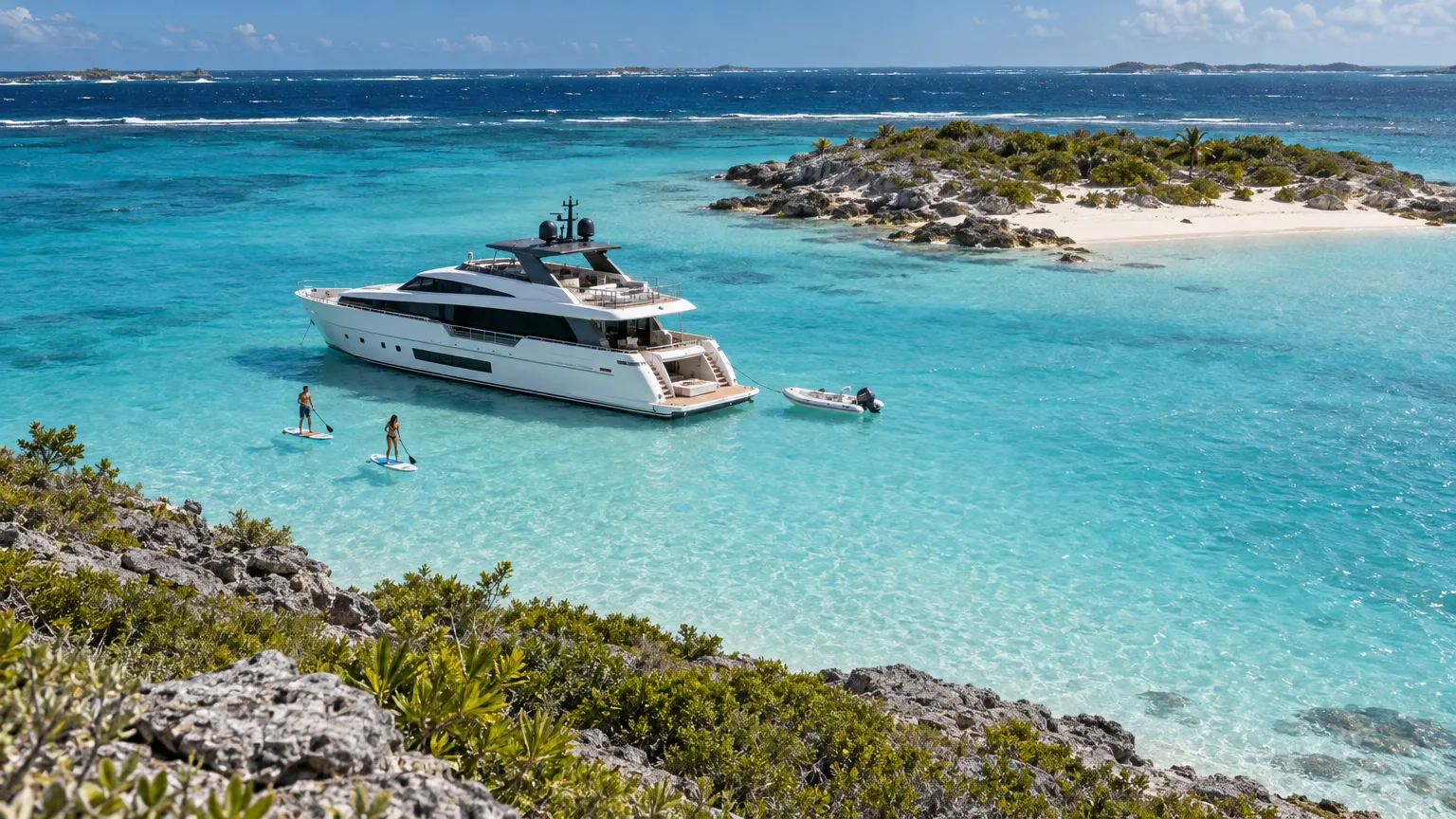
In the Virgin Islands a new anchorage is an hour or two away every day. The Bahamas trade that for long runs of empty sandbars and the clear shallows of the Exumas. In the Leewards you can pair St. Martin’s restaurants with St. Barts, and the Grenadines, in the Windwards, are the quietest of the four. The Caribbean destinations page compares the island groups and searches the crewed yachts in each.
Most crewed yachts price their Caribbean high season from November through April. Hurricane season is June 1 to November 30 (NOAA). Yachts still charter through the summer and fall, and the captain watches the forecast and changes the route if a storm is coming.
How do you book a crewed yacht charter?
You book a crewed yacht charter through a charter broker or the yacht’s central agency. The owner pays the broker’s commission out of the published rate, so using one doesn’t raise your price (CYBA Inclusive Agreement, Clause 7). Our explainer on how a charter broker works covers who pays whom.
The booking itself follows the same few steps on almost every yacht:
- Settle the basics. Your group size, your dates and the island group you have in mind.
- Get a shortlist. A broker matches yachts that are free that week, with crew profiles and sample menus.
- Hold the yacht. A signed contract and a deposit secure the week.
- Fill in the preference sheet. Food, drinks, allergies, the pace you want and anything you’re celebrating.
- Pay the balance. On plus-expenses yachts the APA goes with it, before you board.
If you’re deciding who to book through, our guide to choosing the best charter broker lists the questions to ask.
The bottom line
A crewed yacht charter is a private yacht with its captain and chef for the week. Its quote is easiest to read as one total: the rate, the APA if the yacht charges one, the island’s taxes and the crew tip. Once you know your group size, your dates and the islands you have in mind, browse crewed yachts at Vital Charters and we’ll shortlist the ones that fit.
Frequently Asked Questions
Do you need sailing experience for a crewed yacht charter?
No. The captain is licensed to run the yacht, and the crew handles the sailing, the anchoring and the tender runs ashore. Guests who’d like to learn can help on deck or take the wheel for a while, but nobody has to.
Can two people book a crewed yacht charter?
Yes. Some yachts are sized for small groups: 25 of the crewed yachts listing the Caribbean or Bahamas take four guests or fewer (Vital Charters listings analysis, October 2026). Rates are quoted for the whole yacht, though some catamarans publish a lower rate for fewer guests, so ask for the two-guest price.
Can children come on a crewed charter?
Yes. Of the 81 crewed yachts listing the Caribbean or Bahamas that state a child policy, 51 ask only that children be water safe or strong swimmers, and 17 set a minimum age (Vital Charters listings analysis, October 2026). Ask for life jackets in your children’s sizes when you book.
Who decides the itinerary on a crewed charter?
You do, with the captain. You choose the islands and the pace; the captain plans each day’s route and anchorage around the wind and the sea, and changes the plan if a swell makes a spot uncomfortable or unsafe.
Can the chef cater to allergies and special diets?
Yes. The preference sheet you send before the trip asks about allergies, diets and the food you love, and the chef provisions and plans the menus from it. Tell your broker about a serious allergy early, so the yacht can confirm the chef can manage it.
Your yacht, your crew, your week
Tell us your group size, dates and the islands you have in mind, and we’ll shortlist crewed yachts that fit, with the full price of each week spelled out.