
All-Inclusive Charter vs Bareboat: What Each Quote Actually Covers (2026)
A four-cabin all-inclusive charter runs a $32,000 median week in high season, from 152 current rates. See the six cost lines a bareboat quote leaves to you.

Last Updated: September 5, 2026 | Originally Published: March 16, 2026
Comparing an all-inclusive charter quote against a bareboat quote is the most common pricing mistake we see. The two numbers don’t describe the same amount of holiday. One is the price of a week. The other is the price of a boat, and everything else gets added later, by you.
This guide prices the crewed side exactly, from current listings. On the other side it does something more useful than quoting a rate we have no business quoting. It sets out every line that moves from the yacht’s ledger onto yours. If you want the wider picture first, our guide to how charter costs break down covers the whole structure.
What does an all-inclusive charter cost a week in 2026?
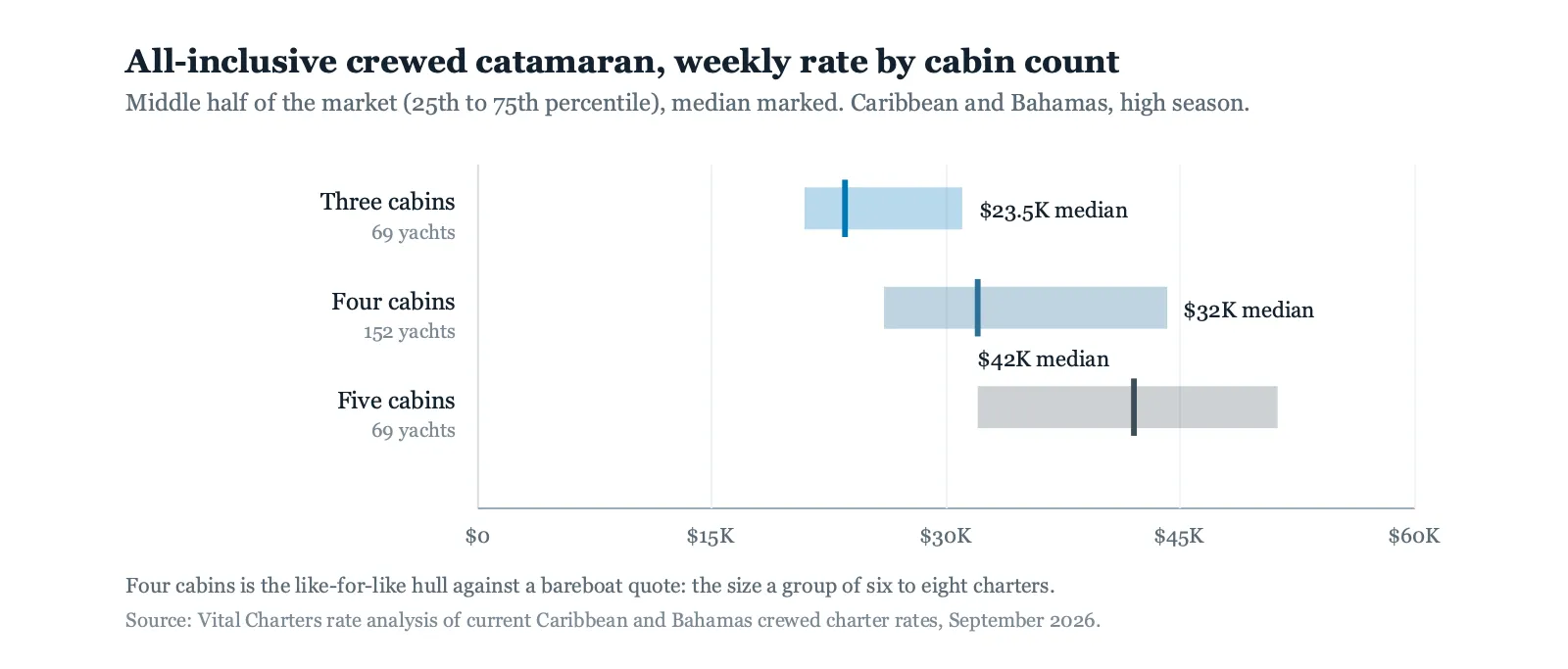
A four-cabin all-inclusive crewed catamaran has a median rate of $32,000 a week. The middle half falls between $26,000 and $44,125. That comes from 152 current Caribbean and Bahamas rates with an unexpired season, read in September 2026 (Vital Charters rate analysis).
Four cabins is a deliberate choice of hull. It’s the size a group of six to eight charters. It’s also the boat a bareboat comparison would put beside it, so both sides of this page describe the same amount of yacht. Our guide to crewed catamaran charters covers the other sizes.
Narrowing to the British Virgin Islands changes almost nothing. That’s 136 four-cabin catamarans at the same $32,000 median, with a middle half of $26,875 to $44,125. The BVI is where most Caribbean charters start, and where the crewed and bareboat fleets sit closest together. Region-wide figures live in our Caribbean charter rates guide.
The Bahamas looks similar at a $31,000 median. That’s only nine yachts, though, and too thin a base to quote as a market rate. Treat it as a hint.
View data table
| Cabins | Yachts | 25th percentile | Median week | 75th percentile |
|---|---|---|---|---|
| Three | 69 | $20,900 | $23,500 | $31,000 |
| Four | 152 | $26,000 | $32,000 | $44,125 |
| Five | 69 | $32,000 | $42,000 | $51,194 |
Source: Vital Charters rate analysis of current Caribbean and Bahamas crewed charter rates, September 2026. All-inclusive catamarans with an unexpired high-season rate; the crew gratuity is not included.
Why aren’t the two quotes comparable numbers?
Because they answer different questions. Setting them side by side and reading the difference as a saving is a category error, not a bargain.
An all-inclusive rate is a defined contract term, not a marketing phrase. Our guide to what all-inclusive includes works through the governing clause line by line.
An all-inclusive Caribbean crewed charter is governed by the CYBA Inclusive Charter Agreement. Its Clause 2 places crew, meals, the standard bar, cruising fuel, cruising taxes and permits, and mooring fees inside the charter fee. Its nine stated exclusions are led by the crew gratuity, at a customary rate of 15 to 20 percent.
A bareboat agreement prices the vessel and its insurance. Food, drink, fuel, moorings, permits, park fees and the damage waiver are yours to arrange and yours to pay. None of them appear on the quote you compared. The MYBA and CYBA contract terms differ again on plus-expenses yachts.
There’s one more difference that pricing pages skip. On a bareboat charter you’re the skipper. The qualification, the weather calls, the anchoring and the liability are yours. That’s the product difference, and the money follows from it.
What moves onto your ledger on a bareboat week?
Six categories of cost move from the yacht’s side of the contract to yours. A seventh disappears.
| Line | All-inclusive crewed week | Bareboat week |
|---|---|---|
| Food and drink for the week | Inside the rate, provisioned to your preference sheet | Yours to buy, carry and stow |
| Fuel for normal cruising | Inside the rate | Yours, metered at return |
| Moorings and dockage | Inside the rate (CYBA Clause 2) | Yours, paid nightly |
| Cruising permit and arrival levy | Covered by the rate in the vast majority of cases | Yours, at the customs counter |
| Marine park fees | Covered by the rate in the vast majority of cases | Yours, at each park |
| Damage waiver or security deposit | None | Yours, held against the hull |
| Crew gratuity | 15 to 20 percent, customary | None, because there’s no crew |
The last row is the one people forget. A crewed week carries a gratuity that a bareboat week doesn’t. On a $32,000 charter that’s $4,800 to $6,400, and it belongs in the comparison. It’s also the only routine extra on that side, against six on the other. Our guide to the crew gratuity custom covers how and when it’s paid.
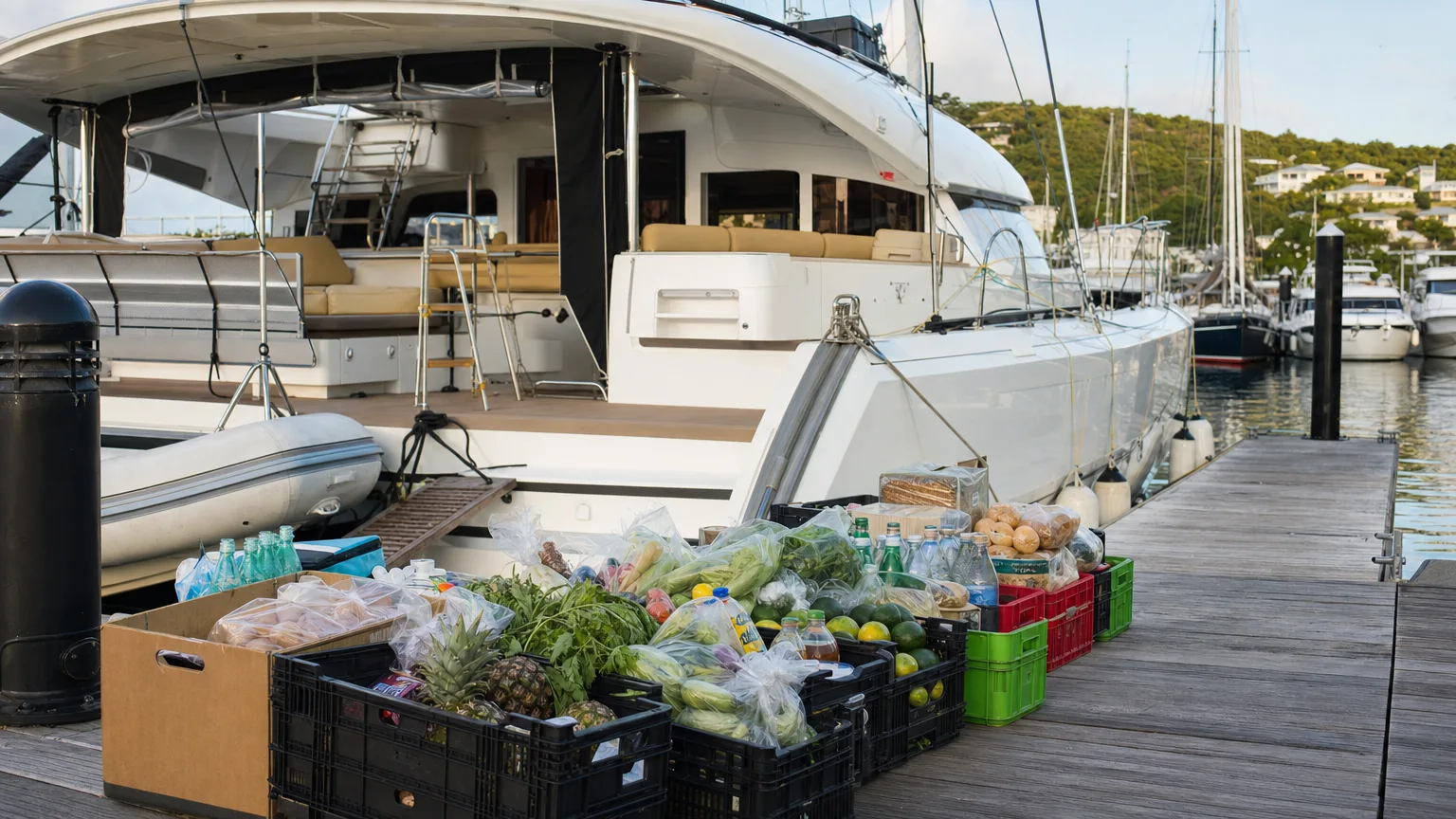
We won’t publish a bareboat base rate. We broker crewed charters, so we hold current rates for crewed yachts and none for bareboat. A figure we can’t verify has no business on a page about pricing honesty. For scale only, one published survey puts rates across the whole market at roughly $10,000 a week at the catamaran end, rising to $150,000 for large motor yachts (Fortune Business Insights, 2026). See our answer to: What’s the Difference Between a Bareboat, Skippered, and Crewed Catamaran Charter? That spans both products and both seasons, so treat it as context.
Which government charges do you pay yourself?
On a bareboat week, all of them. On an all-inclusive week the boat handles them in the vast majority of cases, which is the practical difference rather than the amounts.
The amounts are set by the island and published in law. Who hands the money over is set by your contract.
What lands on a Caribbean charter invoice in 2026
The island sets the amounts: 14 percent in Bahamas taxes, up to $16 per guest per day in BVI cruising fees, nothing per guest in the USVI. The contract sets who pays: all-inclusive rates cover permits, park fees and levies in the vast majority of cases; charter taxes and the 15 to 20 percent gratuity are always yours.
| Line item | Typical amount | Who sets it | Source |
|---|---|---|---|
| APA (Advance Provisioning Allowance) | None mandatory on all-inclusive catamarans (about 2 percent of rates state around 5 percent). Plus-expenses charters add an APA, typically 30 to 35 percent of the base rate, intended to cover every running fee except government taxes, refunded where unspent | The charter contract; mechanics per MYBA | MYBA, Information for Charter Yacht Captains and Crew |
| Government charter taxes | 0 to 14 percent of the charter fee by destination; the Bahamas is highest at 10 percent VAT plus a 4 percent charter tax (per-destination figures in the destination blocks) | Each territory’s government | S.I. No. 57 of 2025 (Bahamas example) |
| Marine park fees | Where you cruise them: EC$15 per guest per day at the Tobago Cays, $12.73 per extra guest per day in the Exuma park, $3 at the BVI’s Baths | TCMP; Bahamas National Trust; BVI National Parks Trust | TCMP fee schedule, effective January 1, 2023 |
| Crew gratuity | Customarily 15 to 20 percent of the charter fee in the Caribbean crewed fleet, the band CYBA’s Inclusive Agreement (Clause 2.B) calls the customary rate; MYBA’s 2026 guidelines publish no percentage, and both leave it at your discretion | Custom, written into the CYBA form | CYBA Inclusive Agreement, Clause 2.B (2020) |
Fees verified September 2026.
One BVI detail is worth more than it first appears, and it cuts the opposite way to what people assume.
The BVI cruising permit is charged per guest per day, and the rate is set by where the yacht is based rather than by who skippers it. Bareboat fleets in the territory are overwhelmingly BVI-based, so they usually attract the lower of the two published rates. A $10 arrival levy is collected per guest either way.
Full per-destination figures and their statutes sit in our Caribbean and Bahamas charter taxes registry. Our breakdown of government versus operator charges sorts every line by who set it.
How much does season move the price?
Less than almost anyone expects on the crewed side. Of 146 four-cabin all-inclusive catamarans that quote both a high-season and a low-season rate, 111 quote the identical number in both. Thirty-one charge more in high season and four charge more in low. The median seasonal premium is zero (Vital Charters rate analysis, September 2026).
That is a genuinely useful finding, because it kills a common negotiating assumption. Three quarters of this fleet publish one rate for the year. Moving your dates to save money mostly doesn’t work on a crewed catamaran, and the yachts that do discount are a minority you have to go looking for.
Christmas and New Year are the real exception. The handful of catamarans publishing a separate festive rate quote a median of $45,297, though only four do so, which is too thin to call a market rate.
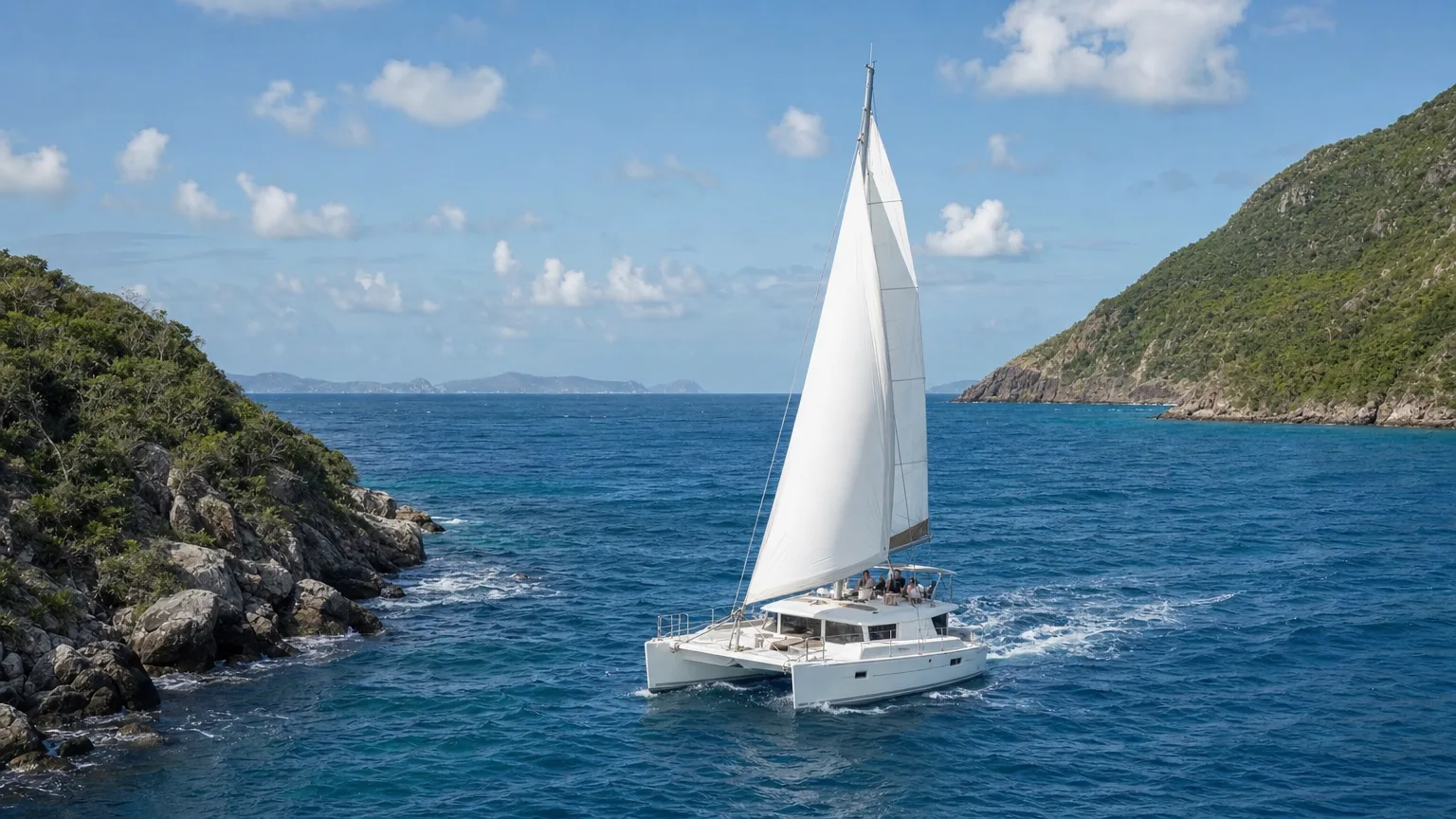
Government charges don’t move with the calendar at all. The BVI permit costs the same per guest per day in September as in February.
Who does an all-inclusive charter suit, and who should book bareboat?
The honest split is about competence and appetite, not budget.
Bareboat suits an experienced skipper with the certification and recent miles to satisfy the operator. It suits a group happy to cook and provision. Above all it suits people for whom the sailing is the point of the trip. If that’s you, a bareboat week is a genuinely different and often better holiday.
An all-inclusive charter suits groups who want the week handled. Someone aboard knows which bay is tenable in a north swell. Meals appear without a supermarket run in a foreign port. The number is agreed before departure. It also suits mixed groups, because a crew absorbs the gap between the one person who wanted to sail and the five who wanted to swim. Our BVI crewed charter guide covers how a week actually runs.
If the budget only reaches bareboat, take the bareboat week. The mistake isn’t choosing the cheaper product. It’s choosing it while believing you’ve bought the more expensive one for less.
The bottom line
The number to compare is never the quote. It’s the quote plus everything the quote leaves to you, and those two lists are different lengths.
On the crewed side we can be precise, because these are current listed rates. An all-inclusive charter for a four-cabin catamaran runs a median $32,000 in high season, with one customary extra on top and almost no seasonal movement. On the bareboat side the base rate is the operator’s to quote. The six add-on categories are yours to estimate, with the government charges published in law and everything else varying with how you shop and how far you cruise.
Want the crewed side priced against your actual dates and group? Start a yacht search at Vital Charters, or tell us what you’re weighing up. We’ll lay both lists out side by side, with the source next to every figure.
Frequently asked questions
Is a bareboat charter cheaper than an all-inclusive charter?
The quote is lower, because it covers less. A bareboat quote prices the vessel. An all-inclusive quote prices the week, including crew, all meals, the bar, fuel, moorings and permits. Whether the finished trip costs less depends on six categories the bareboat quote doesn’t mention, and on whether you’d otherwise have paid a crew gratuity of 15 to 20 percent.
How much does a bareboat catamaran cost per week in the Caribbean?
There’s no reliable public figure, and we won’t invent one: we broker crewed charters and hold no bareboat rates. What we can tell you is what to add to whatever an operator quotes you. Provisioning, fuel, moorings, the cruising permit and arrival levy, marine park fees, and a damage waiver are all yours on a bareboat week, and none of them appear on that first number.
What does a four-cabin crewed catamaran cost per week?
A median of $32,000 in high season, with the middle half between $26,000 and $44,125, across 152 current all-inclusive rates for the Caribbean and Bahamas (Vital Charters rate analysis, September 2026). In the British Virgin Islands the median is the same $32,000 across 136 yachts.
Do I pay the cruising permit myself on a bareboat charter?
Yes. You clear in yourself and pay at the counter. On an all-inclusive crewed charter the rate covers the permit in the vast majority of cases, and the crew files the paperwork. The BVI charges per guest per day, at a rate set by where the yacht is based, plus a $10 arrival levy per guest.
Is there a gratuity on a bareboat charter?
No. There’s no crew, so there’s no gratuity. That’s the one line running in bareboat’s favor. On a $32,000 crewed week it’s worth $4,800 to $6,400 at the customary 15 to 20 percent.
Does the Bahamian 14 percent apply to both charter types?
Yes. The 14 percent is 10 percent VAT plus a 4 percent charter tax on the charter fee, collected together since January 2026. It sits outside the rate on both contract types, so it’s charged on whatever the fee happens to be.
Can I hire a skipper for a bareboat charter?
Most operators will place one aboard for a daily fee, which is worth pricing before you assume bareboat is cheaper. A skippered bareboat sits between the two products. You still provision, fuel and pay moorings yourself, but the qualification requirement and the weather calls stop being yours.
See what $32,000 a week actually covers.
Tell us your dates and group size and we’ll come back with matched crewed catamarans, the rate, and every line that sits outside it.