

The global yacht charter market hit $8.8 billion in 2024 and is projected to reach $12.1 billion by 2030 (Research and Markets, 2025). That growth means more first-time charterers are entering the Caribbean market every year — and most of them don’t know where to start.
If you’re figuring out how to plan a yacht charter for the first time, you’re not alone. About 40% of all charter clients are booking their first trip. The Caribbean remains the world’s most popular charter region, but the sheer number of crewed charter destinations and yacht options can feel overwhelming without a broker guiding you through it.
This guide covers everything I tell my own clients — from budgeting and yacht selection to booking timelines and destination picks. It’s the same process I’ve used to plan hundreds of Caribbean charters, distilled into a single resource you can follow step by step.
TL;DR: Planning a Caribbean yacht charter takes 6-9 months of lead time and costs $20,000-$100,000+ per week depending on yacht size and type. Start by setting your budget (including 25-35% APA on top of the base fee if not all-inclusive), choose between a catamaran or motor yacht, pick your destination based on group interests, and book early — 75% of charters are reserved 4-12 months in advance (Boataround, 2025).
What Does a Caribbean Yacht Charter Actually Cost?
Crewed yacht charters in the Caribbean range from $20,000 to over $100,000 per week, with per-person costs starting around $2,200 per person for a group of six on a sailing catamaran. That base fee is just the starting point — you’ll need to budget for APA, gratuity, and travel to reach your true all-in number.
The base charter fee covers the yacht and crew. But here’s what catches first-timers off guard: the Advance Provisioning Allowance (APA) adds another 25-35% on top. For a $30,000/week charter, that’s an extra $7,500-$10,500 covering food, fuel, docking fees, and drinks (HELM, 2025). Motor yachts burn more fuel, so their APA trends toward 30-50%.
Then there’s crew gratuity. In the Caribbean, 15-20% of the charter fee is standard, with 20% being the norm in the BVI and Bahamas. On that same $30,000 charter, expect to tip $4,500-$6,000. For a deeper breakdown of charter rates, APA, and add-ons, we’ve put together a dedicated cost guide.
Our observation: Most online cost calculators underestimate the real total by 15-40%. That math surprises people, but it’s never led to a disappointed client.
Don’t let the numbers scare you off. When you split a $30,000 charter among 8 guests, you’re looking at roughly $3,750 per person for a week — less than many all-inclusive resort vacations. And you won’t find hidden fees if you understand the MYBA contract structure upfront.
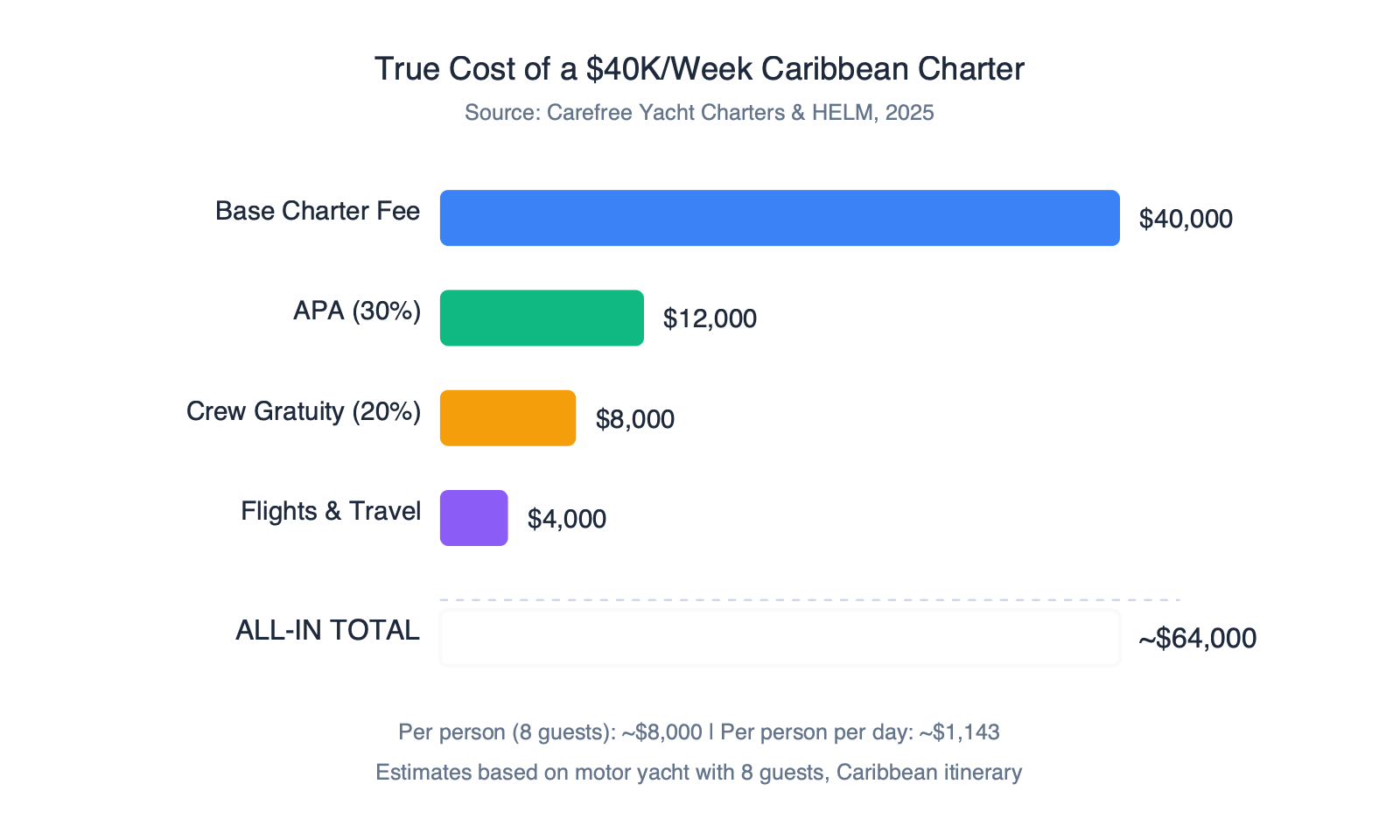
View data table
| Cost Component | Amount | % of Base |
|---|---|---|
| Base Charter Fee | $40,000 | 100% |
| APA (Advance Provisioning Allowance) | $12,000 | 30% |
| Crew Gratuity | $8,000 | 20% |
| Flights & Travel | $4,000 | 10% |
| All-In Total | ~$64,000 | 160% |
Per person (8 guests): ~$8,000. Per person per day: ~$1,143.
How Do You Choose the Right Yacht for Your Group?
Motor yachts generate roughly 87-90% of all charter revenue globally, but catamarans are the fastest-growing segment in the Caribbean charter market (Dream Yacht Sales, 2026). Your choice comes down to three factors: group size, budget, and what kind of experience you want on the water.
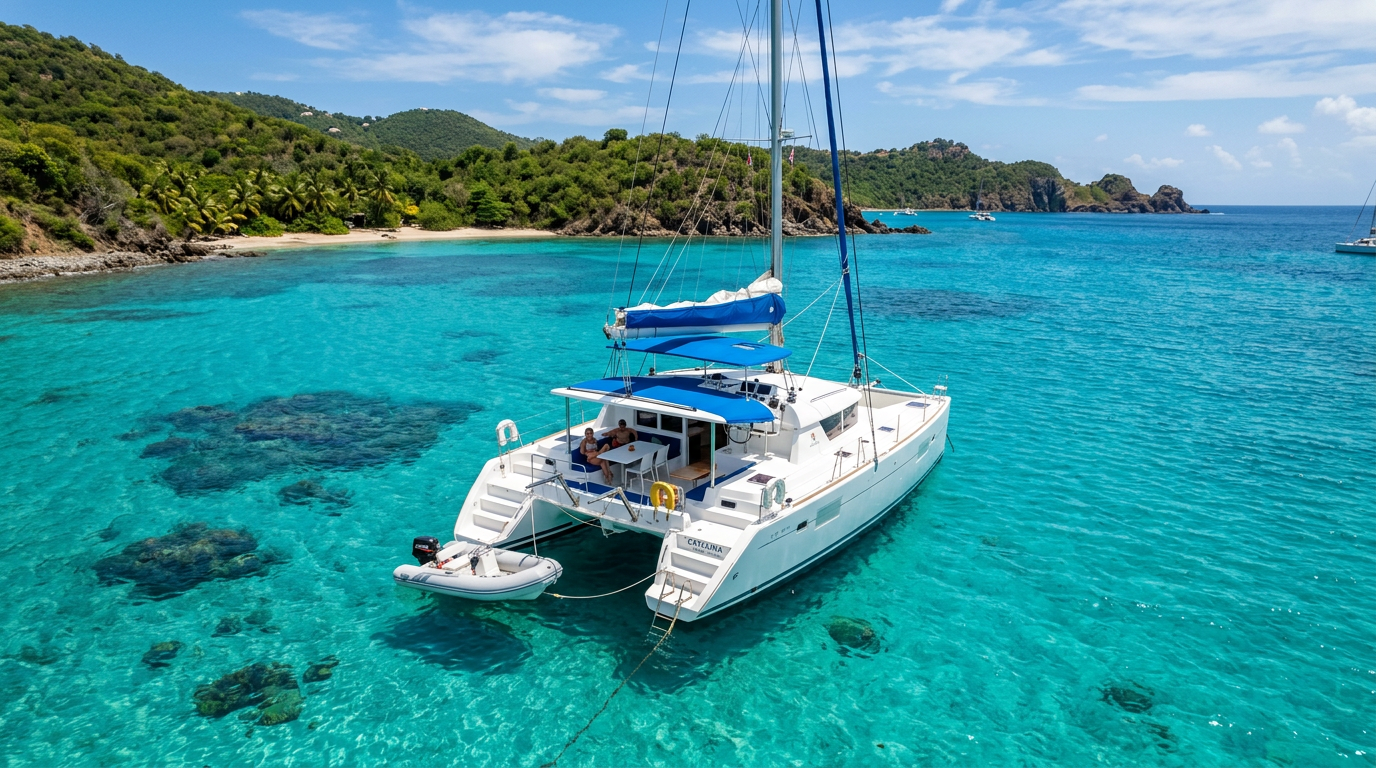
Here’s how the three main yacht types compare for Caribbean charters:
| Yacht Type | Best For | Capacity | Weekly Rate | APA Range |
|---|---|---|---|---|
| Sailing Catamaran | Families, groups of 6-10 | 6-10 guests | $20K-$35K | 20-25% |
| Motor Yacht | Luxury seekers, island-hoppers | 8-12 guests | $50K-$100K+ | 30-50% |
| Sailing Monohull | Couples, purists, small groups | 4-6 guests | $15K-$25K | 20-25% |
Sailing Catamarans
Best for families and groups of 6-10. They’re stable (no heeling), have wide deck space, and shallow drafts let you anchor close to beaches. Weekly rates start around $20,000-$35,000 for a 45-50 footer. If you’re deciding between a catamaran or motor yacht in the Caribbean, catamarans win on value per square foot.
Motor Yachts
More speed, more range, more luxury — and more cost. A 70-foot motor yacht runs $50,000-$100,000+ per week. You’ll cover more ground but burn more fuel (reflected in higher APA). Great for groups that want to island-hop quickly or prioritize onboard amenities like jacuzzis and water toys.
Sailing Monohulls
The purist’s choice. More intimate, with a true sailing experience. Better for couples or small groups of 4-6. They’re typically the most affordable option, starting around $15,000-$25,000/week for crewed charters.
Under international maritime law, charter yachts are capped at 12 guests maximum (YachtCharterFleet, 2025). Caribbean catamarans are commonly set up for 6-10, while monohulls handle 4-8 comfortably. Matching your group size to the right yacht avoids paying for space you don’t need — or cramping everyone into tight quarters.
Want to compare specific builders? Our guide to the most popular charter yacht brands breaks down Lagoon, Bali, Fountaine Pajot, Sunreef, and Leopard side by side.
When Is the Best Time to Charter in the Caribbean?
Caribbean peak season runs December through March, with rates surging 20-30% during the holiday window from Christmas through late January (WI Yachts, 2026). Shoulder season — November and April through May — can save you up to 50% compared to peak rates.
So why does everyone pile into peak season? Fair weather. December through April brings steady 15-20 knot trade winds, minimal rain, and comfortable 80°F days. Hurricane season technically runs June through November, though the real risk window is August through October.
Here’s a month-by-month breakdown for yacht charter planning:
Peak Season (December-April)
Best weather, highest prices, biggest fleet selection. Book 9-12 months ahead for holiday weeks. The BVI, St. Barths, and Bahamas are packed during this stretch. If you want prime dates, early planning isn’t optional — it’s necessary.
Shoulder Season (November, May-June)
Solid weather with significant discounts. You’ll have more yacht options since demand drops. Great for budget-conscious charterers who don’t mind slightly warmer temps and occasional afternoon showers. The price difference between luxury catamaran tiers narrows during these months.
Off Season (July-October)
Lowest prices, but limited availability as many yachts reposition to the Mediterranean. Weather is unpredictable. Some experienced charterers specifically target early July for deep discounts before the peak hurricane months.
What most reviews miss: Shoulder season in the southern Caribbean (Grenada, St. Vincent, Trinidad) is fundamentally different from shoulder season in the northern islands. The Grenadines sit below the hurricane belt, which means you can charter there comfortably into June and July when the BVI fleet has already relocated. I’ve sent clients to the Windwards in late June and they had pristine conditions at 40% off peak rates.
Which Caribbean Charter Destinations Should You Consider?
The BVI hosts approximately 40% of the Caribbean’s professional charter fleet across 60 islands, with over 685 vessels — more than half under three years old (Vital Charters, 2026). That concentration makes it the easiest destination for first-time charterers because of short sailing distances between anchorages and deep infrastructure.
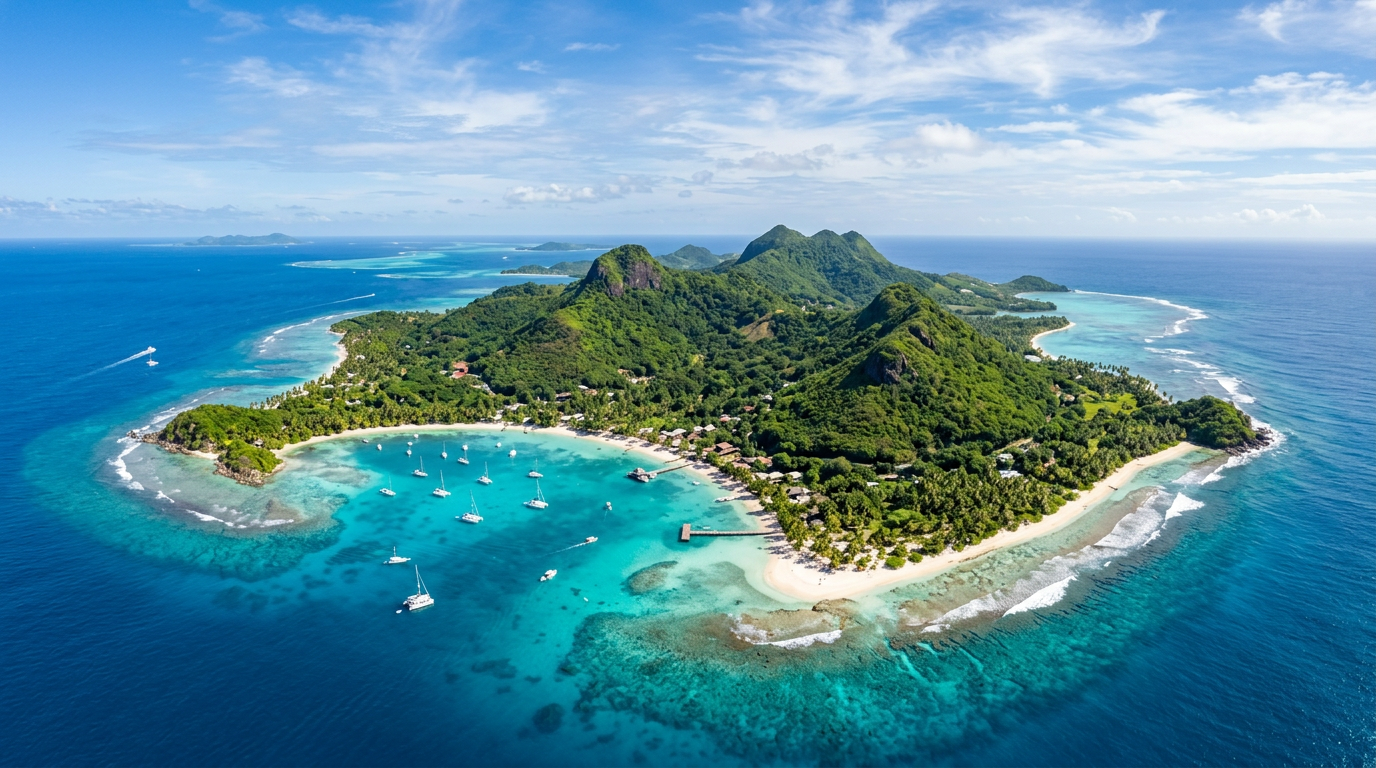
Your destination shapes the entire charter experience. Here’s what each major region offers:
| Destination | Best For | Sailing Difficulty | Price Level | Best Season |
|---|---|---|---|---|
| BVI | First-timers, families | Easy (protected waters) | $$$$ | Dec-Apr |
| USVI | US travelers (no passport) | Easy-Moderate | $$$ | Dec-Apr |
| Bahamas (Exumas) | Motor yachts, exclusivity | Moderate (longer runs) | $$$$ | Nov-May |
| Grenadines | Adventurers, budget-savvy | Moderate-Advanced | $$ | Dec-Jun |
British Virgin Islands (BVI)
The “sailing capital of the Caribbean.” Short island hops (most under 2 hours), protected waters, world-class snorkeling at The Baths, and the most developed charter infrastructure anywhere. Perfect for first-timers. Read our complete BVI charter guide for anchorage-by-anchorage itineraries.
US Virgin Islands (USVI)
No passport needed for US citizens. St. Thomas offers direct flights from most major US cities. St. John’s national park covers two-thirds of the island. Many charterers combine BVI and USVI into one trip — check our BVI vs. USVI comparison to decide which suits your group.
Bahamas (Exumas)
Shallow turquoise banks, swimming pigs at Big Major Cay, and the Exuma Cays Land and Sea Park. Less sailing, more anchoring. Motor yachts shine here because distances between highlights are longer. The Exumas feel more remote and exclusive than the BVI.
Grenadines
For experienced charterers wanting something less commercial. Tobago Cays, Mustique, and Bequia offer unspoiled anchorages. Longer passages between islands mean more open-water sailing. It’s the Caribbean’s best-kept secret for adventurous groups.
What’s Actually Included in a Crewed Charter Fee?
Crewed charters account for 80.2% of all global yacht charter revenue, with weekly bookings representing 55% of all reservations (Grand View Research, 2024). The popularity of crewed charters comes down to one thing: everything is handled for you.
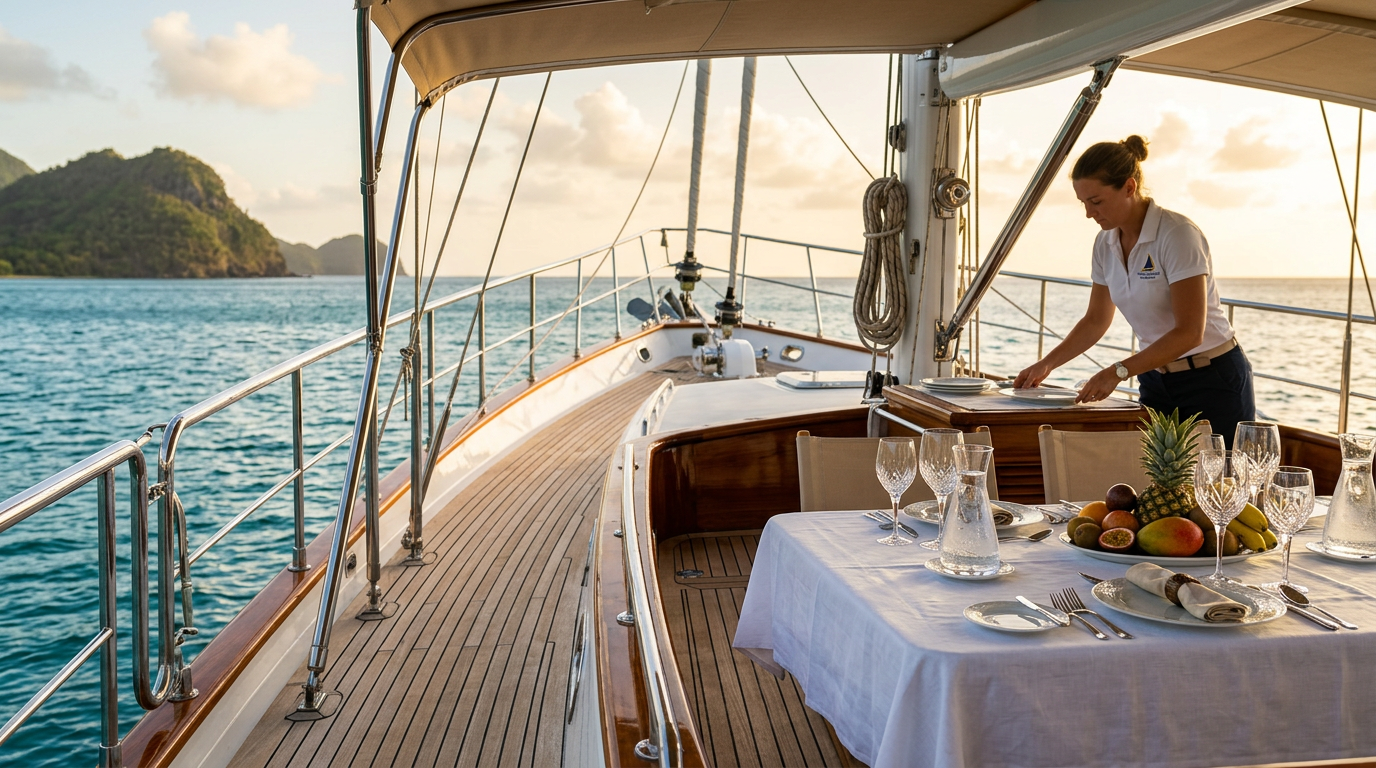
A standard MYBA crewed charter contract includes:
- The yacht itself — all cabins, common areas, water toys, and equipment
- Professional crew — captain, chef, steward(ess), and sometimes a mate or engineer depending on yacht size
- Three gourmet meals daily — your chef customizes menus to dietary preferences and can accommodate allergies
- Standard bar — house wines, beer, spirits, soft drinks, and mixers (premium bottles are extra)
- Water toys — paddleboards, kayaks, snorkel gear, fishing equipment, and often a tender for shore trips
- Itinerary planning — your captain knows the anchorages, conditions, and hidden spots
What’s NOT included in the MYBA contract (covered by APA): fuel, dockage fees, premium provisions, custom wine selections, diving excursions, and national park permits. For the full breakdown of what the MYBA contract covers and what it doesn’t, we’ve laid it all out in a separate guide. The All-Inclusive contract commonly found in the Caribbean does not have a separate APA, it is truly all-inclusive.
Ever wonder why a crewed charter beats a luxury resort for families? It’s the flexibility. No fixed restaurant times, no fighting for pool chairs, no packing and unpacking between islands. Your private yacht becomes your floating hotel, and the crew handles everything while you decide what each day looks like.
How Far in Advance Should You Book a Charter?
Seventy-five percent of yacht charter bookings are made 4-12 months in advance, with 6-9 months being the most common lead time. Last-minute bookings under one month account for just 1-2% of all reservations (Boataround, 2025). If you’re planning a Caribbean yacht charter for the holidays, you’re already competing against repeat clients who rebook annually.
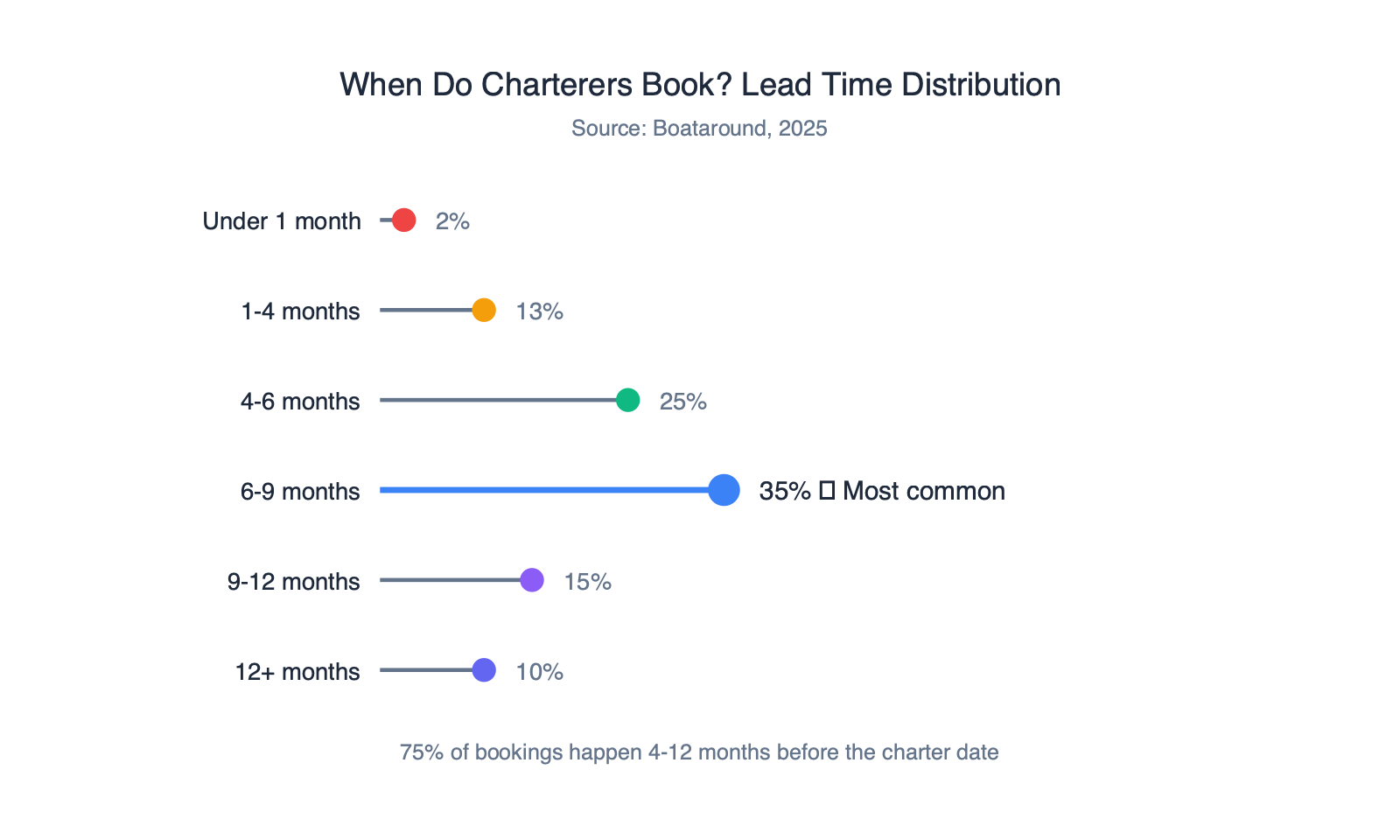
View data table
| Lead Time | % of Bookings |
|---|---|
| Under 1 month | 2% |
| 1-4 months | 13% |
| 4-6 months | 25% |
| 6-9 months | 35% |
| 9-12 months | 15% |
| 12+ months | 10% |
Source: Boataround, 2025
Here’s my recommended booking timeline:
12+ Months Out: Holiday Weeks
Christmas, New Year’s, and spring break weeks in the BVI sell out fast. Repeat clients often rebook for the following year before they’ve even finished their current charter. If you want a specific yacht during peak holiday dates, a year ahead isn’t too early.
6-9 Months Out: Peak Season
The sweet spot for most Caribbean charters. You’ll have strong yacht selection without the last-minute scramble. This is when I tell most first-time clients to lock in their booking.
3-6 Months Out: Shoulder Season
Shoulder season dates (November, April-May) are more forgiving. You can book 3-6 months out and still get excellent options. Prices are lower and availability is broader.
Our observation: Here’s something the booking data doesn’t show — the best yachts with the top-rated crews go first, regardless of season. I’ve had clients wait until four months before a February charter and technically find “available” yachts, but the crew quality wasn’t what I’d recommend. Book early to get the yacht and crew combination that’ll make the trip, not just any open boat.
How to Plan a Yacht Charter: Your Complete Checklist
Weekly charters represent 55% of all bookings globally (Grand View Research, 2024), and the most common mistake first-timers make is treating the process like booking a hotel. It isn’t. A yacht charter has moving parts that need attention months before you step aboard.
Use this checklist to stay on track:
6-12 Months Before
- Set your total budget (remember: base fee × 1.5 for all-in cost)
- Decide on destination and dates
- Contact a charter broker — working with a broker costs you nothing (we’re paid by the yacht)
- Review yacht options and shortlist 2-3 favorites
- Sign the charter contract and pay the 50% deposit
3-6 Months Before
- Book flights to your embarkation port
- Submit your preference sheet to the crew (dietary needs, activity interests, celebration details)
- Arrange travel insurance that covers charter cancellation
- Start your packing list — think light, quick-dry fabrics and reef-safe sunscreen
1-3 Months Before
- Pay the remaining 50% balance plus APA
- Confirm provisioning preferences with the chef (wine selections, special requests)
- Book any special excursions (private dive guides, shore tours)
- Check passport expiration — some Caribbean destinations require 6+ months validity
1 Week Before
- Confirm arrival logistics with your broker and crew
- Download offline maps for your destination
- Pack light — yacht storage is limited even on large boats
- Review crew tipping etiquette so you’re prepared for the end of the trip
If the all-inclusive approach appeals to you and you’d rather skip the budgeting complexity, read our breakdown of how all-inclusive yacht charters work — some operators bundle everything into one flat rate.
Why Work With a Charter Broker?
Crewed charters generate 80.2% of all yacht charter revenue globally (Grand View Research, 2024), and the vast majority of those bookings go through brokers. There’s a reason for that — and it has nothing to do with tradition.
A charter broker works for you, not the yacht. We’ve been aboard the vessels, we know the crews personally, and we’ve seen which yachts photograph well but disappoint in person. Our commission comes from the yacht owner — it doesn’t add to your cost. You pay the same rate whether you book direct or through a broker.
What a broker handles that you can’t easily do yourself:
- Yacht vetting — We filter hundreds of options down to the 3-5 that actually match your group, budget, and style
- Contract negotiation — Charter contracts have nuances around cancellation, insurance, and liability that matter
- Crew matching — The crew makes or breaks a charter. We know which captains are great with kids, which chefs specialize in dietary restrictions, and which crews go above and beyond
- Problem solving — If something goes wrong mid-charter (mechanical issues, weather changes, medical needs), your broker is a single call away with backup plans
At Vital Charters, we specialize in Caribbean crewed charters. If you’re ready to start planning or just have questions about the process, reach out to our team and we’ll walk you through it.
Frequently Asked Questions
What is the average cost to charter a yacht in the Caribbean?
Crewed Caribbean charters range from $20,000 to $100,000+ per week. A 45-foot catamaran for 6-8 guests runs $20,000-$35,000/week; a 70-foot motor yacht starts at $50,000+. Add 25-35% for APA and 15-20% for gratuity (Carefree Yacht Charters, 2025).
What is the 10% rule for yachts?
Annual yacht operating costs (maintenance, crew, insurance, docking, fuel) run roughly 10% of the purchase price. A $5 million yacht costs about $500,000/year. That’s why many choose to charter rather than own.
Are there hidden costs in yacht charters?
With a transparent broker and MYBA contract, there shouldn’t be surprises. First-timers are often caught off guard by APA (25-35% of base fee), crew gratuity (15-20%), and delivery fees. A good broker discloses everything upfront.
Where is it cheapest to charter a yacht in the Caribbean?
The Grenadines and southern Caribbean (Grenada, St. Vincent) offer lower rates, especially during May-June shoulder season — up to 50% off peak BVI prices (WI Yachts, 2026). Trade-off: longer passages, fewer onshore amenities.
How big of a yacht do I need for my group?
Maritime law caps charters at 12 guests (YachtCharterFleet, 2025). For comfort: 2-4 guests suit a 40-45 ft monohull; 6-8 guests fit a 45-55 ft catamaran; 8-12 need a 60+ ft motor yacht. Keep one cabin free for bags.
Start Planning Your Caribbean Yacht Charter
Planning a Caribbean yacht charter doesn’t have to be complicated. Set your budget with realistic all-in numbers, pick a destination that matches your group’s personality, book 6-9 months ahead, and let a broker handle the heavy lifting. That formula works whether it’s your first charter or your tenth.
Key takeaways:
- Budget base fee × 1.5 for true all-in cost (including APA, gratuity, and travel)
- Catamarans offer the best value per person for groups of 6-8
- Peak season (December-March) requires 6-12 months advance booking
- The BVI is the easiest first-time destination; the Grenadines are best for savings
- A broker costs you nothing extra and saves you from expensive mistakes
Ready to take the next step? Explore our guide to all-inclusive vs. bareboat pricing to narrow down what style of charter fits your group, or contact our team at Vital Charters to start building your itinerary.
Jason Acosta is the co-founder and principal broker of Vital Charters. He is an avid sailor and yacht charterer. Jason is also a Master Diver and certified ASA 104 sailor.