
Happy Island: Best of the Grenadines
Happy Island is a bar built by hand from discarded conch shells on a reef in Clifton Harbour, Union Island. How charter guests get there, what it’s like, and its verified 2026 status.
Last Updated: September 7, 2026
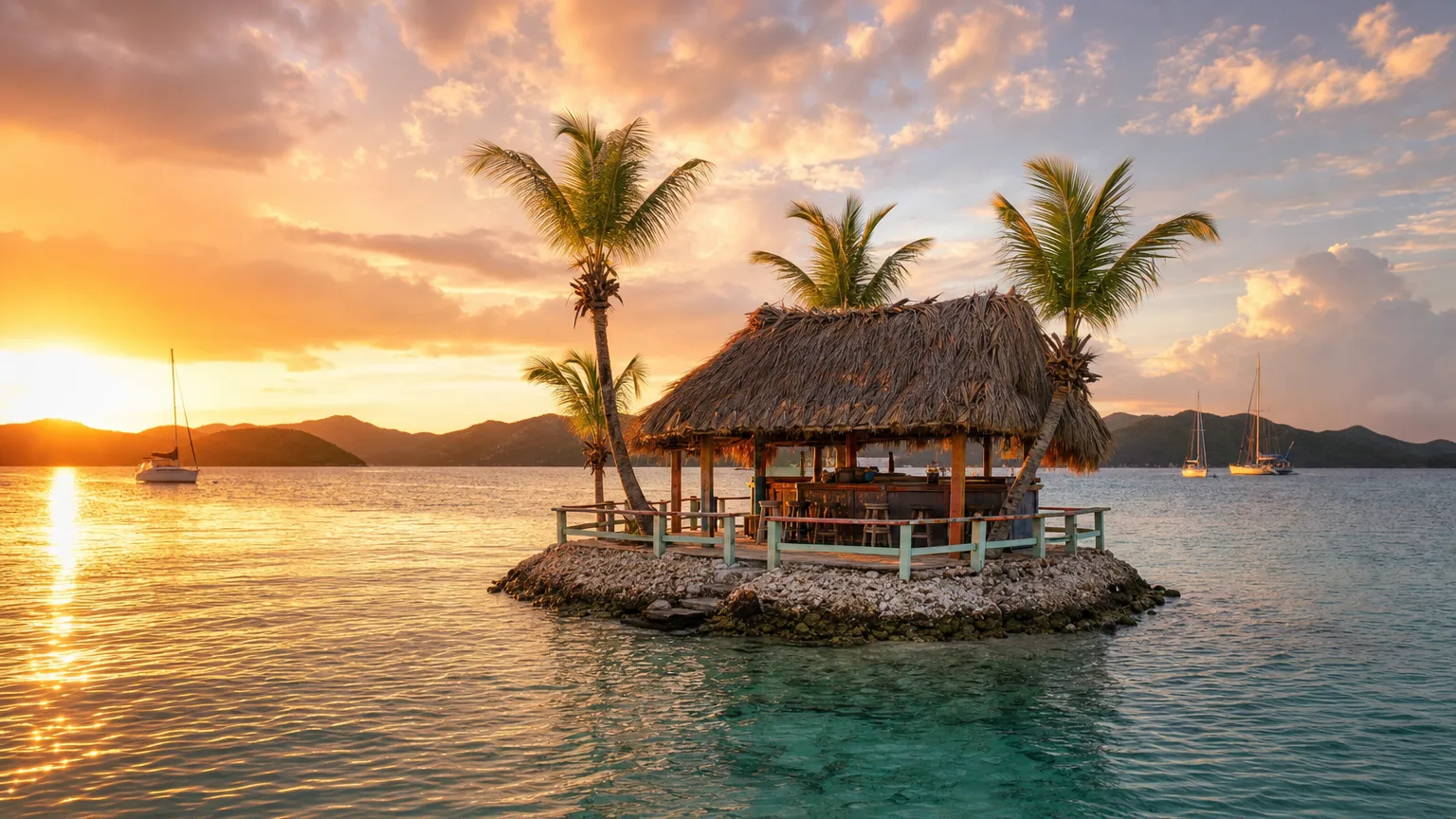
Happy Island Grenadines is a bar one man built by hand out of the conch shells local fishermen threw away, a raised islet on a shallow patch of reef in the middle of Clifton Harbour, with no road to it and no dock beside it. You arrive by boat or you don’t arrive. Google’s business listing puts it at 4.6 stars from 207 reviews. For a crewed yacht charter guest anchored a few hundred feet away in Clifton, it’s the shortest and strangest tender ride of the week.
What Is Happy Island?
Happy Island is a bar standing on an artificial islet in the middle of Clifton Harbour, on the southern coast of Union Island. Atlas Obscura describes it as sitting “just off the shallow coast of Union Island in the Grenadines,” the work of “a local visionary who built the tiny outpost” himself. The whole place is roughly the footprint of a generous patio: a bar, a rail, some seating, a few palms, and water on every side. It isn’t a beach bar. There’s no beach. The structure is the island, and the island is the structure, which is what makes it unlike anything else in the eastern Caribbean. Most famous Caribbean bars are famous for what surrounds them. This one is famous for existing at all!
Happy Island is a bar built on a man-made islet in Clifton Harbour, Union Island, St. Vincent and the Grenadines. Founder Janti Ramage raised the islet by hand from discarded conch shells on a shallow section of reef. It has no road access and no beach, and is reached only by dinghy or water taxi (Atlas Obscura; TravelPulse).
That rarity is why it earns a stop on a Grenadines week. A charter itinerary through the Grenadines charter destinations is already a run of places you can’t drive to. Happy Island is the distilled version of the idea.
Who Built Happy Island, and Why Conch Shells?
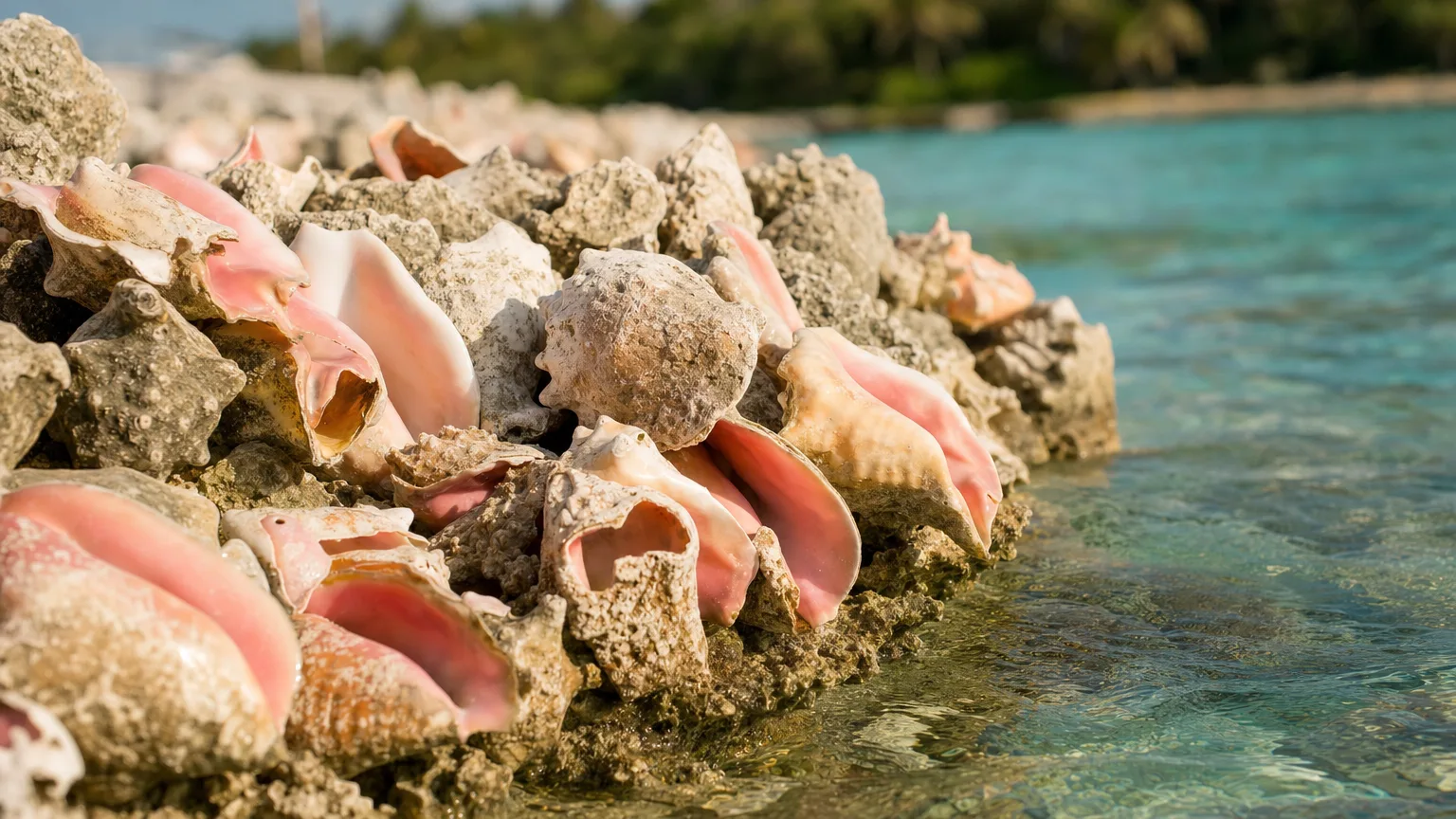
The founder is Janti Ramage, a Union Island man who, according to TravelPulse, was working as an environmental officer when tourism growth in St. Vincent and the Grenadines left him with a specific problem: the large volume of discarded conch shells piling up on the island’s beaches (TravelPulse). Conch (lambi, locally) is a staple. The meat goes to the kitchen. The shells, heavy and beautiful and endless, go somewhere. Ramage’s answer was to move them offshore and stack them, load after load, on a shallow rise in the harbour until the pile broke the surface. Then he kept going, bound the mass together, planted it, and put a bar on top. Visitors still describe the construction the same way a decade and more later: shells and coral rubble, laid up by hand.
There’s a neat environmental logic to it that predates the vocabulary now attached to it. A waste stream got turned into a structure, the structure into a business, the business into the reason a good number of yachts stop at Union Island at all. It’s the kind of thing that shows up in conversations about sustainable yacht charter without ever having set out to be an example of anything.
Where Is Happy Island?
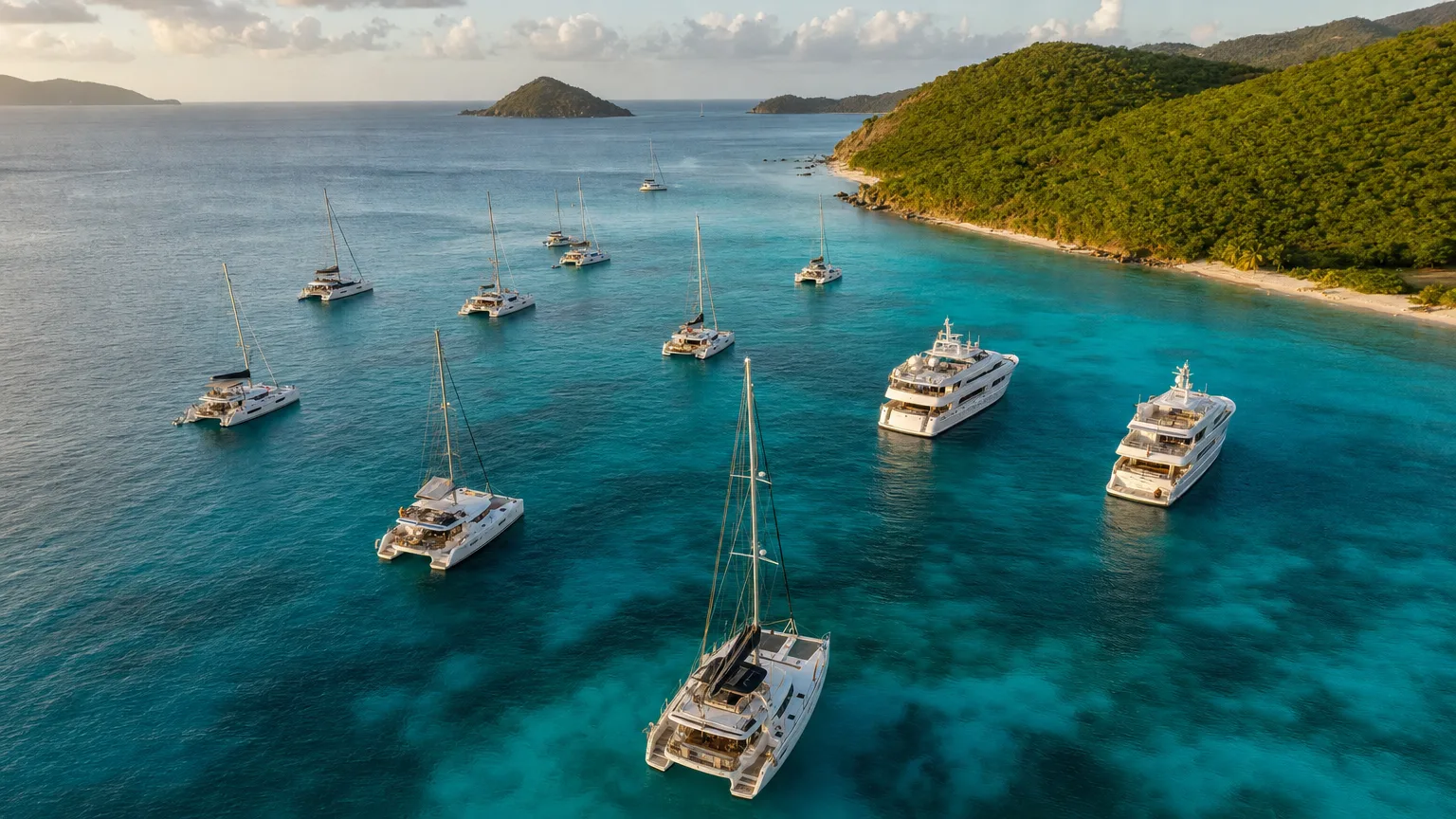
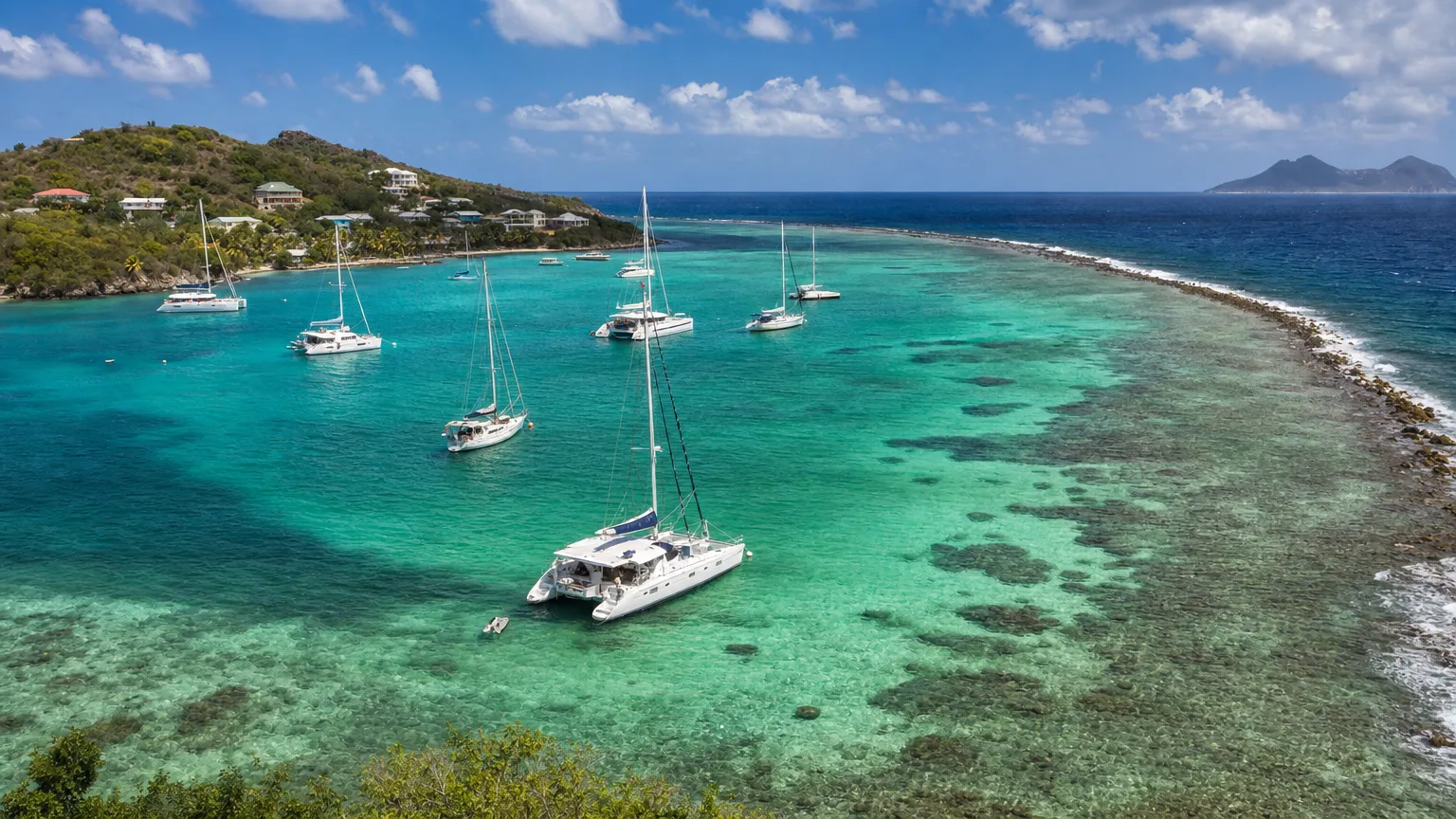
Happy Island sits in Clifton Harbour, Union Island, in the southern Grenadines of St. Vincent and the Grenadines: Google’s listing places it at Clifton Harbour, Clifton, St. Vincent & Grenadines. TravelPulse put it “a little over 300 feet offshore” from Union Island (TravelPulse). From a yacht anchored in the harbour, it’s a short tender ride and nothing more. Worth clearing up, because search engines muddle the two: this is not Aruba. Aruba markets itself as “One Happy Island,” and that nickname dominates the phrase. Happy Island, Grenadines, is a single bar on a shell heap about 575 miles due east of Aruba, very nearly the same latitude, a different country, and an island chain most people reach by boat. Union Island is the southernmost of St. Vincent and the Grenadines’ main inhabited islands, with the private resort islands of Palm Island and Petit St. Vincent lying just east and southeast of it. Clifton is Union’s main harbour and, heading south, the last St. Vincent and the Grenadines port before Carriacou and Grenada, which gives the anchorage a crossroads quality. Boats heading north and boats heading south both pause here. For orientation on a chart: the Tobago Cays sit a short hop north, Mayreau and Salt Whistle Bay just beyond them, and Carriacou lies south across the channel. It’s the kind of geography where the next anchorage is usually visible from the last one, which is much of the pleasure of sailing this chain.
How Do You Get to Happy Island?
By dinghy from your yacht, in about three minutes. That’s the whole answer for a charter guest. The islet is inside the reef in the middle of Clifton Harbour, the anchorage is right there, and the crew runs you across and collects you when you’re done, which is the quiet advantage of arriving this way rather than any other. Everyone else has a harder time of it. Land-based visitors need a water taxi out of Clifton, arranged locally. There’s no ferry, no bridge, no causeway, and no way to walk. The bar’s isolation is not a marketing conceit; it’s a genuine logistical fact, and it’s the reason the place stays small even in high season.
Charter guests reach Happy Island by tender from the Clifton Harbour anchorage, a ride of about three minutes. There is no road, bridge or ferry to the islet, and land-based visitors must arrange a water taxi from Clifton. TravelPulse places the islet a little over 300 feet offshore from Union Island.
This is the category of stop that only really works from a boat, the same logic behind every entry in our guide to hidden Caribbean anchorages reachable only by yacht. You’re not beating the crowd. There isn’t a mechanism for a crowd to get there.
What’s It Actually Like?
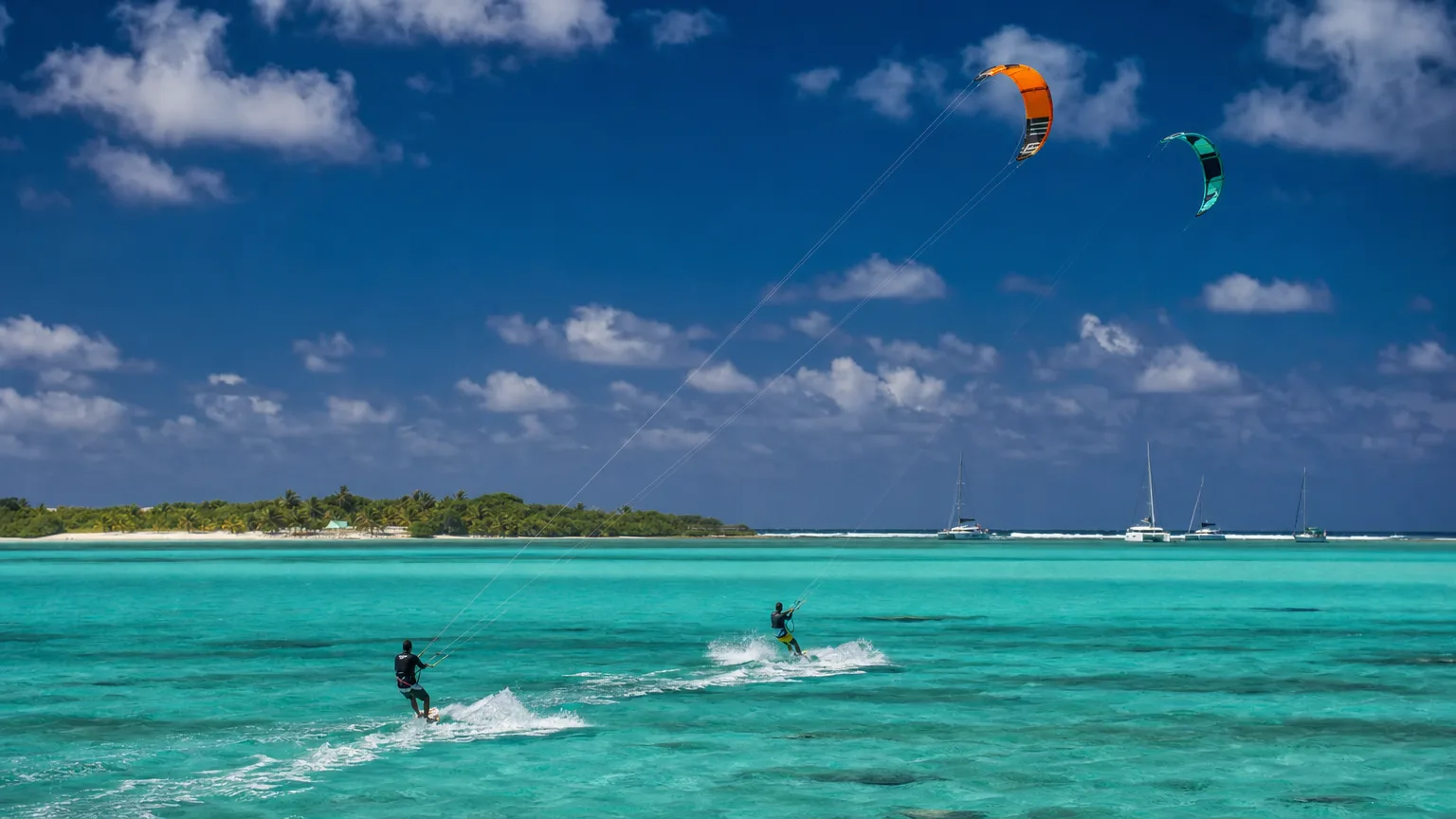
Small, bright, and louder than its size suggests. Reviewers on Tripadvisor describe it as “friendly and welcoming,” with “great rum punch,” “good views,” and a “friendly, laid back atmosphere,” and note it makes a good base to snorkel from (Tripadvisor). The place holds a few dozen people at a squeeze, so when three yachts tender across at once it goes from quiet to full in about ten minutes. The water around the islet is shallow and clear. You’re standing inside the reef line that shelters Clifton Harbour, which Doyle Guides describes as showing “off its brilliant kaleidoscopic colors and patterns as you sail in,” with the water east of the anchorage “an expanse of brilliant green turquoise” (Doyle Guides). From the rail you’re looking across that lagoon toward Palm Island and out in the direction of the Tobago Cays. The other thing you’ll watch is kitesurfers. Riders work the same shallow, reef-protected water the bar sits in, and some of them ride out, land at the islet, drink something, and ride back. It’s a good show, and it’s free. Time it for late afternoon. This is a sundowner spot rather than a late-night one. It fills for the hour or two around sunset and empties afterward. Come across at five, watch the light go, and be back aboard for dinner.
What Do They Serve?
Drinks, principally. The rum punch is what it’s known for, and this is a bar rather than a restaurant, go for the pour, not the plate. Google’s business listing shows a price band of EC$20–40, roughly US$7 to US$15, which is ordinary Caribbean bar pricing rather than resort pricing. The rum punch is a local pour, not a resort measure, and it’s mixed to island strength. Treat the first one as calibration. Older write-ups mention grilled lobster and barbecue, and that may still happen when the day and the catch line up, but the reliable offer is drinks. Eat aboard, or eat in Clifton. One practical note: this is a very small, remote operation with no website. Ask your crew before you go across whether to bring cash. They’ll know what’s current, and a few East Caribbean dollars in a dry pocket is never the wrong call on a tender ride.
Happy Island serves rum punch and cocktails rather than full meals. Google’s business listing shows a price range of EC$20–40 per person, roughly US$7–15, ordinary Caribbean bar pricing rather than resort pricing. Most charter guests treat it as a sunset drinks stop and dine aboard afterward.
Is Happy Island Grenadines Still Open in 2026?
Yes. We checked directly rather than trusting the internet on this one, because almost everything written about Happy Island is old. The bar’s own social channels posted in July 2026, and Google’s business listing shows the venue as open, rated 4.6 from 207 reviews, with a matching Clifton Harbour address and phone number. Hurricane Beryl crossed the southern Grenadines in July 2024, and Union Island has spent the time since rebuilding. The harbour is working, and the bar is pouring. The reason this needs saying at all is that the published record is stale. When we ran the search in July 2026, the most recent substantial article about Happy Island on the first page of results dated from 2021. Below it sat pieces from 2016, 2014 and 2013, and two videos from 2014 and 2011. A traveller researching this place today is mostly reading about a bar as it stood a decade ago.
One honest caveat on sourcing: the ownership picture isn’t fully clear in public records. Janti Ramage built it and is named throughout the coverage, and the venue’s contact details still carry the Ramage family name. Whether day-to-day operation has passed to the next generation is something we’ve seen suggested and can’t confirm, so we won’t state it either way.
What Else Is There to Do on Union Island, Grenadines?
Three things beyond the bar: the kiting flats, Chatham Bay, and the walk up into the hills. Union is a proper working island rather than a resort one, and that’s the appeal: Clifton has a main street, supermarkets, small eateries, and an open-air fruit and vegetable market by the wharf. Doyle Guides reported provisioning as fair, with the main grocery store fully operational and market stalls along the road (Doyle Guides).
- The kiting flats. The shallow, reef-protected water off Clifton is a destination in its own right for kitesurfers. The season runs roughly November to July, and the windiest months are December to February, averaging 20 to 25 knots (IKSURFMAG). Even if you don’t ride, it’s the best free entertainment in the anchorage, and it’s happening directly off the bar’s rail.
- Chatham Bay. A wide, quiet bay on the west coast, on the opposite side of the island from Clifton. It’s a calm anchorage and a swimming stop, noticeably emptier than the harbour, and a good half-day if you want the boat to yourselves for an afternoon.
- Walking the hills. Doyle Guides rates Union’s roads and trails as the best hiking and biking in the Grenadines (Doyle Guides). The island is small enough to see a lot of on foot, and the ridges give you the whole southern chain laid out at once, Palm, Petit St. Vincent, Carriacou, and the Cays to the north.
Clifton itself repays an hour’s wander before you head back out to the boat. The official tourism authority’s island profile is a reasonable starting point for anything further ashore (Discover SVG). Bring your passport when you come ashore in a new country; the crew handles the formalities and the paperwork never becomes your problem.
Where Does Union Island Fit in a Grenadines Charter?
Near the southern end, and usually as a hinge rather than a headline. A Grenadines week typically runs Bequia, Mustique, Canouan, Mayreau and the Tobago Cays, and Union sits just south of that cluster, close enough to the Cays for a short morning hop, and positioned as the last St. Vincent and the Grenadines harbour before Carriacou. Palm Island and Petit St. Vincent lie immediately to its east and southeast, with the Mopion sandbar a short run beyond them. That position is why Clifton fills with boats going both ways. Our St. Vincent and the Grenadines charter routes guide lays out the options, and the seven-day Grenadines itinerary shows where a Union Island night naturally lands in a week. Yachting is a serious part of why anyone comes to this country at all. Government figures show yacht visitor arrivals to St. Vincent and the Grenadines climbing from 47,470 in 2015 to 62,636 in 2019, a 32% rise across five years, and the last clean pre-pandemic run of data the statistical office publishes (Statistical Office, Government of St. Vincent and the Grenadines).
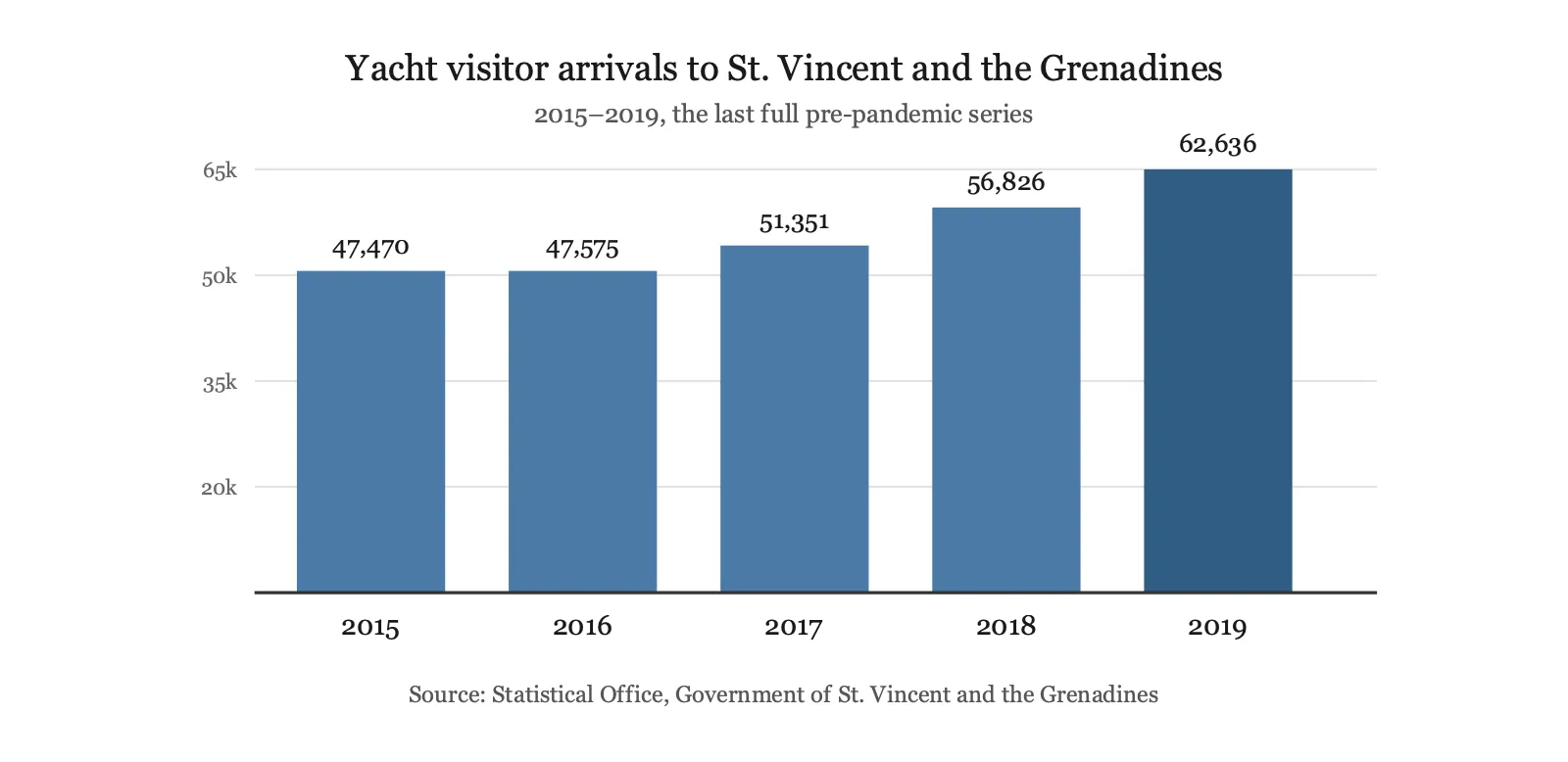
View data table
| Year | Yacht visitor arrivals |
|---|---|
| 2015 | 47,470 |
| 2016 | 47,575 |
| 2017 | 51,351 |
| 2018 | 56,826 |
| 2019 | 62,636 |
Source: Statistical Office, Government of St. Vincent and the Grenadines, visitor arrivals by visitor type, 2015–2019 (stats.gov.vc).
Yacht visitor arrivals to St. Vincent and the Grenadines rose from 47,470 in 2015 to 62,636 in 2019, a 32% increase across five years, according to the country’s Statistical Office. It is the last complete pre-pandemic series the government publishes.
How Does It Compare to the Caribbean’s Other Famous Bars?
It’s the smallest and the hardest to reach, and those are the same fact. The Caribbean has a well-established circuit of bars that charter guests plan around, and Happy Island belongs to the subset a boat is genuinely required for, but it’s the only one where the ground itself was made by hand.
| Bar | Where | How you land | What it stands on |
|---|---|---|---|
| Happy Island | Clifton Harbour, Union Island | Tender or water taxi only | A man-made islet of conch shells |
| Soggy Dollar Bar | White Bay, Jost Van Dyke, BVI | Swim ashore: there’s no dock | A natural white-sand beach |
| Chat ‘N’ Chill | Stocking Island, Exumas | Tender to the beach | Its own sandbar, with resident stingrays |
| Sandy Island | Off Anguilla | Boat only | A natural sand speck on a reef |
| Basil’s Bar | Britannia Bay, Mustique | Tender to the jetty | Stilts over the water, since 1976 |
Every one of those is worth a night. But four of the five sit on something the sea put there. Happy Island is the one where the ground under your feet was made on purpose, by hand, by the man pouring your drink, and that’s the story guests repeat when they get home.
When Should You Visit?
Late afternoon, on a Caribbean charter between roughly December and May. The high season delivers the steady easterly trades that make the sail down the Grenadines a pleasure, and December to February is also when the kiting flats are at their windiest, averaging 20 to 25 knots (IKSURFMAG). Within that window there’s texture. December and January bring the most reliable breeze and the busiest anchorages. February and March are the sweet spot: settled weather, still plenty of wind, and the chain at its best. April and May go quieter and warmer, and Clifton feels noticeably more local, which some guests prefer and some don’t. Within the day, aim for the hour before sunset and plan to be back aboard for dinner. The islet has no lighting to speak of beyond the bar itself, and the tender ride back across the harbour is short but genuinely dark, one more reason the crew running the dinghy is an underrated luxury. On cost: a Grenadines week on a crewed all-inclusive catamaran runs roughly $25,000 to $100,000 per week and up, depending on the yacht and the size of your group. A stop at Union Island doesn’t move that number: the drinks are the cheapest part of the day. Our breakdown of Caribbean charter costs by destination sets the Grenadines against the alternatives.
Other Stops in the Grenadines
Happy Island is an hour of a week that’s full of them. North of Union lie the Tobago Cays, Mayreau’s Salt Whistle Bay, Canouan and Mustique, where the overwater bar at Britannia Bay has been running for half a century: and Bequia’s Princess Margaret Beach at the top of the chain. East and southeast sit Palm Island and Petit St. Vincent. Our charter routes guide maps how they connect, and the seven-day itinerary strings them into a week that works.
Planning a Grenadines charter with an evening on a shell island in it? Start a yacht search at Vital Charters or talk to a charter broker, and we’ll build the week around it. Jason Acosta is co-founder and principal broker at Vital Charters.
Frequently Asked Questions
Where is Happy Island in the Grenadines?
Happy Island sits in Clifton Harbour on the southern coast of Union Island, in St. Vincent and the Grenadines. Union Island is the southernmost of the country’s main inhabited islands, just south of the Tobago Cays and immediately west of Palm Island. The bar is a little over 300 feet offshore from Clifton, inside the reef that shelters the harbour.
Is Happy Island the same as Aruba’s “One Happy Island”?
No. Aruba uses “One Happy Island” as a national tourism slogan, and the phrase dominates search results. Happy Island in this article is a single bar built on a man-made islet in the Grenadines, about 575 miles due east of Aruba, near enough the same latitude, but a different country entirely.
Who built Happy Island?
Janti Ramage, a Union Island man who was working as an environmental officer when he was tasked with clearing the discarded conch shells accumulating on the island’s beaches, according to TravelPulse. Rather than dump them, he moved them offshore and piled them on a shallow patch of reef until an islet emerged, then built a bar on it.
What is Happy Island made of?
Discarded conch shells (lambi shells, locally) along with coral rubble, laid up by hand and bound together over the years. Conch is a dietary staple across the Grenadines, and the shells are a by-product that accumulates fast. The islet is quite literally built from the leftovers of thousands of meals.
How do you get to Happy Island?
Only by boat. Charter guests take the yacht’s tender from the Clifton Harbour anchorage, a ride of about three minutes. Land-based visitors arrange a water taxi from Clifton. There is no road, causeway, bridge or scheduled ferry to the islet, which is the main reason it never gets truly crowded.
Is Happy Island open in 2026?
Yes. The bar’s own social channels were posting in July 2026, and Google’s business listing shows it as open, rated 4.6 from 207 reviews, with a Clifton Harbour address and a working phone number. Because it’s small and family-run with no website, we confirm it’s trading in the week before a charter reaches Union Island.
What does Happy Island serve?
Rum punch and cocktails, primarily: it’s a bar rather than a restaurant. Google’s listing shows an EC$20–40 price band, roughly US$7–15, which is ordinary Caribbean bar pricing. Most charter guests treat it as a sunset drinks stop and eat aboard afterward. Ask your crew whether to bring cash before you head across.
What time should you go to Happy Island?
Late afternoon into sunset. It’s a sundowner spot rather than a late-night one: it fills for the hour or two either side of sunset and empties afterward. The light across the reef in the hour before the sun goes down is the whole point, and the tender ride back is easier before full dark.
Can you snorkel at Happy Island?
Yes: visitors regularly describe it as a good base to snorkel from. The islet sits inside the reef that protects Clifton Harbour, in shallow, clear water. Your crew will know the best patches and whether conditions suit on the day.
Is Union Island worth a stop on a Grenadines charter?
Yes, particularly if you want a working Caribbean island rather than a resort one. Clifton has a market, shops and eateries, the kiting flats are among the eastern Caribbean’s best known, and Chatham Bay offers a quiet west-coast anchorage. Our seven-day Grenadines itinerary shows where a Union night fits.
Is there kitesurfing at Union Island?
Yes. The reef-protected shallows off Clifton are a well-known kitesurfing spot. The season runs roughly November to July, with December to February the windiest months at an average of 20 to 25 knots. Riders work the same lagoon the bar sits in, so watching them from the rail is part of the experience whether or not you ride.
How much does a Grenadines yacht charter cost?
Crewed all-inclusive catamarans in the Grenadines run roughly $25,000 to $100,000 per week and up, depending on the yacht and the size of your group. That covers the yacht, the crew, meals aboard and most activities. Our guide to Caribbean charter costs by destination breaks the numbers down.
A bar built by hand, on ground that wasn’t there
Union Island’s strangest stop sits on a heap of conch shells in the middle of Clifton Harbour, and the only way in is a three-minute tender ride. We’ll build the Grenadines week that puts you at the rail for sunset.