
Yacht Charter vs. Luxury Villa Rental: What $50K a Week Actually Buys You
Yacht charter vs villa rental at $50K/week: see what each price tier actually covers, what villa renters pay extra for, and which buys an experience.
Last Updated: September 7, 2026
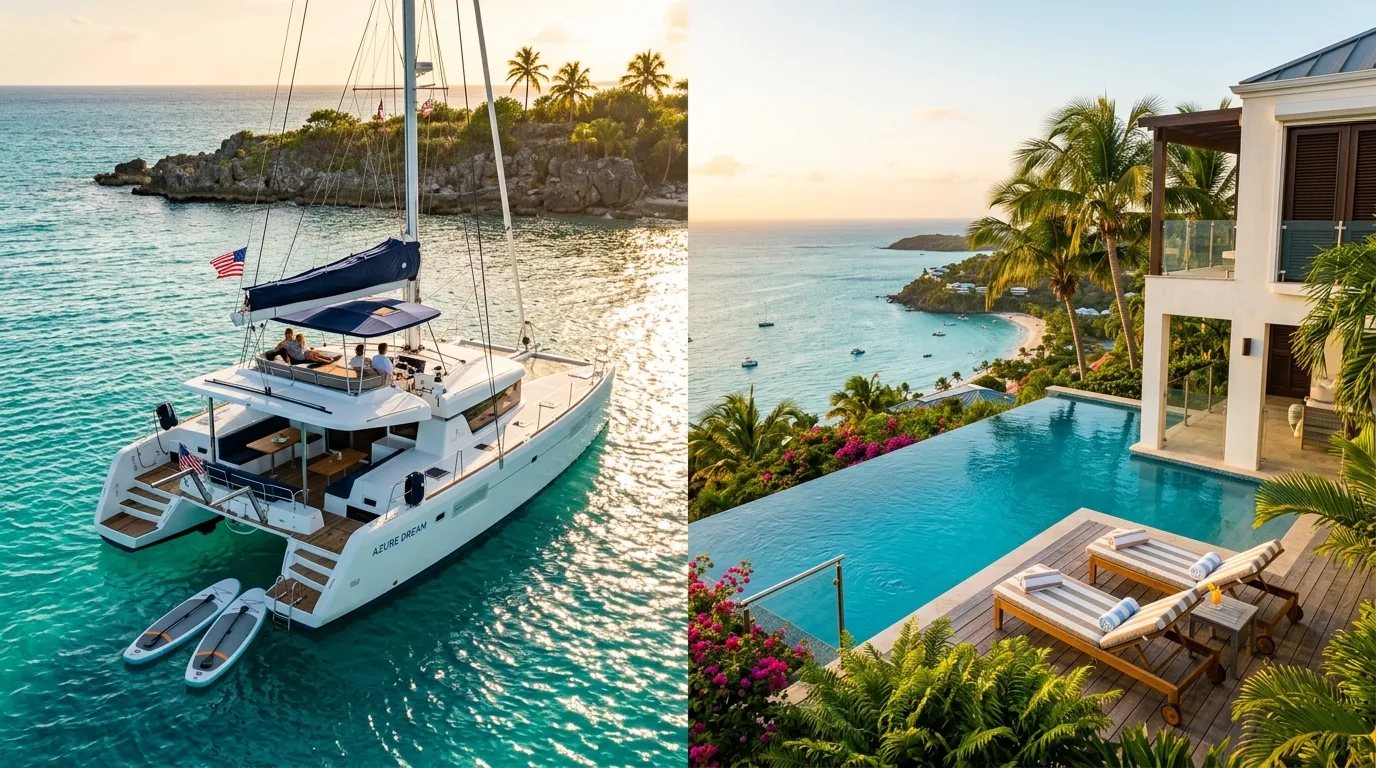
The yacht charter vs villa rental question isn’t really about price: at $50,000 a week, both options are luxury-tier. It’s about what that money buys: a destination, or a destination wrapped inside an experience. In 2026 the answer has moved, because the data on what high-spend travelers actually want has shifted. (And it’s the same shift driving the larger luxury travel reset we tracked earlier this year.)
At $50,000 a Week, Are You Buying a Destination or an Experience?
93% of luxury travelers now say luxury is “less about the most exclusive accommodations and more about access to authentic people, places and experiences” (Flywire 2026 Luxury Travel Report, January 2026). That single data point reframes the entire yacht-versus-villa decision.
What lands on a Caribbean charter invoice in 2026
The island sets the amounts: 14 percent in Bahamas taxes, up to $16 per guest per day in BVI cruising fees, nothing per guest in the USVI. The contract sets who pays: all-inclusive rates cover permits, park fees and levies in the vast majority of cases; charter taxes and the 15 to 20 percent gratuity are always yours.
| Line item | Typical amount | Who sets it | Source |
|---|---|---|---|
| APA (Advance Provisioning Allowance) | None mandatory on all-inclusive catamarans (about 2 percent of rates state around 5 percent). Plus-expenses charters add an APA, typically 30 to 35 percent of the base rate, intended to cover every running fee except government taxes, refunded where unspent | The charter contract; mechanics per MYBA | MYBA, Information for Charter Yacht Captains and Crew |
| Government charter taxes | 0 to 14 percent of the charter fee by destination; the Bahamas is highest at 10 percent VAT plus a 4 percent charter tax (per-destination figures in the destination blocks) | Each territory’s government | S.I. No. 57 of 2025 (Bahamas example) |
| Marine park fees | Where you cruise them: EC$15 per guest per day at the Tobago Cays, $12.73 per extra guest per day in the Exuma park, $3 at the BVI’s Baths | TCMP; Bahamas National Trust; BVI National Parks Trust | TCMP fee schedule, effective January 1, 2023 |
| Crew gratuity | Customarily 15 to 20 percent of the charter fee in the Caribbean crewed fleet, the band CYBA’s Inclusive Agreement (Clause 2.B) calls the customary rate; MYBA’s 2026 guidelines publish no percentage, and both leave it at your discretion | Custom, written into the CYBA form | CYBA Inclusive Agreement, Clause 2.B (2020) |
Fees verified September 2026.
A luxury villa rental is, by design, a destination purchase. You pay for the building, the view, and the staff who keep it running. Anything that happens between check-in and check-out (meals, transportation, excursions, entertainment) is something you arrange, coordinate, and pay for separately.
A crewed yacht charter is structured the opposite way. The yacht itself is the smaller line item; the value sits in the captain, chef, and crew whose entire job is to choreograph your week. You don’t book a villa-style “stay.” You book a moving, fully-staffed environment that hops between islands and handles the logistics in the background.
What Does $50,000 Buy on a Crewed Yacht Charter?
A crewed catamaran in the BVI sleeping eight medians $32,000 per week all-inclusive, with the middle half of that fleet between $27,000 and $43,400 across 129 priced listings (Vital Charters rate analysis, September 2026). At the $50,000 line, you’re firmly inside premium-cat territory, a 50–60 foot catamaran with a professional captain, chef, mate, and four to five guest cabins.
The all-inclusive crewed structure is the thing villa renters tend to underestimate. On a typical Caribbean crewed week you get private accommodation, a professional crew, all meals prepared by your chef, open bar, fuel for the week, snorkel gear, paddleboards, and a custom daily itinerary, and chef inclusions run from a full breakfast and light lunch through hors d’oeuvres and a three-course dinner every day.
There are still two line items on top: the APA (Advance Provisioning Allowance), which is set at roughly 20–30% of base fee for sailing yachts and 25–35% for motor yachts under MYBA Caribbean rules (our APA breakdown explains the math), and crew gratuity at around 15–20%. Even with both stacked on, a typical $32K base ends up in the high $40Ks all-in, which is why $50K is the working number for a luxury crewed week. On a CYBA charter which is the most common agreement in the Caribbean, the price is all inclusive.
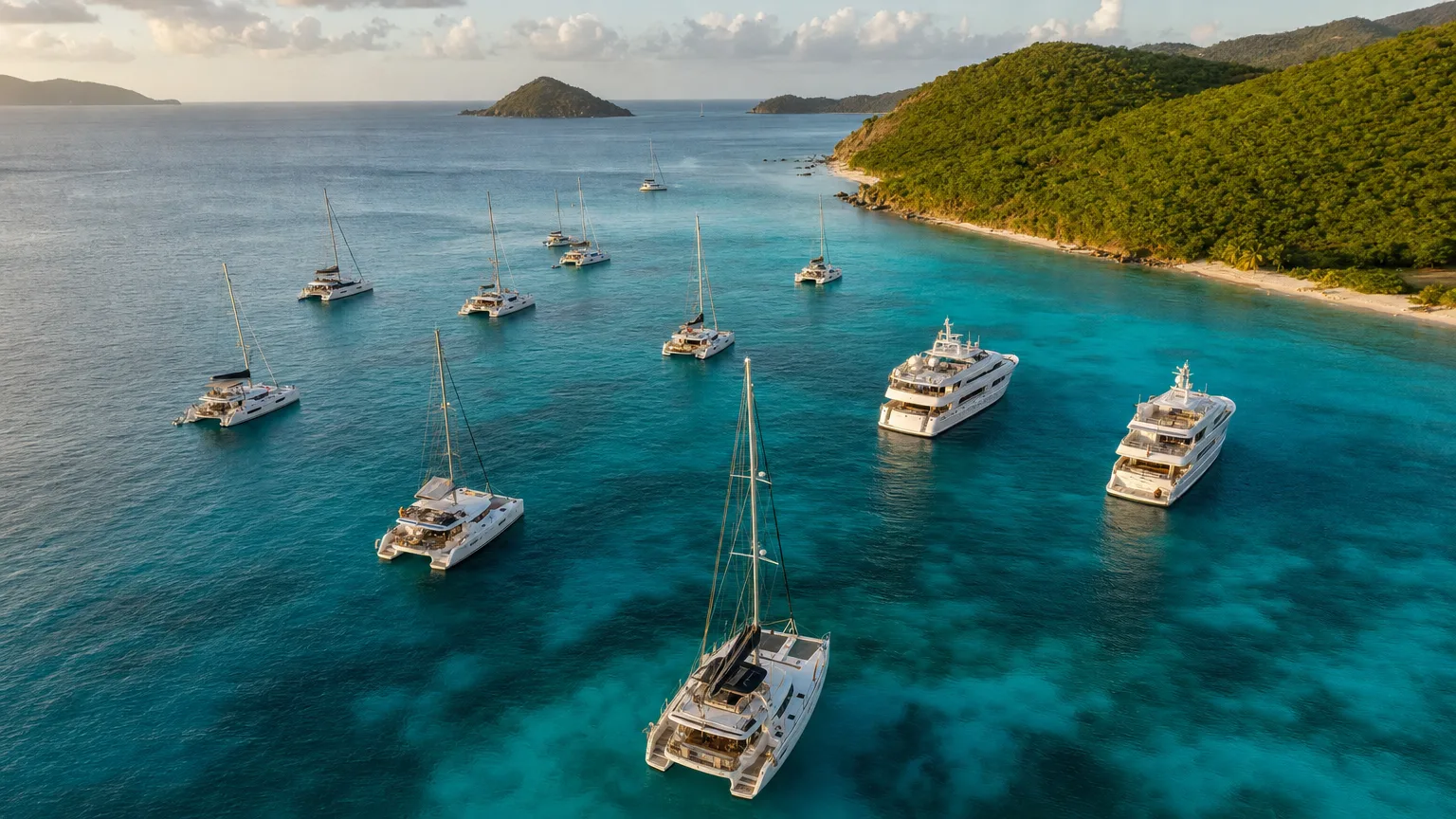
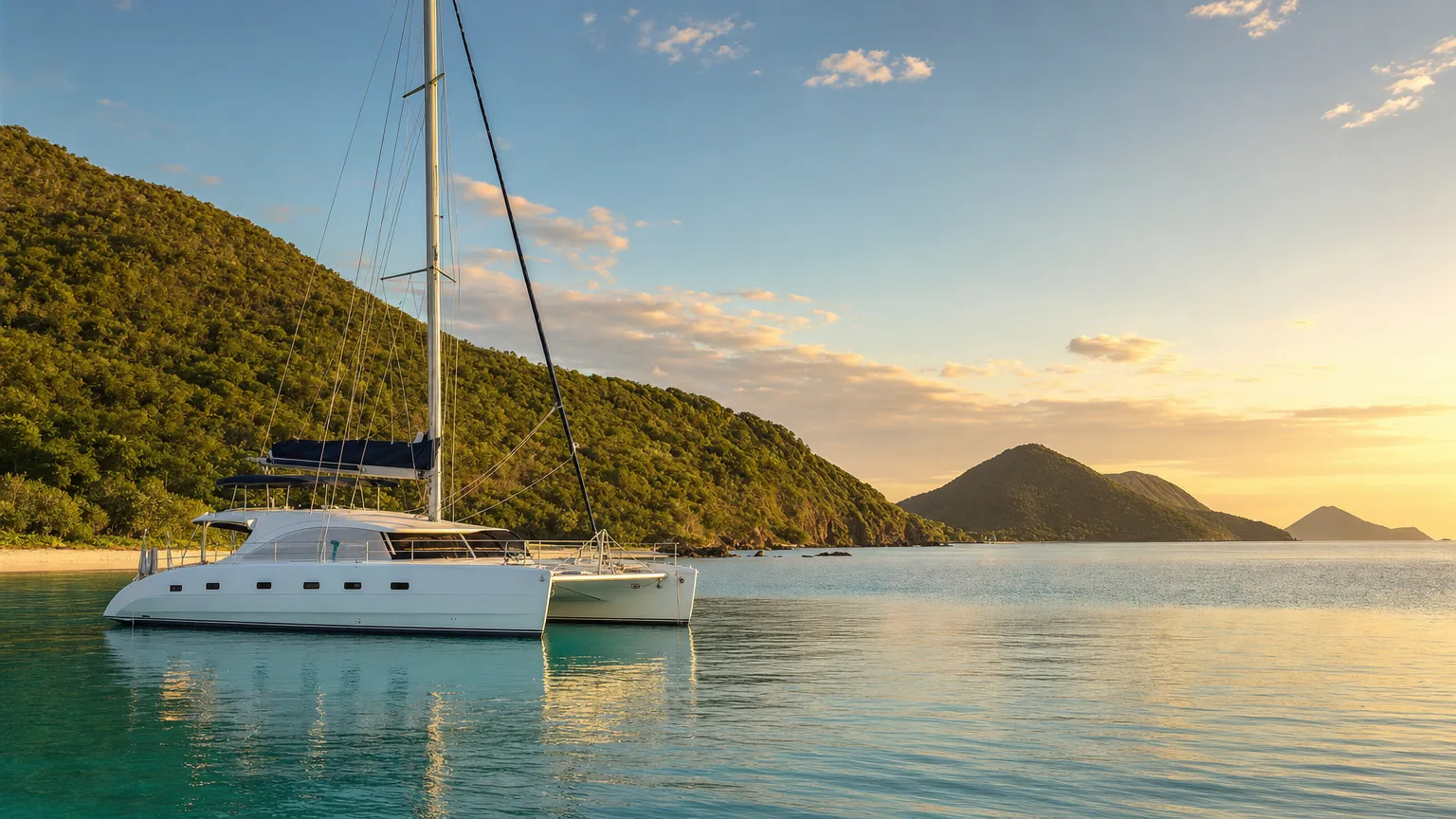
What that $50K week actually feels like: you wake up in a new anchorage almost every day, breakfast is on the bow before you’ve put shoes on, the chef has already pre-shopped your preference sheet, and someone else is reading the weather. The week is engineered around you.

Want to see what a real charter week looks like? Search crewed yachts by destination, guests, and yacht type. Every match is a live yacht you can price out.
What Does $50,000 Buy at a Luxury Villa Rental?
Top-tier Caribbean villa rentals in Turks & Caicos, St. Barts, and the BVI advertise nightly rates from a few hundred dollars at the entry end up to $6,500–$8,000 per night at the ultra-luxury tier (Caribbean Dream Villas / WIMCO, 2026), so $50,000 lands you somewhere between a five-bedroom premium villa for a full week and a four-night stay at a peak-season ultra-luxe property.
Read the small print, though, and the headline rate is the start of the math. Caribbean villa service fees “range from 10% to 20% of the total rental cost,” plus local taxes of “10% to 12%,” and some properties layer on “a 15% concierge and financial management fee for concierge services including airport fast track, car rental, restaurant booking, and babysitters” (Haute Retreats, 2026).
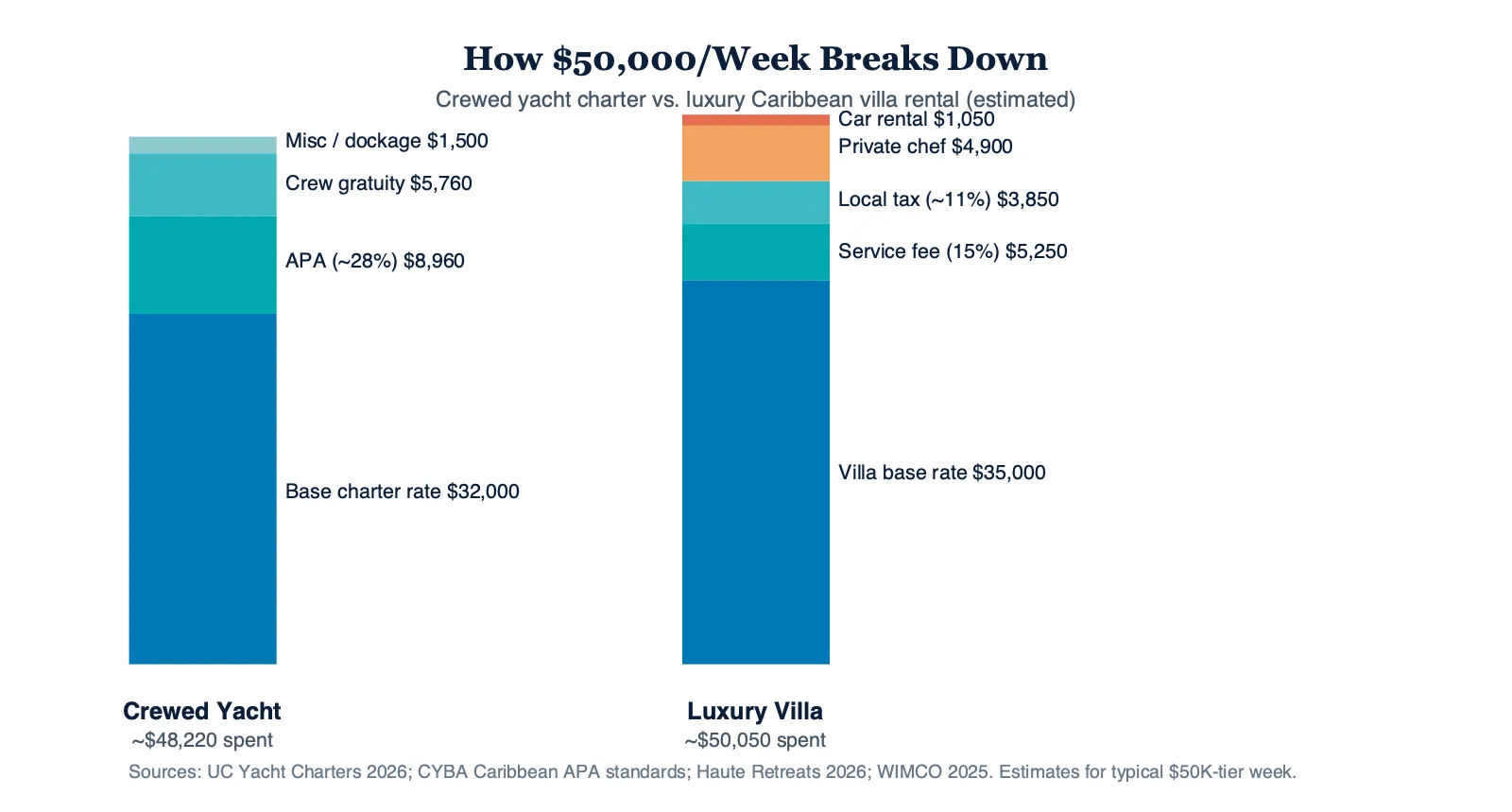
That stack is what eats into the figure most people picture when they hear “$50,000 villa.” A $35,000 base + 15% service + 11% tax already pushes past $44,000 before you’ve bought a single meal, hired a chef, or rented a car.
What Do Villa Renters Actually Do With Their Week? The “Hidden Effort” Tax
A private chef at a Caribbean villa typically runs $275 for breakfast or brunch and $500 for dinner per service, exclusive of food costs, billed around $75 to $150 per hour at 2025 rates (WIMCO Turks & Caicos, 2025). Daily lunch-plus-dinner packages from independent operators start around $199 per adult per night (Grand Cayman Villas, 2025), and full-day private-chef coverage in the Caribbean “can easily hit USD 600 a day” once food and gratuity stack on (Adam Brunet, 2026).
Then there’s the car. St. Barts rental cars run $80–$150 per day standard, with luxury vehicles at $120–$200+, and peak-season Dec–April pricing pushes those numbers “substantially” higher (WIMCO St. Barts, 2025). For a seven-day villa week you’re looking at roughly $1,000–$1,500 in transportation alone, before any driver service.
Stack those onto the villa-week base:
- Villa base ($5,000/night × 7): $35,000
- Service fee (15%): $5,250
- Local tax (~11%): $3,850
- Private chef (7 nights × $500 + ~$200/day food): ~$4,900
- Car rental (7 days × ~$150): $1,050
- Total at $50K tier: ~$50,050: and you still book your own restaurants, excursions, and entertainment.
Compare that to the crewed-charter version of the same week, where the chef is the chef, the captain is the driver, the daily itinerary is the entertainment, and nobody on your party is on the phone with a concierge.
Yacht Charter vs. Villa Rental at $50K: How Does the Math Compare Side-by-Side?
Apples-to-apples, a $50,000 budget covers a comprehensively-included week on a crewed catamaran with money left for tip, or an upper-tier Caribbean villa where chef and transport eat the rest of the runway. The chart below shows where each dollar lands. The headline takeaway: on the yacht side, roughly 67% of spend goes to the boat-and-crew package; on the villa side, only about 70% of spend reaches the property itself, with the rest absorbed by fees, taxes, chef, and transport that have to be sourced separately.
View data table
| Line item | Crewed Yacht (BVI, 8 guests) | Luxury Villa (St. Barts / T&C tier) |
|---|---|---|
| Base rate | $32,000 | $35,000 |
| APA (~28%, sailing) | $8,960 | , |
| Service fee (15%) | , | $5,250 |
| Local tax (~11%) | , | $3,850 |
| Private chef (7 days) | Included | $4,900 |
| Open bar | Included | Self-funded |
| Transportation between locations | Included (yacht moves you) | $1,050 car rental |
| Water toys / activities | Included | Booked + paid separately |
| Crew gratuity (~18%) | $5,760 | n/a |
| Misc / dockage | $1,500 | , |
| Approximate total | ~$48,220 | ~$50,050 |
Sources: CYBA Caribbean APA standards via Vital Charters; Haute Retreats (2026); WIMCO Turks & Caicos and St. Barts (2025).
Yacht vs. Villa: What’s Actually Included by Default?
Standard crewed-charter inclusions are wider than most first-time charterers realize: private yacht, professional captain and chef, all meals and beverages prepared by the chef, water toys including paddleboards and kayaks, snorkel gear, a custom daily itinerary, and fuel for the week. Luxury villa rentals, even at the $50K tier, generally include the property and daily housekeeping. Chef, transportation, activities, and concierge tend to be billed separately (Haute Retreats, 2026).
If you compare the two on a “what’s already paid for” basis, the gap is bigger than the headline price would suggest. The all-inclusive crewed structure bundles the choreography of the week into the base price; the villa hands you the building and a contact list.
It’s a similar dynamic to what we mapped out in our crewed yacht charter vs. luxury resort comparison: luxury resort packages and crewed charters tend to converge on the “everything-included” experience, while villas (and serviced-apartment-style stays) hand the orchestration back to the guest.
Why Do Yachts Win on the 2026 Trend Lines?
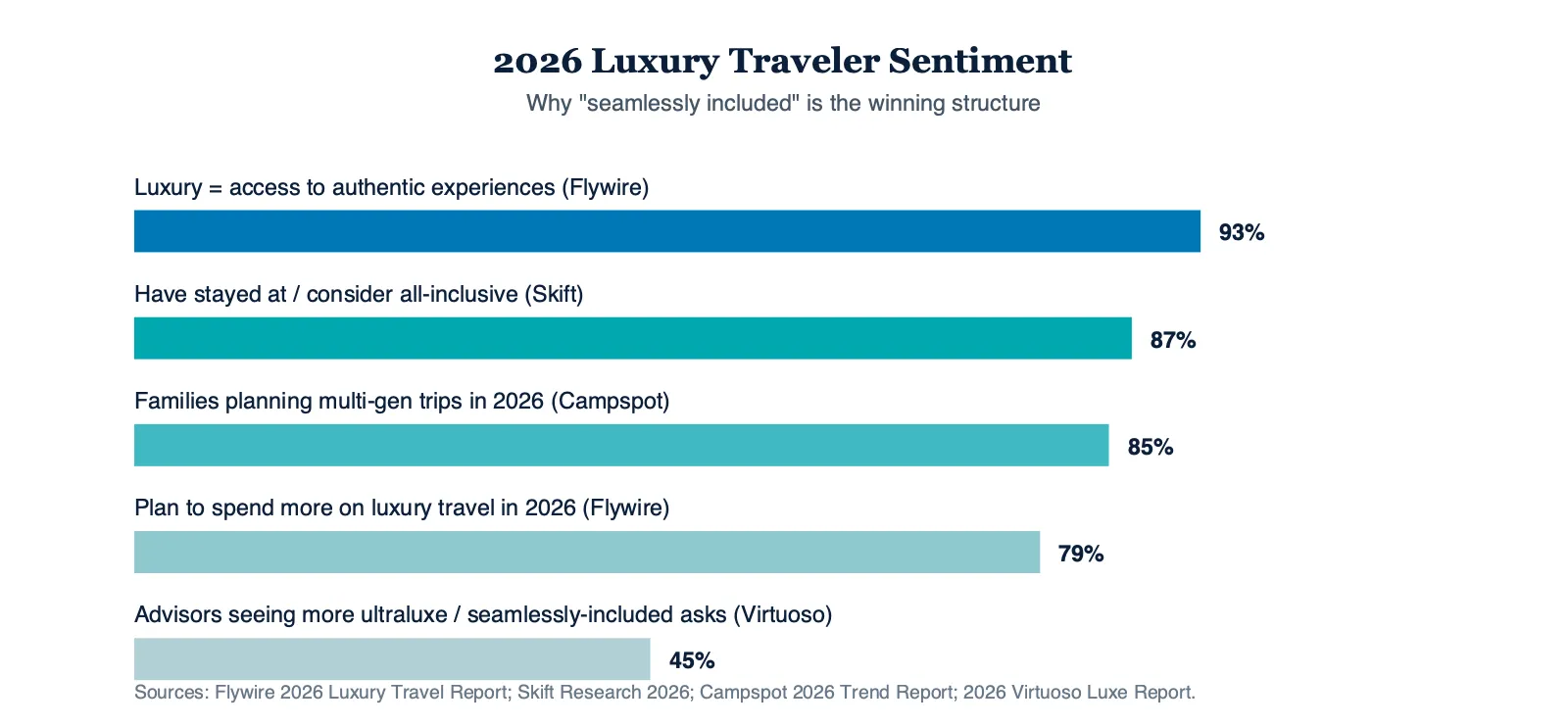
67% of Virtuoso advisors forecast a slight to significant uptick in travel for 2026, and 55% expect clients to spend more per trip; 45% have specifically seen increased requests for “ultraluxe experiences,” defined as “seamlessly included details” (2026 Virtuoso Luxe Report). That’s the entire crewed-charter sales pitch in two data points.
Stack it with Skift’s reporting that 87% of consumers have either stayed at or considered an all-inclusive trip, and that six in ten say they’re more likely to do so than they were five years ago, with Millennials (75%) and Gen Z (68%) saying all-inclusive provides better value than DIY planning (Skift Research, March 2026). The premium market has tilted toward done-for-you. Crewed charters are done-for-you with a passport stamped at every island.
View data table
| 2026 Sentiment Metric | % | Source |
|---|---|---|
| Luxury = access to authentic experiences, not exclusive accommodations | 93% | Flywire 2026 Luxury Travel Report |
| Have stayed at or consider an all-inclusive trip | 87% | Skift Research, March 2026 |
| Families planning multi-generational trips in 2026 | 85% | Campspot 2026 Trend Report |
| Plan to spend more on luxury travel in 2026 vs. 2025 | 79% | Flywire 2026 Luxury Travel Report |
| Travel advisors seeing more “ultraluxe / seamlessly included” requests | 45% | 2026 Virtuoso Luxe Report |
The villa option doesn’t lose those clients on price. It loses them on effort. When 85% of families are planning multi-gen trips in 2026 (Campspot), the math behind a 12-person villa week (group meals to coordinate, separate transportation to book for the grandparents, activities to research for the kids) gets heavy fast. The charter equivalent of that same group defaults to a chef who already has the dietary preferences, a captain who’s the transportation, and a daily itinerary that’s already been built.
How Many Destinations Do You Actually See in a Week?
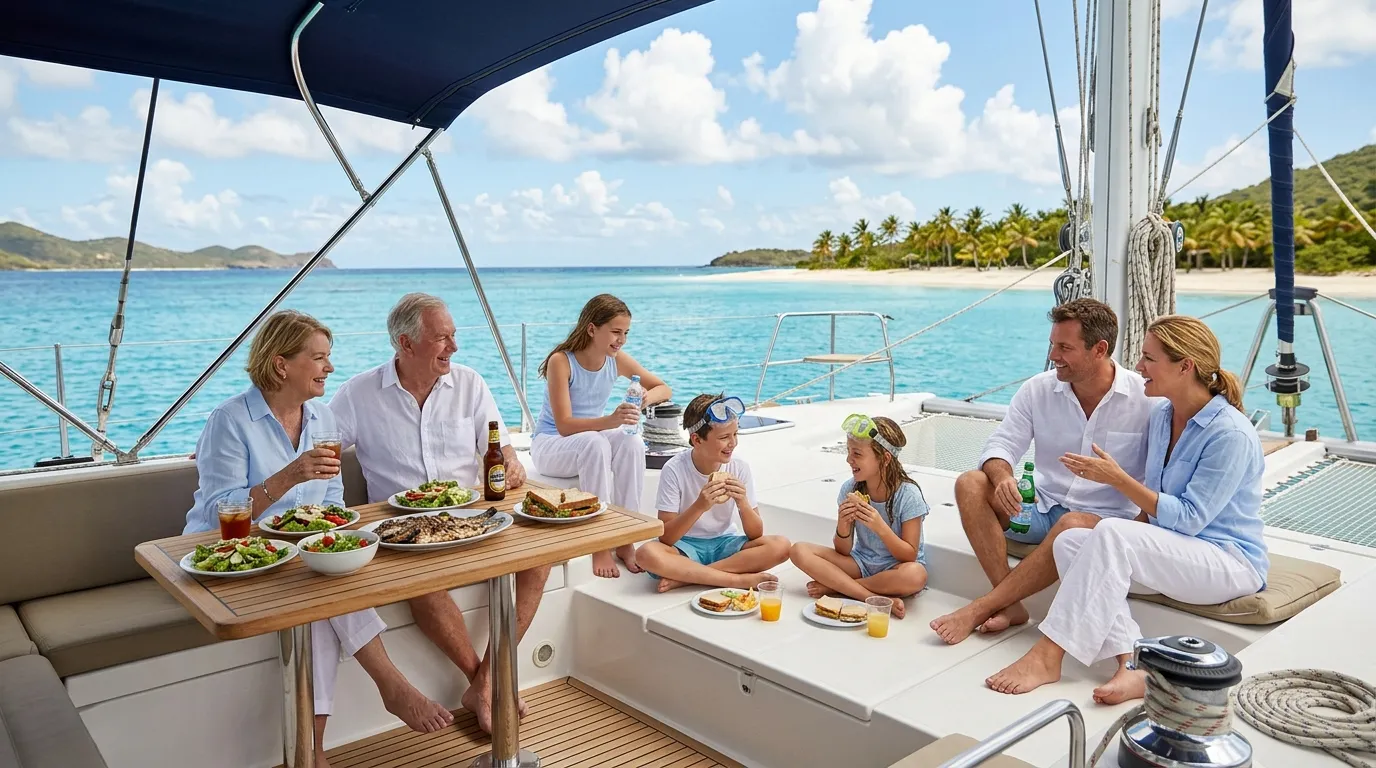
A typical 7-day BVI catamaran itinerary visits Norman Island, Peter Island, Cooper Island, Virgin Gorda, Guana Island, and Jost Van Dyke, roughly six to eight islands or anchorages over the week. The British Virgin Islands themselves are 60 islands and islets, most within 15 nautical miles of each other, which is what makes the island-hopping cadence work in the first place.
A villa is, by definition, one place. That’s part of its appeal for some travelers (wake up to the same view, settle in, no packing) but it’s also the structural reason a yacht delivers more “destinations per week” without trying.
The other thing the yacht gets you: water-access-only stops. Soggy Dollar Bar on Jost Van Dyke “is accessible only by boat … the swim from your anchorage is necessary since there’s no dock,” and Foxy’s New Year’s draws “hundreds of yachts lashing themselves together” outside. A villa renter trying to reach those places is renting a boat for the day, which is, of course, just a more expensive way to do what a charter does by default. (We mapped the broader pattern in our guide to anchorages only reachable by yacht.)
Where Does Each Format Actually Win?
The honest answer isn’t “yacht beats villa every time.” Each format has a sweet spot.
The Villa Wins When…
Villas are the right call for static groups in destinations where the land-based dining and beach scene is the main event.
- Your group is large (10+ guests) and you want big indoor common areas.
- You have small children or guests with mobility needs who’d prefer a static base over moving water.
- You’re staying in a destination with strong land-based dining and excursions you want to explore independently (St. Barts dining scene, for instance, or Turks & Caicos beach access).
- You actively want to plan the trip: coordinating chef, drivers, and activities is part of the fun, not a tax.
The Yacht Wins When…
Yachts are the right call when the week is about the experience rather than any one address, and when the destinations you most want to see are on the water.
- You want the week to feel like one continuous experience instead of a list of bookings.
- You’re traveling multi-generationally and need the logistics handled invisibly.
- You’d rather see four to eight places than one.
- You’re going somewhere the best spots are on the water, the BVI, the Bahamas Exumas, the Grenadines.
- You’re a luxury traveler who’s already concluded that “exclusive accommodations” matter less than “seamlessly included” service (the 93% in the Flywire data).
If your group leans toward the second list, our breakdown of yacht charter cost by size shows what each price band actually delivers in the Caribbean and Bahamas.
The Bottom Line
$50,000 a week buys real luxury either way. A villa buys you a single beautiful place and the time to make a vacation out of it. A crewed yacht buys you a fully-staffed, moving experience that visits six to eight places and asks nothing of you except where you’d like to swim today.
In 2026, with luxury travelers explicitly saying they want experiences over exclusivity (Flywire), all-inclusive structures over DIY (Skift), and seamlessly-included service over status hardware (Virtuoso), the math tilts toward the yacht side of the line for most premium clients we work with. The villa still wins for specific groups in specific destinations. We’ll tell you when it’s the better call.
If you’d like to see what a $50K (or $30K, or $80K) crewed week actually looks like for your group, start a yacht search at Vital Charters and we’ll pull a short list of available cats and motor yachts that fit.
Frequently Asked Questions
What taxes and fees are added to a Caribbean yacht charter?
It varies by destination: 14 percent in the Bahamas (10 percent VAT plus a 4 percent charter tax), $4 to $16 per guest per day in BVI cruising fees plus a $10 arrival levy, marine park fees in the Grenadines and Exumas, nothing per guest in the USVI, and in the French islands only a 1 euro per person per day waste tax in Gustavia. On all-inclusive terms the permits, levies and park fees are covered by the rate in the vast majority of cases; the percentage taxes and the crew gratuity are the lines you pay directly.
Is a $50K yacht charter really comparable to a $50K villa rental?
On total spend, yes: both land around the same final number. On what’s included, no. A $50K crewed week typically delivers crew, chef, meals, open bar, fuel, and water toys all baked in. A $50K villa week typically delivers the property, daily housekeeping, and concierge access, with chef, transportation, and activities billed separately (Haute Retreats, 2026).
Do luxury villas in the Caribbean really cost extra for a chef?
Most do. Private chef rates in Turks & Caicos start at $275 per breakfast/brunch and $500 per dinner (food extra), at roughly $75–$150 per hour (WIMCO, 2025). Full-day chef coverage in the Caribbean “can easily hit USD 600 a day” (Adam Brunet, 2026). Some villas include chef service in the rate: always confirm in writing before booking.
What’s the APA on a yacht charter and how does it change the price?
Under a CYBA contract, there is no APA as those provisions are included in one price. APA stands for Advance Provisioning Allowance. Under MYBA Caribbean rules, it’s typically 20–30% of the base fee for sailing yachts/catamarans and 25–35% for motor yachts. It funds the trip’s variable costs (food, drink, fuel, dockage) and is reconciled at the end of the week. Unspent funds are returned. Our APA guide walks through the math.
How many islands can I realistically see on a 7-day Caribbean charter?
Six to eight is typical for a BVI catamaran week: most published 7-day itineraries cover Norman Island, Peter Island, Cooper Island, Virgin Gorda, Guana, and Jost Van Dyke. The BVI’s 60 islands are mostly within 15 nautical miles of each other, which is what makes the cadence comfortable.
Is a yacht charter realistic for multi-generational families?
Yes: and it’s increasingly the default. 85% of families are planning multi-gen trips in 2026 (Campspot, 2026), and the crewed-charter format suits the group particularly well: separate cabins for couples and grandparents, a chef who accommodates every diet, water toys for the kids, and a captain who handles the moving parts. The catamarans that actually price around $50,000 average 63.7 feet, sleeping 8 to 10 guests in four or five cabins (Vital Charters rate analysis, September 2026). A 50 to 60 footer medians $31,000, so at $50,000 you are buying a bigger boat rather than the same boat in a better week.
Which is better for couples: yacht charter or villa?
For couples, the crewed yacht charter usually wins on romance and the villa wins on privacy from staff. A 45–50 ft crewed catamaran with just a captain and chef gives couples constantly-changing views, private dinners on deck, and easy access to classic honeymoon stops like The Baths and Anegada. A villa offers more square footage and fewer people on-property, better for couples who want true seclusion. Budget-wise, a couples-only yacht week often comes in below the villa equivalent because crew + chef + transport are bundled.
What if I want to do part villa, part yacht?
It’s common, and it works. Many charter guests bookend their week with a couple of nights in a luxury resort or villa for arrival logistics, then board the yacht for the main event. The quiet-luxury crowd often defaults to this hybrid: land-based luxury for the arrival night, then a week of doing nothing on the water.
Spend the week moving, not staying.
Tell us your group and dates and we’ll match you to a crewed yacht that turns $50K into a week of changing anchorages, not one fixed address.