
The Lolos of Grand Case: Best of St. Martin
Grand Case restaurants number about 30 on one street, from fine dining to the lolos, open-air Creole BBQ shacks on St. Martin. How to visit by yacht.
Last Updated: September 7, 2026
Among Grand Case restaurants, the lolos are the ones worth planning a charter evening around. A row of open-air barbecue shacks on the French side of St. Martin where grilled Creole food, modest prices, and communal tables have anchored the village’s dinner scene for generations. They sit right on the beach, a short tender ride from where a crewed yacht anchors, and they are the reason a village of a few hundred people gets called the food capital of the Caribbean. This guide covers what a lolo actually is, what to order, and how to reach Grand Case by boat on a crewed Caribbean charter.
What Is a Lolo? St. Martin’s Open-Air BBQ Shacks
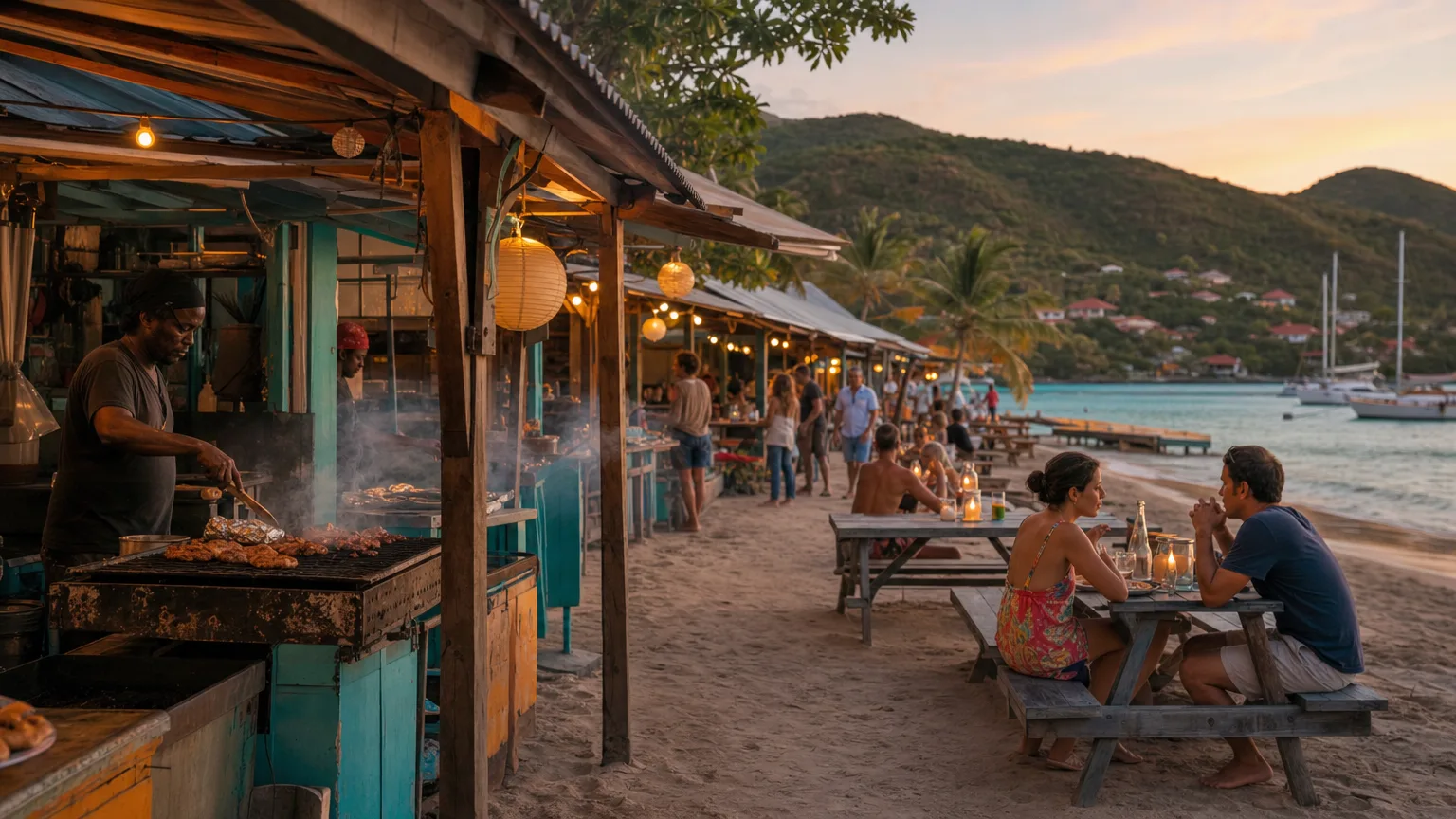
A lolo is a small traditional restaurant of about 300 square feet built around a barbecue, according to the St. Martin Tourist Office. The kitchen is completely open, tables are arranged around the grill, and the terrace spills onto the street or the sand. There are no phone reservations and no dress code: you walk up, sit at a communal picnic table, and order from a short handwritten menu of whatever came off the grill that day.
The tradition is woven into the island’s history rather than invented for tourists. One commonly told origin traces the name to the colonial-era retail unit called a “lot,” though the true etymology isn’t settled and several folk stories compete. What is documented is the social role: the tourist office describes the lolo as, in its own words, “a meeting place where high spirits and modest prices are the name of the game,” with bar areas that historically stayed open late so the community could gather after work.
The St. Martin Tourist Office defines a lolo as a small traditional restaurant of about 300 square feet built around a barbecue, with an open kitchen and tables set around the grill. Lolos take no reservations, seat guests first-come at communal tables, and open daily, the affordable, everyday counterpoint to the village’s fine-dining rooms. (St. Martin Tourist Office)
On St. Martin, the two main lolo clusters are the Marigot waterfront near the ferry terminal and the beachfront strip in Grand Case. Grand Case is where the lolos share a single street with some of the Caribbean’s best-known kitchens, which is what makes the village unusual.
Why Grand Case Restaurants Are the Caribbean’s Food Capital
Grand Case packs roughly 30 bars and restaurants onto one mile-long street, a concentration that both of St. Martin’s tourism boards promote as the “food capital of the Caribbean” (St. Martin Tourist Office). The village sits on the island’s northwest coast, facing the Anguilla Channel, about a 20-minute drive from the capital at Marigot. Its long sandy beach is lined end to end with places to eat.
What sets the strip apart is the range. Along Boulevard de Grand Case, restaurants rated by the Gault & Millau guide operate a few doors down from the beachfront lolos, so a single block offers both a white-tablecloth French tasting menu and a $12 plate of grilled snapper eaten with your fingers. Among Grand Case restaurants, that contrast is the whole appeal. You can dress up one night and go barefoot the next without moving the boat.
Grand Case sits on the French side of St. Martin, on the northwest coast facing the Anguilla Channel. Both the island’s French and Dutch tourism boards promote it as the Caribbean’s food capital, with roughly 30 restaurants, from Gault & Millau-rated dining rooms to beachfront lolos, packed along its mile-long main street. (St. Martin Tourist Office)
What to Eat at the Lolos
The lolo kitchen is Creole and grill-forward: the St. Martin Tourist Office lists chicken curry, conch stew, fresh daily fish, spicy shrimp, oxtail, crab colombo, and crab and rice as classic lolo dishes. In practice you’ll also find barbecued ribs, grilled chicken, whole grilled snapper, and grilled lobster, plus the sides that define a Caribbean plate, rice and beans, plantains, johnny cakes, coleslaw, and gratins. Meats and seafood are cooked over a barbecue traditionally fashioned from a metal drum split lengthwise and fitted with a grill.
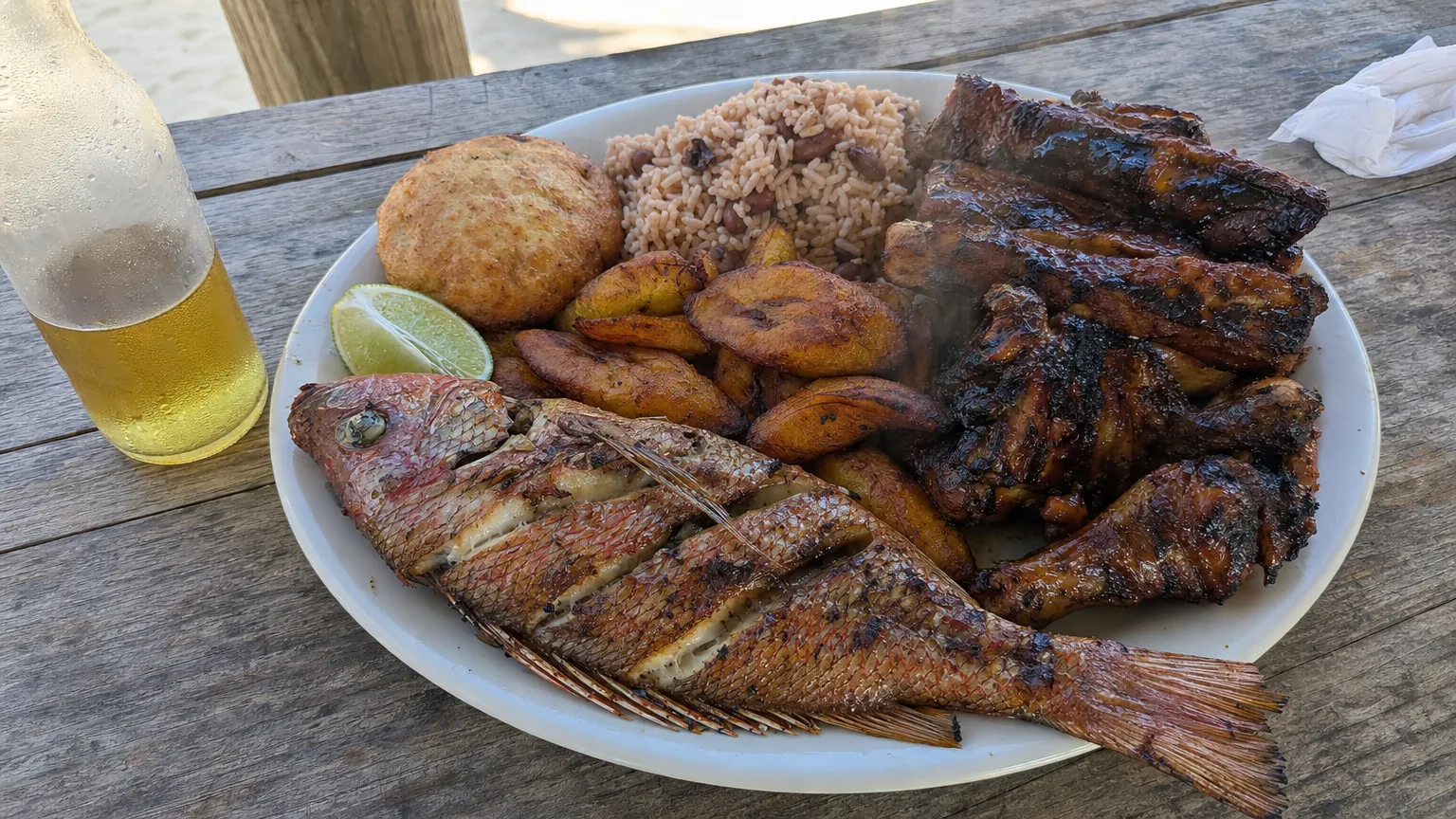
Prices are the point. Full barbecue platters run roughly $10 to $20, and a main plate with several sides lands in the low teens, approximately a third of what the fine-dining rooms up the street charge (Frommer’s; figures approximate). Grilled lobster costs more, priced by weight. Lolos deal in cash, taking both US dollars and euros, and St. Martin bills generally fold in a 15% service charge, so bring small bills and don’t expect to run a card.
Anchoring at Grand Case by Yacht
Baie de Grand Case anchors in about five meters over sand with good holding, according to the nautical guide sea-seek. The catch for boaters is exposure: the bay faces northwest and is open to northerly swell, so it’s a comfortable overnight anchorage in settled trade-wind conditions. When a winter northerly runs, it can get rolly. The everyday beach is calm, the tourist office calls its waters “protected from sea swells” for swimming, but those are two different scales, and the swell that moves a yacht at anchor is not the swell a swimmer notices.
Skippers drop the hook southwest of the quay and stay clear of the shallow ground off the western headland, where depths shoal to around 1.5 meters within a few hundred meters of the point and fishing nets are laid. Grand Case has a landing stage the tourist office calls unique among the island’s beaches, plus a dinghy dock and easy beach landings right in front of the restaurant strip, so getting ashore for dinner is straightforward once you’re anchored.
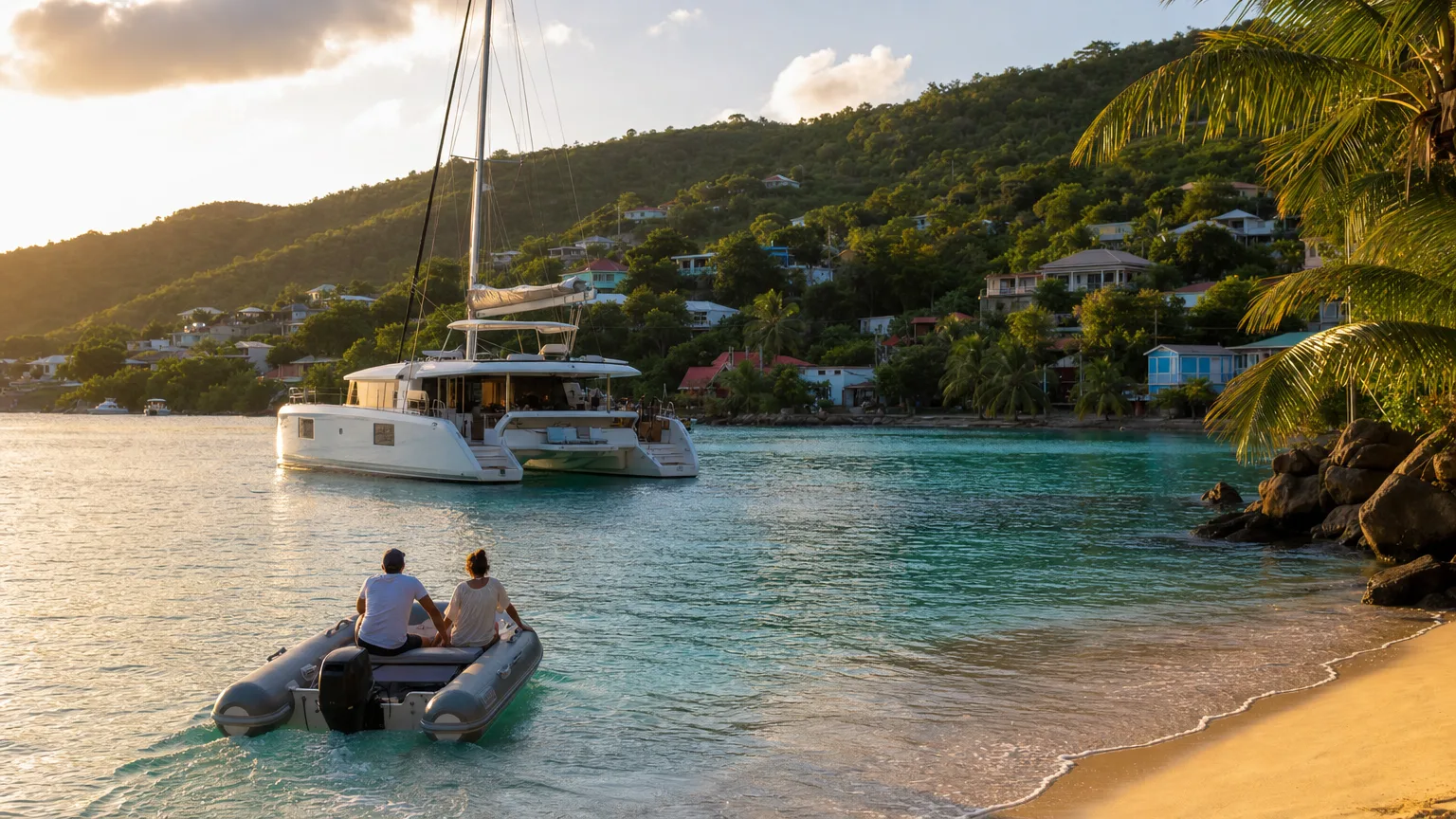
Baie de Grand Case offers anchorage in about five meters over sand with good holding, per nautical guide sea-seek. The bay faces northwest and is open to northerly swell, so it anchors best in settled trade-wind conditions; skippers drop southwest of the quay and avoid the shallow, net-strewn ground off the western point. (sea-seek)
Grand Case sits on the northwest coast, part of the wider St. Martin and St. Barts cruising ground that runs east toward the best anchorages in St. Barts. Marigot Bay is about five miles away. The big, sheltered Simpson Bay Lagoon (the island’s main charter base, next to Princess Juliana airport on the Dutch side) sits farther south, and Anse Marcel’s protected marina lies to the northeast. Anguilla sits about five miles north across the channel, where Sandy Island makes a natural day trip. When the forecast turns, crews base in that more sheltered water and reach the lolos by a short taxi or tender rather than sitting in an exposed anchorage overnight. The interactive map of St. Martin shows Grand Case beside the island’s other anchorages, beaches and restaurants, on both sides of the border.
When to Go: Season, Harmony Nights, and Closures
December through April is the best window to charter St. Martin: the Caribbean high season, with the driest weather, clearest water, and steadiest trade winds of the year. It sits opposite the June-to-November Atlantic hurricane season (NOAA), and it’s also when Grand Case is at its liveliest and brackets the village’s signature event.
From January through March, Grand Case hosts Harmony Nights, Les Mardis de Grand Case, a Tuesday-evening street festival where the main road closes to traffic for a craft market, live music, and carnival parades (St. Martin Tourist Office). It’s the single best night to time a lolo dinner: you eat off the grill, then wander a pedestrianized street full of stalls and bands. Exact start dates shift year to year, so confirm the current schedule before building an itinerary around it.
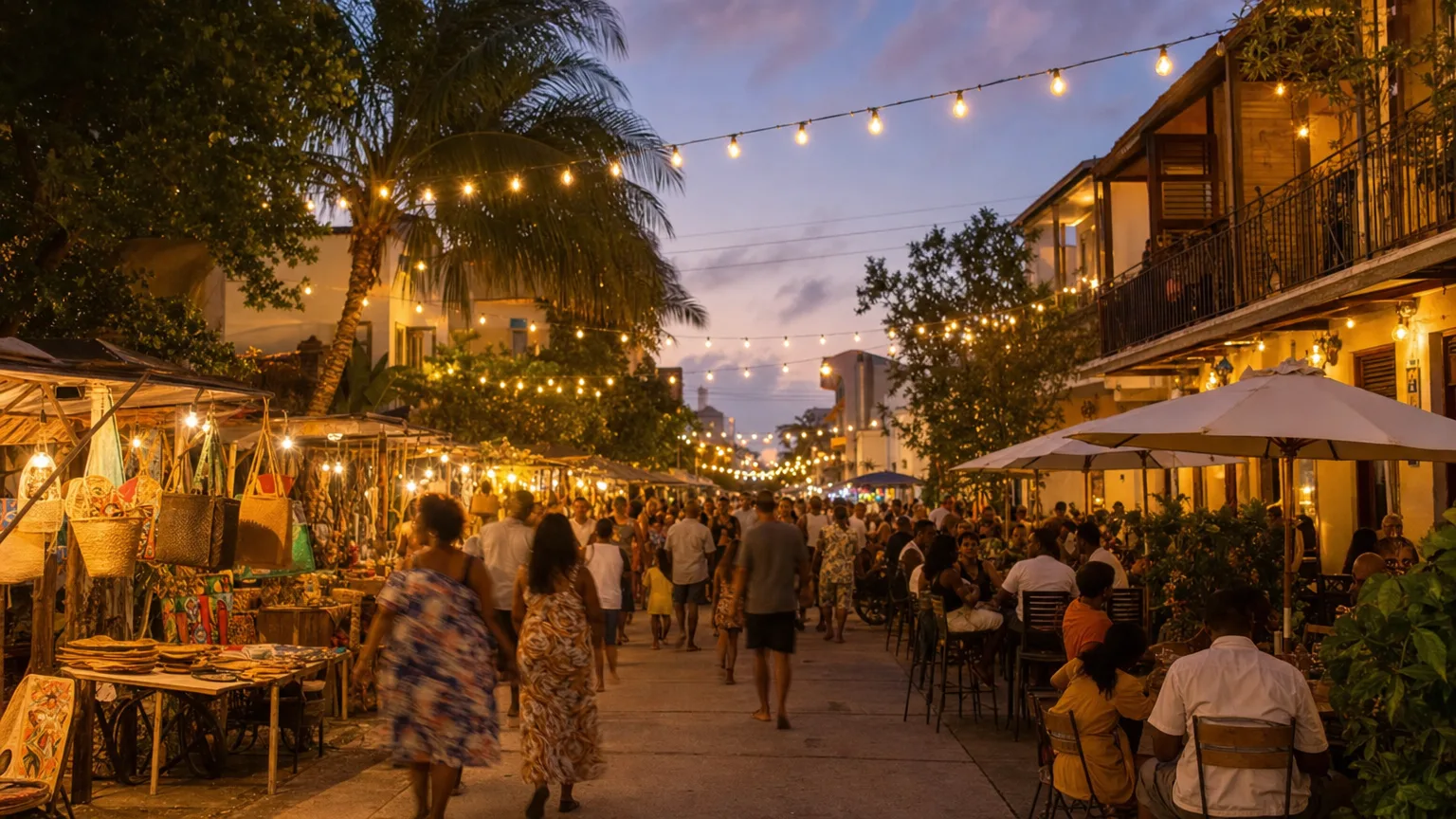
The flip side is the off-season. Atlantic hurricane season officially runs June 1 to November 30, with peak activity around September 10 (NOAA), and many French-side restaurants close for an annual break, typically sometime between August and October. If you’re chartering in the shoulder or low season, check which kitchens are open before you plan a dinner ashore, the lolos included.
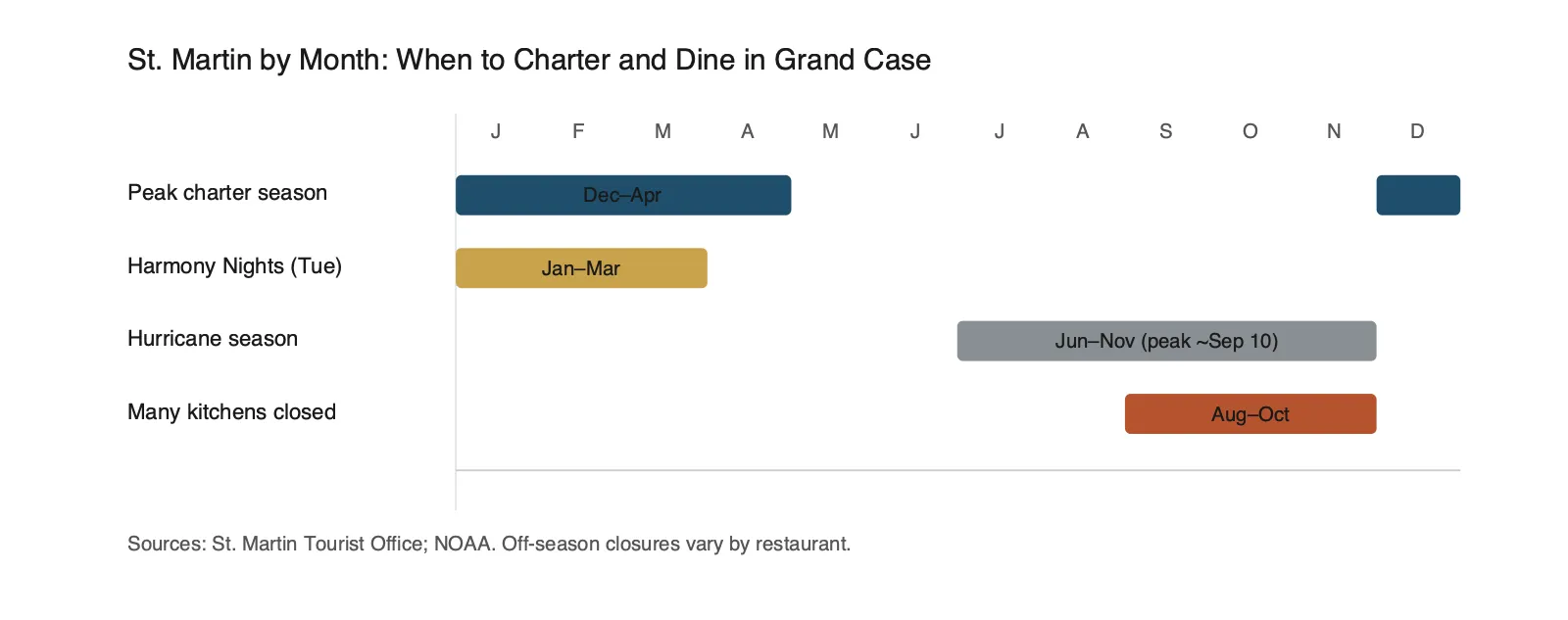
St. Martin’s charter high season runs December through April, the driest months with the steadiest trade winds. From January through March, Grand Case adds Harmony Nights, a Tuesday street festival of craft stalls and live music. Many French-side kitchens then close for an annual break between August and October. (St. Martin Tourist Office; NOAA)
View data table
| Period | Months | What it means |
|---|---|---|
| Peak charter season | December–April | Driest weather, clearest water, trade winds 15–25 knots; highest demand and prices |
| Harmony Nights (Tuesdays) | January–March | Boulevard de Grand Case closes for a craft market, live music, and parades |
| Atlantic hurricane season | June 1–November 30 | Peak activity around September 10; lower prices, more weather risk |
| Common restaurant closures | August–October | Many French-side kitchens take an annual break; confirm openings before dining ashore |
Making the Most of a Lolo Night on a Crewed Charter
The single biggest advantage of visiting Grand Case by crewed yacht is that the logistics stop being your problem. Your captain reads the swell and decides whether to anchor off the beach or base in sheltered water; the crew handles the tender run ashore, and they’ll know whether the anchorage is comfortable that night. You show up hungry.
A few practical notes make a lolo night smoother. Bring cash in small bills: dollars or euros both work, and cards mostly don’t. Go early or plan to wait, because lolos don’t take reservations and fill up fast on high-season evenings. And consider pairing the two halves of the street: a walk-up lolo plate to start, a reserved table at one of the fine-dining rooms to finish, and, if the timing lands on a Tuesday between January and March, Harmony Nights in between.
Lolo menus lean Creole and grill-forward: barbecued ribs and chicken, whole grilled fish, conch stew, oxtail, crab colombo, johnny cakes, and sides like rice and beans and plantains. Plates are inexpensive, roughly a third of fine-dining prices, and most lolos take cash in both US dollars and euros. (St. Martin Tourist Office; Frommer’s)
For a broker, Grand Case is one of those stops that sells itself: it’s affordable, it’s authentic, and it puts guests shoulder to shoulder with locals rather than behind a rope. Pair it with an anchorage-hop around the wider region. It slots naturally into a St. Barts charter itinerary, and it becomes an easy highlight of a St. Martin week. The classic same-day pairing is a morning snorkeling off Pinel Island, a short sail around the island’s northeast point, followed by a lolo dinner ashore. When you’re ready to plan one, you can start a yacht search at Vital Charters.
Frequently Asked Questions
What is a lolo?
A lolo is a small, traditional open-air restaurant built around a barbecue, roughly 300 square feet, with an open kitchen and communal picnic-table seating (St. Martin Tourist Office). Lolos serve Creole grilled food at modest prices, take no reservations, and are a St. Martin institution, clustered along the beachfronts of Grand Case and Marigot.
Do the lolos of Grand Case take reservations?
No. Lolos operate first-come, first-served with communal picnic-table seating and no phone reservations, per the St. Martin Tourist Office. On busy high-season evenings, arrive early or expect a short wait. The village’s fine-dining restaurants, by contrast, are worth reserving ahead, especially December through April.
How much does dinner at a Grand Case lolo cost?
Lolo plates are inexpensive: full barbecue platters run roughly $10 to $20, about a third of fine-dining prices up the street (figures approximate). Grilled lobster costs more, priced by weight. Bring cash; lolos take US dollars and euros, and bills usually include a 15% service charge.
Can you anchor a yacht at Grand Case?
Yes. Baie de Grand Case anchors in about five meters over sand with good holding (sea-seek), southwest of the quay. It faces northwest and is open to northerly swell, so it’s best in settled trade-wind conditions; when a winter swell runs, many crews base at more sheltered Simpson Bay or Marigot and reach Grand Case by tender or taxi.
What food do the lolos serve?
Creole barbecue: grilled chicken, ribs, whole grilled fish, and lobster, plus dishes like conch stew, oxtail, crab colombo, and crab and rice, served with Caribbean sides, rice and beans, plantains, johnny cakes, and gratins (St. Martin Tourist Office). Everything comes off an open barbecue.
What is Harmony Nights in Grand Case?
Harmony Nights, Les Mardis de Grand Case, is a Tuesday-evening street festival held January through March, when the main street closes to traffic for a craft market, live music, and parades (St. Martin Tourist Office). It’s the liveliest night to plan a lolo dinner. Confirm the current-year dates before building an itinerary around it.
Is Grand Case on the French or Dutch side of St. Martin?
The French side. St. Martin has been divided since the 1648 Treaty of Concordia between the French Collectivité de Saint-Martin in the north and Dutch Sint Maarten in the south, with an open border. Grand Case sits on the northwest coast of the French side, about 20 minutes from Marigot.
When is the best time to visit Grand Case by yacht?
December through April: the Caribbean high season, with the driest weather and steadiest trade winds. It also covers the January-to-March Harmony Nights window. Avoid the deep off-season if you plan to eat ashore, since many French-side kitchens close between August and October.
Grand Case’s beachfront lolos, reached by tender
The lolos of Grand Case are St. Martin’s open-air Creole barbecue shacks: modest prices, communal tables, no reservations. On a charter the crew anchors in the bay or bases in sheltered water and runs you ashore for dinner.