
Coolcation Travel Trends: Shoulder Season Caribbean Yacht Charter
A shoulder season Caribbean yacht charter in late April delivers 80–86°F daytime highs with steady 15-knot trade winds […]
Last Updated: September 7, 2026
A shoulder season Caribbean yacht charter is the 2026 answer to the heat-dome problem. The 2025 Mediterranean summer killed an estimated 2,300 people across 12 European cities in 10 days (World Weather Attribution). Phoenix posted 70 days at or above 110°F in 2024, smashing the previous record of 55 days. The Mediterranean Sea registered its second-warmest year on record. Meanwhile, the Caribbean’s shoulder months, late November through early December and late April through early May, sit reliably in the low-to-mid 80s with the trade winds blowing 12 to 20 knots out of the northeast. This is the regenerative-tourism spoke’s structural cousin in our 2026 travel trends series: a charter window the climate has not yet broken.
What is a coolcation and why is it surging in 2026?
A coolcation is a deliberately-timed trip to a destination whose temperatures stay below the extreme-heat threshold that has redefined “summer” in 2024–2026, and Condé Nast Traveler named it an official 2026 trend in its annual roundup. Booking.com’s April 2026 climate research, drawn from 32,500 travelers across 35 markets, found that 74% of travelers now consider extreme-weather risk when choosing destination and timing, 55% say some destinations are “now too hot to visit at their preferred time of year,” and 25% are actively seeking cooler destinations for 2026. Booking Holdings reported to Skift that searches for cooler destinations were up 74% year-on-year at the start of 2026.
The data driving the shift is real. The World Meteorological Organization confirmed 2025 was 1.44°C above the 1850–1900 baseline, making 2023, 2024, and 2025 the three warmest years on record across all eight global datasets. The 2025 European summer saw western Europe’s warmest June on record at 20.49°C average, an August heatwave in Spain reaching 45°C (113°F), and roughly 1,034,000 hectares burned in European wildfires. Virtuoso’s 2026 Luxe Report found that 45% of luxury travel advisors say clients are adjusting plans due to climate change, and of those, 76% are choosing shoulder-season or off-peak travel while 75% favor destinations with moderate weather.
A coolcation is not necessarily a cold-weather trip. It is a shoulder-season charter to a destination whose climate has not been broken by the latest heat dome.
Caribbean shoulder-season temperatures month by month
Caribbean shoulder-season temperatures sit between 80°F and 87°F across every major charter base from Nassau to Grenada, and the trade winds make it feel cooler than the same number on a Mediterranean coast. Late November and December average highs run 80–86°F in Nassau, San Juan, St. Thomas, Tortola, Antigua, St. Lucia, and Grenada. Late April through early May runs 82–87°F. Water temperatures stay in the upper 70s to low 80s year-round.
The structural advantage is the trade winds. From December through April, steady northeast trades blow 15 to 20 knots, dropping to 12 to 18 knots in November and late April. The wind creates a continuous cooling effect on deck that the windless Mediterranean July does not have. A yacht anchored in Tobago Cays at 84°F with 18 knots of breeze on deck feels meaningfully cooler than 84°F in a Mykonos harbor.
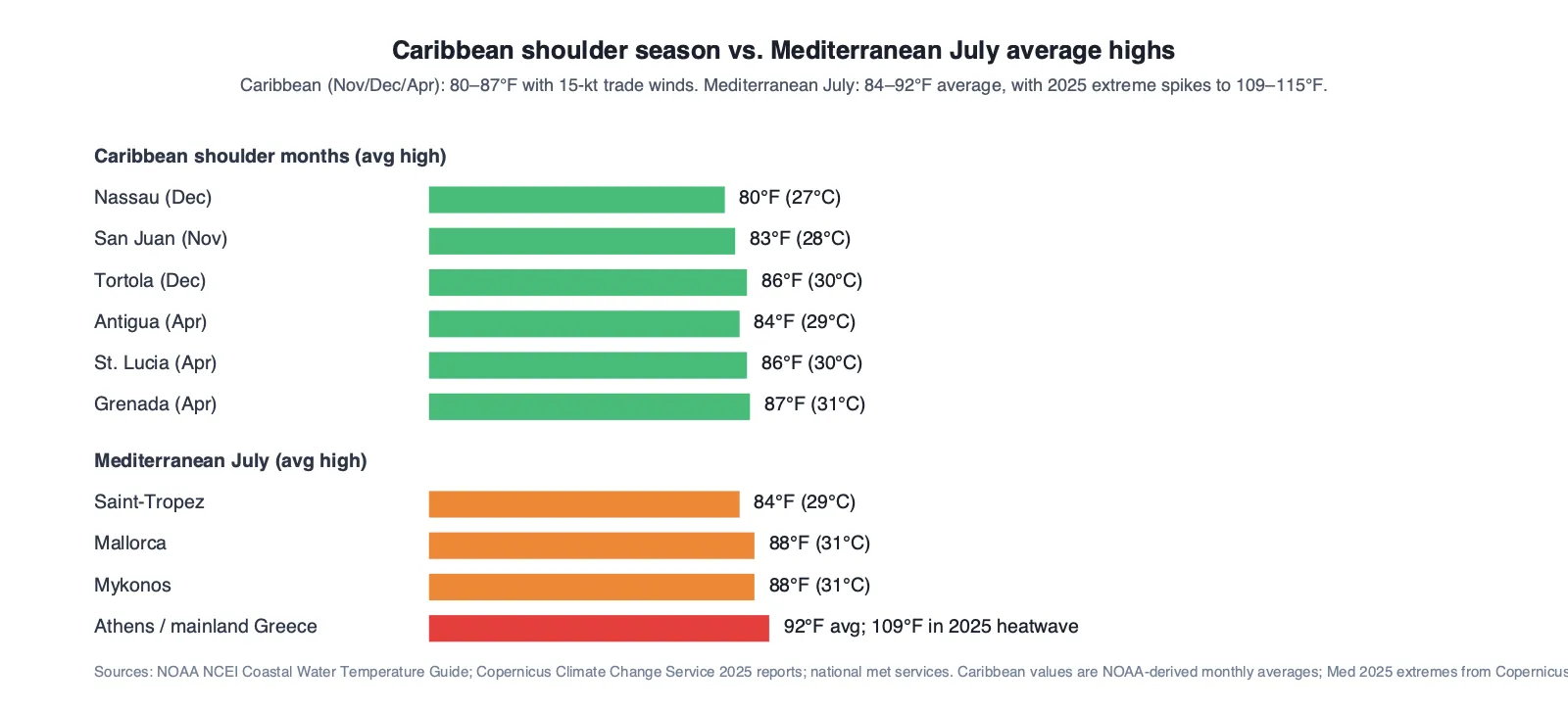
View data table
| Location | Month | Avg high | 2025 notes |
|---|---|---|---|
| Nassau, Bahamas | December | 80°F (27°C) | Trade winds 12–18 kt |
| San Juan, Puerto Rico | November | 83°F (28°C) | Last named storm risk tail |
| Tortola, BVI | December | 86°F (30°C) | Peak trade winds 15–20 kt |
| Antigua | April | 84°F (29°C) | Pre-hurricane shoulder |
| St. Lucia | April | 86°F (30°C) | Dry season tail |
| Grenada | April | 87°F (31°C) | Southern Caribbean, outside hurricane belt |
| Saint-Tropez, France | July | 84°F (29°C) | August 2025 heatwave 42°C / 108°F |
| Mallorca, Spain | July | 88°F (31°C) | June 2025 national max 46°C / 115°F |
| Mykonos, Greece | July | 88°F (31°C) | July 2025 heatwave 35°C+ for 2 weeks |
| Athens / Greek mainland | July | 92°F (33°C) | July 24–25, 2025: 43°C / 109°F |
Why early December and late April beat July anywhere
Early December and late April beat July in any Mediterranean charter base on three measures: temperature, crowd density, and heat-event risk. The temperature gap is structural. A late-April charter in St. Lucia averages 86°F with consistent trade winds; the Mediterranean July average is 88–92°F in still air, with extreme-event spikes that hit 109°F in Athens and 115°F in Spain during the 2025 summer. The Mediterranean Sea itself registered its second-warmest year on record in 2025, reducing the cooling effect of sea breezes.
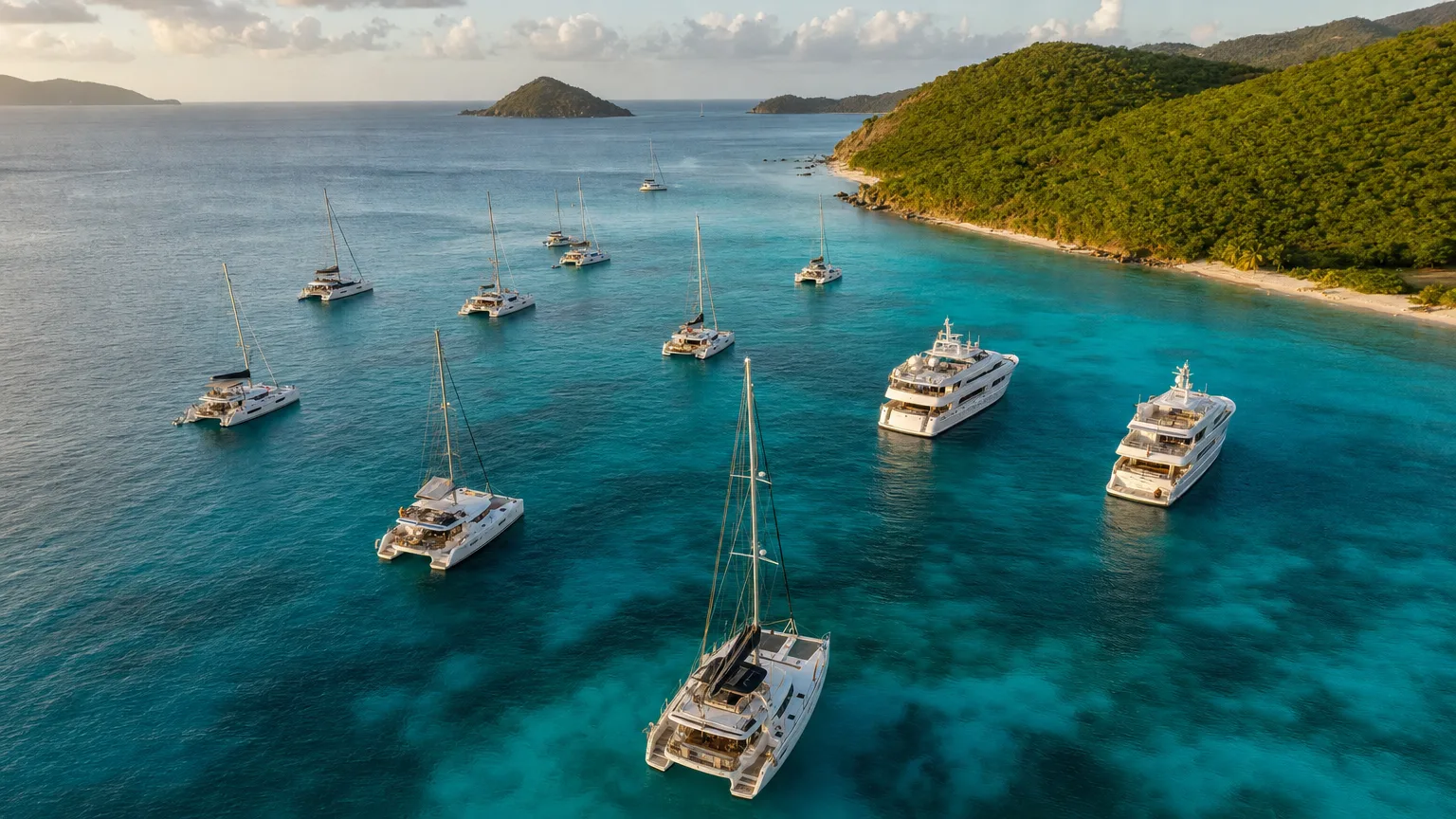
Crowd density is the second axis. The Caribbean peak season runs December 26 through April 15. Shoulder-month charters in early December or late April hit anchorages without the rafted-up festival of peak season. The strongest tier-1 anchorages (the Tobago Cays, Anegada’s North Shore, Compass Cay in the Exumas) often sit with three or four yachts in early December instead of the dozen-plus they hold in mid-February.
Heat-event risk is the third. The 2024–2025 climate record makes the Mediterranean summer a probability bet, not a guarantee. Booking.com found that 31% of travelers canceled or changed a trip in the past 12 months due to extreme weather. A Caribbean shoulder charter does not eliminate weather risk (rain squalls and occasional late-season tropical disturbances do happen), but it removes the heat-dome probability entirely.
Best Caribbean regions for cooler charter weather
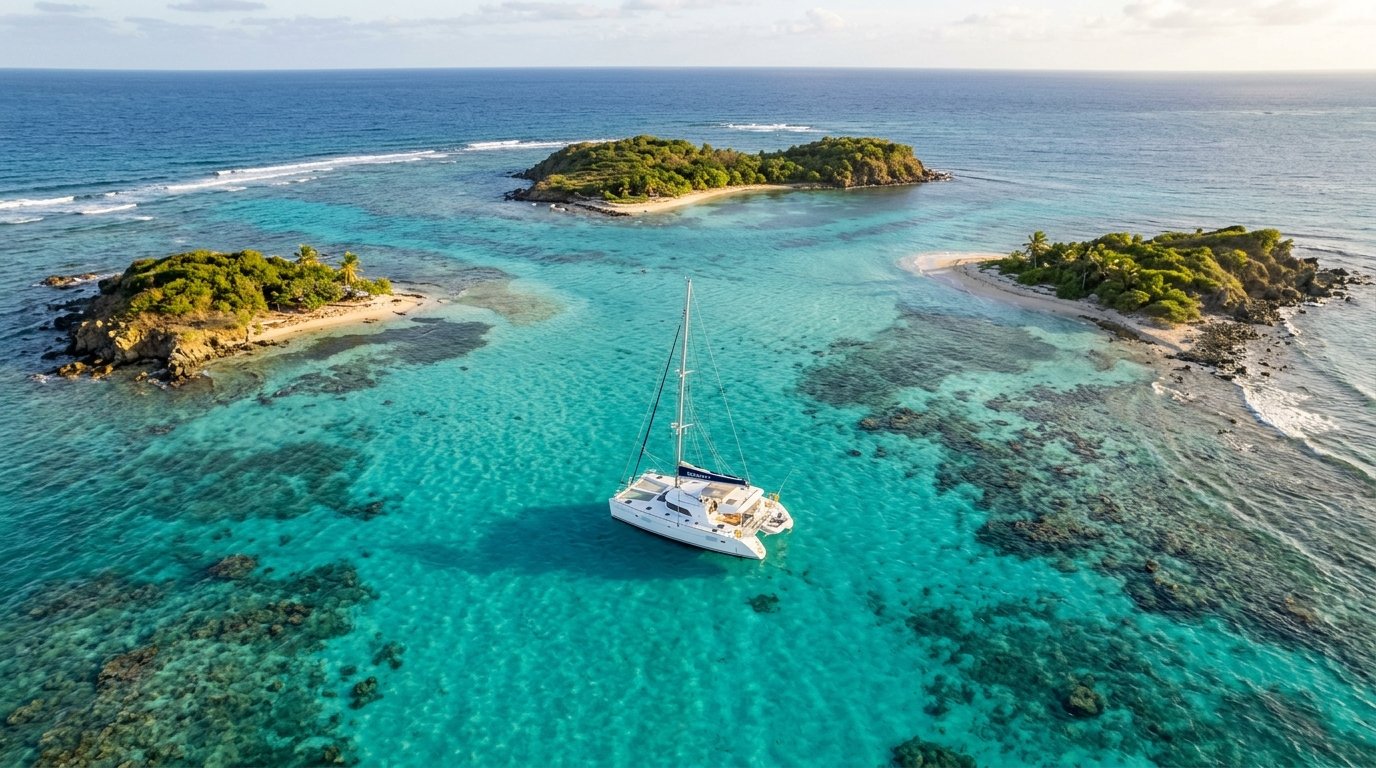
The best Caribbean regions for shoulder-season charter weather depend on how you want to trade temperature for itinerary variety. The Grenadines and southern Caribbean (Grenada, St. Vincent, Bequia) sit outside the deepest hurricane risk band and run 86–87°F in late April with the strongest reef-protected anchorages. The BVI in early December averages 86°F with the most concentrated charter infrastructure on earth and the easiest captain pool. See our answer to: What is the best month to sail in BVI? The Bahamas Exumas in November and early December run a slightly cooler 80°F, the lowest daytime temperatures of any major Caribbean charter region.
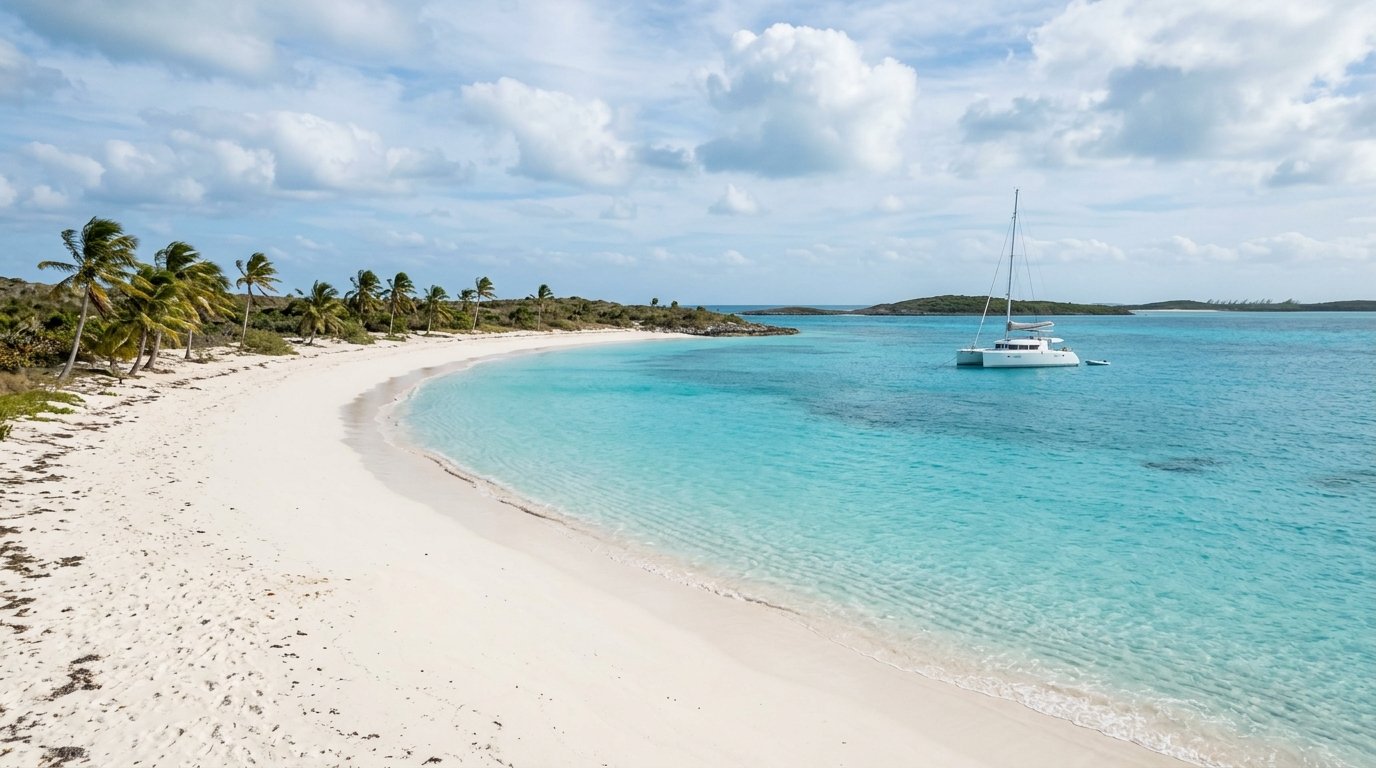
For the structurally coolest week of the year, the Bahamas in late November to early December is the answer. Northeastern trade winds push cooler continental air south, daytime highs sit in the upper 70s to low 80s, and the heat-dome events that grip the Mediterranean six months later are six months away. For dry-season tail charters with the most reliable weather, late April in Antigua, St. Lucia, or Grenada is the right call.
Sample shoulder-season charter itineraries
A 7-day late-April BVI shoulder charter looks like this: pick up in Tortola, run to Norman Island (The Bight + The Caves), to Cooper Island for a quieter overnight, to Virgin Gorda for The Baths and the Bitter End, to Anegada for the lobster-on-the-beach overnight, back through Jost Van Dyke (White Bay, Soggy Dollar) to Tortola. The week averages 84°F at anchor, 86°F ashore, with consistent 15-knot easterlies. The same week in the Mediterranean July often hits 95°F with no wind in the Saronic.
A 7-day early-December Grenadines charter: pick up in St. Vincent, sail to Bequia (Port Elizabeth and the Saturday market), to Mustique (Basil’s Bar overnight), to Mayreau and the Tobago Cays for two nights snorkeling Horseshoe Reef, to Union Island, finishing in Grenada via Carriacou. Daytime highs sit at 86–87°F, water 82°F, trades steady at 12–18 knots. Hurricane season officially ended November 30 and the Grenadines sit at the southern edge of the historical hurricane belt anyway.
A 7-day late-November Bahamas Exumas charter: pick up in Nassau, run to Highbourne Cay, to Norman’s Cay for the sunken plane snorkel, to Compass Cay for the nurse sharks, to Staniel Cay for Thunderball Grotto and the swimming pigs at Big Major, back via Allen’s Cay for the iguanas. The week averages 80°F at anchor, the lowest daytime temperatures in this guide. The Bahamas in shoulder season is a hidden Caribbean anchorages play with the temperature dial turned down.
Pricing benefit of a shoulder season Caribbean yacht charter
The pricing benefit of a shoulder season Caribbean yacht charter is smaller than it is usually described: 280 of 522 Caribbean yachts publish the identical rate in high and low season, and catamarans are the least likely to move at 74 percent flat (Vital Charters rate analysis, September 2026). The saving instead comes through promotional specials, which sit outside the published rate: at the time of writing 65 of 635 Caribbean and Bahamas yachts carry one, a median of 10 percent off, and 34 of those offers name an April-to-August window while 42 name November or December (Vital Charters listings analysis, September 2026). That is why shoulder pricing has a real reputation even though the rate cards barely move. The offers are not published alongside the rate and turn over weekly, so they have to be asked for. Peak season (December 26 through April 15) is when most premium catamarans and motor yachts post their full advertised rate. In the shoulder windows (mid-November through December 25, and April 16 through May) a lower rate is the exception rather than the rule; where operators do publish a discrete “early December” rate it is the deepest cut on their calendar.
Crew gratuity, APA (Advance Provisioning Allowance), and dockage fees do not change between peak and shoulder. The savings are pure base-rate. For an eight-guest, $40,000-per-week peak catamaran, the early-December rate often lands at $32,000–$36,000, saving $4,000–$8,000 for the same boat, the same crew, and weather that is structurally similar to a mid-February charter.
The other pricing benefit is yacht availability. The 5–10 premium catamarans in any given Caribbean base that book a year out for mid-February peak often have open weeks 2–3 months out in the shoulder windows. A guest who can flex on dates can book a higher-tier vessel for a lower number. This is one structural reason a sustainable yacht charter Caribbean booking is easier in shoulder season: the operators with the cleanest provisioning practices and the most-experienced captains have more open inventory.
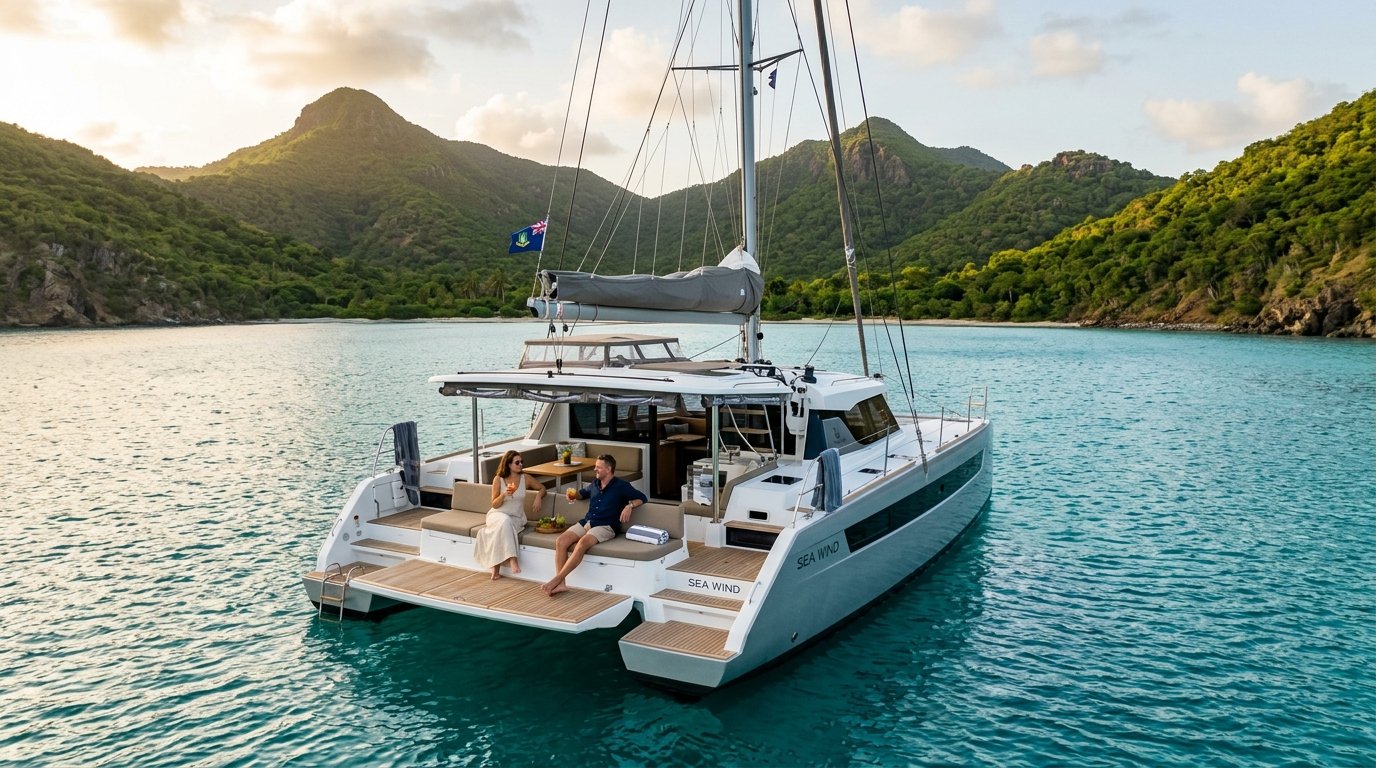
Start a yacht search at Vital Charters if you want a shoulder season Caribbean yacht charter broker who prioritizes availability over peak-rate margins. Contact us with your dates, destination preference, and group size, and we’ll return a short-list of vessels in the right shoulder window at the right rate.
Frequently Asked Questions
What is a shoulder season Caribbean yacht charter?
A shoulder season Caribbean yacht charter is a trip booked outside the December 26–April 15 peak window, most commonly in mid-November through December 25 or April 16 through May. The weather is structurally similar to peak (80–87°F with trade winds), the anchorages are dramatically less crowded, and base rates typically run 10–25% lower than peak.
Is the Caribbean cooler than the Mediterranean in summer?
In a direct measure, no: both are warm. But the trade winds in the Caribbean (steady 12–20 knots northeast) create a continuous cooling effect that the still Mediterranean air does not have, so a Caribbean 86°F afternoon feels meaningfully cooler than the same number in the Med. The 2024–2025 climate record also makes the Mediterranean summer a high-volatility bet, Athens hit 109°F in July 2025 and Spain hit 115°F in June 2025 (Copernicus).
When is the safest shoulder season for the Caribbean given hurricane risk?
Late April through mid-May is the safest shoulder window, fully outside the June 1–November 30 hurricane season. Early December is also low-risk in most years, though 2025’s Hurricane Melissa hit Jamaica on October 28 as the strongest landfalling Atlantic hurricane on record (NOAA), a reminder that the season can produce major events at the tail. The Grenadines and southern Caribbean sit outside the deepest hurricane risk band year-round.
How much do I save chartering in shoulder season?
Most shoulder season Caribbean yacht charter rates are the same as peak for the same vessel. Of the 242 yachts that do come down, the median cut is about 10 percent, so on a $40,000 peak catamaran expect roughly $4,000 rather than a quarter off, with crew gratuity, APA and dockage unchanged (Vital Charters rate analysis, September 2026). Some operators publish a discrete “early December” rate that’s the steepest discount of the year.
Which Caribbean region has the coolest shoulder-season weather?
The Bahamas in late November through early December has the coolest daytime temperatures of any major charter region, averaging 80°F in Nassau and the Exumas, because northeastern trade winds push cooler continental air south earlier than they reach the southern Caribbean. For dry-season tail charters, the BVI and Antigua run 84–86°F in late April.
Are trade winds still reliable in shoulder season?
Yes. The northeast trades blow 12–18 knots in November and late April, ramping to 15–20 knots December through February. The shoulder windows are well within the reliable trade-wind band. You get the wind, the sailing, and the cooling effect without peak crowds.
How far in advance should I book a shoulder season Caribbean yacht charter?
Two to three months out is typical for the shoulder windows, versus 12–18 months for premium catamarans in peak February. Booking that close to the date also gives you flexibility on vessel choice and captain selection.
About the author: Jason Acosta is co-founder and principal broker at Vital Charters.
Sources: Booking.com 2026 Climate Research; Skift 2026; Virtuoso 2026 Luxe Report; Condé Nast Traveler 2026 Trends; Copernicus Climate Change Service; World Meteorological Organization; World Weather Attribution; NOAA National Hurricane Center; NWS Phoenix; NOAA NCEI Coastal Water Temperature Guide; European State of the Climate 2025.
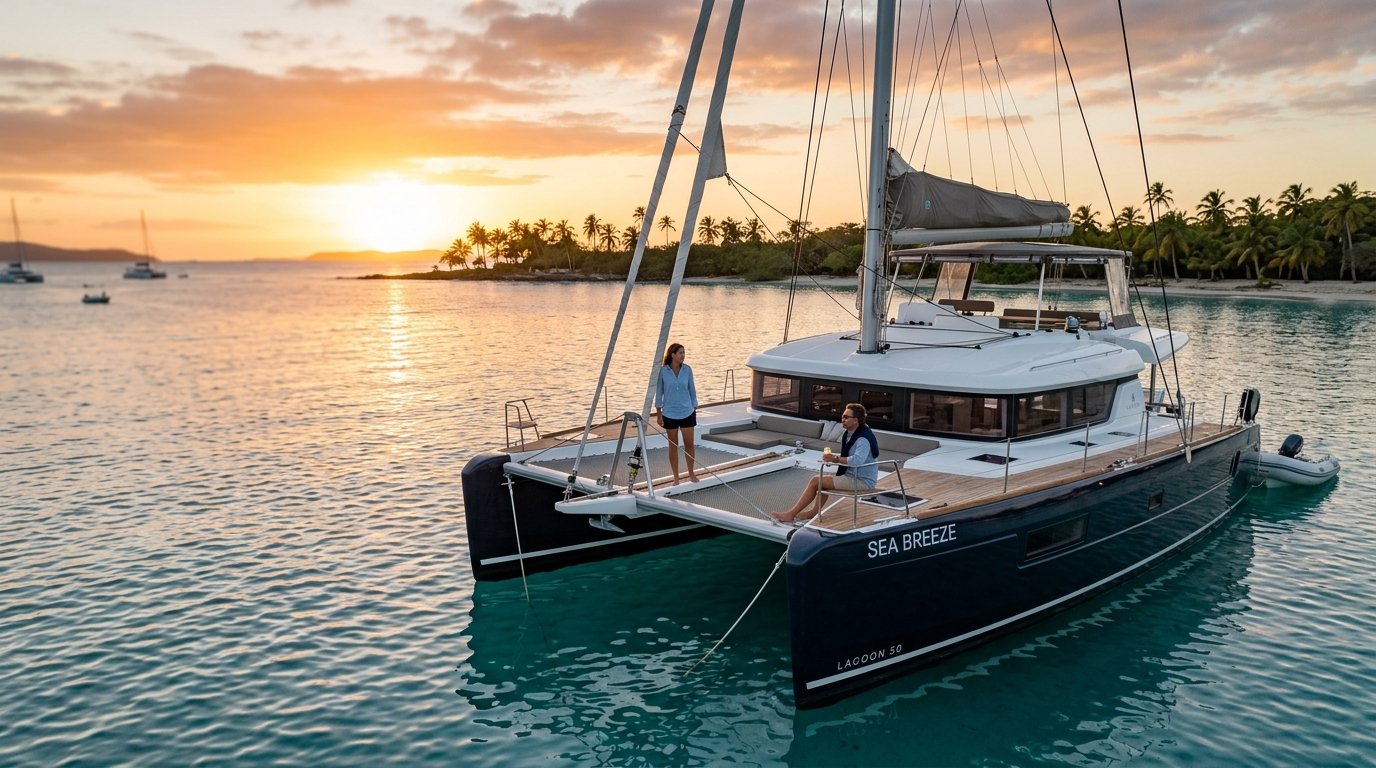
Trade-wind sailing before the peak-season crowds arrive.
Tell us your preferred dates and group size and we’ll show you crewed yacht availability for late April or early December, the Caribbean’s best-kept calendar secret.