
Things to Do in St Croix on a Crewed Yacht Charter (2026)
Things to do in St Croix on a 2-3 day yacht side trip from a USVI week: snorkel Buck Island, tour a 1738 Danish fort and watch the sun set in Frederiksted.
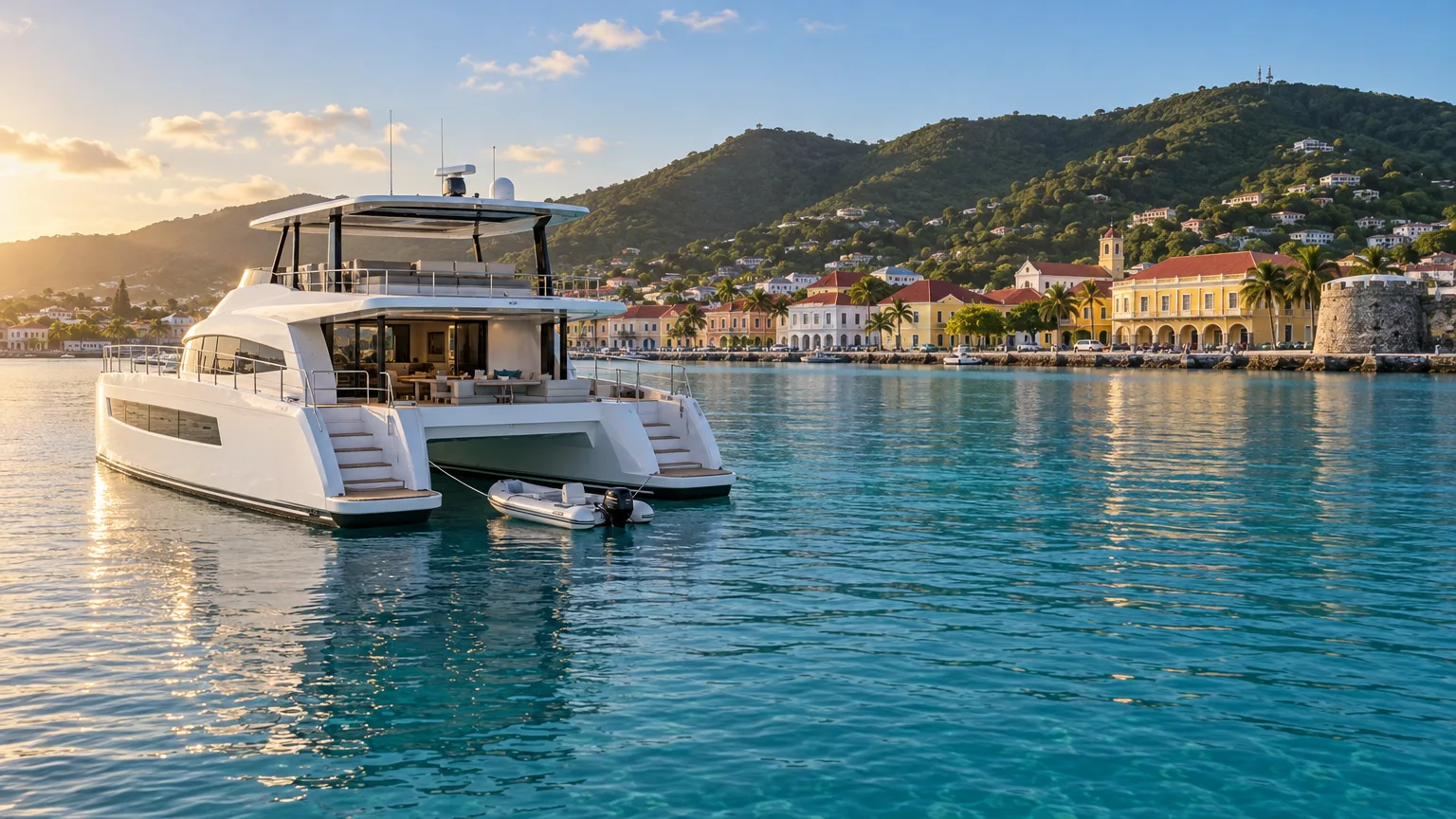
The best things to do in St Croix on a crewed yacht charter fit into a two- or three-day side trip. That’s enough time to snorkel the marked trail at Buck Island, walk Christiansted’s Danish fort and boardwalk, spend an afternoon in Frederiksted on the west end and dive off the north shore. Few crewed charters include St Croix, because getting there means an open-water crossing on a day the crew picks from the forecast.
If you’re still deciding which islands belong in your week, our guide to the top US Virgin Islands to visit by yacht compares St Croix with St Thomas, St John and Water Island, and the US Virgin Islands destination page shows the crewed yachts that cruise them.
Where is St Croix, and how far is it from St Thomas and St John?
St Croix lies 32 nautical miles (about 37 statute miles) south of St Thomas and St John (NOAA US Coast Pilot 5, 2026), across the Virgin Islands Trough, which reaches 4,200 meters (about 13,800 feet) deep (USGS, 2008). It’s the largest of the 40-plus islands and cays in the US Virgin Islands (National Park Service, 1997).
Its population is slightly smaller than St Thomas’s, though: 41,004 residents at the 2020 census (US Census Bureau, 2021). The island’s two towns sit on different coasts: Christiansted on the north shore, and Frederiksted on the west coast, in the lee of the trade wind.
Most of a Virgin Islands week is spent in sheltered channels, but the passage to St Croix crosses open ocean. The trade winds blow “almost without exception from an east direction, or between north-northeast and south-southeast” (NOAA US Coast Pilot 5, 2026), so the run south from St John is usually across the wind. The trades blow hardest from late December to the end of January. The crew watches the forecast and picks the crossing day. If the sea is up all week, St Croix waits for another trip and the yacht stays among the northern islands.
Christiansted’s harbor sits behind a reef (NOAA US Coast Pilot 5, 2026), so the crew leaves early enough to arrive in daylight. If anyone in your group gets queasy on open water, a few seasickness precautions the night before make the crossing day easier.
How does St Croix fit into a USVI charter week?
A St Croix side trip usually fills two or three days of a seven-night US Virgin Islands charter: a day to cross to Christiansted, a day at Buck Island and an optional third on the west end before heading north. Guests’ reviews describe it that way, as a stop inside a week (Vital Charters analysis of guest reviews, November 2026).
Day 1: Cross to Christiansted
The yacht leaves the St John or St Thomas anchorage in the morning and makes the crossing south. By afternoon you’re anchored off Christiansted, near Protestant Cay, the small island in the middle of the harbor. The tender drops you at the boardwalk for an evening in town.
Day 2: Buck Island and the East End
An early start to Buck Island, off the northeast coast, gets you on the snorkel trail before the day boats arrive. In the afternoon the yacht can work along the East End toward Point Udall before heading back to Christiansted for the night.
Day 3: Frederiksted, then back north
The yacht runs around to the west coast for a morning in Frederiksted, or spends the day on the Christiansted side if the forecast suggests an earlier crossing back. On a two-day version, the crew skips the west end and starts north after Buck Island.
Here’s where the main stops sit and how you reach them from the yacht:
| Stop | Where | How you get there from the yacht |
|---|---|---|
| Christiansted and Fort Christiansvaern | North shore | Tender to the boardwalk |
| Buck Island Reef | Off the northeast coast | Tender from outside the lagoon |
| Salt River Bay | North shore, west of Christiansted | Tender or guided kayak |
| Point Udall, Jack Bay and Isaac Bay | East End | By boat; Point Udall also by road |
| Frederiksted and Fort Frederik | West coast | Tender from the anchorage off town |
| Estate Whim and the Cruzan distillery | Inland | A car the crew arranges |
The rest of the week stays where crewed charters spend most of their time: the national park bays of St John and the anchorages around St Thomas. Groups who want more of St Croix than a side trip allows can add a few nights ashore before or after the charter.
Before you choose the islands, see which crewed yachts cruise St Croix and the rest of the US Virgin Islands for a group your size.
What are the best things to do in St Croix around Christiansted?
Christiansted’s main sight is Fort Christiansvaern, built in 1738 and the centerpiece of Christiansted National Historic Site, which in 1952 became the first National Park Service unit in the Virgin Islands (National Park Service, 2026). The fort is open daily (NPS, 2026), and the site’s other Danish-era buildings stand around the same harbor-front green.
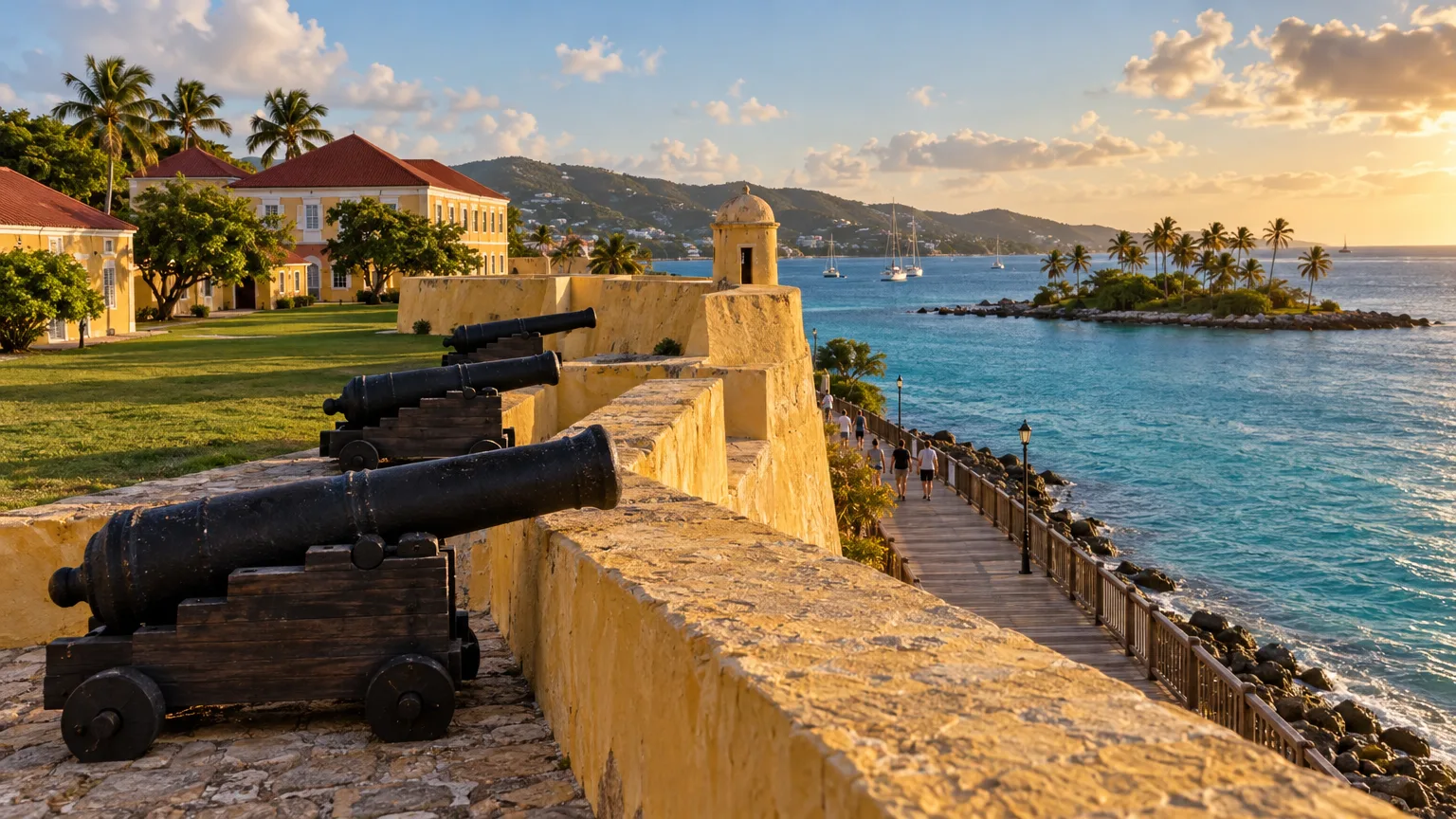
Those buildings include the Steeple Building, the Danish Custom House, the Scale House and the warehouse of the Danish West India and Guinea Company (NPS, 2026), which bought St Croix from France in 1733 (NPS National Historic Landmark nomination, 1997). The fort has an entrance fee, and a single ticket covers three days (NPS, 2026). The site reopened in August 2025 after Hurricane Erin (NPS, 2025).
Alexander Hamilton spent his teenage years here. His family arrived in 1765, and he worked as a clerk for the merchants Beekman and Cruger until he left the island in 1773 (NPS, 2026). A plaque marks the King Street building that stands on or near the firm’s site (NPS, 2026).
The chef aboard cooks most meals, so dinner ashore is a night off for everyone. On the boardwalk, Rum Runners has tables facing the harbor and a menu that leans on fresh seafood, and Savant, near the fort, serves a Caribbean-forward menu that changes often (Caribbean Journal, 2026).
Four times a year, Christiansted closes its streets for a Jump Up, and the biggest falls in February near Valentine’s Day (Visit USVI, 2026). Expect live music, food stalls and mocko jumbies, the stilt dancers that Virgin Islands tradition casts as “spiritual guardians of the village” (St. Thomas Source, 2019).
What is Buck Island Reef like on a St Croix side trip?
Buck Island Reef National Monument, off St Croix’s northeast coast, is a day-use marine reserve with a marked underwater snorkel trail (National Park Service, 2026). Fishing and every other extractive use are banned there (36 CFR 7.73, 2024), so even a shell stays where you found it. The only way in is by boat.
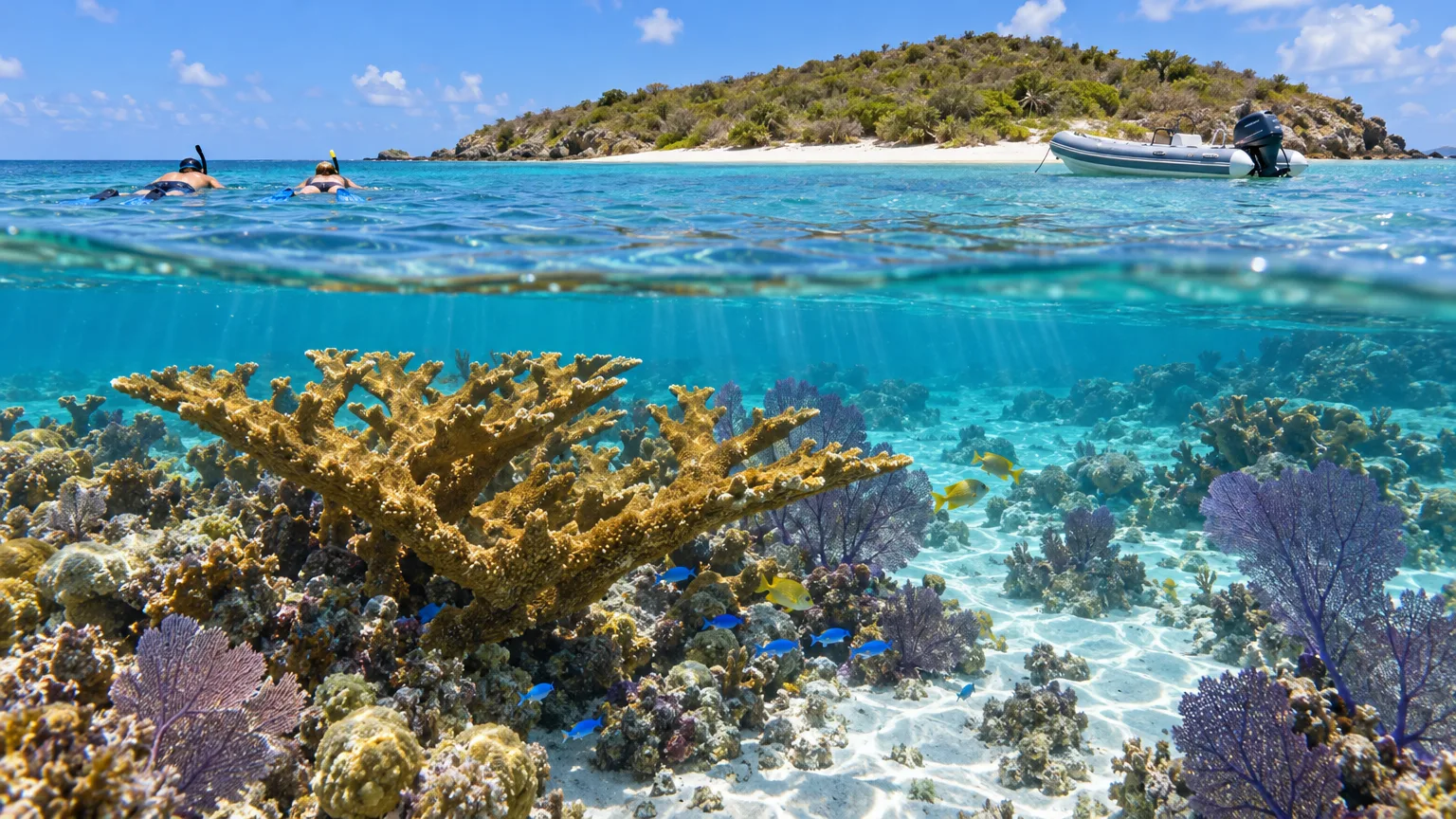
Boats anchor only in a marked area off West Beach. The lagoon is closed to anything the size of a crewed yacht, so the yacht waits outside it while the tender runs you to the trail. The biggest yachts anchor in deeper water farther out and have a longer tender ride (NPS Superintendent’s Compendium, 2026). Jet skis stay aboard, because personal watercraft are banned in the monument’s waters (NPS Superintendent’s Compendium, 2026).
Guests on three of the eight yachts whose reviews describe St Croix mention Buck Island by name, and one group called it the best memory of their week (Vital Charters analysis of guest reviews, November 2026). Our Buck Island Reef guide covers the snorkel trail, the reef’s coral and the beach and overlook hike on the island itself.
What is there to do in Frederiksted and on the west end?
Frederiksted’s landmark is Fort Frederik, finished in 1760 (National Park Service, 2026), where Governor-General Peter von Scholten proclaimed on July 3, 1848 that “All unfree in the Danish West India Islands are from to-day free” (NPS National Historic Landmark nomination, 1997). The fort is now a museum, and a three-year restoration was due to begin around the start of 2026 (DPNR, 2025), so the crew plans the visit around the work.
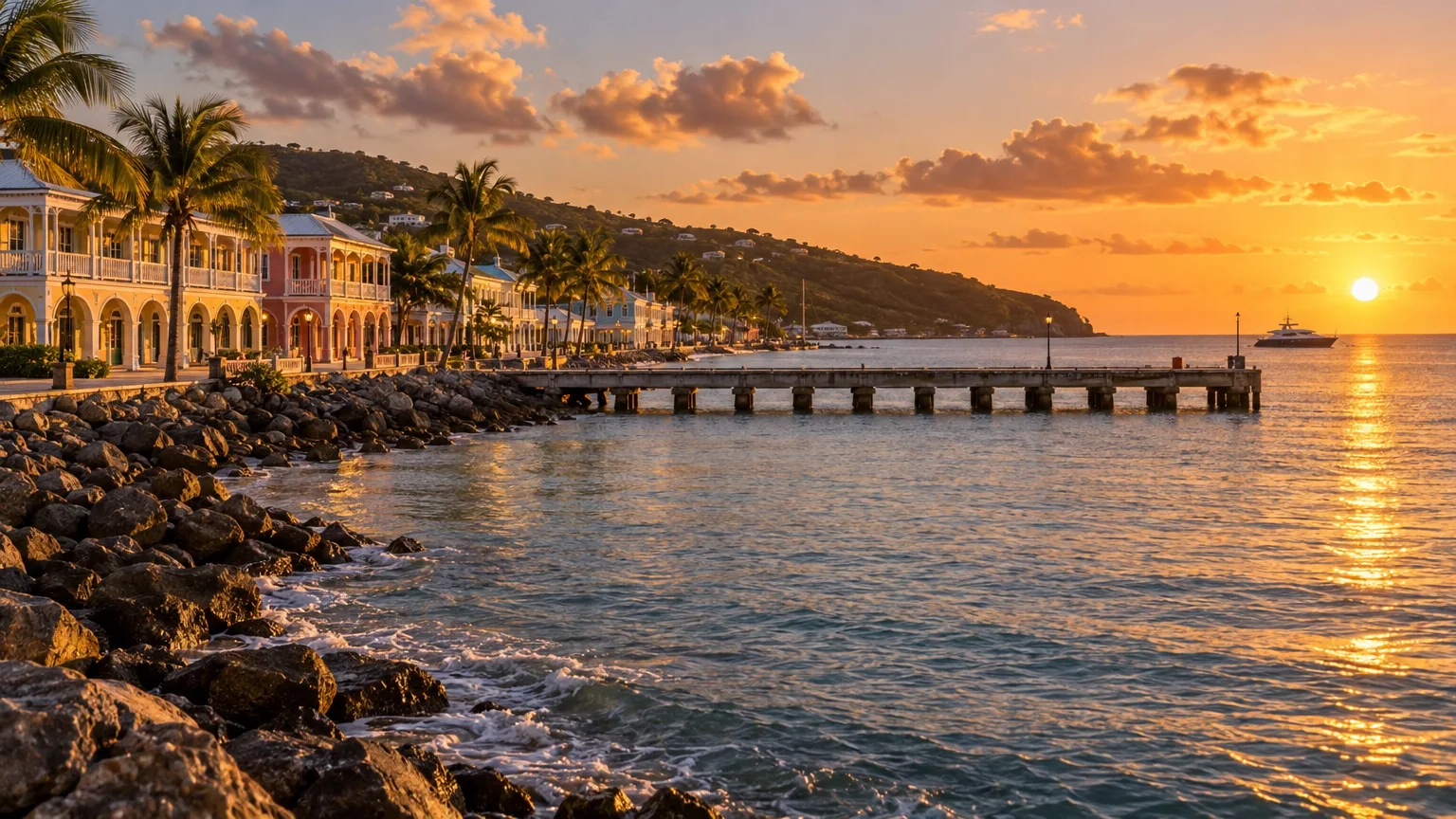
Much of the town burned in the labor riots of October 1878 and was rebuilt with the ornate Victorian detailing you see on its arcaded streets today (NPS Frederiksted Historic District nomination, 1976). The 1,526-foot pier that runs out from the waterfront is the island’s cruise ship dock (Virgin Islands Port Authority, 2026).
Frederiksted lies on an open roadstead, sheltered from the east trade wind but exposed when the wind swings west or northwest (NOAA US Coast Pilot 5, 2026). On most days the wind is in the east, so the anchorage off town is calm.
Two inland stops pair well with a Frederiksted morning, and the crew arranges a car for both:
- Estate Whim Museum: A former plantation where sugar was the main crop from 1754 until the 1920s, with its animal, wind and steam cane mills on show (St. Croix Landmarks Society, 2026). It opens Wednesday through Saturday and on cruise ship days, and the crew plans the visit around that.
- Cruzan Rum Distillery: Tours run about an hour, and the distillery closes on Wednesdays and Sundays (Cruzan, 2026).
South of town, the beach at Sandy Point National Wildlife Refuge closes from roughly mid-April to August each year “to avoid disturbing nesting leatherback sea turtles” (US Fish and Wildlife Service, 2026). Outside those months, the crew can plan a beach afternoon there.
What can you see at Salt River Bay and the East End?
Salt River Bay, on St Croix’s north shore, is the only confirmed site where members of Christopher Columbus’s second expedition set foot on what is now US territory, in 1493 (National Park Service, 2026). Today it’s a national historical park and ecological preserve with some of the largest mangrove forests left in the Virgin Islands (NPS, 2026).
The bay’s entrance is a narrow, shallow passage through a reef (NOAA US Coast Pilot 5, 2026), so the yacht stays outside, and you go in by tender or by kayak. The bay is also home to “the most popular bioluminescent bay in the U.S. Virgin Islands” (VI Consortium, 2021), and you see it on a guided night paddle.
The East End is the quiet side of the island. Point Udall, billed as the easternmost point of the United States, has a stone sundial built for the year 2000 (Visit USVI, 2026). The St Croix East End Marine Park, set up in 2003 as the first marine protected area designated and managed by the territory itself, includes a no-take zone where snorkeling and flagged diving are still allowed (DPNR, 2026). Inshore, Jack and Isaac Bays form a 300-acre preserve run by The Nature Conservancy (The Nature Conservancy, 2026), with beaches and no facilities at all.
Can you go scuba diving at St Croix?
Yes. St Croix’s dive sites include the wall at Cane Bay on the north shore, which starts just 100 yards from the shoreline (Visit USVI, 2026). The Frederiksted Pier is a well-known night dive, with seahorses among its residents (Visit USVI, 2026). Off Salt River, the canyon “plummets to a depth of over 12,000 feet” (National Park Service, 2026). Buck Island’s underwater trail is closed to scuba (NPS Superintendent’s Compendium, 2026), so tanks stay on the boat that day.
If diving is the main reason for the crossing, choose a yacht with its own dive gear and a dive-certified crew, so the dives run from the boat.
When is the best time to visit St Croix?
February and March are St Croix’s driest months, with 1.35 and 1.62 inches of rain on average, and November is the wettest at 5.30 inches, according to NOAA’s 1991-2020 climate normals for St Croix’s airport (NOAA NCEI, 2021). Average highs run from 84.2°F in January to 89.5°F in August.
The sea is warm all year, from 80.3°F in February to 86.6°F in September in Christiansted Harbor (NOAA, 2025). Hurricane season runs from June 1 to November 30 and peaks around September 10 (National Hurricane Center, 2026). From June to September the trade wind is usually light, with occasional strong southwest winds that bring heavy rain (NOAA US Coast Pilot 5, 2026). Our guide to chartering during hurricane season covers what to expect in those months.
Two events can shape when you go:
- Crucian Christmas Festival: St Croix’s carnival runs from December 5, 2026 to January 2, 2027, with its parades and pageantry in Frederiksted (Visit USVI, 2026).
- Agriculture and Food Fair: The chef can shop this annual February fair for island produce. The 54th edition ran February 14-16, 2026 (University of the Virgin Islands, 2026).
Add St Croix to your Virgin Islands week
St Croix is for groups who want more than the usual Virgin Islands loop. In two or three days you can walk a Danish fort and the old town around it, snorkel a national monument reef and see a quieter coast that most crewed charters never reach. Getting there means an open-water crossing, so tell us early if it’s on your list. Start a yacht search at Vital Charters, and we’ll match you with a crewed yacht that makes the crossing.
Frequently Asked Questions
Do you need a passport to visit St Croix?
Not if you’re a US citizen arriving from the mainland or Puerto Rico, because the US Virgin Islands are a US territory (Visit USVI, 2026). If your charter week also visits the British Virgin Islands, everyone needs one. Christiansted is a customs port of entry (NOAA US Coast Pilot 5, 2026), and the crew handles the formalities. Our guide to Caribbean charter entry requirements covers the rest.
How long is the sail from St John to St Croix?
Most of a morning. One group of guests on a crewed catamaran described it as a four-hour sail (Vital Charters analysis of guest reviews, November 2026). It’s open water the whole way, so the crew waits for a day when the sea is moderate.
Can a crewed yacht stay overnight at Buck Island?
No. Buck Island Reef National Monument is open from 7 a.m. to 5 p.m. every day, and overnight anchoring isn’t allowed (NPS Superintendent’s Compendium, 2026). After a day at the reef, the yacht goes back to Christiansted harbor for the night.
What sunscreen can you use on St Croix?
Sunscreens containing oxybenzone, octinoxate or octocrylene are banned throughout the US Virgin Islands, not just in the national parks, under a territorial law in force since March 30, 2020 (St. Thomas Source, 2020). Pack a mineral sunscreen before you fly.
Is St Croix part of the British Virgin Islands?
No. St Croix is one of the US Virgin Islands, which Denmark transferred to the United States on March 31, 1917 (Office of the Historian, 1917). The British Virgin Islands are a separate British territory to the northeast.
Do you need a car on St Croix?
Not for a side trip by yacht. Christiansted’s sights are a short walk from where the tender lands, and Frederiksted’s waterfront is too. For inland stops such as Estate Whim or the rum distillery, the crew arranges a car.
Add St Croix to your Virgin Islands week.
Tell us your group size and dates and we’ll put together crewed USVI options, with a St Croix side trip the crew times around the weather.