
How Peter Island Fits Into a BVI Yacht Itinerary
Peter Island, BVI is the British Virgin Islands’ largest private island. A crewed-charter guide to its anchorages, reopened resort, diving and best season.
Last Updated: September 6, 2026
Peter Island, BVI is the largest private island in the British Virgin Islands, 1,800 acres of green hills, five beaches, and some of the most protected anchorages in the chain (Wikipedia, 2026). For crewed-charter guests, it’s one of the best “wake up somewhere quiet, dive a world-famous wreck before lunch” stops in the entire Sir Francis Drake Channel.
It’s also a place that changed in late 2024: after a seven-year closure, the Peter Island Resort reopened, which reshaped what a day here looks like for guests arriving by yacht. This guide covers the anchorages, the resort access, the diving, the costs, and the best time to go, and where Peter Island fits among the other crewed charter destinations across the Caribbean.
If you’re weighing the wider region first, start with our broader guide to planning a crewed yacht charter in the British Virgin Islands, then come back here to slot Peter Island into the route.
Where Is Peter Island in the BVI?
Peter Island sits about 5 miles (8 km) southwest of Road Town, Tortola, on the south side of the Sir Francis Drake Channel (Wikipedia, 2026). It’s privately owned and has no airport or public ferry dock for general traffic, so the only way to reach it is by boat, which is exactly why it suits a crewed charter so well.
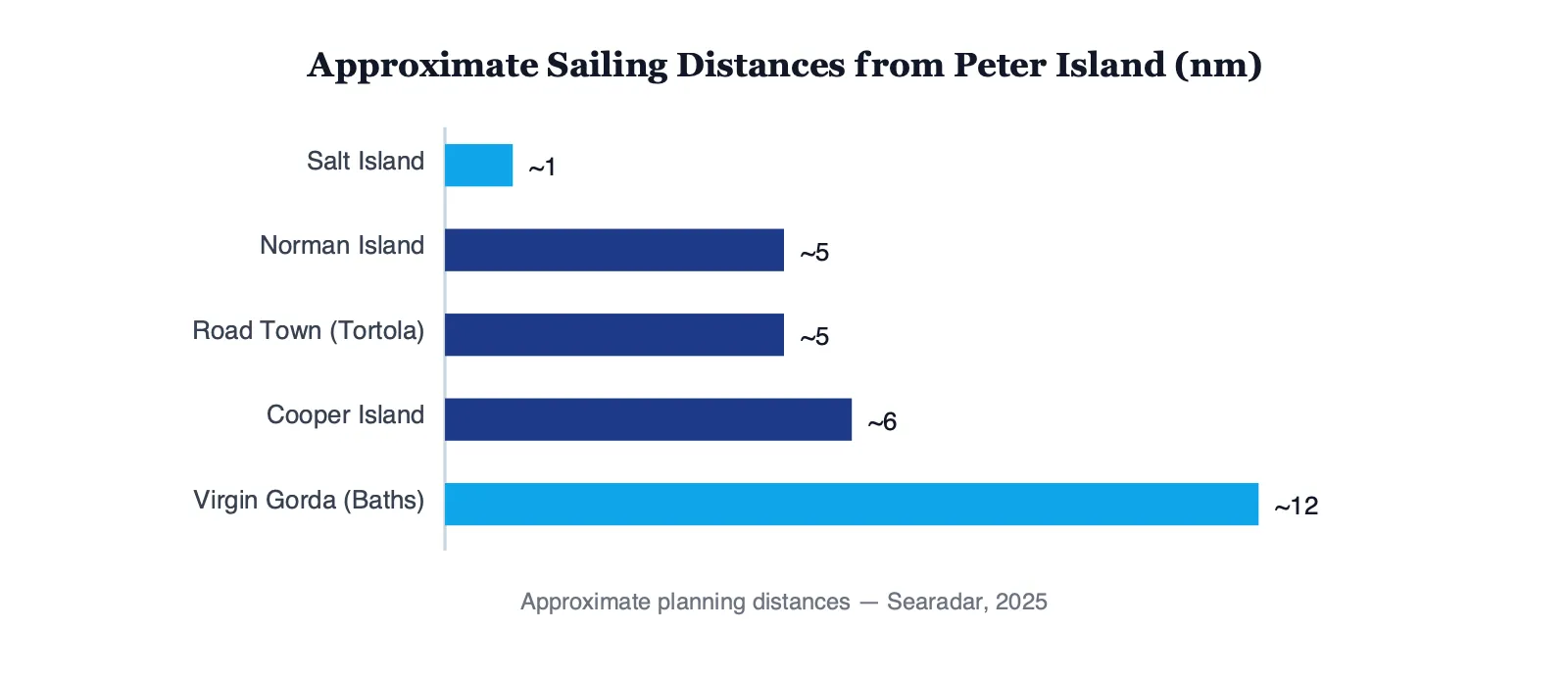
From a yacht, Peter Island is one of the most convenient stops in the BVI. It’s a short hop from the main charter base on Tortola and sits in the middle of a cluster of marquee anchorages, Norman Island, Cooper Island, and Salt Island are all close enough to fold into a single day’s sailing.
View data table
| From Peter Island to | Approx. distance (nm) |
|---|---|
| Salt Island (neighbor) | ~1 |
| Norman Island | ~5 |
| Road Town, Tortola | ~5 |
| Cooper Island | ~6 |
| Virgin Gorda (The Baths) | ~12 |
Approximate planning distances; actual sailing time depends on your base, weather, and chosen anchorage (Searadar, 2025).
That central position is what makes Peter Island so easy to drop into a route. On a 7-day BVI itinerary, most crews use it as either a first-night decompression stop out of Road Town or a mid-week anchor for diving the Rhone.
Who Owns Peter Island: and Is the Resort Open in 2026?
Peter Island is owned by the Van Andel family, co-founders of Amway, not by the Amway corporation itself. The DeVos family (Amway Corporation) bought the island in 1978, and full ownership passed to the Van Andel family in 2001 (Peter Island history, 2026). It hasn’t been sold to a hotel chain; it remains a privately held family island, unusual for a property of this scale in the Caribbean.
The Peter Island Resort reopened on December 1, 2024 after a seven-year closure caused by Hurricane Irma in 2017 (Virgin Islands News Online, 2024). The rebuild was extensive: the resort now has 52 rooms and suites, 52 of 54 of them beachfront on Deadman’s Bay, plus a 10,000-square-foot spa with seven treatment rooms, new restaurants, and structures engineered to Miami-Dade High Velocity Hurricane Zone standards (Robb Report, 2024).
Immediately after reopening, Peter Island Resort joined the Legend Collection by Preferred Hotels & Resorts, the brand’s top tier (Travel Weekly, 2024). For charter guests, the practical takeaway is simple: after years of arriving at a shuttered resort, you can once again use Peter Island’s restaurants, spa, and beach facilities as part of a day at anchor.
What Are the Best Anchorages at Peter Island?
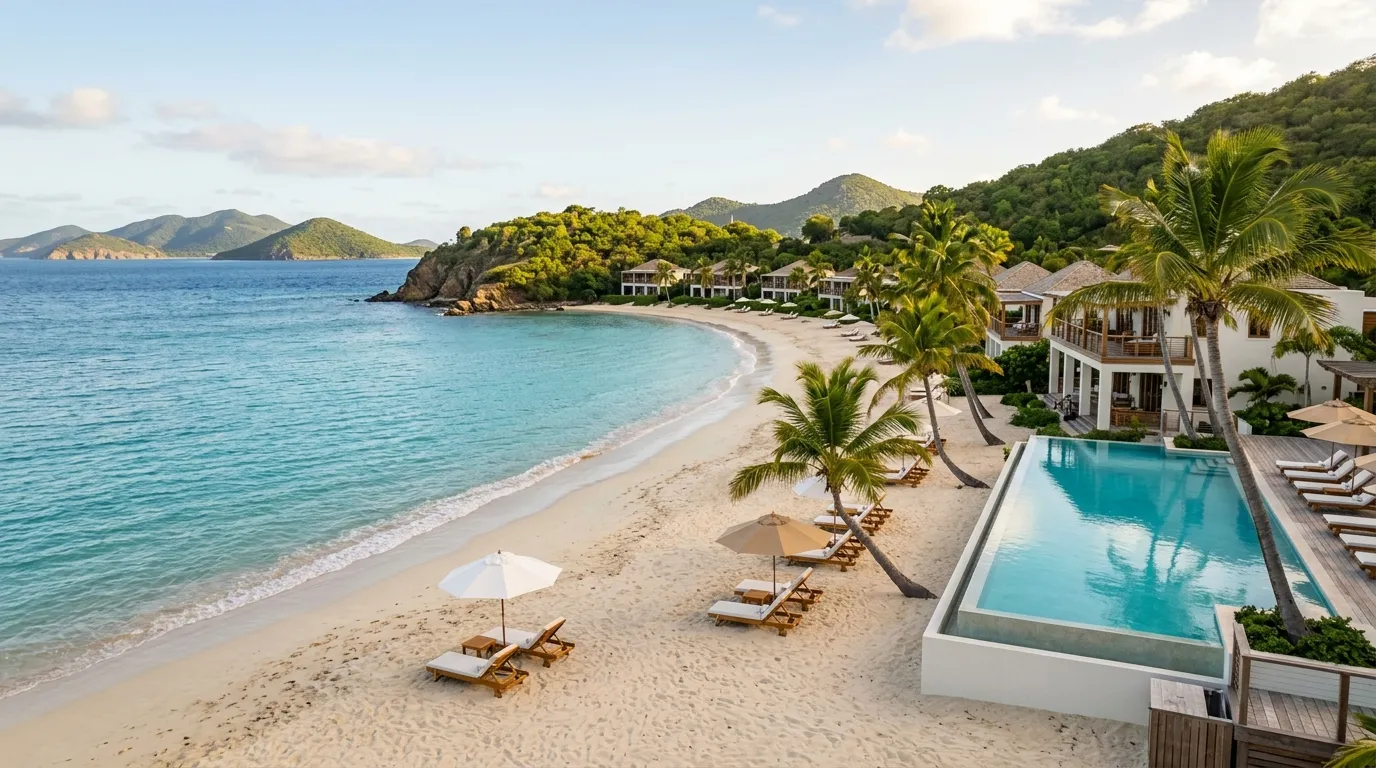
The best anchorages at Peter Island are Great Harbour and Little Harbour on the north side. Great Harbour is deep, wide, and well-protected, while Little Harbour is one of the most secluded anchorages in the BVI (Online Cruising Guide, 2026). Deadman’s Bay on the south side has bookable mooring balls and direct access to the resort beach.
Peter Island’s geography gives you options in almost any conditions. The north-facing harbours are sheltered from the prevailing easterly trades and the Drake Channel swell, while the south-side bays are gorgeous in settled weather but exposed when the wind backs around. A good captain reads the forecast and picks accordingly, which is one of the quiet advantages of a crewed charter over going it alone.
| Anchorage | Side | Depth | Protection | Best for |
|---|---|---|---|---|
| Great Harbour | North | ~30–35 ft (eastern shore) | Well-protected; easy wide approach | Big-yacht room, overnight security, reef snorkeling |
| Little Harbour | North | ~15–30 ft | Very sheltered, tranquil, uncrowded | Seclusion, turtles, escaping the crowds |
| Deadman’s Bay | South | Sandy | Good, with a mile-long beach | Resort beach access via mooring balls |
| White Bay | South | Sandy | Good in settled conditions only | Soft sand, coral, sea-turtle snorkeling |
| Key Bay | South | ~15 ft | Exposed to southerly swell; 2–3 boats max | Diving the sunken original Willy T |
| Sprat Bay | North | Dredged | Resort home harbour / marina | Marina services, fuel, water, resort access |
Anchorage character compiled from cruising-guide sources (Online Cruising Guide, 2026). Depths and holding are approximate: always confirm against current charts and forecasts.
Sprat Bay is the resort’s home harbour and superyacht marina, which now accommodates yachts up to 200 feet after the rebuild added new dock space (Peter Island marina page, 2026). For most charter catamarans and sailing yachts, though, the draw is the free-swinging room and mooring balls in Great Harbour and Little Harbour.
If you’re the type who plans a charter around great anchorages, it’s worth comparing notes with the best anchorages in St. Barts, a very different, more glamorous anchoring scene farther down the chain.
Snorkeling and Diving Around Peter Island
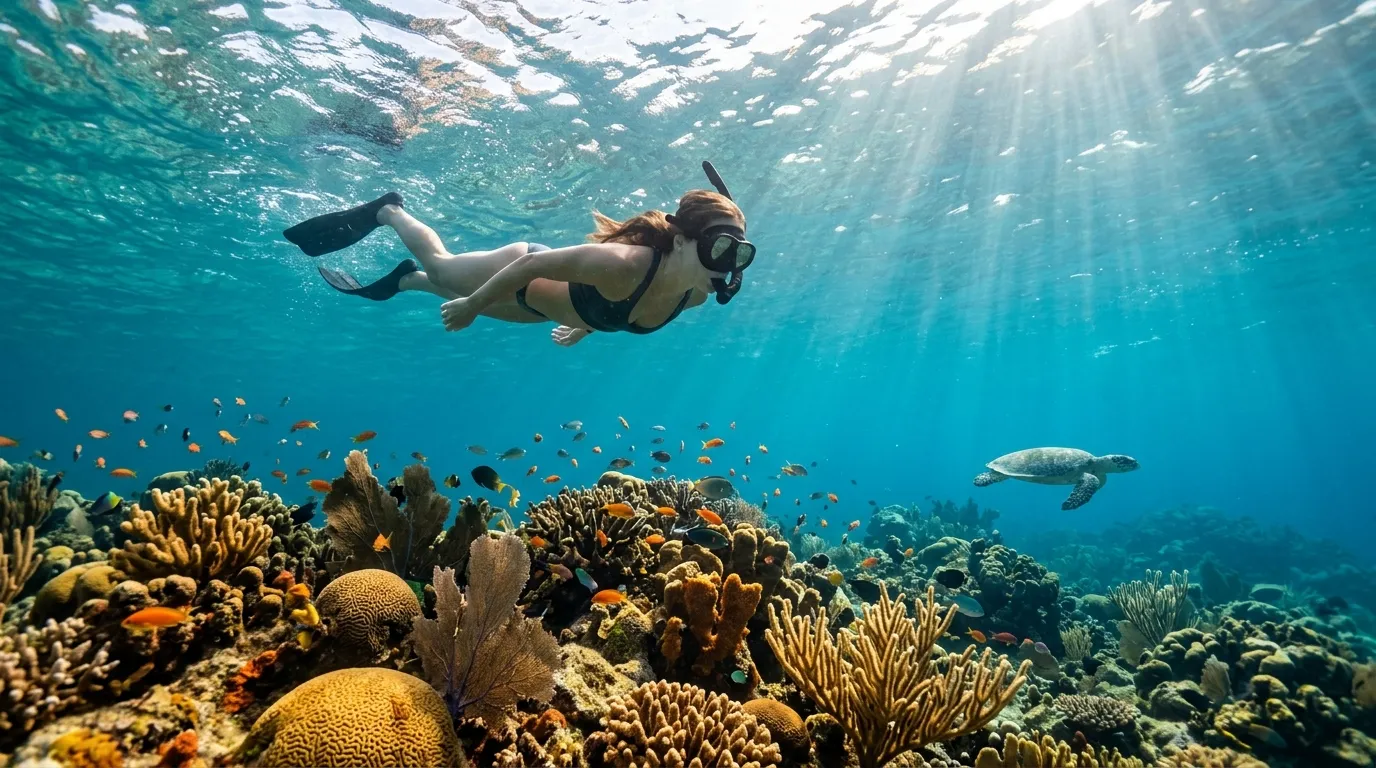
The standout dive near Peter Island is the wreck of the RMS Rhone, which sank off neighboring Salt Island in an 1867 hurricane and is now a protected marine park and the BVI’s most celebrated dive (Wikipedia, 2026). The ~310-foot wreck lies in two sections in 30 to 90 feet of water, and the shallower bow is reachable by strong snorkelers, one of the few world-class wreck dives that non-divers can also enjoy.
Salt Island is Peter Island’s immediate neighbor to the east, a short sail or tender ride, so most crews diving the Rhone anchor at or near Peter Island and run over for the morning. The wreck is widely considered the best dive in the British Virgin Islands and one of the best in the Caribbean.
Closer in, Peter Island has its own underwater attraction. The original Willy T floating bar, the one destroyed by Hurricane Irma in 2017, was sunk at Key Bay and is now a “ghost ship” artificial reef you can dive or snorkel (BVI Traveller, 2025). The fringing reefs off Deadman’s Bay and White Bay round out the on-island snorkeling, with healthy coral and frequent sea-turtle sightings.
What Is There to Do on Peter Island?
Peter Island has five beaches, a 310-foot wreck dive (the RMS Rhone), a snorkelable artificial reef at Key Bay, hiking trails, and, since the December 2024 reopening, a spa and two restaurants (Robb Report, 2024). It’s a low-key, nature-first island with no town, no cruise dock, and no crowds.
Here is how most charter guests fill a day at Peter Island:
- Dive or snorkel the Rhone in the morning, when visibility and light are best.
- Beach time on Deadman’s Bay, a mile-long crescent of white sand.
- Hike one of the island’s trails: the climb above White Bay rewards you with sweeping channel views, and post-hurricane clearing has exposed historic ruins along the way.
- Spa and lunch ashore at the resort (more on access below).
- Sundowners back aboard, or a short sail to the Willy T floating bar at Norman Island.
One quick clarification, because guides get it wrong: the Willy T floating bar itself is now moored at The Bight on Norman Island, about 5 nautical miles away, not at Peter Island (Willy T official site, 2026). Peter Island has the sunken original at Key Bay; Norman Island has the operating bar. Both are easy to reach from a Peter Island anchorage, which is part of the appeal.
Resort dining brings a few new options for 2026: the upscale Drake Steakhouse and the casual Drunken Pelican beach grill both opened with the reopening (Robb Report, 2024). For more dining variety across the islands, see the BVI’s newest restaurants worth a tender ride.
Can Charter Guests Visit the Resort? Access, Day Passes & Dining
Yes: charter guests can visit Peter Island. All BVI beaches are public up to the high-water mark, and the resort offers a “Yacht Club Experience” add-on, available with a mooring-ball rental or overnight docking, that grants access to the pool, sport courts, beach shuttles, and the Drunken Pelican restaurant (Peter Island Yacht Club). The resort publishes no price for it, and the spa and Drake Steakhouse take reservations separately, so your crew books the whole thing ahead rather than you negotiating it at the dock.
In practice, the resort asks visiting yachts to bring their tenders to the eastern end of Deadman’s Beach rather than the resort dock. From there, the beach, the casual restaurant, and (with a reservation) the spa are all on the table. It’s a meaningful upgrade from the closure years, when Peter Island offered scenery but nothing ashore.
A few planning notes:
- Book ahead. Spa appointments and Drake Steakhouse reservations should be arranged in advance, a crewed yacht’s captain or your broker can set this up before you arrive.
- Mooring balls in Deadman’s Bay are bookable online and are the easiest way to combine an overnight with resort access.
- Crew are usually welcome at the casual venues as part of the Yacht Club Experience, which makes Peter Island a comfortable lunch stop for the whole boat.
If you’re planning land time before or after the charter, it’s also worth scanning the best BVI hotels for charter guests. Peter Island is one option, but Tortola and Virgin Gorda have easier logistics for a pre-charter night.
How Much Does Peter Island Cost?
Staying at the Peter Island Resort starts around $1,000 per night for a standard room, with private villas ranging from roughly $5,600 to over $11,600 per night (Robb Report, 2024). Those are 2024 launch rates, confirm current pricing, but they set the bar: Peter Island is positioned as a top-tier luxury property.
For charter guests, the math is different and usually more favorable. Instead of paying a per-room resort rate, you bring your accommodation with you. A crewed yacht sleeps your whole group, includes a private chef and crew, and lets you sample Peter Island (a day at the beach, lunch ashore, a spa appointment) without booking a room at all. The resort’s day-use access (around $50 per person, where it applies) is a fraction of a room night.
Charter pricing varies widely by yacht size, season, and itinerary. For a realistic breakdown of what a Caribbean charter costs by destination, see our cost guide: but as a rule, a week aboard a crewed catamaran for a group often works out comparable to, or below, booking equivalent luxury resort rooms and meals separately.
When Is the Best Time to Charter to Peter Island?
The best time to charter to Peter Island is December through April, the BVI’s dry season, when you get sunshine, low humidity, and steady 15–20 knot trade winds. August through October is the cheapest window but falls inside Atlantic hurricane season, which officially runs June 1 to November 30. Water temperatures range from about 77°F in January to 85°F in September.
Because Peter Island’s prime anchorages face north, it handles the peak-season trades comfortably, Great Harbour and Little Harbour stay sheltered when the channel is breezy. The south-side bays (White Bay, Key Bay) are best saved for the calmer, settled days.
| Season | Months | What to expect |
|---|---|---|
| High season | Dec–Apr | Driest weather, steady 15–20 kt trades, peak prices and demand |
| Shoulder | May, Nov | Warm, fewer crowds, good value, low storm risk early/late |
| Low / value | Aug–Oct | Lowest prices, warmest water, but peak hurricane risk |
For a month-by-month view across the region, see our guide to the best time to charter in the Caribbean. If your dates are flexible, the shoulder weeks in May and November are the sweet spot for Peter Island: warm water, thin crowds, and rates well below the holiday peak.
A Brief History of Peter Island
Peter Island is named after Pieter Adriaensen, a Dutch settler associated with Tortola in the early 1600s, whose first name was later anglicized to “Peter” (Wikipedia, 2026). The island passed through a long agricultural era: cotton in the 1700s, then tobacco after a major 1916 hurricane, with a British diplomat running a cigar-export plantation in the 1930s (Peter Island history, 2026).
The resort era began in 1968, when Norwegian shipping magnate Torolf “Peter” Smedvig bought most of the island for about $950,000 and built the first hotel (Wikipedia, 2026). After Smedvig’s death, the DeVos family of Amway purchased it in 1978 and developed the modern resort; ownership passed to the Van Andel family, the other Amway co-founding family, in 2001.
The island has weathered two of the Atlantic’s most violent storms. Hurricane Hugo struck in September 1989 with winds around 140 mph (UPI Archives, 1989). Hurricane Irma, a Category 5 with sustained 185 mph winds, devastated the BVI in September 2017 (Britannica, 2025). That storm closed Peter Island for seven years, and the 2024 rebuild was a direct response: the new resort is engineered to far tougher storm standards than the one Irma destroyed.
How to Plan a Peter Island Yacht Charter
The British Virgin Islands drew a record 1.2 million visitor arrivals in 2025 (BVI News, 2026), yet Peter Island’s north-side anchorages still feel uncrowded, which is why it works best as one stop on a wider BVI route rather than a destination you park at. The most common approach is to base out of Tortola, fold Peter Island in alongside Norman, Cooper, and Salt Islands, and let your captain time the anchorages to the weather. First-timers should read our first-timer’s guide to sailing the BVI for how the week typically flows.
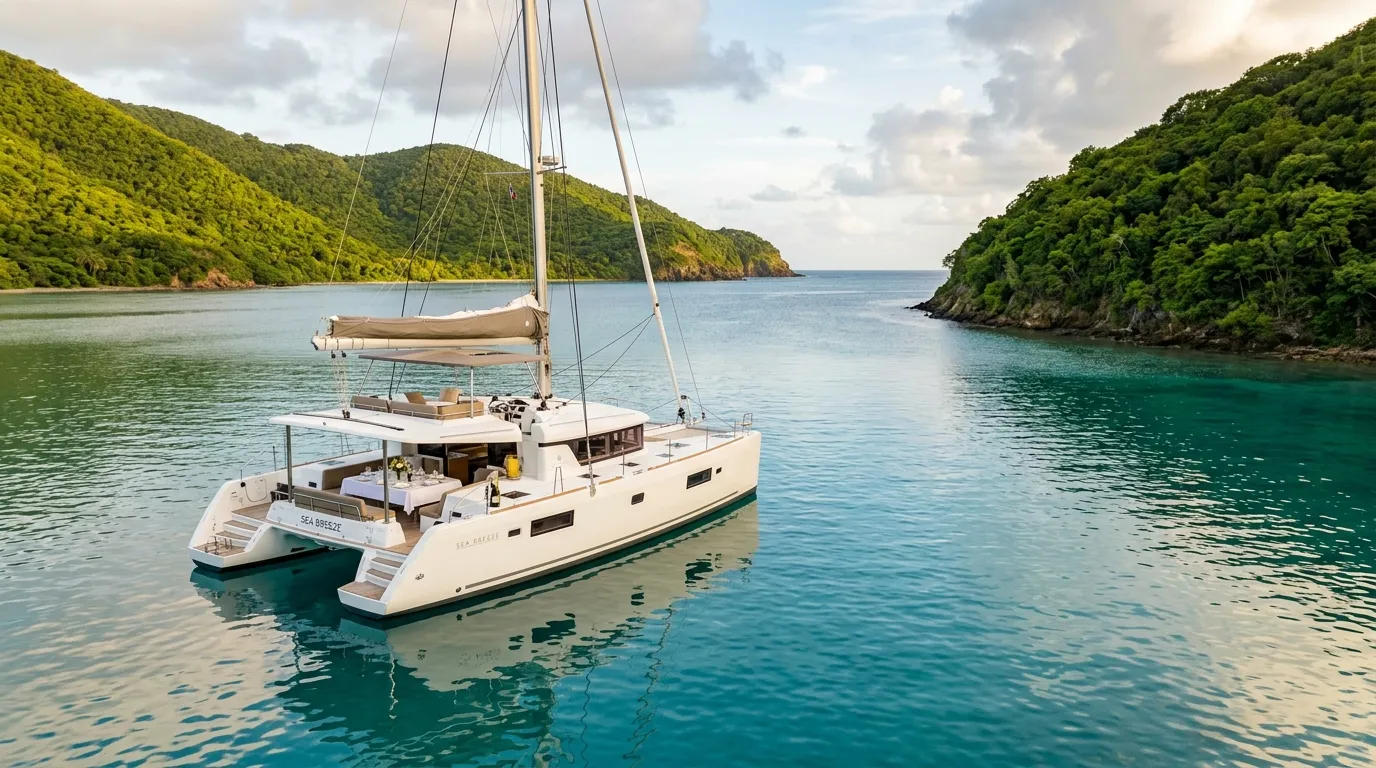
A crewed charter is what unlocks the island’s best version: a captain who knows which harbour to pick tonight, a chef so you’re not tied to resort dining hours, and the freedom to dive the Rhone at dawn and still be ashore for a spa appointment by afternoon. To match a boat to your group and dates, browse the crewed yachts we charter in the British Virgin Islands and beyond.
When you’re ready, a broker can handle the moving parts (yacht selection, mooring bookings in Deadman’s Bay, dive arrangements, and resort reservations) so the only thing left to decide is which beach to swim to first.
Frequently Asked Questions
Who owns Peter Island now? Is it still owned by Amway?
Not by the Amway corporation itself. Peter Island is owned by the Van Andel family, Amway’s co-founders. The DeVos family (Amway Corporation) bought the island in 1978, and full ownership passed to the Van Andel family in 2001 (Peter Island history, 2026). It hasn’t been sold to an outside hotel chain.
Is Peter Island Resort open, and when did it reopen?
Yes. Peter Island Resort reopened on December 1, 2024 after a seven-year closure following Hurricane Irma in 2017, and it now operates year-round (Virgin Islands News Online, 2024).
How much does it cost to stay at Peter Island?
Standard rooms start around $1,000 per night, with private villas ranging from roughly $5,600 to over $11,600 per night, based on 2024 launch rates (Robb Report, 2024). Charter guests can instead visit for the day via the resort’s Yacht Club Experience for a much smaller fee.
Can charter yacht guests visit Peter Island?
Yes. BVI beaches are public to the high-water mark, and the resort’s “Yacht Club Experience” add-on, available with a mooring-ball rental or overnight docking, grants access to the pool, beach shuttles, and the Drunken Pelican restaurant, and the spa and Drake Steakhouse taking reservations separately (Peter Island Yacht Club). The resort publishes no per-person price, so ask your crew to arrange it before you arrive.
What are the best anchorages at Peter Island?
Great Harbour (deep and well-protected) and Little Harbour (secluded and tranquil) on the north side are the standouts. Deadman’s Bay offers resort beach access via bookable mooring balls. The south-side bays, White Bay and Key Bay, are best only in settled conditions.
What is the best dive near Peter Island?
The wreck of the RMS Rhone off neighboring Salt Island: a protected marine park and the BVI’s most famous dive. The ~310-foot wreck lies in 30 to 90 feet of water, and strong snorkelers can reach the shallower bow section (Wikipedia, 2026).
Where is the Willy T floating bar?
The operating Willy T floating bar is moored at The Bight on Norman Island, about 5 nautical miles from Peter Island (Willy T, 2026). The original vessel, destroyed by Hurricane Irma in 2017, was sunk at Peter Island’s Key Bay and is now a snorkel and dive site (BVI Traveller, 2025).
Is Peter Island worth visiting?
Yes: especially for crewed-charter guests. Peter Island pairs protected, uncrowded anchorages (Great Harbour and Little Harbour) with the BVI’s most famous wreck dive nearby and a newly rebuilt luxury resort that reopened in December 2024 (Robb Report, 2024), all within a short sail of Tortola.
Where is Peter Island and how do you get there?
Peter Island is a private island about 5 miles (8 km) southwest of Road Town, Tortola, in the British Virgin Islands. It’s reachable only by boat: a short sail from Tortola, the resort’s ferry, or your own crewed yacht (Wikipedia, 2026).
When is the best time to charter to Peter Island?
December through April for the driest weather and steady 15–20 knot trade winds; August through October is the cheapest window but falls inside hurricane season (June 1–November 30).
Peter Island and beyond: your BVI itinerary, built to order.
Tell us your group size and dates and we’ll put together a crewed BVI itinerary with the best anchorages at Peter Island and the surrounding islands.