
BVI Fishing on a Crewed Yacht: Trolling, North Drop and Anegada Flats
BVI fishing on a crewed yacht: 296 of 409 BVI-listed yachts carry gear. See how trolling, North Drop marlin, Anegada bonefish and the no-fishing zones work.
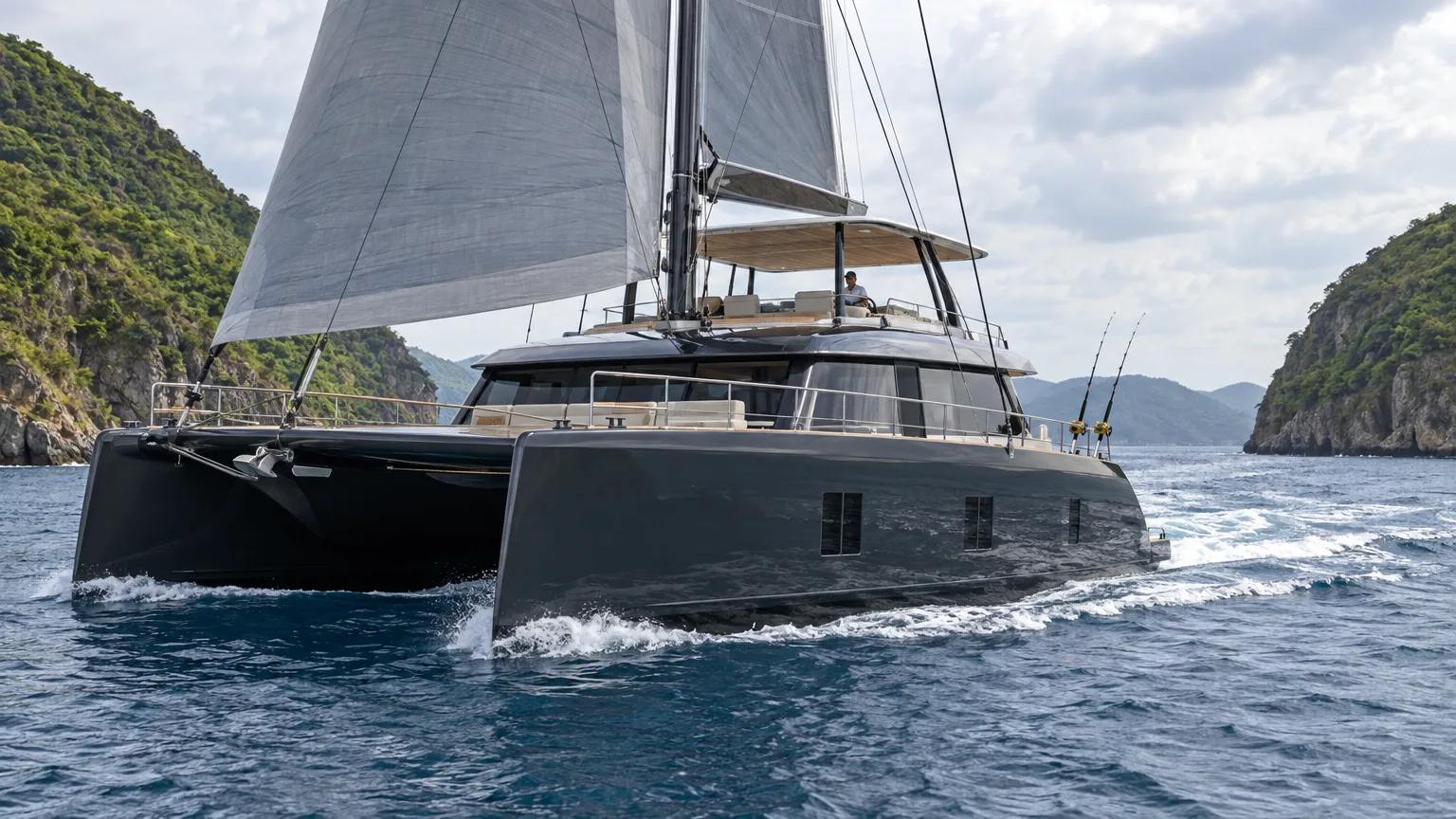
BVI fishing on a crewed yacht happens three ways: trolling between anchorages, an offshore day at the North Drop, and a morning on Anegada’s flats. Offshore, guests go out on a sportfishing boat for a half or full day, and on the flats they fish with a local bonefish guide.
All three fit around the sailing and island stops of a crewed BVI charter. BVI law licenses fishing by the boat, bans it in national parks and from park moorings, and bans spearguns outright.
How does BVI fishing work on a crewed yacht?
BVI fishing aboard a crewed yacht usually means trolling. Of the 409 active crewed yachts listing the British Virgin Islands, 296 carry fishing gear among their listed water toys (Vital Charters analysis of crewed yacht listings, November 2026). Most describe trolling rods plus a light casting or spinning rod, and the lines go out on the passages between islands.
BVI fisheries licenses are issued for the boat that fishes (Fisheries Act 1997). A pleasure license, the kind for personal use, caps the catch at “a maximum of 30 pounds per boat” (BVI Fisheries Regulations 2003).
Fourteen of those gear-carrying yachts say in their listings that the gear is for use outside BVI waters, or that their fishing permit covers the US Virgin Islands only. One listing reads: “Trolling – NOT AVAILABLE FOR BVI CHARTERS.”
What can you catch trolling between the BVI islands?
Trolling from a sailing yacht at an ordinary passage speed catches yellowfin tuna, mahi-mahi and wahoo. A 2025 Cruising World piece says “Sailing along at less than 8 knots, there’s a good chance we’ll catch something” and names those three as the likely catch (Cruising World, 2025).
A Caribbean cruiser writing in Cruising World in 2011 added kingfish, barracuda and sailfish to that list, trolling “between five and eight knots, an ideal trolling speed” (Cruising World, 2011). On an island-hopping week in the BVI, the line goes out whenever the yacht is under way between anchorages.
Billfish and sharks caught in BVI waters go straight back. Billfish such as blue marlin, white marlin and sailfish are catch-and-release under the pleasure license (BVI Fisheries Regulations 2003). A shark that takes the lure “shall immediately be released” under the Fisheries (Protected Species) Order 2014, which bans fishing for sharks and rays outright (BVI Protected Species Order 2014).

See which crewed yachts cruise the BVI this season.
Where is the North Drop, and when do the marlin bite?
The North Drop is a “roughly 12-mile stretch of undulating Caribbean seabed” in British Virgin Islands waters, where the Puerto Rico Trench “takes a 90-degree elbow to the north” (Marlin magazine, 2023). North Drop blue marlin bite best “before and after the full moons from July through October” (Marlin magazine, 2024).
Yachting magazine pointed out in 2007 that “The North Drop is actually within the waters of the British Virgin Islands, not the USVI” (Yachting, 2007).
The drops around the Virgin Islands fish for more than marlin. Coastal Angler Magazine writes that “The sailfish bite peaks October through March” there. Yellowfin tuna arrive in late summer and stay through winter, wahoo are “a year-round target”, and mahi-mahi peak in fall (Coastal Angler Magazine, 2023).
How guests fish the North Drop
Offshore days run on a dedicated sportfishing boat, booked for a half or full day while the yacht waits at anchor. A captain told Marlin magazine that from Scrub Island, off Tortola’s east end, “you’re basically 20 to 25 miles from some of the best blue marlin fishing in the world” (Marlin magazine, 2023).
Scrub Island hosts a billfish series on the North Drop every late summer. In 2025 the fleet of 27 boats released 118 billfish, 114 of them blue marlin, and the resort describes its marina as “the closest marina to the North Drop” (Scrub Island Resort, 2025). The 2026 series lost a day to weather and still released 93 billfish, including 89 blue marlin (Marlin magazine, 2026).
Can you go bonefishing on Anegada?
Yes. “Bonefishing is another Anegada specialty, with broad flats drawing anglers specifically to the island,” Caribbean Journal wrote in 2026 (Caribbean Journal, 2026). The flats hold bonefish, tarpon and permit inside the reef around the island. Local guides fish them on foot or from a flats skiff.
Anegada is the flat coral island at the north end of the territory, and yachts anchor off Setting Point. Anegada Fly-Fishing Guide Service describes the reef creating “a shallow, lagoon-like environment” and says guides will “meet you at your boat or at a dock near you”. For fly or spin anglers, “Guided trips are available throughout the year,” according to the service’s rates page.
We didn’t find a BVI rule that requires releasing bonefish. The Bonefish & Tarpon Trust says a bonefish “removed from the water for longer than ten seconds is six times less likely to survive” (Bonefish & Tarpon Trust). The camera comes out before the fish is lifted.
Horseshoe Reef, off Anegada’s southeast side, is one of the BVI’s fisheries protected areas, where the law restricts fishing (Fisheries (Fishing Priority Areas and Protected Areas) Order 2011).
Fly fishing closer to Tortola
The flats aren’t only on Anegada. Caribbean Saltwater Fly Fishing says on its own site that it has guided fly anglers in the BVI since 1998, for bonefish, permit and tarpon. The outfitter works from Nanny Cay, a marina on the south coast of Tortola where some crewed yachts take on their guests.
Where can’t you fish in the BVI?
You can’t fish in any BVI national park, or from a boat tied to any National Parks Trust mooring, under the National Parks Regulations 2008 (BVI National Parks Trust). The rule reads: “no person shall fish in a park.”
At the Wreck of the Rhone Marine Park, off Salt Island and Dead Chest, the Trust states that “Anchoring and fishing are strictly prohibited within the Marine Park” (BVI National Parks Trust). The wreck’s bow, boilers, engines and propeller are still visible, and scuba diving in the BVI at the Rhone starts from a park buoy where no line goes over the side.
Other national parks closed to fishing include The Baths, Devil’s Bay and Spring Bay on Virgin Gorda. Diamond Cay off Jost Van Dyke and Prickly Pear in North Sound are parks too (National Parks Act 2006). The Baths and Devil’s Bay are two of the best-known stops for snorkeling in the BVI.
BVI fisheries law also names fisheries protected areas where fishing is restricted (Fisheries Order 2011). They include Money Bay on Norman Island, Green Cay off Jost Van Dyke, Big Reef at Peter Island and The Sound at Salt Island.
| Where | What the law says | What it means for your day |
|---|---|---|
| Any national park, including the Rhone Marine Park | No fishing | Snorkel and dive there; lines stay in |
| Any National Parks Trust mooring | No fishing from a boat tied to one | No line over the side on a lunch stop at a park buoy |
| All BVI waters | No spearguns, and no scuba for fishing | Leave the speargun at home |
| All BVI waters, pleasure license | No hooking lobster; no taking turtles, conch or whelks | Order lobster ashore, on Anegada or anywhere else |
Sources: BVI National Parks Regulations 2008, Fisheries Act 1997, Fisheries Regulations 2003, Fisheries (Fishing Priority Areas and Protected Areas) Order 2011.
Is the fish you catch in the BVI safe to eat?
In the BVI, open-ocean fish such as mahi-mahi and wahoo are the safer catch. Large reef predators can carry ciguatera, a poisoning from a toxin made by a microscopic coral-reef alga that builds up through the food chain. The CDC names “large carnivorous reef fish (e.g., amberjack, barracuda, grouper, moray eel, sea bass, sturgeon)” as the most likely cause (CDC Yellow Book, 2025).
US outbreak data points the same way. Of 189 ciguatera outbreaks reported in the United States from 2011 to 2023, barracuda was implicated in 58, grouper in 25 and amberjack in 22; mahi-mahi appeared in one (CDC MMWR, 2026). The FDA lists the neighboring US Virgin Islands among the places where unsafe ciguatoxin levels have been found in fish (FDA, 2019).
Cooking won’t fix a toxic fish. The CDC says the toxins “are not destroyed by gastric acid or by canning, cooking, freezing, pickling, salting, or smoking”, and that they don’t change a fish’s taste or smell. A NOAA-hosted review found oceanic fish that feed in open water “are less susceptible” than reef fish (Friedman et al., 2017).
Researchers studying ciguatera in the US Virgin Islands concluded that “experience and local knowledge of safe fishing grounds remain the best strategy to avoid toxic fish” (Robertson et al., 2014). On a crewed yacht the crew carry that knowledge, and they decide what the chef cooks and what goes back over the side.
Planning a fishing week in the BVI
A BVI fishing week on a crewed yacht can combine all three styles: lines out on the passages between islands, one day offshore at the North Drop, and a morning on Anegada’s flats while the yacht lies off Setting Point. At the parks and park moorings the rods stay stowed, and those are the stops where the week’s snorkeling and diving happen. Start a yacht search at Vital Charters and tell us if fishing’s on the list.
Frequently Asked Questions
Do you need a fishing license in the BVI?
Yes. BVI fishing licenses are issued for the boat that fishes, so on a crewed charter the yacht arranges one. Some yachts carry rods but won’t fish in BVI waters, and a broker can tell you which ones on a shortlist fish here.
When is the best time for BVI fishing?
It depends on the fish. Blue marlin bite best from midsummer into fall, and Scrub Island’s billfish series fishes the North Drop in late summer. Trolling turns up something on the Virgin Islands drops in any month, and Anegada’s bonefish guides run trips throughout the year.
Can you keep the fish you catch in the BVI?
Some of it. Billfish and sharks go back, and two reef fish have closed seasons under the Fisheries Regulations 2003: Nassau grouper from March 1 to May 31, and red hind from January 1 to March 31. Anything kept for the table counts toward the boat’s limit.
Is spearfishing legal in the BVI?
No. The Fisheries Act 1997 bans spearguns for fishing in BVI waters, for residents and visitors alike, with fines of up to $15,000. Cabinet reviewed an amendment to remove the blanket ban in April 2026; until one passes, the 1997 ban applies. Snorkeling and free-diving to look are fine.
Can you fish from a mooring ball in the BVI?
Not from a National Parks Trust mooring. Fishing from one is banned anywhere in the territory, so those buoys are where you’ll snorkel and dive, at the Rhone, The Baths and elsewhere. Lines go out once the yacht is under way again.
Is barracuda safe to eat in the BVI?
No. The CDC tells travelers to “never eat high-risk fish (e.g., barracuda, moray eel)”. With any reef fish, it also advises avoiding “the parts of the fish (e.g., the head, intestines, liver, roe) that concentrate ciguatera toxin.”
A BVI week with lines in the water
Tell us your group size, dates and how much fishing you want, and we’ll match you with a crewed yacht that carries the gear.