
Mopion Island: Best of the Grenadines
Mopion Island is a bare sandbar a mile northwest of Petit St. Vincent, famous for the single thatched palapa that stood on it. The palapa is no longer standing. Here’s what’s actually there in 2026, and why the sandbar still earns an hour of a Grenadines charter week.
Last Updated: September 7, 2026
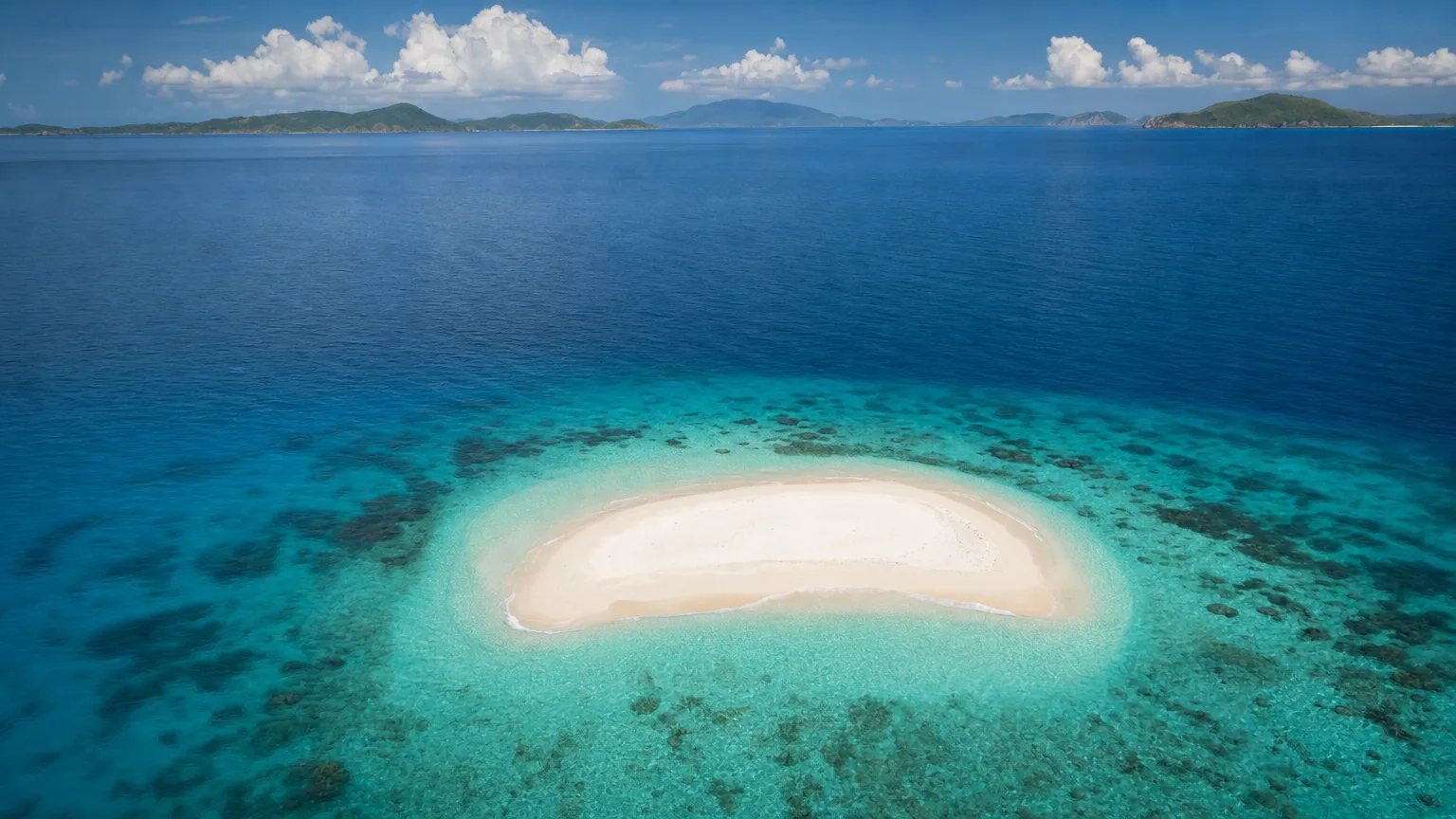
Mopion Island is a bare crescent of white sand about a mile northwest of Petit St. Vincent, and for years the only thing on it was a single thatched palapa. A picture that turns up everywhere you look at the Grenadines island chain. That palapa is no longer standing. Most of what’s published about Mopion still shows it intact, which means most of what you’ll read describes the picture rather than the place. For a crewed yacht charter guest it’s still one of the best hours of the week, and this is what you’ll actually find when the tender noses in.
What Is Mopion Island?
A sandbar with a reef around it and nothing on it. Mopion isn’t an island in any sense that involves soil, trees or fresh water. It’s a heap of coral sand sitting on a reef in the southern Grenadines, uninhabited and unserviced. There are no trees on it. There’s no dock, no bar, no shelter, nobody selling anything, and nowhere to go to the bathroom.
What made it famous was the one exception to all that: a small wooden frame roofed with palm thatch, standing alone in the middle of the sand. It’s in nearly every photograph of the place, and it’s the reason a bare sandbar became a destination at all.
Mopion is an uninhabited sandbar on a reef in the southern Grenadines, with no trees, no buildings and no fresh water. Its only structure was a thatched palapa, which gave the islet both its only shade and the one feature that told it apart from Punaise, a second bare sandbar about a kilometer west.
Whatever it was originally built for, the palapa had a second use. On a low sandbar that all but vanishes against the sea from a distance, it was how you knew which of the two sandbars you were looking at.
Is the Palapa Still There?
Not standing. The most recent first-hand account we could find is from June 2026, written by a visitor who’d also been in 2019, which makes the comparison worth something. They describe the palapa as “still there, but it has been torn up and laid over,” and the islet itself as much smaller than on the earlier visit (Tripadvisor, June 2026).
Photographs filed with that account, captioned as remains, show what that means: the timber frame is down on the sand at an angle with the thatch still attached and splayed across it. One of them shows visitors’ names written along a fallen beam, one dated as recently as May 2026. The tradition of leaving a mark has outlived the structure standing up.
As of June 2026, the palapa on Mopion Island is not standing. The most recent first-hand visitor account describes it as torn up and laid over, and photographs filed with that account show the frame down on the sand. Most published descriptions of Mopion still show the shelter intact.
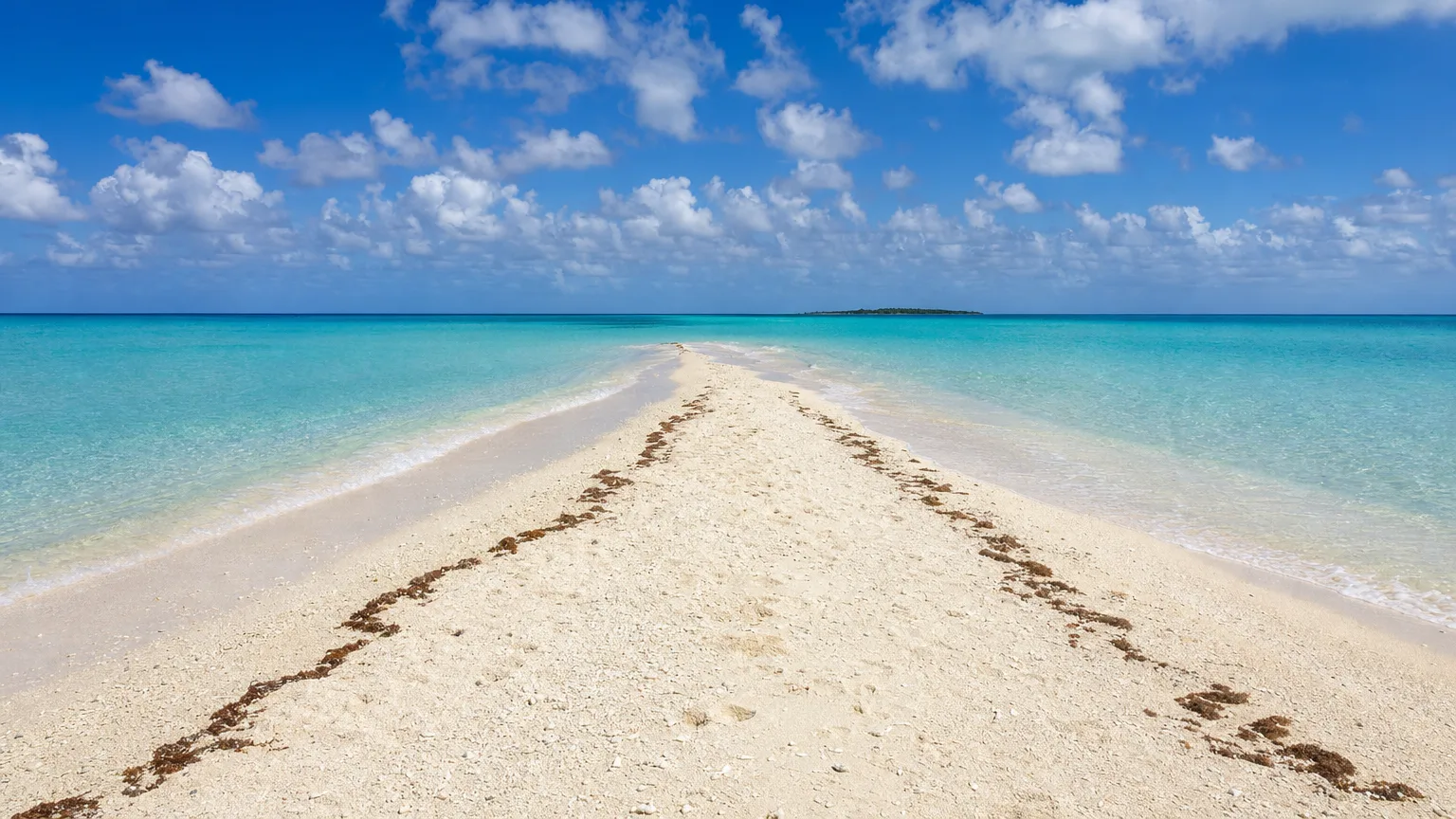
Two things follow, and they’re the whole reason this section exists. First, there’s now no shade at all on Mopion: not partial shade, not a bit of thatch you can sit under, none. Go in the middle of the day without a hat and you’ll regret it. Second, the thing everyone photographs isn’t the thing that’s there, so if you’ve seen the picture, it’s worth knowing before the tender leaves.
Will it be rebuilt?
Nobody has said. We couldn’t find a source documenting who built the original, when, or how often it’s been replaced. The upkeep gets attributed to people on Petit St. Vincent everywhere you look, and sourced to them nowhere. With that resort closed and rebuilding, a sandbar a mile offshore probably isn’t near the top of anyone’s list.
Where Exactly Is Mopion Island?
In the southern Grenadines, in the stretch of water between Union Island and the Grenada border. It sits about a mile northwest of Petit St. Vincent, the southernmost island of St. Vincent and the Grenadines, and a little under two miles north-northwest of Petite Martinique, which is Grenadian. Mopion itself belongs to St. Vincent and the Grenadines.
| From Mopion | Distance | Direction |
|---|---|---|
| Petit St. Vincent | About 0.9 nm | Southeast |
| Petite Martinique (Grenada) | About 1.8 nm | South-southeast |
| Palm Island | About 2.4 nm | North |
| Clifton, Union Island | About 3.3 nm | North-northwest |
| Tobago Cays | Under 6 nm | North-northeast |
Those are computed from published coordinates and rounded. They’re the shape of the neighborhood, not anything to steer by. The useful part is that Mopion isn’t a detour. See our answer to: How long is the yacht charter season? Union, Palm, Petit St. Vincent and Petite Martinique all sit within three and a half miles of it, so this is the middle of the last cluster of a southbound Grenadines week, not a diversion from it.
The border intrudes less than it sounds. Bring your passport: if the week carries on south into Grenada, the crew handles the paperwork while you’re still in the water.
How Do You Get Ashore?
By tender. The yacht anchors off and the crew runs you in, because nobody steps ashore here directly from the boat. On a calm day you can swim in from the anchorage, and plenty of people do.
Guests reach Mopion Island by tender from a yacht anchored offshore. There’s no dock and no landing directly from the yacht, so every arrival is from the water. On calm days guests swim ashore from the anchorage. The islet has no facilities of any kind.
The part worth planning around is that Mopion is a fair-weather stop and a daylight one. There’s no shelter here, so if the day is rough the stop doesn’t happen, and a crew that knows the area will make that call in the morning rather than at the sandbar. It’s a lunchtime hour, not a night.
That’s also why an itinerary should never hang on Mopion. Your crew will build the day around Union Island or Petit St. Vincent, both fixtures of the classic Grenadines charter routes, and treat the Mopion sandbar as the thing you do if the water’s flat. It usually is, between December and April.
Is Mopion the Smallest Island in the Caribbean?
Nobody can say, and the honest answer is more interesting than the claim. There’s no official register of island sizes and no agreed definition of what counts as an island, so every “smallest island” title (Caribbean, Grenadines or world) is a piece of marketing rather than a measurement. Atlas Obscura hedges it to “supposedly,” which is about right.
What’s actually true is stranger. Mopion has no fixed size to compare. Published descriptions run from a few tens of meters of sand to something on the order of a hundred, and they disagree partly because they were written at different times, the islet reshapes with the tide, the current and the season. Charter captain David Kilmer, writing in Caribbean Compass in 2025, put it well: “Sometimes the island is a little bigger, and sometimes it disappears altogether. It all depends on what the summer storms have wrought” (Caribbean Compass).
Mopion Island has no fixed dimensions. Published descriptions range from a few tens of meters of sand to roughly a hundred, because the sandbar reshapes with tide, current and season. There’s no official register of island sizes, so claims that Mopion is the smallest island in the Caribbean or the world can’t be checked against any standard.
So the fair description is that Mopion is one of the two smallest pieces of land in the Grenadines you can stand on (Punaise, its unmarked neighbor, is the other) and small enough that its size depends on what the weather’s been doing. That’s a better fact than a superlative. It also means two visits seven years apart won’t tell you much about a trend, which is worth remembering when you read that it’s smaller than it used to be.
What Is There to Do?
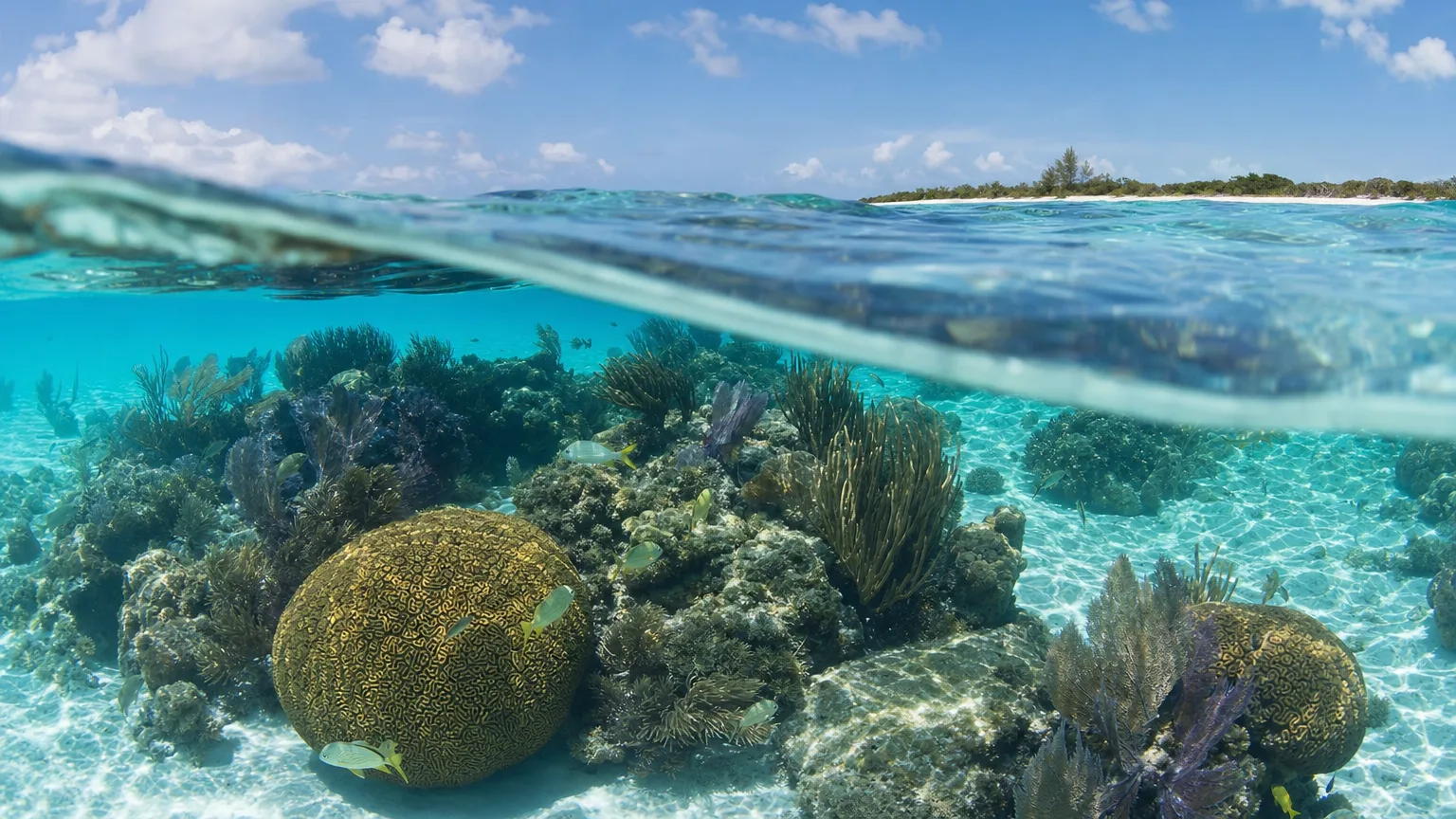
Swim, snorkel, and stand about on a piece of sand in the middle of the sea, which is more compelling than it sounds. The reef that built Mopion also surrounds it, and the snorkeling straight off the sand is the main reason anyone comes, clear, calm on the leeward side, and shallow enough that you don’t need to go deep to see it.
The other thing people do is leave a mark. Writing in Caribbean Compass, charter captain David Kilmer remembered the thatched roof having a bottle opener fixed to it, and visitors have long scratched names into the timber and tucked notes into the thatch. That tradition has outlasted the structure: the June 2026 photographs show names written along the fallen beam.
Set expectations on two things. Sargassum reaches this part of the Caribbean seasonally and the June 2026 photographs show a good deal of it along the tideline; it comes and goes, and nobody can promise clean sand on a given day. And an hour is about right. There’s no shade, nothing to buy, and the charm isn’t improved by a fourth hour of it.
What About Petit St. Vincent?
The resort hasn’t reopened yet. Doyle Guides, the reference cruising guide for these islands, reports that it “has not yet reopened after the hurricane” (Doyle Guides), the resort’s own site says only that a date will be announced, and a Small Luxury Hotels listing has put the renovation into late 2026.
This changes the planning, because almost every published description of Mopion frames it as the day trip from Petit St. Vincent, which for the moment it can’t be. What it doesn’t affect is the stop itself. A crewed yacht anchors off, the tender goes in, and nothing about that hour depends on a resort being open a mile away.
Mopion Island can be visited whether or not the Petit St. Vincent resort is open. Mopion is uninhabited public sand about a mile away, reached by tender from a yacht anchored offshore, with no facilities and no admission of any kind. The resort’s status has no bearing on a charter’s ability to stop there.
There’s a neatness to that. Of all the stops in the southern Grenadines, Mopion is the one a closure can’t take away, because there’s nothing on it to close.
Where Does the Name Come From?
From an insult, more or less. The islets here were named by the French, and the names stuck after the British took the islands in the eighteenth century. Mopion is a worn-down form of Morpion, and in French, a morpion is a crab louse. Its unmarked neighbor is Punaise, which is a bedbug. Two of the prettiest specks of sand in the Caribbean are named after small biting insects, which is the kind of thing that only happens when sailors get to name places.
The usual explanation for the modern spelling is that the R simply stopped being pronounced locally, and then stopped being written. You’ll still see Morpion in French-language sources and older cruising references, and both spellings turn up the same speck of sand.
What Is the Other Sandbar?
Punaise: a second bare sandbank about a kilometer west, with nothing on it at all. It’s the reason the palapa was useful beyond shade: two near-identical heaps of sand in the same patch of water, one of them marked.
Very few boats bother with it. It has no shelter, no mark and nothing to distinguish it, and with the palapa on Mopion now down, the two are harder to tell apart than they’ve been in a long time. If you want the sandbar with the story attached, it’s Mopion.
Where Does Mopion Island Fit in a Grenadines Week?
At the southern end, near the finish. A standard southbound run goes St. Vincent, Bequia, Mustique, Canouan, Mayreau and the Tobago Cays, and Mopion sits below all of that, in the last cluster before Grenada.
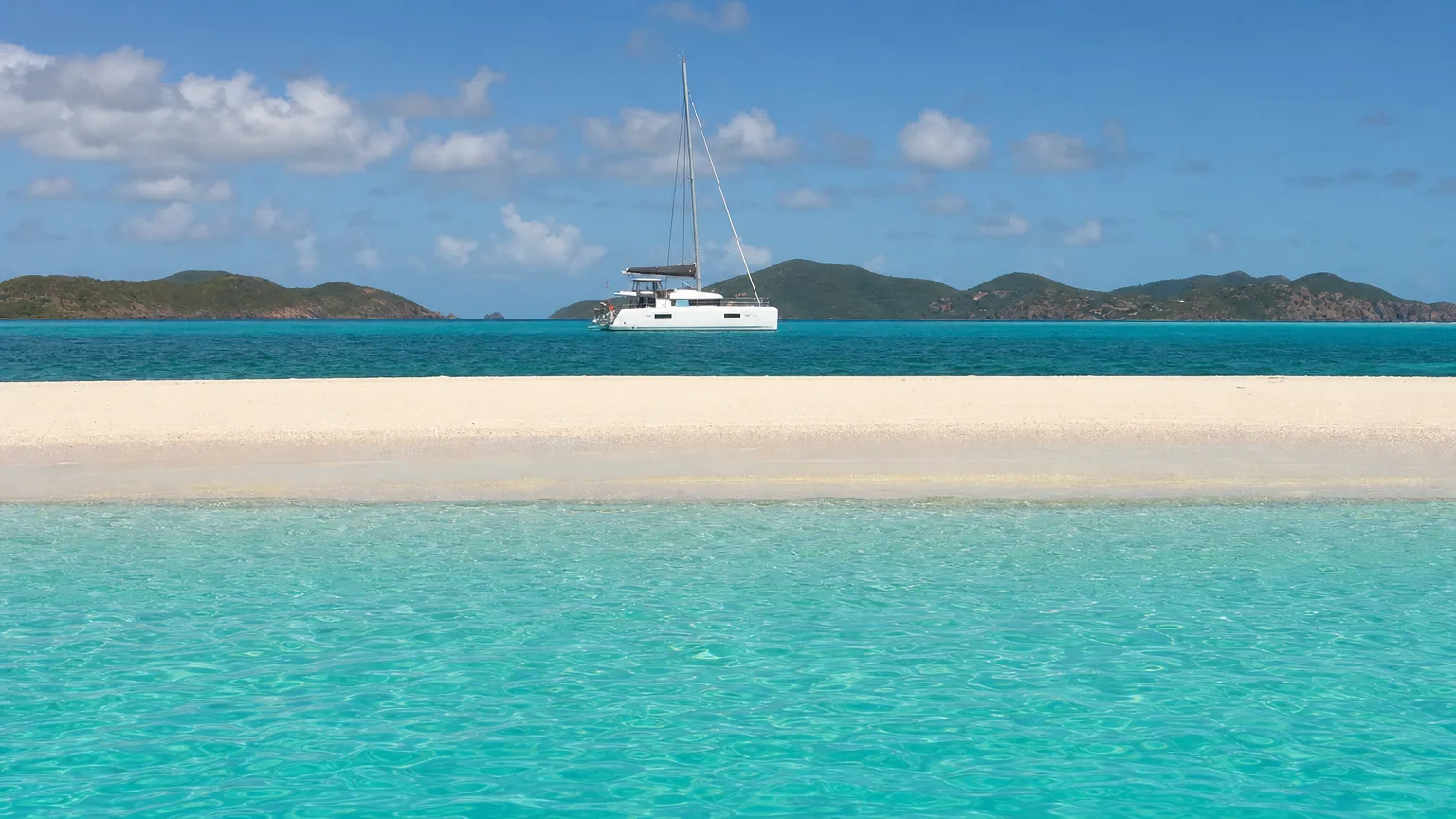
That places it naturally in the same day or two as Union Island and Palm Island, and it pairs particularly well with the Tobago Cays: the Cays are the serious reef, and Mopion is the twenty minutes of pure silliness afterwards. Earlier in the week the stops are bigger and busier, Jack’s Beach Bar on Bequia for the first afternoon, Basil’s Bar on Mustique midweek, then Salt Whistle Bay on Mayreau and Happy Island off Union as things get smaller.
The neighbors are in good shape. The Tobago Cays are running normally, with the moorings, the beach barbecues and the boat vendors all operating, as of Doyle’s post-Beryl update (Doyle Guides). Union Island’s marina, moorings and formalities are all working, with bars and restaurants open ashore again, though the island is still visibly repairing. Carriacou, across the border, had many of its yachting businesses fully operational by December 2024 (Caribbean Compass).
When Should You Go?
December through April, and in the morning. The high season is when the trades are steadiest and the water’s most often flat enough for the stop to happen at all, and the earlier in the day you go, the better the light and the lower the chance the afternoon has kicked up.
Two seasonal things are worth knowing. Sargassum tends to arrive in the Caribbean through spring and summer, so a winter visit is likelier to find clean sand. And with no shade left on the islet, the middle of the day is genuinely punishing in a way it wasn’t when there was a roof. Mid-morning is now the sensible hour rather than merely the pleasant one.
| Feature | As usually described | As of June 2026 |
|---|---|---|
| Thatched palapa | Standing, the islet’s landmark | Down on the sand |
| Shade | Under the palapa | None |
| Size | A fixed figure | Reshapes with the season |
| Sand | Clean white sand | Sargassum along the tideline |
| Facilities | None | None |
Other Stops in the Grenadines
Mopion is one stop in a chain that rewards being taken slowly. North of it, Happy Island sits on the reef in Clifton Harbour off Union, hand-built from conch shells and very much still trading. Northeast, the Tobago Cays are the best-known snorkeling in the chain, with a buoyed turtle sanctuary off Baradal. Further up, Salt Whistle Bay on Mayreau puts the Caribbean and the Atlantic a dozen paces apart, and Basil’s Bar on Mustique has been running since 1976.
Mopion is the smallest thing on that list by a wide margin, and the one with the least on it. It’s also the one guests tend to mention first. If a week in the southern Grenadines is on your mind, start a yacht search at Vital Charters and we’ll build the run that puts you on that sandbar on a flat morning.
Frequently Asked Questions
Where is Mopion Island?
Mopion Island is in the southern Grenadines, about a mile northwest of Petit St. Vincent and roughly three miles south-southeast of Clifton on Union Island. It belongs to St. Vincent and the Grenadines. Petite Martinique, less than two miles away, is Grenadian.
Is the palapa on Mopion still standing?
No. The most recent first-hand account we could find, from June 2026, describes it as torn up and laid over, and the photographs filed with it show the frame down on the sand. Most published descriptions still show it intact.
Is there any shade on Mopion?
None at all. There are no trees on the islet, so the palapa was the only shade there was. With it down, bring a hat and go in the morning rather than the middle of the day.
Can you swim to Mopion Island?
On a calm day, yes, from a yacht anchored off. Most guests go by tender instead. There’s no dock, so every arrival is from the water one way or the other.
Is Mopion the smallest island in the Caribbean?
There’s no official register of island sizes or agreed definition of an island, so no such title is adjudicated. Mopion is fairly described as one of the two smallest pieces of land in the Grenadines you can stand on, alongside its neighbor Punaise, and its size genuinely changes with tide, current and season.
How big is Mopion Island?
It depends when you measure. Published descriptions run from a few tens of meters of sand to roughly a hundred. A June 2026 visitor who’d also seen it in 2019 reported it much smaller than on the earlier visit, though a sandbar that reshapes every season won’t tell you much from two data points.
Does Mopion Island disappear underwater?
Accounts differ. Most descriptions assume the sand is always dry, while Caribbean Compass reported in 2025 that it sometimes disappears altogether depending on what the summer storms have done. Treat dry sand as likely rather than guaranteed, and let the crew check conditions on the day.
Is there anything to buy on Mopion?
Nothing. Mopion is uninhabited, with no bar, no vendors, no restrooms and no facilities of any kind. Everything you want for the hour (water, sunscreen, a hat) comes with you from the yacht.
What should you bring to Mopion?
Sun protection above all, because there’s no shade left: a hat, a rash guard or shirt, and more sunscreen than feels necessary. Add water, snorkel gear and something on your feet for the reef. Your crew will usually pack a cooler.
How long do people stay at Mopion?
About an hour, sometimes two. Nobody stays the night: there’s nothing to stay for. Most crewed itineraries treat it as a mid-morning stop on the way somewhere else.
Why is it called Mopion?
It’s a worn-down form of the French Morpion, which means crab louse. The neighboring unmarked sandbar is Punaise, French for bedbug. The French named these islets and the names survived the British takeover in the eighteenth century.
Is Petit St. Vincent open?
The resort hasn’t reopened and no confirmed date has been announced, though late 2026 has been indicated. It doesn’t affect a yacht’s ability to visit Mopion, which is uninhabited sand reached by tender.
An hour of nowhere at all
A heap of sand on a reef, a mile off Petit St. Vincent, with nothing on it and no way to reach it but a tender. It’s the stop guests describe first when they get home. We’ll build the Grenadines week that puts you there on a flat morning.