
Best Time to Charter a Yacht in the Caribbean (Month-by-Month)
The best time to charter a yacht in the Caribbean is December through April. Month-by-month weather, availability, and what timing actually does to the price.
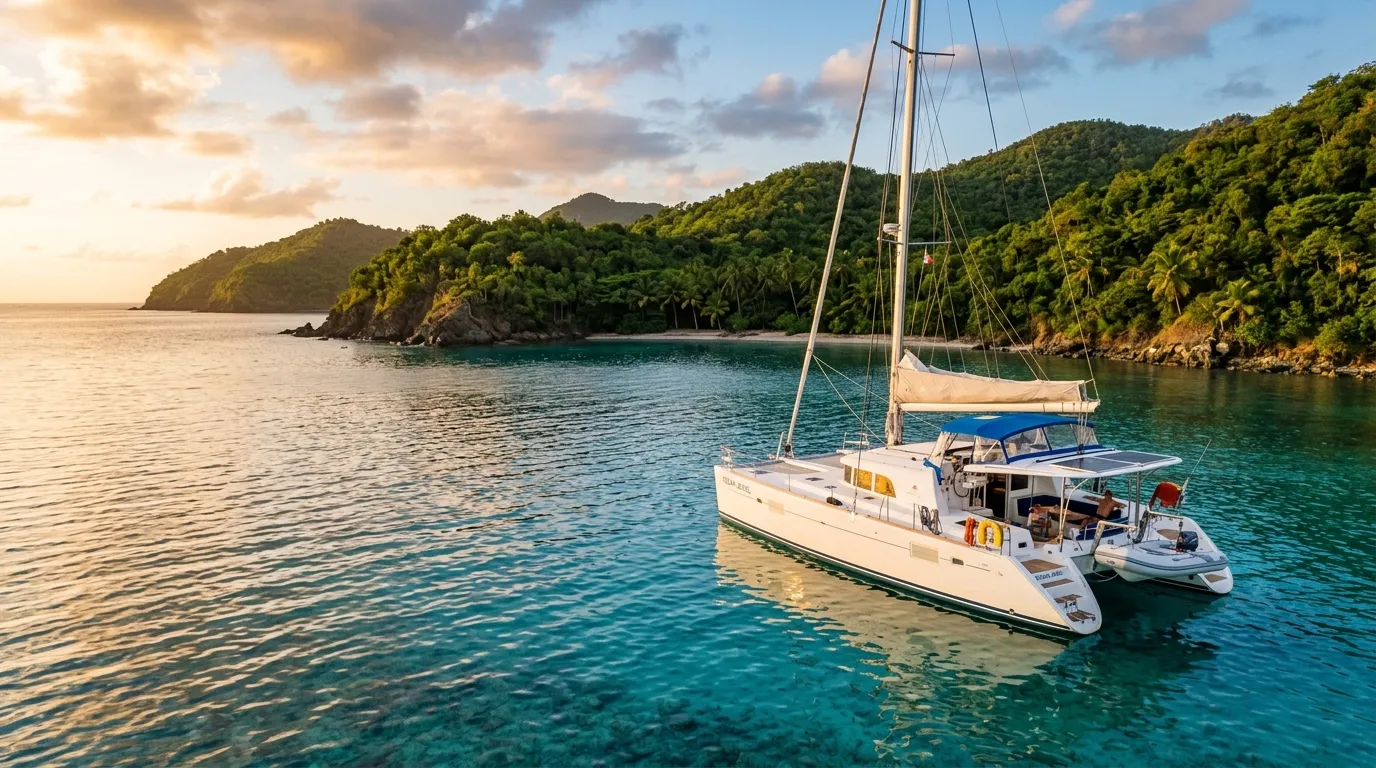
The Caribbean accounts for roughly 60% of all winter yacht charter bookings worldwide. That’s not surprising: warm trade winds, calm turquoise water, and dozens of island chains make it the world’s top charter destination from December through April.
But here’s what most guides won’t tell you: the “best” month depends entirely on what you’re optimizing for. Peak-season conditions? February. Maximum savings? June. The sweet spot between great weather and reasonable pricing? May or November.
If you’re planning your first crewed yacht charter, timing can mean the difference between a $45,000 week and a $22,000 one, with nearly identical conditions in some months. Here’s what each month actually looks like.
Last Updated: September 8, 2026
When Is the Best Time to Charter a Yacht in the Caribbean?
The Caribbean yacht charter season runs from mid-November through mid-July, with over 70% of crewed charters concentrated between December and April. The official tourism authorities say the same thing in their own words: the BVI Tourist Board and the Bahamas Ministry of Tourism both point visitors at the December-to-April window, and the NOAA National Hurricane Center sets the storm season that decides the other half of the calendar. Trade winds blow a steady 12–20 knots from the east-northeast during these months, creating ideal sailing conditions across the region.
The season breaks into three distinct periods, each with dramatically different pricing, weather, and yacht availability:
- Peak season (December–April): Best weather, highest demand, premium pricing. Trade winds at 15–25 knots. Rainfall under 3 inches per month.
- Shoulder season (May and November): Good conditions, significantly lower rates. Fewer boats in the water means quieter anchorages.
- Off-season (June–October): Hurricane risk, limited fleet availability. The southern Caribbean below the hurricane belt remains viable year-round.
What drives this seasonality? Two factors: weather and fleet positioning. Most crewed charter yachts spend winter in the Caribbean and summer in the Mediterranean. They cross the Atlantic in November and return in May or June. That’s why the widest selection, and the most competitive crew, are available December through April.
For a full breakdown of which Caribbean destinations suit your trip, we’ve got a separate guide.
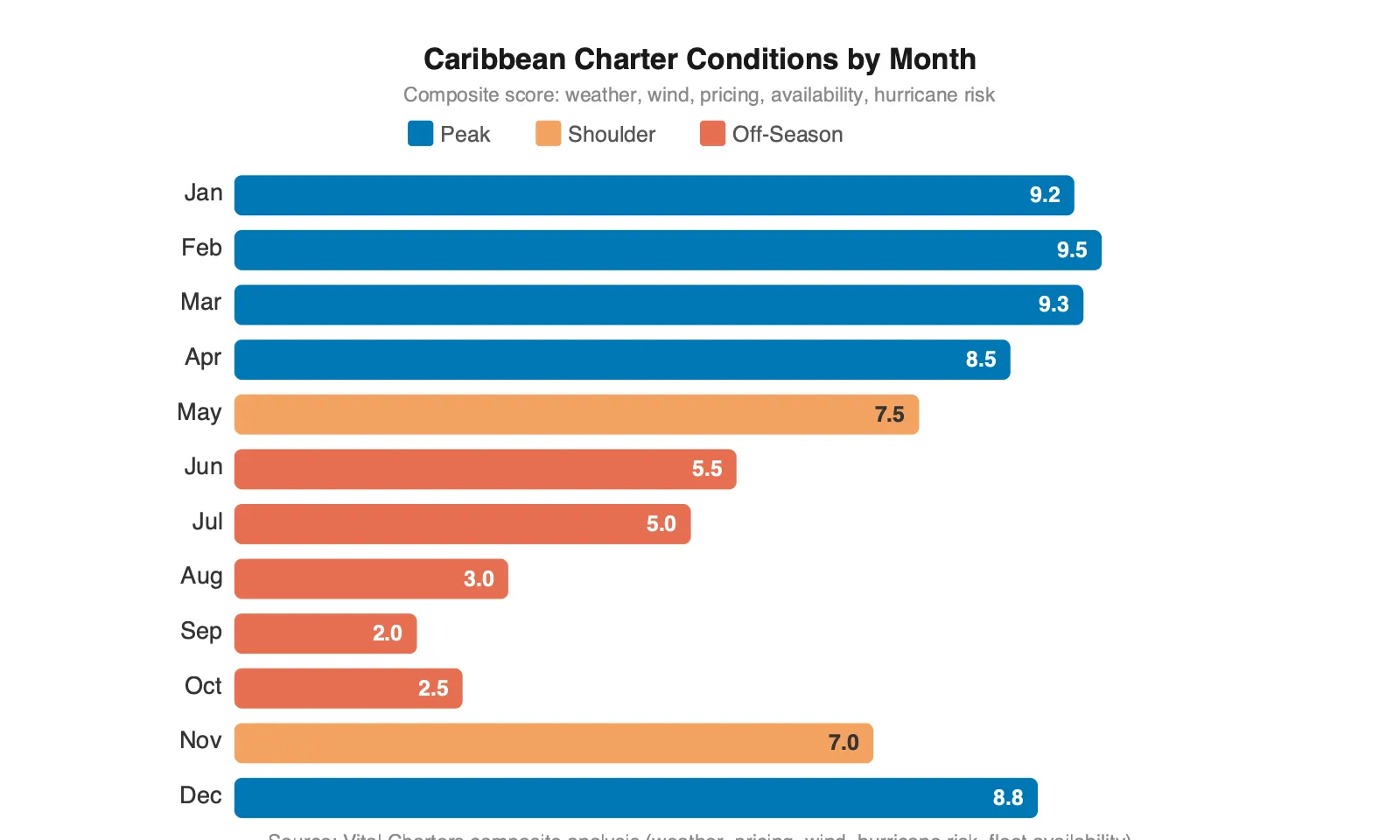
View data table
| Month | Season | Rating (1-10) |
|---|---|---|
| January | Peak | 9.2 |
| February | Peak | 9.5 |
| March | Peak | 9.3 |
| April | Peak | 8.5 |
| May | Shoulder | 7.5 |
| June | Off-Season | 5.5 |
| July | Off-Season | 5.0 |
| August | Off-Season | 3.0 |
| September | Off-Season | 2.0 |
| October | Off-Season | 2.5 |
| November | Shoulder | 7.0 |
| December | Peak | 8.8 |
Peak Season Month by Month: December Through April
Over 70% of Caribbean crewed yacht charters take place between December and April, when northeast trade winds average 12–20 knots and monthly rainfall stays below 3 inches (Current Results, 2025). Here’s what each peak-season month looks like from the deck of a crewed charter yacht.
 Learn more about best charter brokers 2026.
December: Holiday Magic (and Holiday Pricing)
December kicks off with pleasant 15–18 knot trade winds and highs around 82°F. Water temperatures hover at 79°F: perfect for snorkeling and diving. But there’s a catch: Christmas and New Year’s do carry a real premium, though a smaller one than is usually quoted. Only about 5 percent of the fleet publishes a separate festive rate at all; of the 27 that publish both, every one prices the holiday above its own high season, by a median of 12 percent, with the middle half between 9 and 15 percent (Vital Charters rate analysis, September 2026). For the rest, the holiday week is priced on request. These holiday weeks book 12–18 months in advance for premium yachts.
The “Christmas winds”, a well-known phenomenon, can push gusts to 20–25 knots in late December and early January. Exciting sailing, but it can make some anchorages rolly. If you’re chartering with young kids, January might be calmer.
January and February: The Sweet Spot
February consistently delivers the Caribbean’s most reliable charter conditions, with trade winds averaging 15–20 knots from the east-northeast, water temperatures at 78–79°F, and less than 2 inches of rainfall. These two months represent the highest demand period in the crewed charter market.
January starts strong after the holiday surcharge drops in the second week. The winds settle into a steady pattern, and anchorages in the BVI fill but don’t feel overcrowded. February is, in our opinion, the single best month to charter anywhere in the Caribbean. Air temps in the low 80s, water at 78°F, dry skies, and consistent easterly winds. It doesn’t get better than this. Time a BVI yacht charter for February and you will catch the islands at their absolute best.
Both months sit squarely in high-season pricing. You won’t find discounts, but you won’t get rained on either.
March and April: Spring Sailing and Lighter Crowds
March matches February’s weather but with a slight edge: the crowds thin out as the Northern Hemisphere spring break window closes. Easter week (when it falls in March or April) can see a pricing bump, though it’s less dramatic than Christmas.
April is the transition month. Trade winds start easing to 10–15 knots. Air temperatures climb into the mid-80s. The first hints of afternoon showers appear toward month’s end. Nothing that’ll ruin your trip, just a quick 15-minute tropical downpour. Many sailing events happen in April, including Antigua Sailing Week in late April, which keeps the charter fleet active.
If you’re wondering what a typical charter day looks like, conditions in March and April are about as perfect as it gets, warm but not hot, breezy but not rough. Learn more about chat ‘n’ chill.
Why May and November Are the Caribbean’s Best-Kept Secret
 Learn more about compass cay marina. Learn more about lolos of grand case.
Shoulder-season charters in May and November deliver close to peak-season sailing conditions with a fraction of the competition for the good boats. What they mostly do not deliver is a discount: 69 percent of Caribbean catamarans publish the same rate in low season as in high, and the ones that move come down by a median of 7 percent (Vital Charters rate analysis, September 2026). The value in May is the availability and the empty anchorages, not the invoice.
May is genuinely underrated. Trade winds still blow at 10–15 knots from the southeast. Seas typically stay under 2 feet. Temperatures run 80–85°F, and hurricane probability in May is statistically negligible. The biggest perk? Anchorages that were packed with 20 boats in February now have three or four. You’ll feel like you have the islands to yourself.
November is trickier. Hurricane season doesn’t officially end until November 30, and while the risk drops dramatically after mid-November, it’s not zero. That said, trade winds return at 15–20 knots from the east-northeast, rainfall is decreasing, and the charter fleet is repositioning back from the Mediterranean. You’ll often find captains and crews eager to fill those early-season slots, which means more flexibility on itinerary and even some negotiation room on pricing.
Shoulder season works particularly well for experienced charterers or anyone who’s flexible on exact dates. If weather does look iffy, your crew can adjust the itinerary. That’s one of the biggest advantages of a crewed charter over a fixed resort stay.
Can You Charter During Hurricane Season? (June–October)
August through October accounts for 78% of tropical storm days, 87% of minor hurricane days, and 96% of major hurricane days in the Atlantic basin, with September 10 as the climatological peak date (NOAA National Hurricane Center, 2024). The average Atlantic season produces 14 named storms, 7 hurricanes, and 3 major hurricanes.
That doesn’t mean the entire June–October window is a write-off. Here’s the nuance:
June and early July carry relatively low hurricane risk. Sea surface temperatures haven’t reached the threshold that fuels major storms, and African easterly waves (the seedlings of most hurricanes) are just getting started. Rates are at their most negotiable, though on most hulls they do not move: 220 of 299 Caribbean catamarans quote the identical week in high and low season (Vital Charters rate analysis, September 2026). You’ll find fewer yachts available since many have crossed to the Mediterranean, and the ones that stay are competing for a thin summer market.
August through October is genuinely risky. We don’t recommend chartering in the northern Caribbean during these months. Modern forecasting gives several days of warning, but a charter vacation shouldn’t involve watching weather models every morning. The stress alone isn’t worth the savings.
The southern Caribbean exception: Grenada, St. Vincent and the Grenadines, Barbados and Trinidad sit below the hurricane belt, and the Windwards carry 207 of the crewed yachts we list. The Dutch ABC islands sit below it too, but no crewed yacht in our listings is based there. If you want a summer Caribbean charter, look south. The Bahamas, BVI, and USVI are better reserved for December through May.
How Much Does Timing Your Charter Actually Save?
On a catamaran, usually nothing at all. Of the 335 Caribbean catamarans that publish both a high-season and a low-season rate, 231 quote the identical number in both, which is 69 percent (Vital Charters rate analysis, September 2026). The 104 that do come down move by a median of 7 percent. That is a long way from the 30 and 40 percent discounts the season is usually sold on.
Motor yachts behave completely differently, and this is the part worth knowing before you pick your dates. Only 36 of 168 Caribbean motor yachts hold their rate across the two seasons, so 79 percent of them genuinely do move, by a median of 11 percent when they do. What you save by timing depends almost entirely on which hull you charter, not on which month you pick.
| Hull type | Yachts publishing both rates | Same rate year round | Median cut when it does move |
|---|---|---|---|
| Catamaran | 335 | 231 (69%) | 7% |
| Motor yacht | 168 | 36 (21%) | 11% |
| Monohull and other | 19 | 3 (16%) | 11% |
Source: Vital Charters rate analysis of current Caribbean and Bahamas crewed charter rates, September 2026. Advertised weekly rates published by each yacht’s central agent, comparing each yacht against its own low-season rate.
The one direction the calendar reliably moves money is upward. Of the 27 Caribbean yachts that publish a separate festive rate for Christmas and New Year, not one matches its own high-season number, and the median premium is 12 percent. Booking the last two weeks of December costs more everywhere; booking June rarely costs less.
None of this rules out a better price. Published rates are the starting point, not the last word, and a broker asking on your behalf in a soft week is a different conversation from a listing page. What it does mean is that you should not plan a trip around a seasonal discount that, on the most common Caribbean hull, three times in four is not there. For a deeper look at what goes into charter pricing, see our complete breakdown of yacht charter costs.
What the quieter months genuinely buy you is choice and space: the yachts that are booked solid in February are available in May, the anchorages are emptier, and the crews are less stretched. The trade is a higher chance of rain and, from August through October, real hurricane risk.
Want to compare what those rates look like across different Caribbean destinations? Our Caribbean charter cost comparison breaks down BVI vs. Bahamas vs. Grenadines pricing side by side.
How Far in Advance Should You Book?
About 75% of yacht charter bookings are made 4–12 months in advance, with 6–9 months being the most common lead time. How far ahead you need to move depends entirely on the week you want:
- Christmas/New Year’s: 12–18 months ahead. Premium crewed catamarans sell out for the holidays more than a year in advance. This isn’t marketing hype: it’s what we see in our booking data every year.
- Peak season (Jan–Apr): 9–12 months for the best yacht selection. You can still find options at 3–6 months, but you’re choosing from what’s left, not what’s best.
- Shoulder season (May/Nov): 3–6 months is usually plenty. Crews are eager to fill these weeks.
- Off-season (Jun–Oct): 1–3 months. Limited fleet, but also limited demand. Last-minute deals exist here.
Ready to start planning? Our step-by-step planning guide walks through the entire process from choosing dates to signing the contract.
Which Caribbean Destination Works Best Each Month?
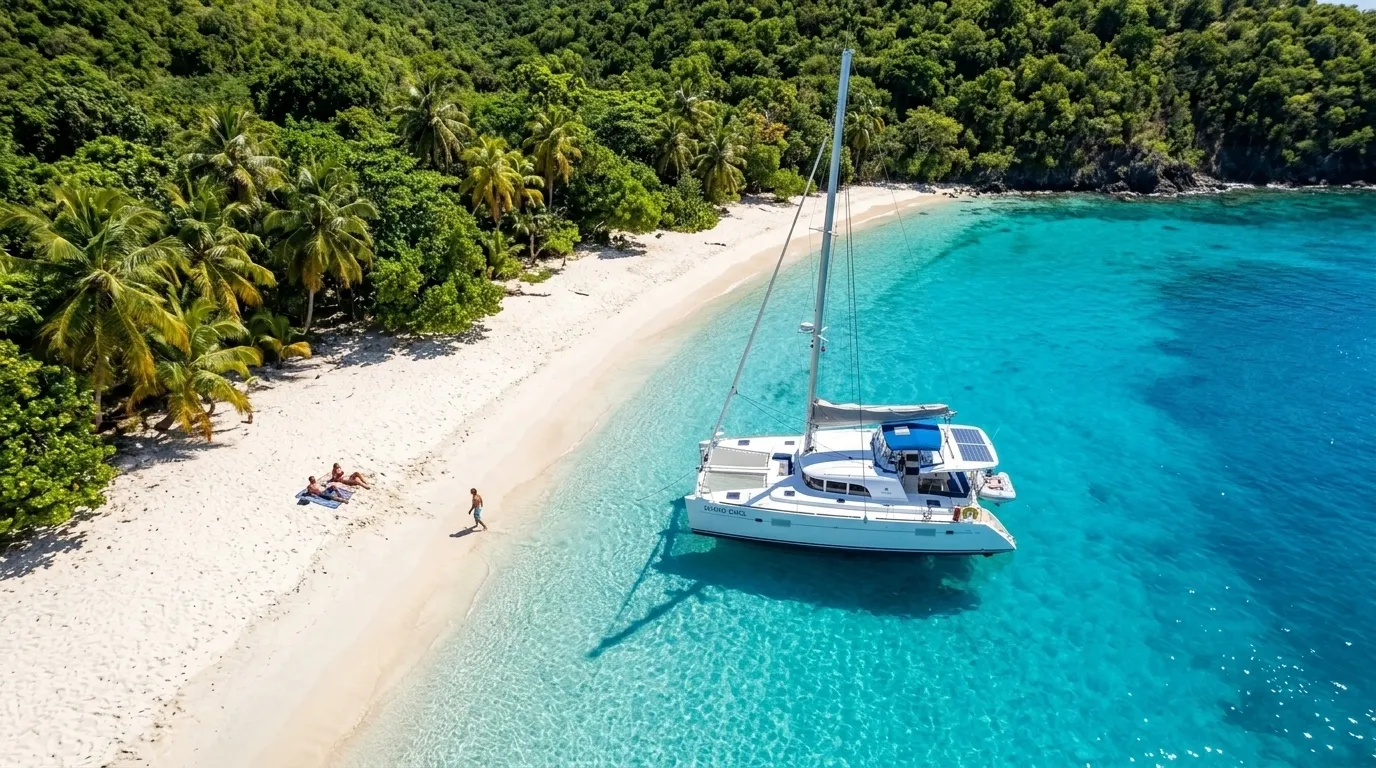
Not every Caribbean destination peaks at the same time. Here’s where to go and when:
- December–March:British Virgin Islands, the world’s top crewed charter destination. Flat water, short island hops, and 60+ mooring balls make it perfect for first-timers. Also prime time for the Bahamas Exumas and St. Barths.
- March–April: Antigua and the Leeward Islands. Antigua Sailing Week (late April) brings a festival atmosphere. Also excellent for USVI charters before summer heat arrives.
- May:The Grenadines: lower latitude means less hurricane exposure and stunning sailing through Tobago Cays, Bequia, and Mustique at shoulder-season rates.
- November:Bahamas: the fleet is arriving from the Mediterranean, and the Exumas offer world-class conditions. BVI also reopens for the season.
- June–October (southern Caribbean only): Grenada and St. Vincent and the Grenadines sit below the hurricane belt and charter year-round. Vital Charters listings analysis counts 207 active crewed yachts in the Windward Islands and none in the Dutch ABC islands, so the Grenadines are the practical summer choice.
Water temperatures stay swimmable year-round: from 78°F in January to 84°F in August (Sea Temperature, 2025). Snorkeling and diving conditions are excellent in every season, though visibility tends to be best December through April when there’s less runoff from rain.
Which Month Should You Book for Your Caribbean Charter?
February scores highest for conditions while May delivers the best value, but the right month depends on your priorities. Here’s the bottom line:
- Money is no object and you want perfection? Book February, 9–12 months ahead.
- Want the best value without real compromise? Book May, 3–6 months ahead.
- Holiday charter with the family? Book Christmas/New Year’s 12–18 months ahead: and don’t hesitate.
- Adventurous and budget-conscious? Book June in the southern Caribbean, 1–3 months ahead.
- First-time charterer? January through March in the BVI. Calm conditions, reliable weather, and the most forgiving cruising ground in the Caribbean.
The Caribbean welcomed roughly 35 million visitors in 2025 (Caribbean Tourism Organization, 2026), and the yacht charter market continues growing at over 8% annually (Fortune Business Insights, 2026). The best months won’t stay a secret forever.
Have questions about timing your charter? Start a yacht search or reach out to our team. We’ll match you with the right yacht, crew, and dates for your trip.
Frequently Asked Questions
What is the yachting season in the Caribbean?
The Caribbean yachting season runs from mid-November through mid-July, with peak demand between December and April. Over 70% of crewed yacht charters occur during this window, when trade winds average 12–20 knots and rainfall stays below 3 inches per month. Consider an all-inclusive charter to simplify your first peak-season booking.
What months should you avoid for a Caribbean yacht charter?
Avoid August through October in the northern Caribbean (BVI, USVI, Bahamas). These three months account for 96% of major Atlantic hurricane days (NOAA, 2024). The Windward Islands (Grenada, St. Vincent and the Grenadines) remain viable year-round since they sit below the hurricane belt, and they are where the southern crewed fleet actually is.
Is it safe to charter a yacht in June or July?
June and early July carry relatively low hurricane risk since sea surface temperatures haven’t peaked. Expect the rate to be close to the winter number: across 522 Caribbean yachts publishing both seasons, 280 quote the same price in both (Vital Charters rate analysis, September 2026). You’ll have fewer yacht options since many cross to the Mediterranean in May, and the ones that stay compete for a thin summer market. That competition shows up as promotional specials rather than lower rate cards: at the time of writing 65 of 635 Caribbean and Bahamas yachts carry a live offer, a median of 10 percent off (Vital Charters listings analysis, September 2026).
What’s the cheapest month to charter a yacht in the Caribbean?
September and October carry the highest storm risk of the year, which makes them poor choices whatever the rate. For the best balance, charter in May. Conditions are close to peak and the crowds have gone, though only about half the fleet prices a low season at all, so treat a discount as something to ask for rather than expect. November’s another smart pick as the season reopens.
Book the month your budget loves.
Tell us your preferred travel window and group size and we’ll show you real crewed yacht availability, peak season glamour or shoulder-season savings, your call.