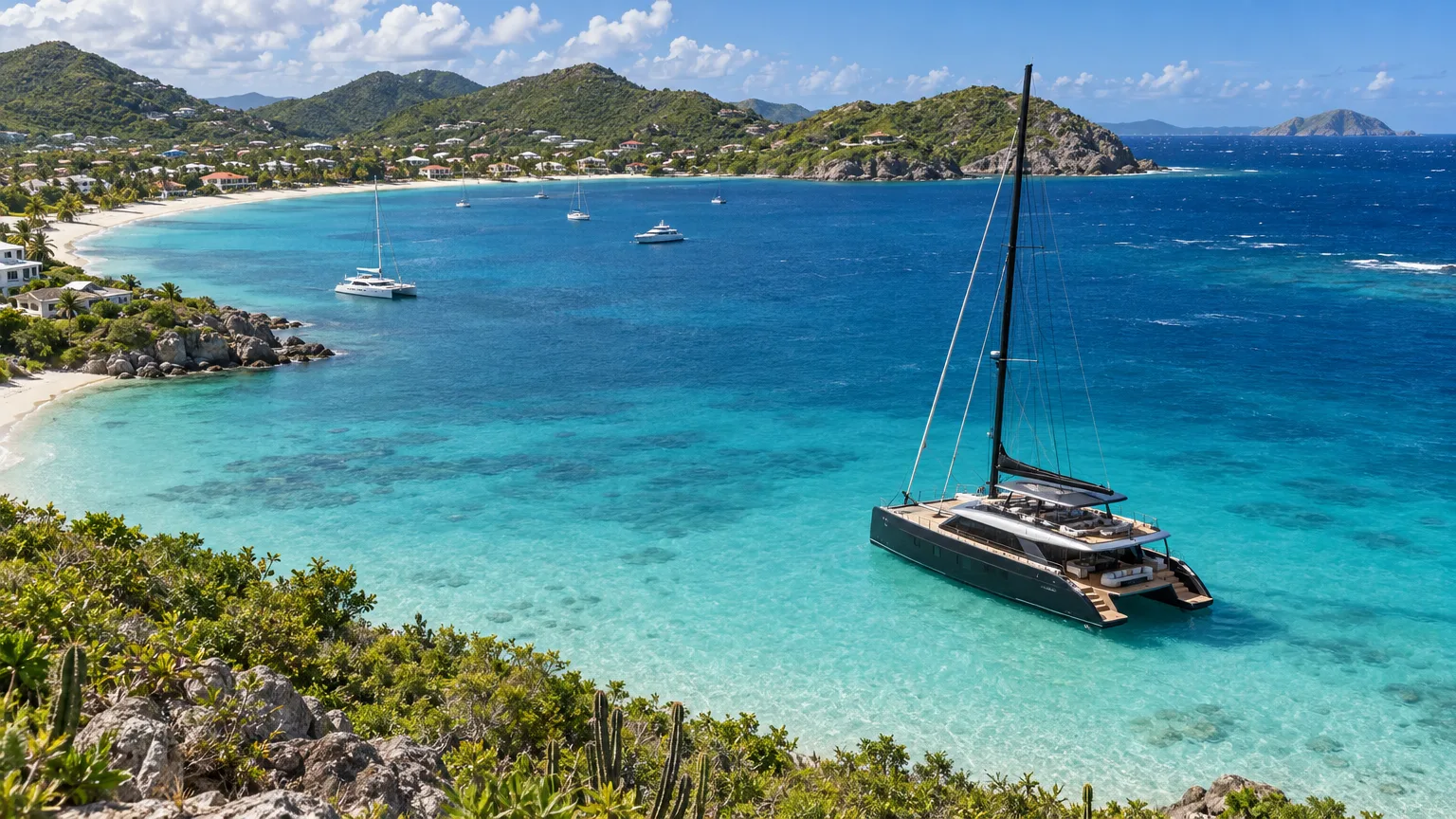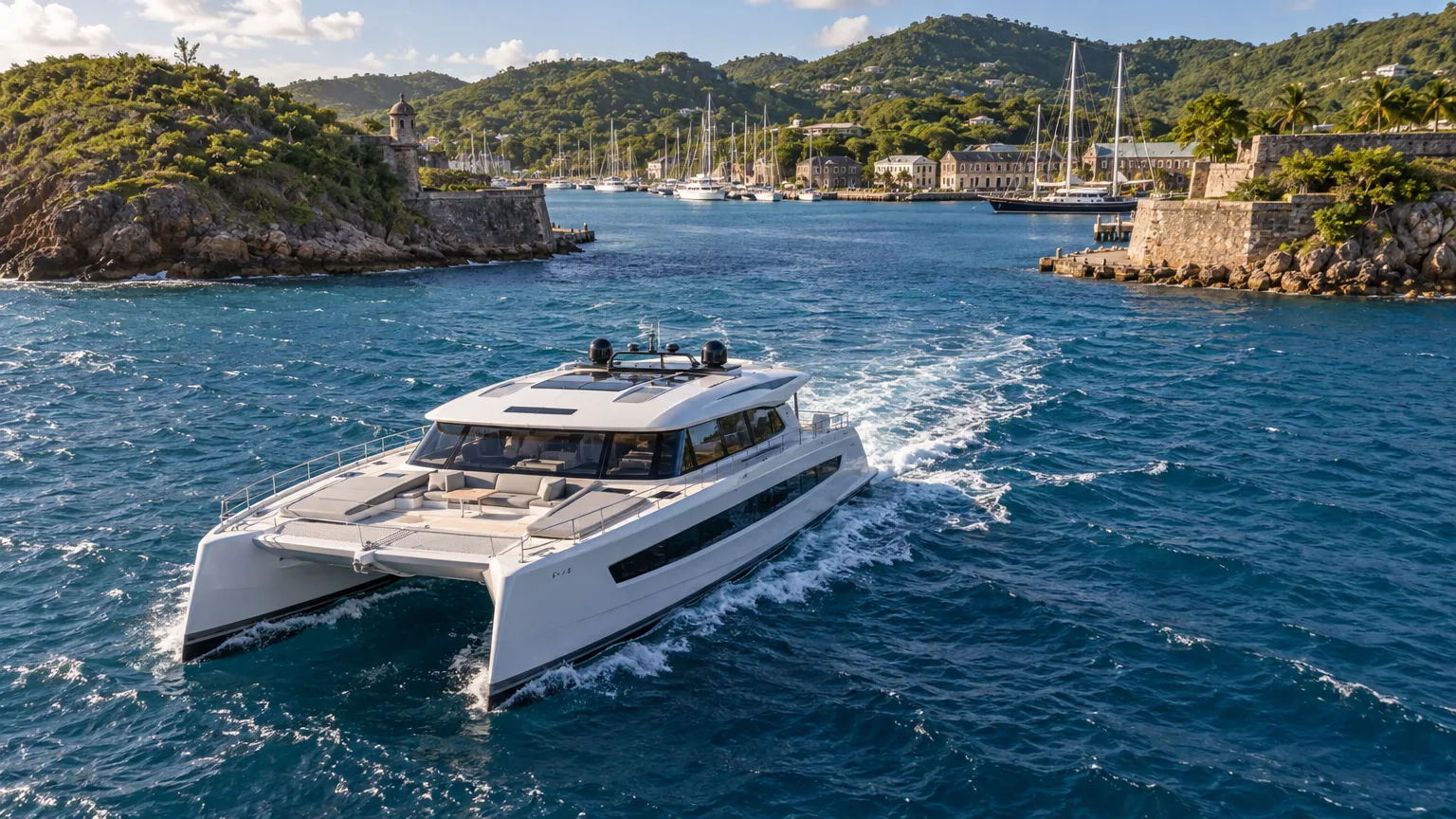

Compass Cay Marina: Best of the Exumas
Compass Cay Marina, 7.5 nm north of Staniel Cay, is where you swim with wild nurse sharks off the dock. Visit by crewed yacht: fees, tides, and safety.
Last Updated: September 6, 2026
Compass Cay Marina is the private Exumas harbour where you can slip into the water with a group of docile, wild nurse sharks, right off the dock, in water so clear you can count them from the pier. It’s one of the most famous wildlife encounters in the Bahamas, and almost every guide frames it as a day-trip you buy a ticket for. What they skip is the better way to do it: arriving on your own schedule aboard a crewed Bahamas yacht charter, timing the swim to high tide, and having the sharks (and one of the Bahamas’ most protected harbours) largely to yourself.
What is Compass Cay Marina?
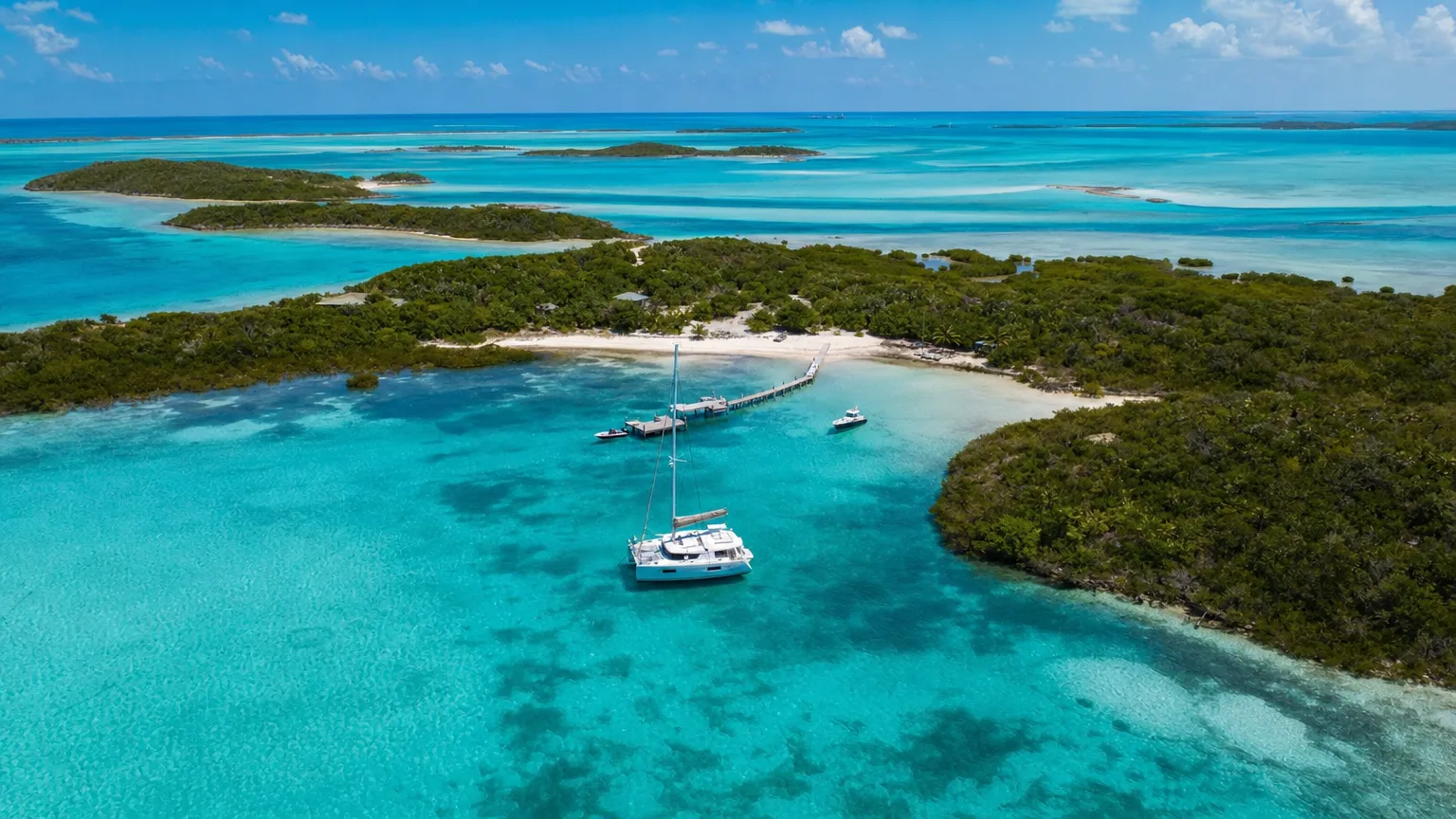
Compass Cay Marina is a privately run marina on Compass Cay, a small island in the central Exuma Cays roughly 7.5 nautical miles north of Staniel Cay, built around one of the rare totally protected natural harbours in the chain (Compass Cay Marina). The harbour is deep and sheltered enough to take vessels of all sizes, up to 180-foot megayachts, which is a big part of why it became a cruising landmark rather than just another pretty cay.
The island itself is privately held: a beach lodge, a scatter of rental cottages, a small marina store, and miles of walking trails. By the marina’s own account, a longtime manager named Tucker will personally guide a first-time voyager into the harbour (Compass Cay Marina). There are no roads and no crowds; the whole place is organized around the water. But what put Compass Cay on the map is what lives in the marina basin: the sharks.
Compass Cay is a privately held island in the central Exuma Cays, about 7.5 nautical miles north of Staniel Cay, built around one of the few totally protected natural harbours in the Bahamas. Its marina takes vessels up to 180 feet, but it’s best known for the resident nurse sharks that gather in the shallow water off its docks.
Can you swim with the nurse sharks at Compass Cay?
Yes, swimming with the nurse sharks is the reason most boats detour to Compass Cay. The sharks gather in the shallow, sandy-bottomed water around the marina’s “Shark Dock,” and visitors step straight off the dock into the basin to snorkel and float among them (Compass Cay Marina). The animals are used to people and generally unbothered, cruising slow circuits through waist-to-chest-deep water while you watch from inches away.
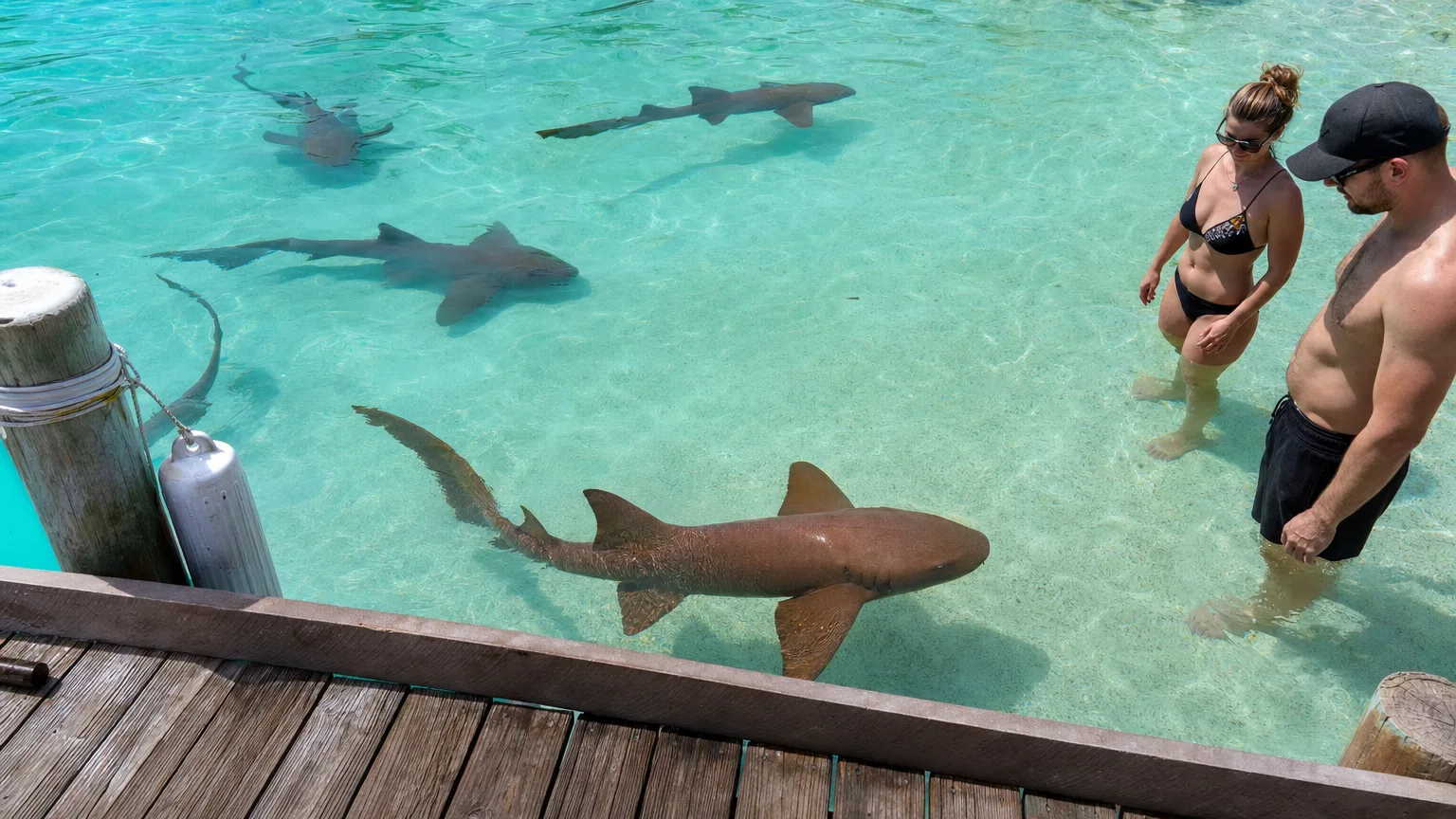
Timing matters more than people expect. The swim is best around high tide, when there’s enough water over the sand to float comfortably alongside the sharks rather than standing on the bottom. This is also the part visitors mix up with Staniel Cay Yacht Club a few miles south, where resident nurse sharks are usually watched and petted from the dock. At Compass Cay you actually get in the water with them, and on a crewed week you can easily do both.
At Compass Cay you get in the water with the nurse sharks off the marina’s Shark Dock; at Staniel Cay Yacht Club, about 7.5 miles south, the resident nurse sharks are typically watched and touched from the dock. The Compass Cay swim works best around high tide, when there’s enough water to float alongside them.
Are the Compass Cay nurse sharks safe?
Nurse sharks are not generally aggressive and usually swim away when approached (Florida Museum of Natural History). Recorded bites are almost always the result of a shark being grabbed, cornered, or otherwise disturbed; the same source notes their bite is a powerful, vise-like grip, and that bite frequency has risen alongside ecotourism feeding. In other words, the encounter is safe when you treat the animals as wild wildlife, not pets.
That’s the responsible way to do it: keep your hands close to your body so you’re never mistaken for holding food, don’t grab tails or try to ride them, give any shark that wants space its space, and leave the feeding to the people who run the dock. The “pet shark” nickname is affectionate, not literal. These are free-ranging wild animals that happen to have learned the marina means an easy meal.
It helps to know the wider context: you’re swimming inside one of the largest shark sanctuaries on earth. In 2011 The Bahamas banned commercial shark fishing and the shark-product trade across its entire waters, the first shark sanctuary in the Atlantic Ocean (Pew Charitable Trusts). The healthy, unafraid sharks at Compass Cay are one visible result of that protection.
How do you get to Compass Cay?
Compass Cay is reachable only by boat: there is no public ferry, and the “landing strip” you’ll see mentioned is a tidal sandbar, not an airstrip. The practical route for most visitors is to fly into Staniel Cay’s 3,000-foot airstrip and transfer about 10 minutes by boat, or to arrive under your own keel on a charter working the central Exumas (Compass Cay).
Day visitors pay the marina directly: a published 2026 rate of $4 per foot of boat length plus a $15-per-person landing fee, with overnight dockage at $5 per foot. Credit cards are accepted and a card deposit is required, so it is not cash-only (Compass Cay Marina). Rates shift seasonally, so confirm when you plan. On a crewed charter, your captain handles the dockage, the cut, and the timing, and the fee simply becomes part of the day.
Compass Cay is boat-access only, with no public ferry. Most visitors fly to Staniel Cay’s 3,000-foot airstrip, then transfer about 10 minutes by boat. The marina’s published 2026 day-use rate is $4 per foot of boat length plus a $15-per-person landing fee; credit cards are accepted, so it is not cash-only.
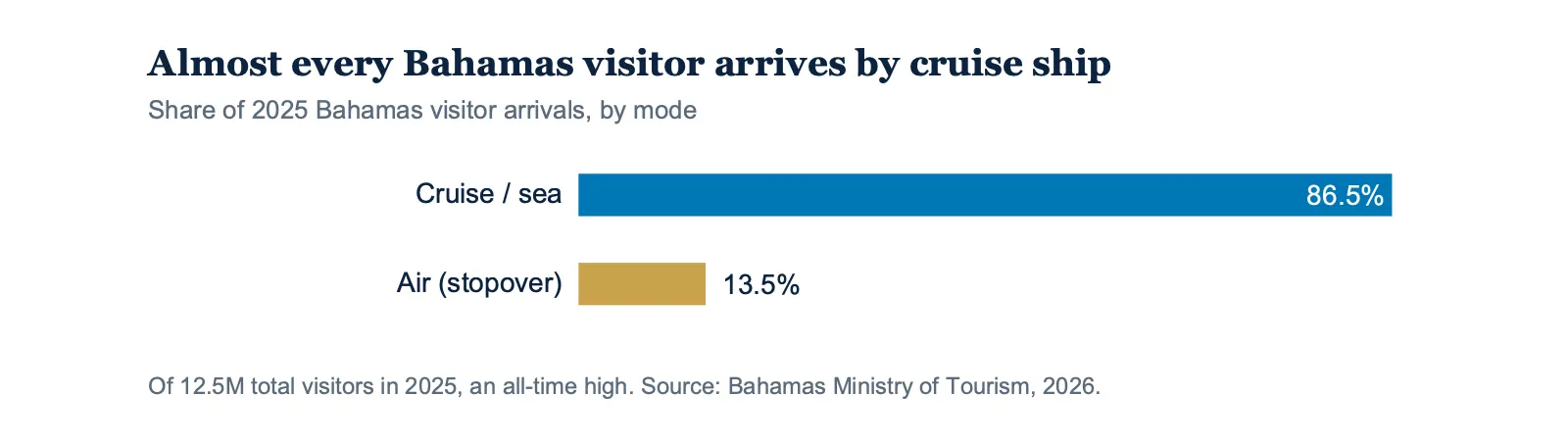
View data table
| 2025 Bahamas visitor arrivals | Share |
|---|---|
| Cruise / sea arrivals (~10.6M) | 86.5% |
| Air / stopover arrivals (~1.7M) | 13.5% |
Of 12.5M total visitors in 2025, an all-time high. Source: Bahamas Ministry of Tourism, 2026.
That split is the whole reason Compass Cay still feels remote. The overwhelming majority of the country’s record 12.5 million 2025 visitors arrived on cruise ships that never leave the Nassau orbit, and the cays of the central Exumas simply aren’t reachable that way. It takes a small boat, and done comfortably a crewed one, to get here at all, which is exactly what keeps the shark dock from turning into a theme park.
What else is there to do on Compass Cay?
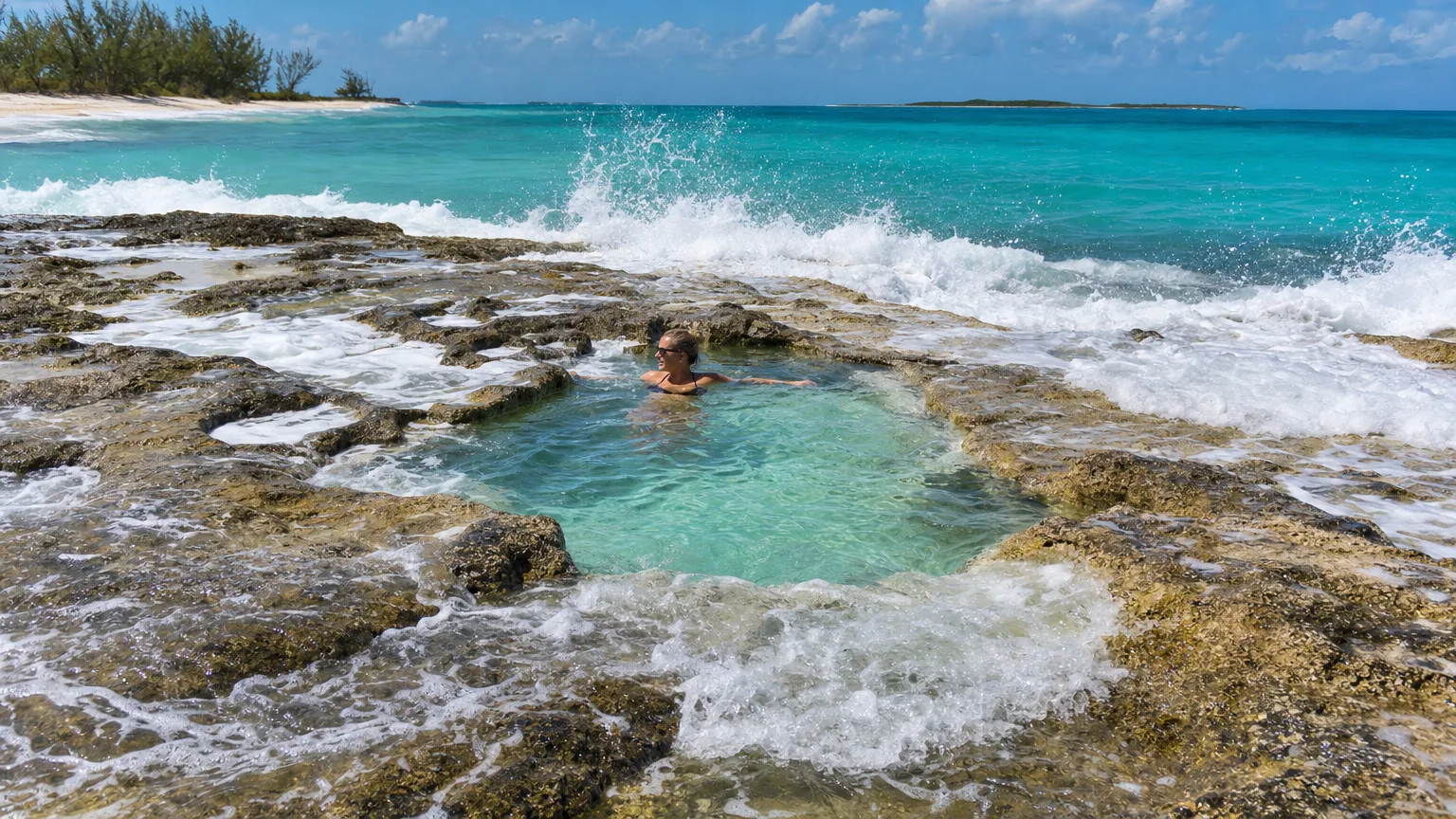
Beyond the sharks, Compass Cay’s best-known attraction is Rachel’s Bubble Bath, a rock-rimmed natural tidal pool on the north end that foams like a jacuzzi as ocean swell washes over the rocks at mid-to-high tide (Compass Cay Marina). There’s also Crescent Beach, a long curve of sand the marina calls one of the finest anywhere, and a trail system that climbs to 92-foot Compass Peak, the island’s high point.
From the top of Compass Peak you look out over the Exuma Cays Land and Sea Park, the 112,640-acre no-take marine reserve established in 1958 and managed by the Bahamas National Trust, where all fishing has been banned since 1985 (Bahamas National Trust). Compass Cay sits just south of the park boundary, which means a day here can pair the shark swim with a run up into some of the most strictly protected water in the Caribbean.
Beyond the sharks, Compass Cay offers Rachel’s Bubble Bath, a natural tidal pool that foams at mid-to-high tide, along with Crescent Beach and a hike to 92-foot Compass Peak. The cay sits just south of the Exuma Cays Land and Sea Park, a 112,640-acre no-take reserve where all fishing has been prohibited since 1985.
When should you visit: and how does Compass Cay fit an Exumas charter?
The best window is the winter dry season, roughly December through April, when the trade winds ease, the seas calm, and water clarity is at its best; Atlantic hurricane season runs June 1 to November 30 (NOAA). Whatever month you come, plan the actual shark swim around high tide. That single detail does more for the experience than the date on the calendar.
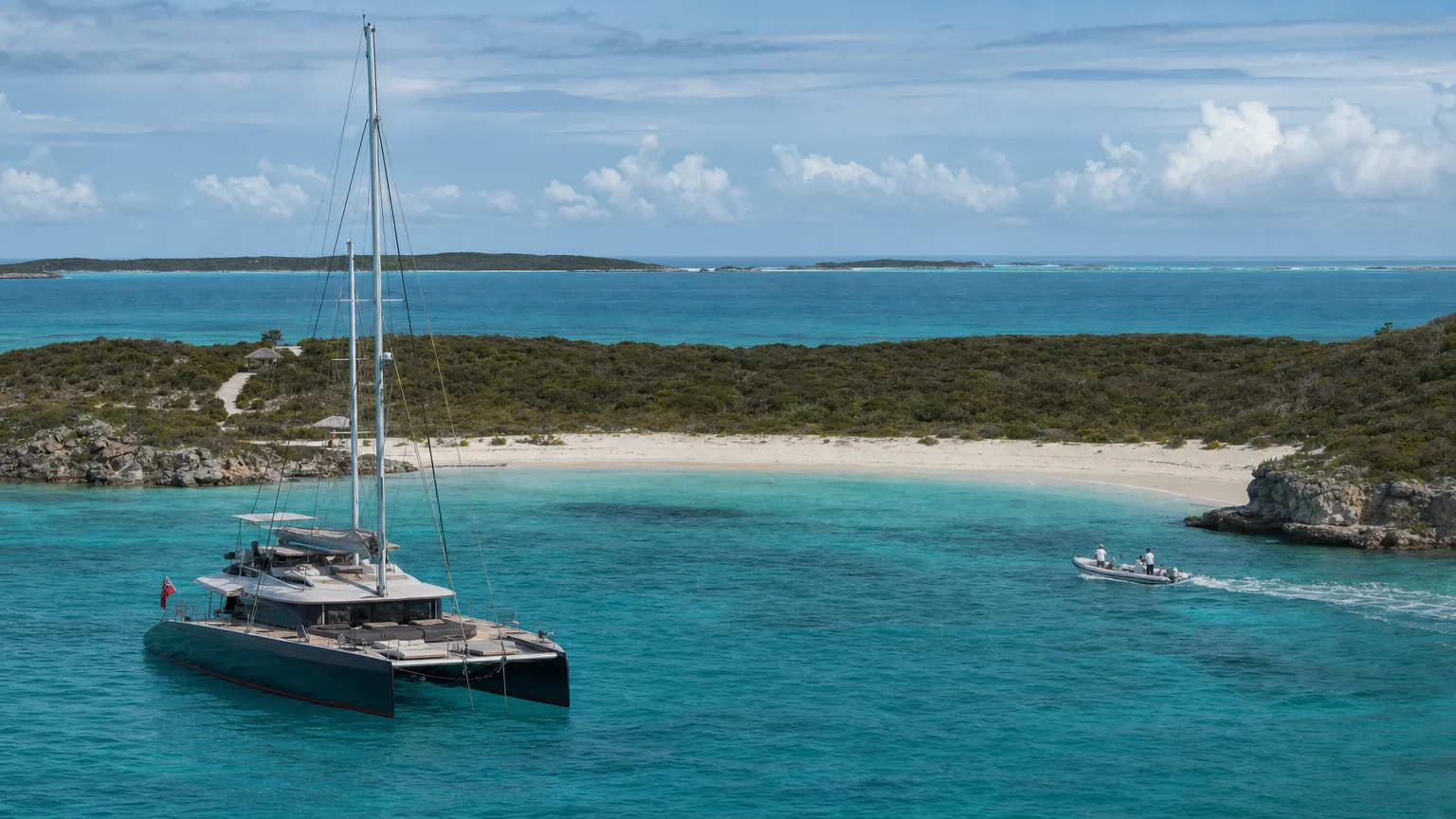
Compass Cay isn’t a destination you build a whole week around; it’s one brilliant stop on the central-Exumas circuit. In a single charter you can thread it together with Staniel Cay, Thunderball Grotto, the swimming pigs of Big Major Cay, and the beaches of the Land and Sea Park. Our full Exuma Cays charter guide maps how the pieces connect. The advantage of a crewed boat is sequencing: your captain hits the grotto at slack water and the shark dock at high tide, so each stop lands at its best.
When you’re ready to plan it, start a yacht search at Vital Charters, and we’ll build the shark dock into your Exumas week.
Compass Cay sits between Staniel and Warderick Wells on a normal Exumas route. Our Bahamas yacht charter prices guide covers what the week lists at, and our Abacos itinerary is the other Bahamas chain worth putting on a shortlist.
Frequently Asked Questions
Can you swim with the nurse sharks at Compass Cay?
Yes. Compass Cay Marina lets visitors get in the water with its resident nurse sharks off the “Shark Dock,” where the animals gather in shallow, clear water. You step off the dock and snorkel or float among them. It works best at high tide, and it’s the in-water version of the encounter, different from watching resident sharks from the dock at nearby Staniel Cay.
Is it safe to swim with nurse sharks in the Bahamas?
Generally, yes. Nurse sharks are not aggressive and usually swim away when approached (Florida Museum of Natural History). Recorded bites are almost always caused by grabbing or cornering a shark. Keep your hands close, don’t touch or chase them, and let the dock staff manage any feeding, and it’s one of the more approachable wildlife encounters in the Bahamas.
What kind of sharks are at Compass Cay?
They’re nurse sharks (Ginglymostoma cirratum), docile, bottom-dwelling sharks common in the warm, shallow waters of the Bahamas. Adults typically run around 7.5 to 10 feet and can weigh 200 pounds or more, and they can live roughly 25 years (Florida Museum of Natural History). By day they rest on the sand, which is why they’re calm and easy to swim alongside at the marina.
How much does it cost to visit Compass Cay?
The marina’s published 2026 rates are $4 per foot of boat length plus a $15-per-person landing fee for day boats, and $5 per foot for overnight dockage. Credit cards are accepted and a card deposit is required, so it isn’t cash-only. Rates change seasonally, so confirm before you go. On a crewed charter, the fee is handled as part of the day.
How do you get to Compass Cay?
Only by boat, since there’s no public ferry. Most visitors fly into Staniel Cay’s 3,000-foot airstrip and transfer about 10 minutes by boat, or arrive on a crewed charter working the central Exumas. Compass Cay’s own “landing strip” is a tidal sandbar, not an aviation airstrip, so plan on arriving by water.
What is Rachel’s Bubble Bath?
Rachel’s Bubble Bath is a natural, rock-rimmed tidal pool on the north end of Compass Cay. As ocean swell washes over the surrounding rocks at mid-to-high tide, the pool churns and foams like a jacuzzi. It’s a short walk from the marina and one of the island’s most popular spots after the shark dock, best enjoyed on a rising tide.
When is the best time to visit Compass Cay?
The winter dry season, December through April, brings the calmest seas and clearest water; Atlantic hurricane season runs June through November. Regardless of month, time the shark swim to high tide, when there’s enough water to float comfortably alongside the sharks. A crewed captain plans your day around the tides so each Exumas stop lands at its best.
Swim the Shark Dock on the tide
A crewed captain anchors you in Compass Cay’s protected harbour and times the swim to high water, no day-boat clock, no rush back to Nassau.