
Magens Bay: Best of the US Virgin Islands
Magens Bay is St. Thomas’s finest beach: heart-shaped, calm, world-famous, $7 to enter. Here’s the fee, the crowds to skip, and how to arrive by yacht.
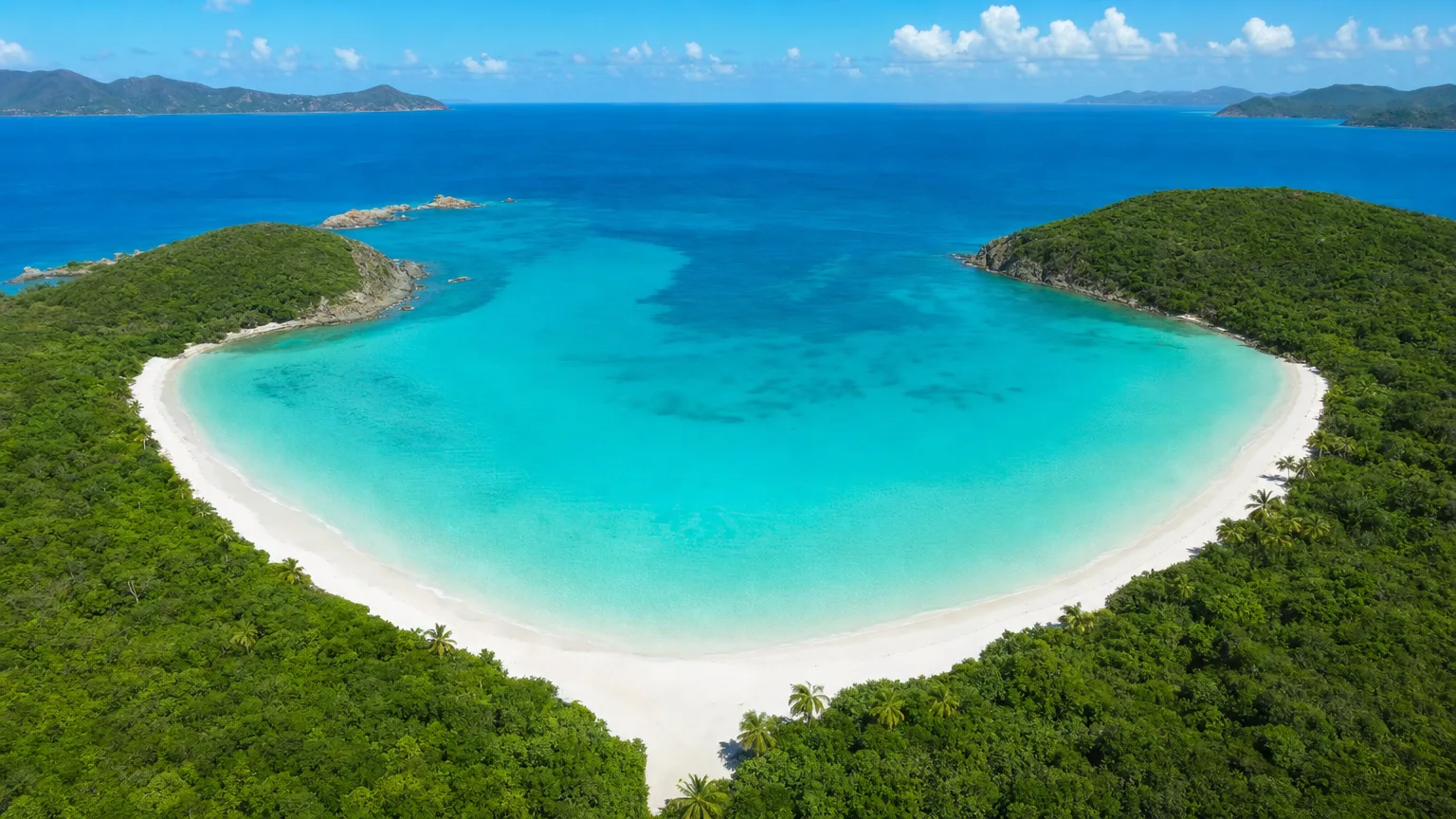
Magens Bay is the heart-shaped, roughly three-quarter-mile beach on the north shore of St. Thomas that most travelers picture when they imagine the US Virgin Islands: powder-white sand, water so calm it barely ripples, and two green peninsulas wrapped around the bay like arms. It’s also the single most popular beach excursion off the Charlotte Amalie cruise docks, which is the one thing worth planning around. Arrive by crewed yacht charter instead of a taxi van, and you can anchor off the outer buoys, tender ashore, and have the calmest swim water on the island before the day-trip crowd ever crests the mountain road.
What Makes Magens Bay the Crown Jewel of St. Thomas
Magens Bay is widely considered the finest beach on St. Thomas and consistently ranks among the most beautiful beaches in the world (Visit USVI). The Magens Bay Authority describes it as “a heart-shaped stretch of shoreline that curves gently along calm, crystal-clear waters,” and notes it has been featured in national travel press as a must-see destination (Magens Bay Authority). The shape is the whole story. Sheltered by the Tropaco and Peterborg peninsulas, the bay is almost entirely protected from open-water swell, so for most of the year there’s little to no wave action and the water reads glass-flat and clear (Wikipedia). That’s why it works for everyone from toddlers to strong swimmers: you wade into warm, shallow turquoise that stays gentle a long way out. The sand runs nearly three-quarters of a mile in a smooth arc, backed by sea grape and coconut palms, with no high-rise resorts crowding the shoreline behind it.
Magens Bay is a heart-shaped, roughly three-quarter-mile white-sand beach on the north shore of St. Thomas, US Virgin Islands. Sheltered by two peninsulas, it has exceptionally calm, clear water and is consistently ranked among the most beautiful beaches in the world. The surrounding park is run by the semi-autonomous Magens Bay Authority.
What It Costs to Get In: Fees, Hours & Amenities
Getting into Magens Bay costs non-resident adults $7 per day, with children under 12 free and parking $2 per vehicle (Magens Bay Authority). Residents pay $2 with local ID, and monthly and family passes are available. Gates open daily at 8 a.m., with the beach closing in the late afternoon; it’s worth confirming current hours before you go. The fee goes back into a beach that’s actively managed rather than left to fend for itself.
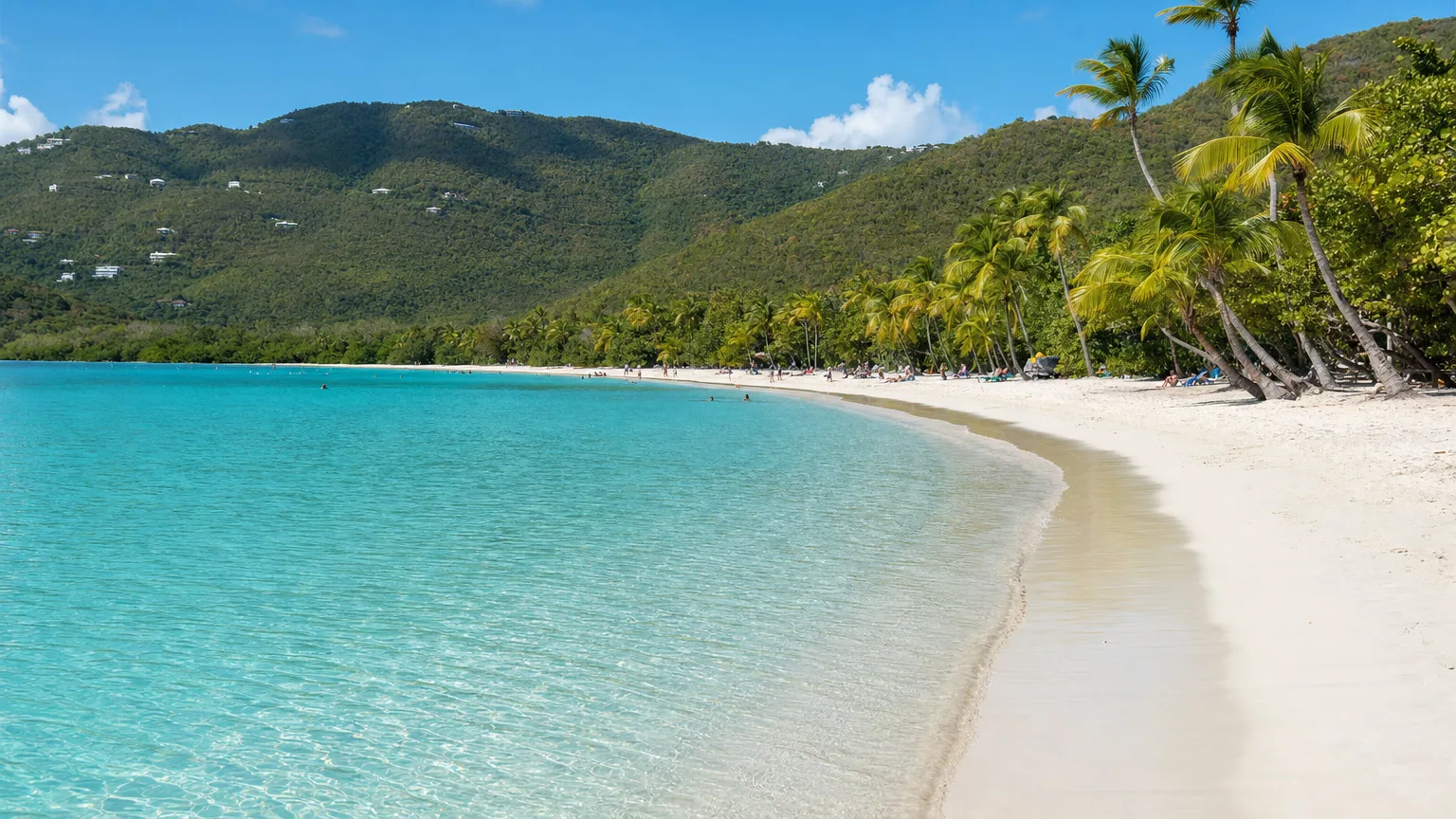
For a day beach, the amenities are unusually complete. There are lifeguards, restrooms, and freshwater showers, plus rentals for beach chairs, umbrellas, kayaks, and stand-up paddleboards at the north end, and food and drink on site (Visit USVI). You can arrive with nothing and have a full day handled, which is exactly why it’s the default beach stop for cruise passengers and first-time visitors alike.
Magens Bay charges non-resident adults $7 per day, with children under 12 free and parking $2 per vehicle. The beach and its watershed are managed by the semi-autonomous Magens Bay Authority, a US Virgin Islands agency that sets the fees, hours, and boating rules. On-site amenities include lifeguards, restrooms, showers, and chair, kayak, and paddleboard rentals.
Anchoring in Magens Bay: Why Arriving by Yacht Wins
Yes, yachts can anchor in Magens Bay, but only outside the outer buoy line, roughly 100 feet seaward of the boat buoys, and only in sand to protect the seagrass beds that feed the bay’s sea turtles (Friends of Magens Bay). The large inner bay is a designated swim area closed to all watercraft, the speed limit is about 6 knots, jet skis are banned park-wide, and a marked dinghy lane at the northeast end handles drop-off and pick-up. Those rules are precisely why the calmest water in St. Thomas stays calm. The real advantage isn’t the anchoring, though; it’s the clock. Magens Bay is the single most popular taxi shore excursion from the Charlotte Amalie cruise ports, and the US Virgin Islands see far more cruise passengers than overnight visitors. In 2024, the territory hosted 1,700,161 cruise passengers against 907,366 air arrivals, nearly two to one (USVI Bureau of Economic Research). Those cruise guests funnel onto the beach in a predictable mid-day wave.
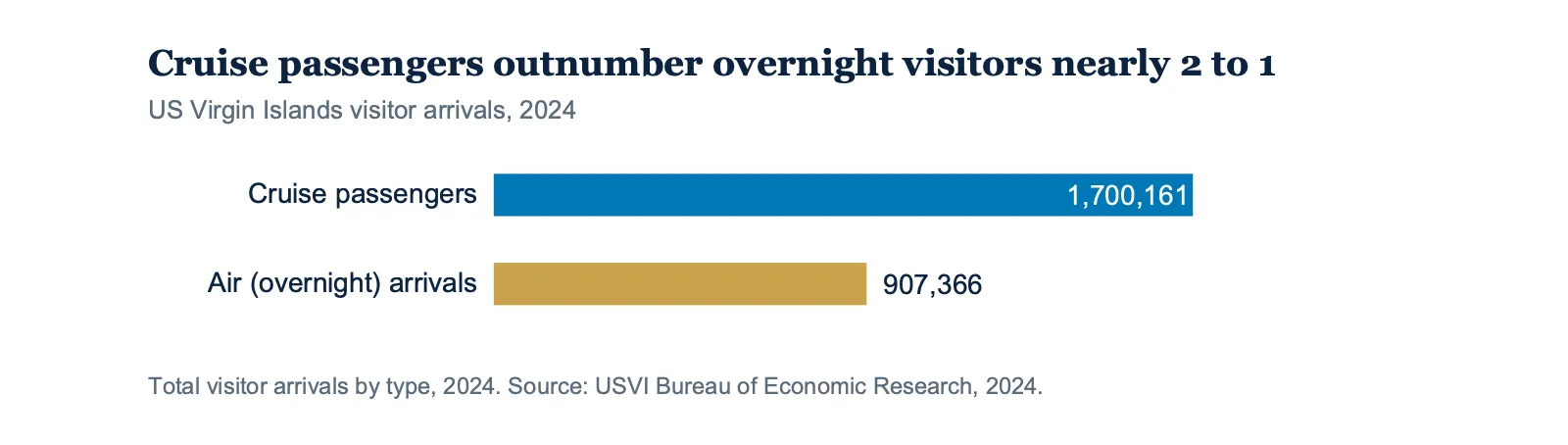
View data table
| US Virgin Islands visitor arrivals, 2024 | Arrivals |
|---|---|
| Cruise passengers | 1,700,161 |
| Air (overnight) arrivals | 907,366 |
Total visitor arrivals by type, 2024. Source: USVI Bureau of Economic Research, 2024.
Yachts may anchor in Magens Bay only outside the outer buoy line, about 100 feet seaward of the boat buoys, and only in sand to protect the seagrass that feeds its sea turtles. The inner bay is a swim area closed to all watercraft; jet skis are banned, and a marked dinghy lane at the northeast end tenders guests ashore.
Beyond the Sand: The Arboretum, Nature Trail & Sea Turtles
Magens Bay’s protected land totals a 319-acre watershed, a 5-acre arboretum with around 160 rare and exotic tree species, and a 2.4-mile Discovery Nature Trail that runs through dry forest, moist tropical forest, and a mangrove boardwalk before opening onto the shore (Visit USVI). The park also holds a coconut grove and mangrove, and the trail is a genuine birding walk, not a token path.
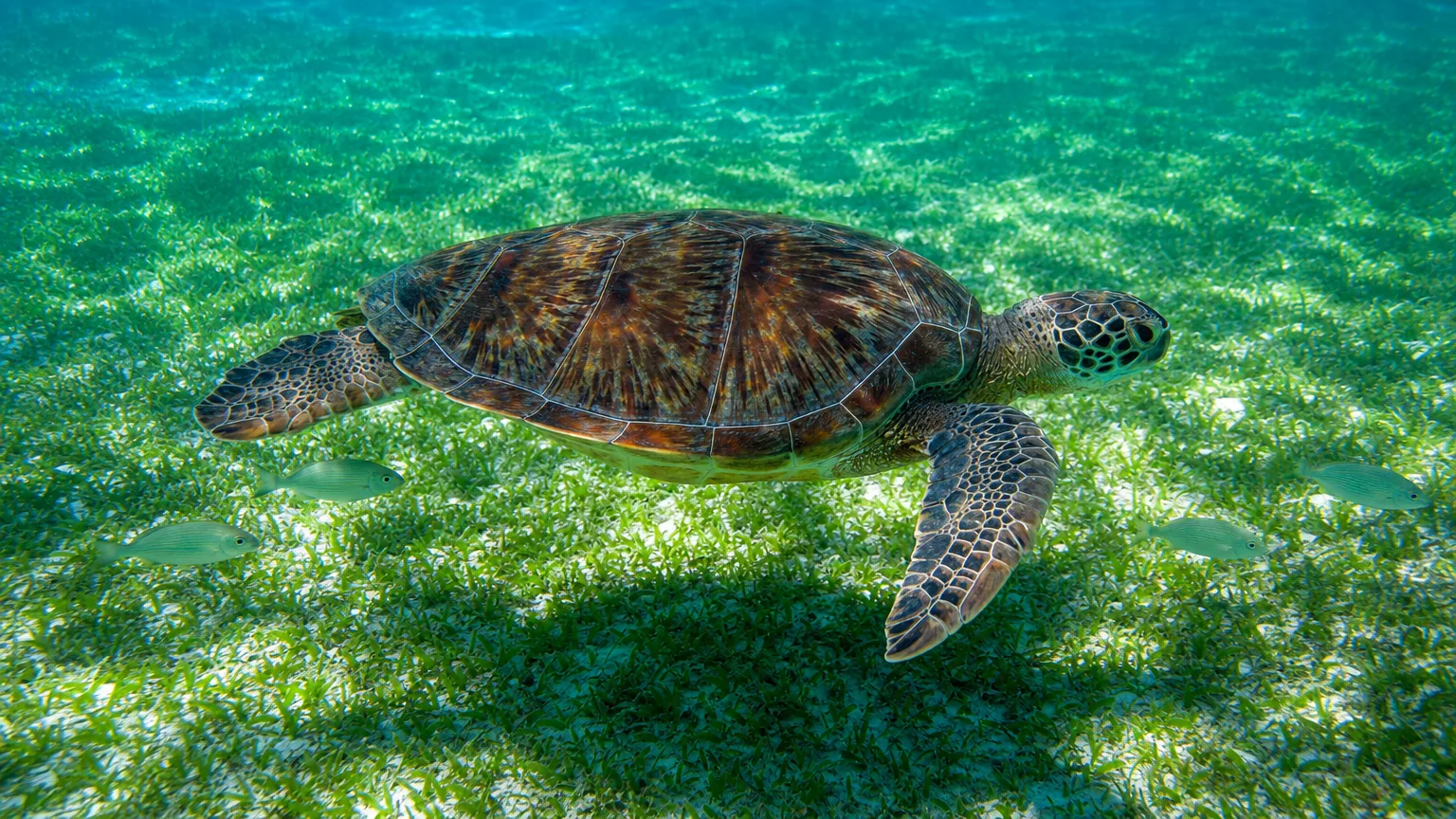
In the water, the same calm that makes Magens Bay easy to swim makes it good for wildlife: sea turtles, stingrays, spotted eagle rays, conch, and tarpon are all commonly seen in the bay (Wikipedia). Walk to the quieter eastern end of the beach and the crowds thin out toward a small, secluded cove tucked along the Peterborg shoreline. The land itself is a gift in the literal sense: financier Arthur S. Fairchild donated 56 acres of the beach and surrounding area to the public in the mid-1940s (Wikipedia), which is why there’s no wall of development behind it today.
Behind Magens Bay’s beach sit a 319-acre protected watershed, a 5-acre arboretum with roughly 160 tree species, and a 2.4-mile Discovery Nature Trail through dry forest, tropical forest, and a mangrove boardwalk. Sea turtles, stingrays, and spotted eagle rays are commonly seen in the bay. The original 56-acre park was donated by financier Arthur S. Fairchild in the mid-1940s.
How to Get to Magens Bay
Magens Bay sits about six miles northwest of Charlotte Amalie via Northside Road (Route 35), a 15-to-20-minute drive up and over the mountain from the cruise port (Visit USVI). From the Havensight or Crown Bay docks, most visitors reach it by taxi van, safari bus, or a booked shore excursion, and on a busy cruise day that road and the beach fill together. There’s no flat coastal drive in; the fastest arrival is by water.
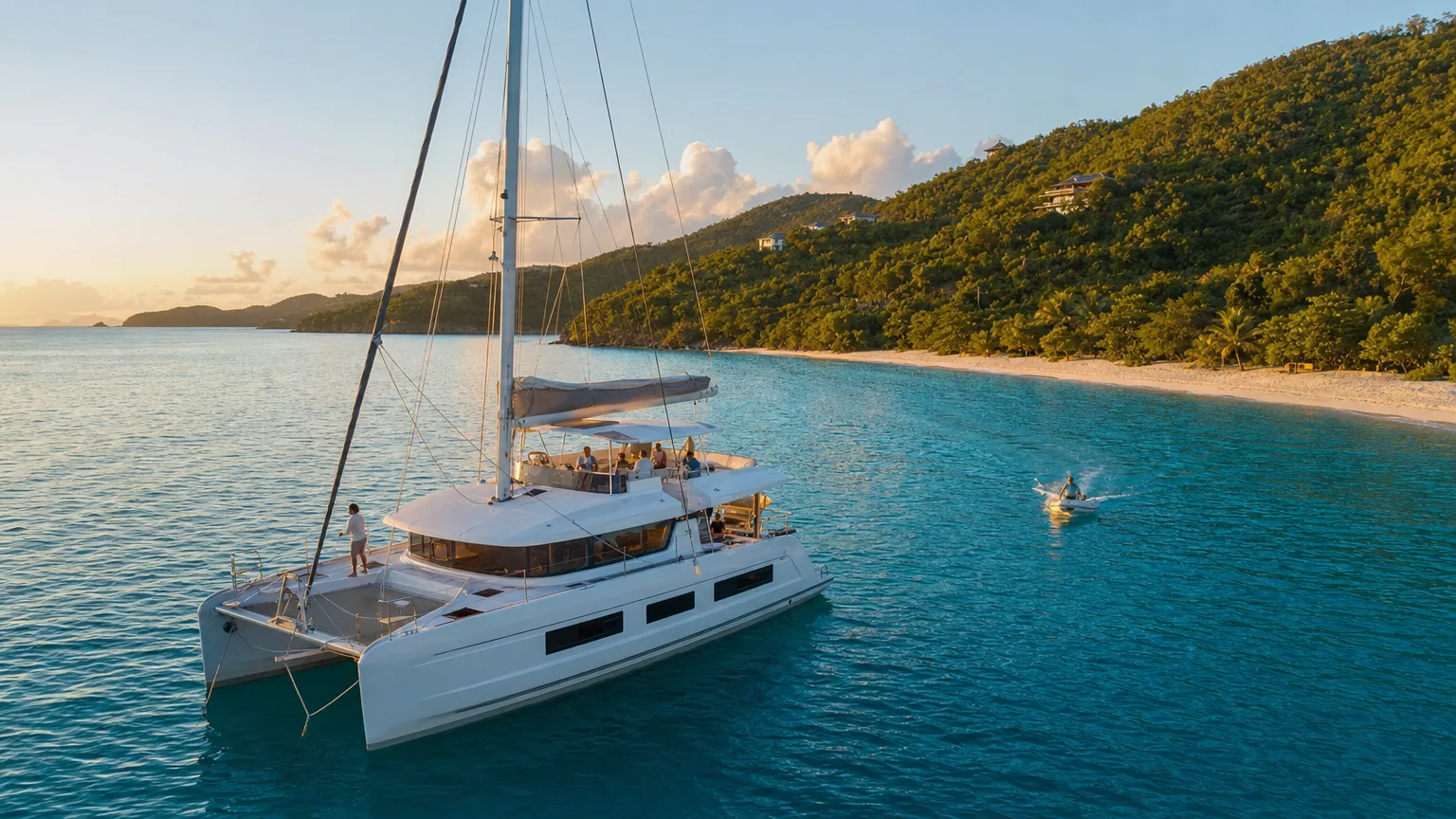
By yacht, the trip flips around. A crewed charter cruising the islands of the US Virgin Islands can anchor off Magens Bay’s outer buoys and tender you straight onto the sand, no van, no switchbacks, no waiting for the next shuttle. St. Thomas is also the natural jumping-off point for the British Virgin Islands next door, and it’s worth understanding how a USVI charter compares to the BVI before you set an itinerary. Magens Bay is one stop among the wider US Virgin Islands charter destinations a week on the water can string together.
Magens Bay is about six miles northwest of Charlotte Amalie via Route 35, a 15-to-20-minute drive from the St. Thomas cruise port. Most visitors arrive by taxi van, safari bus, or booked excursion. There is no coastal road; arriving by yacht means anchoring off the outer buoys and tendering ashore through the marked dinghy lane at the northeast end.
The Best Time to Visit Magens Bay
The best time to visit Magens Bay is early morning or late afternoon, before and after the cruise-ship excursions that peak between roughly 10 a.m. and 2 p.m. The water is warm year-round, in the low-to-mid 80s°F, warmest in late summer and coolest in winter. St. Thomas’s high season tracks the winter dry months, while the Atlantic hurricane season officially runs June 1 to November 30, with peak activity August through October (NOAA). If you’re building a full week, Magens Bay slots naturally into the broader map of Caribbean crewed charter destinations rather than standing alone; a day here pairs with quieter USVI anchorages and the BVI beyond. The through-line is timing: the beach everyone else visits in the crowded middle of the day is the one you can have at its calmest and emptiest simply by arriving on your own deck.
Frequently Asked Questions
Is Magens Bay worth visiting?
For most visitors, yes. Magens Bay is the signature beach of St. Thomas, with nearly three-quarters of a mile of white sand and some of the calmest, clearest swimming water in the US Virgin Islands. It has full amenities, from lifeguards and showers to chair and kayak rentals. The one caveat is timing: it’s the island’s most popular cruise-ship beach, so it’s best early or late in the day.
How much does it cost to get into Magens Bay?
Entry is $7 per day for non-resident adults and free for children under 12, with parking at $2 per vehicle. Residents pay $2 with a local ID, and monthly and family passes are available. The fees are set by the Magens Bay Authority, the semi-autonomous US Virgin Islands agency that manages the beach and its surrounding park.
Can you get to Magens Bay from the cruise port?
Yes. Magens Bay is about six miles from the Charlotte Amalie cruise docks, a 15-to-20-minute drive over Northside Road (Route 35). Most cruise passengers reach it by taxi van, safari bus, or a booked shore excursion. Because it’s the most popular beach excursion on St. Thomas, it fills up on busy cruise days, generally between mid-morning and mid-afternoon.
What is the prettiest beach in St. Thomas?
Magens Bay is the beach most often named the prettiest on St. Thomas, and it’s the one that lands on “world’s best beaches” lists. Its heart-shaped bay, calm water, and long crescent of white sand set it apart. Other St. Thomas favorites include Lindquist Beach and Sapphire Beach, but Magens Bay is the headline.
Which is better, Trunk Bay or Magens Bay?
They’re different experiences on different islands. Magens Bay, on St. Thomas, is a long, calm swimming beach with full amenities and easy access. Trunk Bay, on St. John inside Virgin Islands National Park, is famous for its underwater snorkeling trail and dramatic setting. If you want easy calm swimming and services, Magens Bay wins; if you want snorkeling and national-park scenery, Trunk Bay does. On a crewed charter you can simply visit both.
Can you anchor a yacht in Magens Bay?
Yes, with rules. Boats must anchor outside the outer buoy line, about 100 feet seaward of the boat buoys, and only in sand to protect the seagrass beds. The inner bay is a designated swim area closed to all watercraft, jet skis are banned, and there’s a marked dinghy lane at the northeast end for tendering guests ashore. A crewed captain handles all of this, so you simply step onto the beach.
Jason Acosta is co-founder and principal broker at Vital Charters.
Own the calm water before the crowd
Anchor off the outer buoys and Magens Bay’s calm swim water is yours at first light, long before the mid-day taxi wave crests the mountain road.