
The Baths: Best of the BVI
Swim into granite grottoes off Virgin Gorda. Here’s how to visit The Baths by crewed yacht: moorings, the dinghy swim-in, and beating cruise crowds at dawn.
Last Updated: September 6, 2026
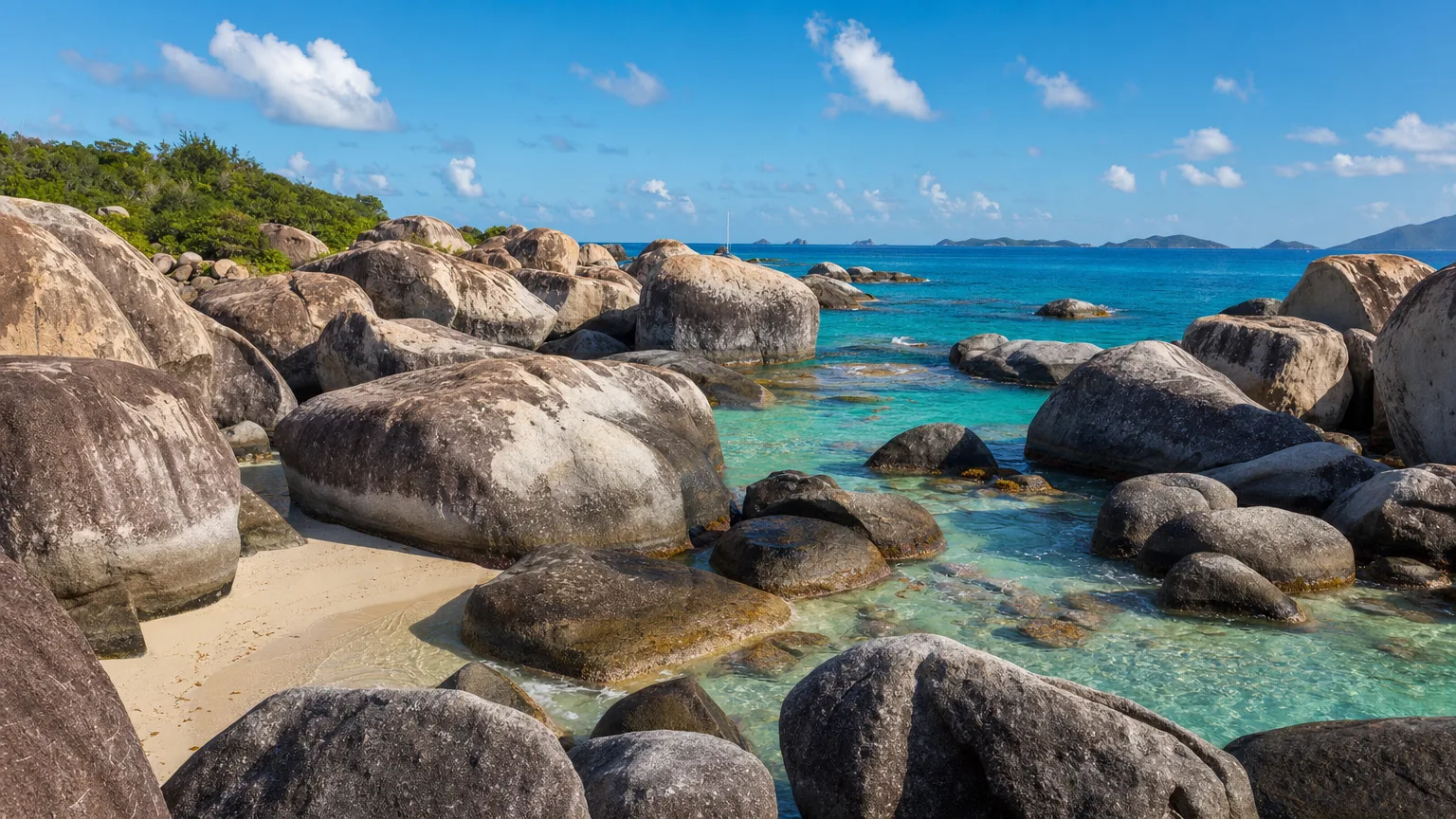
The Baths sit on the southern tip of Virgin Gorda, where house-sized granite boulders pile into a maze of sea pools, caves, and grottoes you can wade and swim straight through. It’s been a national park since 1990, and it ranks among the most visited natural attractions in the British Virgin Islands. Arriving by yacht changes the whole experience: your boat picks up a day-use mooring just offshore, and you swim in from the tender rather than fighting a ferry line. On a crewed BVI charter, the captain handles the park permit and the logistics so you can just enjoy the place.
What are The Baths?
The Baths is a national park on the south coast of Virgin Gorda, about 1.2 miles south of Spanish Town, sitting between Spring Bay to the north and Devil’s Bay to the south. It’s been protected as a national park since 1990 and is managed by the National Parks Trust of the Virgin Islands (National Parks Trust of the VI, 2026). The draw is the geology: nothing else in the British Virgin Islands looks like it.
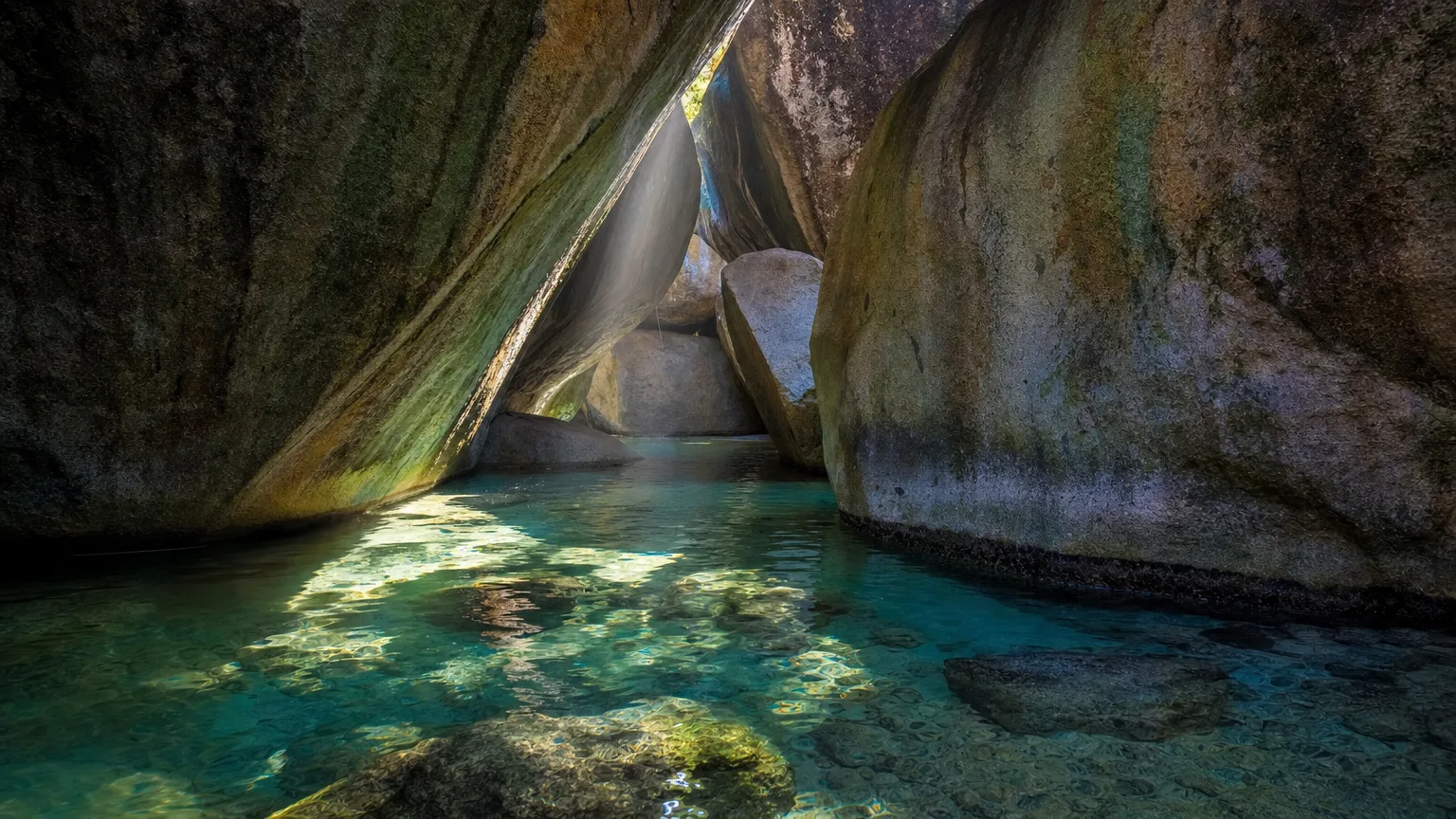
The granite formed underground from the Virgin Islands Batholith roughly 40 to 50 million years ago, then erosion exposed and rounded the rock into the smooth boulders you see today. Seawater fills the gaps between them, making natural pools and shadowed grottoes you can swim through. The sand is unusual too: white quartz mixed with dark hornblende grains. The most-photographed chamber is popularly called the “Cathedral Room” (that’s a nickname, not an official name) where shafts of light cut down through the boulders onto the water.
The Baths is a national park on the southern tip of Virgin Gorda, BVI, protected since 1990 and managed by the National Parks Trust of the Virgin Islands. Giant granite boulders, the largest about 40 feet, formed from the Virgin Islands Batholith roughly 40 to 50 million years ago and create sea pools, caves, and grottoes open to the ocean (National Parks Trust of the VI, 2026).
How do you visit The Baths by yacht?
You visit The Baths by picking up a National Parks Trust day-use mooring buoy just offshore. Anchoring is prohibited here to protect the reef, and that’s not negotiable. Charter yachts tie to one of the park’s mooring balls, then tender toward the beach. Dinghies can’t land on the main sand; instead there’s a dinghy/swim line set offshore. You tie the tender to that line and swim the last stretch in. It sounds fussy, and it’s the single best way to arrive.
On a crewed boat, none of that lands on you. The captain reads the mooring field, ties off, sets the dinghy on the swim line, and points you toward the beach. The mooring field is day-use only, overnighting at The Baths isn’t allowed, so for the night you’ll move to a nearby anchorage like Spanish Town or Savannah Bay. There’s a small park entry fee collected onshore (about $3 per person; free for BVI belongers with ID), so bring a little cash.
Anchoring is prohibited at The Baths to protect the reef; charter yachts must pick up a National Parks Trust day-use mooring, which requires a National Parks mooring permit by law. Dinghies cannot land on the main beach: they tie to an offshore swim line and guests swim in. The mooring field is day-use only, with no overnighting (National Parks Trust of the VI, 2026).
Do you need a permit, and what are the rules?
Yes: a National Parks mooring permit is required by law to use a mooring at The Baths, and the BVI has been enforcing entry requirements more strictly across the Greater Baths National Park (Government of the Virgin Islands, 2024). On a crewed charter your captain arranges the permit before you arrive, so you never touch the paperwork. The day pass is $3 per adult and $2 per child (National Parks Trust of the Virgin Islands, ticketing), and your crew handles it.
The rest of the rules are about protecting the park. No anchoring. Day-use moorings are first-come, first-served and often time-limited, so the crew works the timing. The park is day-use only, and the boulder trail closes before sunset. There’s no lighting in there once the sun drops. Use reef-safe sunscreen, take nothing from the rocks, and pay the onshore entry fee. The National Parks Trust manages the moorings and the trail, and the fees go back into maintaining them.
A National Parks mooring permit is required by law to moor at The Baths, and the Government of the Virgin Islands has stepped up enforcement of entry requirements across the Greater Baths National Park. Onshore, a park entry fee of about $3 per person is collected, free for BVI belongers with valid ID (Government of the Virgin Islands, 2024).
What’s the trail to Devil’s Bay like?
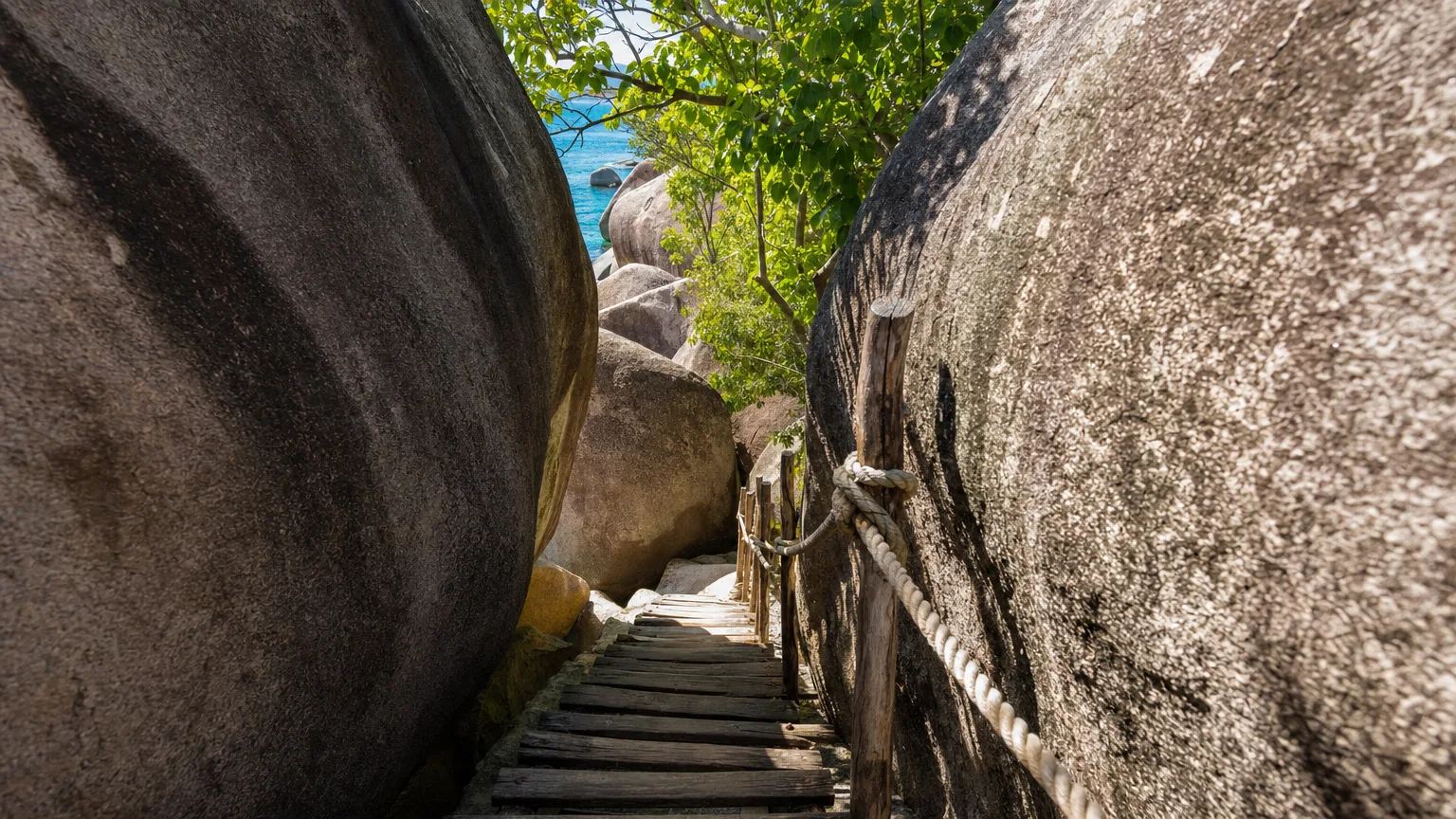
The boulder trail, locals call it “the Caves”, runs about 15 minutes from The Baths main beach through the rocks to Devil’s Bay at the far end. It’s a moderate, adventurous scramble, not a stroll: wooden ladders, rope handrails, tight squeezes between boulders, and a few spots where you wade through knee-deep pools. It’s genuinely fun, and it’s the part guests talk about afterward. It’s also not for everyone.
If anyone in your group has serious mobility limits or strong claustrophobia, the trail isn’t the right call: some passages are narrow and low. The payoff at the end is Devil’s Bay, a calmer, sandier cove that’s often better for swimming and snorkeling than the busy main beach. Wear water shoes; the granite is slippery where it’s wet and sharp where it’s dry. Bring a dry bag or a waterproof phone case for the wading sections, and rent snorkel gear onshore if you didn’t bring your own.
When should you go to beat the crowds?
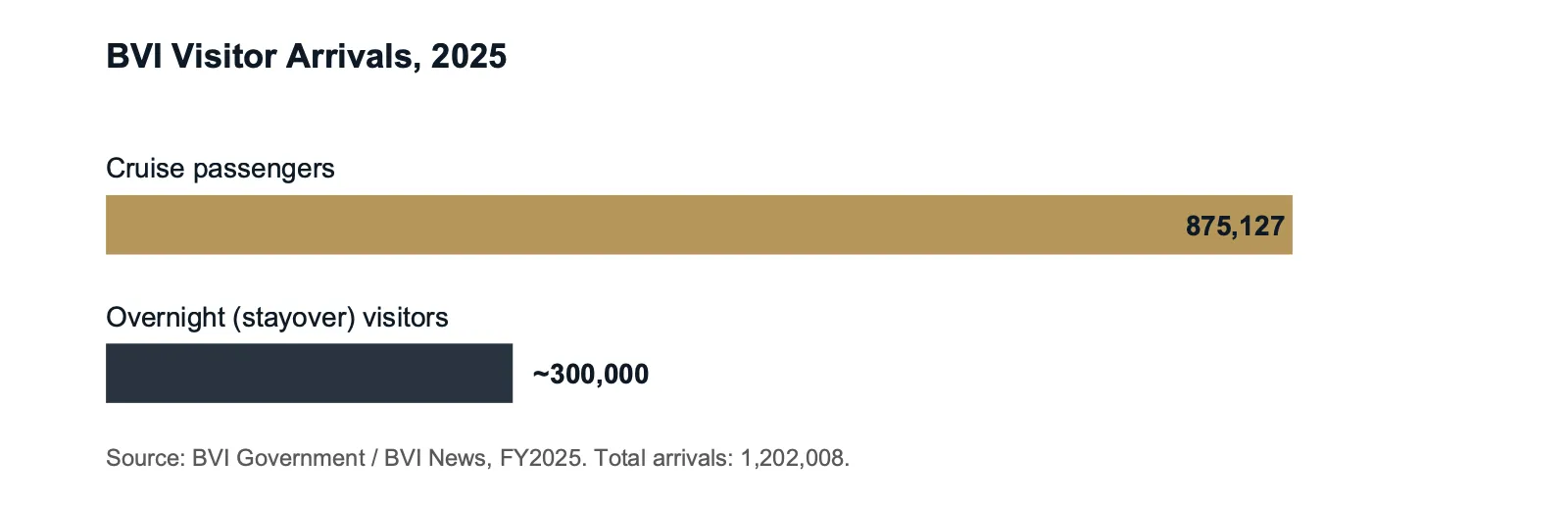
Go at dawn or after 3pm. The BVI logged a record 875,127 cruise passengers in 2025, up 13.9% year over year, part of a record 1,202,008 total arrivals, per Premier Dr. Natalio Wheatley (reported by BVI News, 2026). A big share of those visitors funnel toward The Baths, and cruise-ship excursions plus Tortola ferry day-trippers flood the beach roughly 10am to 2pm.
The window that works is early morning, sunrise to about 9am, or late afternoon after the crowd clears. This is exactly where a crewed yacht wins. You overnight at a nearby anchorage, pick up a mooring at first light, and have the grottoes nearly to yourself before the first excursion boat shows up. One caveat on conditions: winter north swells, roughly December through March, can make The Baths rough or temporarily unsafe for swimming. Your captain reads the swell and may reroute the morning if it’s running.
View data table
| 2025 arrival type | Visitors |
|---|---|
| Cruise passengers | 875,127 |
| Overnight (stayover) visitors | ~300,000 |
| Total visitor arrivals | 1,202,008 |
The British Virgin Islands recorded 1,202,008 total visitor arrivals in 2025, a record, including 875,127 cruise passengers, up 13.9% year over year, plus roughly 300,000 overnight visitors, per the BVI government and Premier Dr. Natalio Wheatley (BVI News, 2026). Cruise excursions crowd The Baths roughly 10am to 2pm, so dawn and late afternoon are the calm windows.
Where do The Baths fit in a BVI charter week?
We usually place Virgin Gorda mid-week, after the boat works its way east from Tortola through the islands. The Baths slot cleanly into a 7-day BVI island-hopping itinerary: Norman Island’s caves, the Rhone wreck, then the granite grottoes. Hit them at dawn, then spend the rest of the day on the same island instead of rushing off.
The pairing we recommend is The Baths by day and sunset ashore the same evening. After a morning in the grottoes, you can move the boat up to Spanish Town and cap the day with a sunset dinner at CocoMaya, set among the same granite boulders a short walk from the harbour. If your week runs longer, point north afterward to Virgin Gorda’s North Sound, a protected anchorage with its own beach bars. Only a crewed charter strings both ends of the island together comfortably in one trip.
Frequently Asked Questions
Do you need a permit or pay a fee to visit The Baths?
Yes. A National Parks mooring permit is required by law to use a mooring, and on a crewed charter your captain arranges it. Onshore, the National Parks Trust charges a day pass of $3 per adult and $2 per child for The Greater Baths (National Parks Trust of the Virgin Islands, ticketing), free for BVI belongers with valid ID. Your crew buys them with the mooring.
Can you anchor at The Baths?
No: anchoring is prohibited to protect the reef. Charter yachts must pick up a National Parks Trust day-use mooring buoy offshore, then tie the dinghy to the swim line and swim in, since dinghies can’t land on the main beach. The mooring field is day-use only, so you’ll move to a nearby anchorage for the night.
What’s the best time of day to visit The Baths?
Early morning, sunrise to about 9am, or late afternoon after roughly 3pm. Cruise-ship excursions and Tortola ferry day-trippers flood The Baths roughly 10am to 2pm. A crewed yacht overnights nearby and picks up a mooring at dawn, so you get the grottoes nearly empty before the first excursion arrives.
Is the trail to Devil’s Bay hard?
It’s a moderate, adventurous scramble: about 15 minutes through the boulders with wooden ladders, rope handrails, tight squeezes, and wading through pools. Most reasonably fit guests love it. It isn’t ideal for anyone with serious mobility limits or strong claustrophobia. Wear water shoes; the granite is slippery wet and sharp dry.
Can you visit The Baths at night or stay overnight?
No. The boulder trail closes before sunset, and there’s no lighting in the grottoes. The mooring field is day-use only, so overnighting at The Baths isn’t allowed. For the night, your crew moves the boat to a nearby anchorage like Spanish Town or Savannah Bay, then returns to a mooring the next morning.
The Baths is the rare BVI stop worth building a whole day around, granite grottoes you swim into, a boulder scramble to a quieter bay, and a dawn arrival that only a yacht makes possible. Skip the anchoring and the ferry lines, pick up a mooring, and let the crew handle the permit and the swim-in. Tell us your dates and group and we’ll build the Virgin Gorda day around it. Start a yacht search at Vital Charters.
Swim the granite grottoes of Virgin Gorda
Tell us your dates and group size, and we’ll build the Virgin Gorda day around a dawn arrival at The Baths.