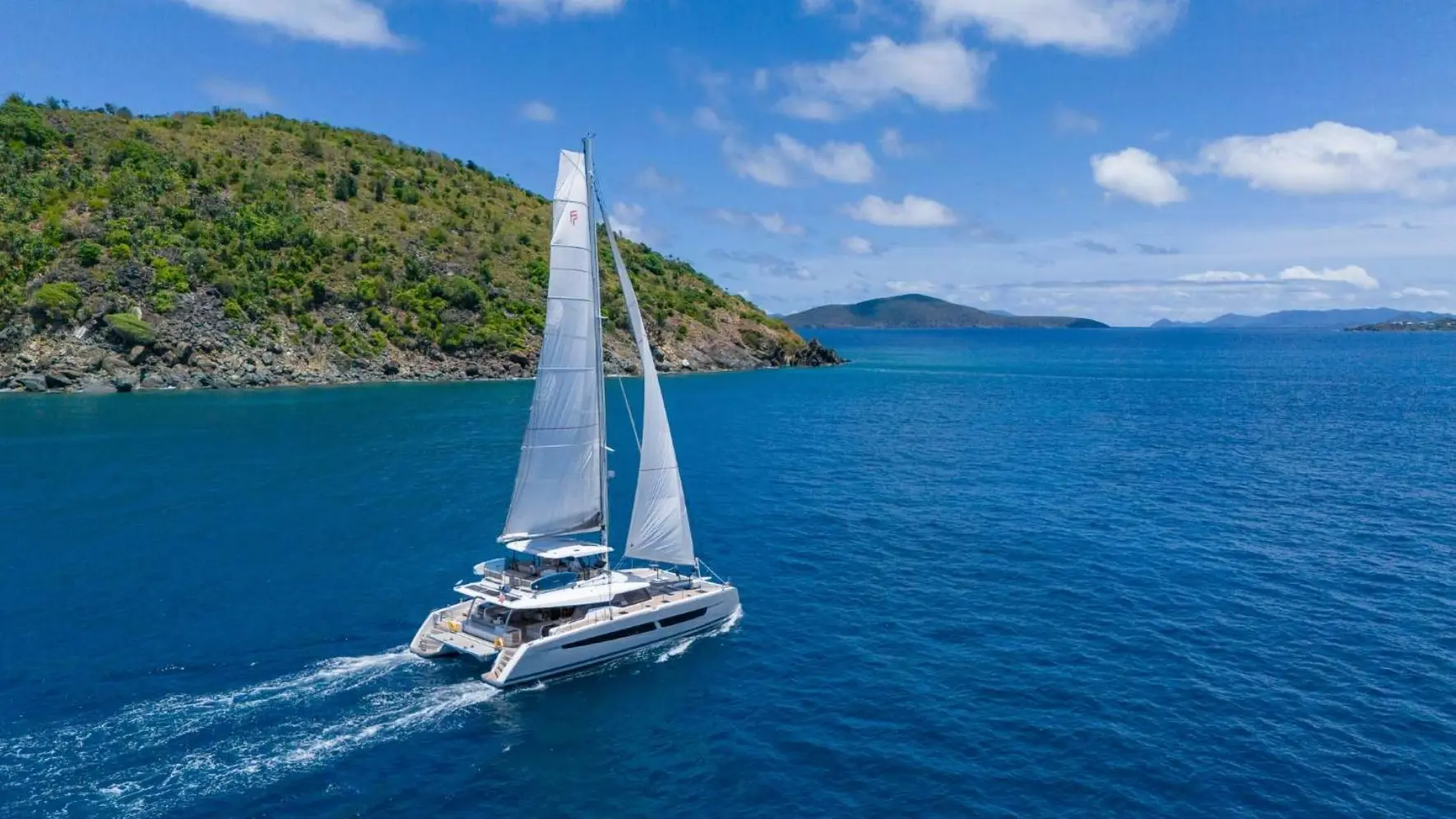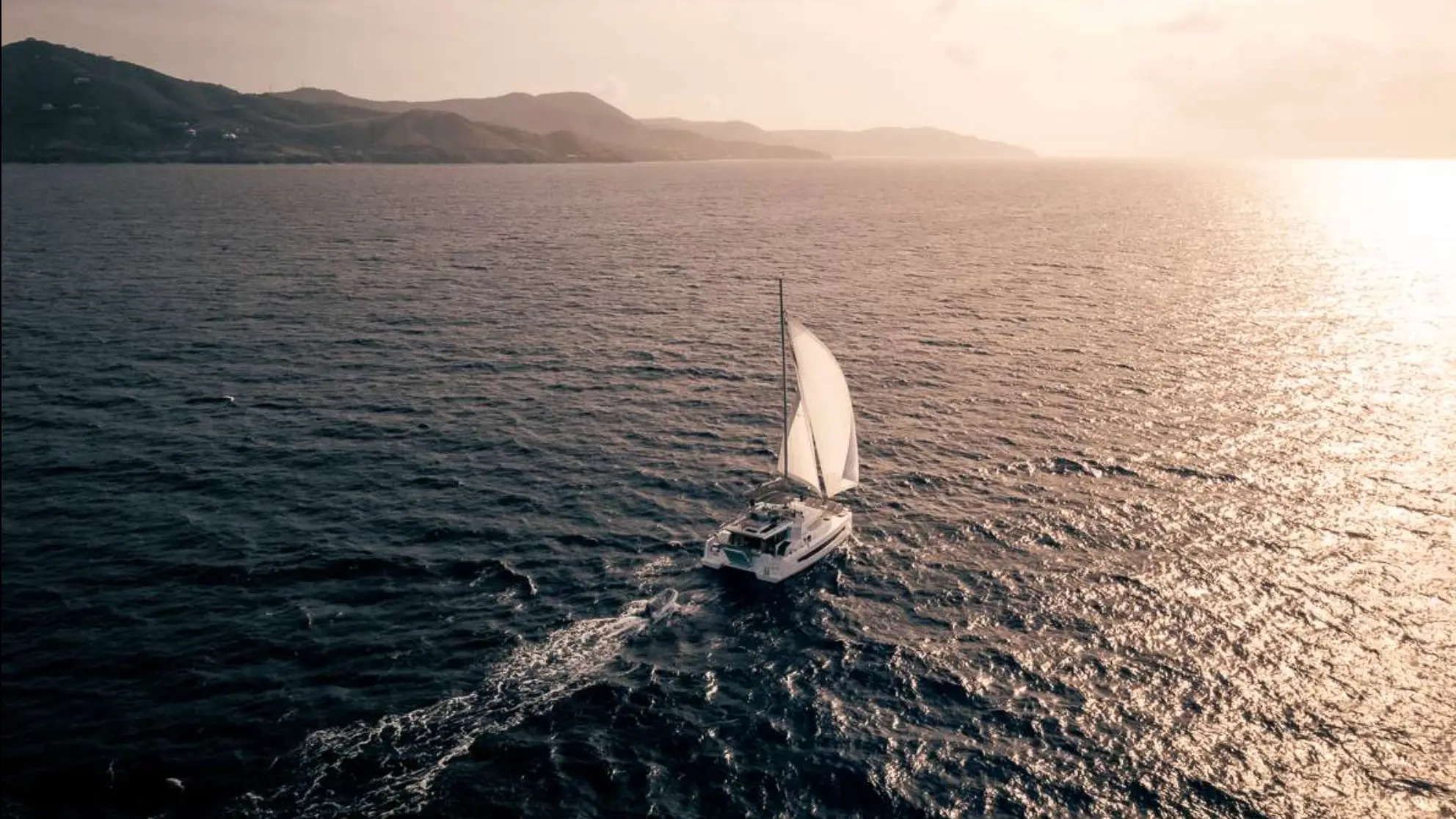
Walk along any marina dock in the British Virgin Islands or the Bahamas, and you’ll notice something: Leopard Catamarans are everywhere. There’s a reason for that. Robertson & Caine, the South African shipyard behind the Leopard brand, has delivered over 3,000 catamarans to THL Marine — the parent company of The Moorings and Sunsail — across a partnership spanning nearly three decades (Yacht Style, 2025). That’s not a coincidence. It’s the result of a design philosophy built specifically for charter.
Among the top catamaran brands in the Caribbean charter market, Leopard holds a unique position. While competitors like Lagoon and Fountaine Pajot split production between private owners and charter fleets, Leopard builds the majority of its boats for professional charter operations. That single fact shapes everything — from hull construction to cabin layout to the materials used in galley cabinetry.
TL;DR: Leopard Catamarans, built by South Africa’s Robertson & Caine, have supplied over 3,000 vessels to The Moorings and Sunsail charter fleets (Yacht Style, 2025). Their signature forward cockpit, charter-grade durability, and models like the award-winning Leopard 46 make them the most common catamaran you’ll encounter on a Caribbean or Bahamas sailing vacation.
How Did Leopard Catamarans Become the Dominant Charter Brand?
Robertson & Caine was founded in 1991 by John Robertson and Jerry Caine in Cape Town, South Africa (Leopard Catamarans, 2025). The partnership that would transform Caribbean sailing began in 1994, when The Moorings approached the yard to manufacture purpose-built charter catamarans. Two years later, R&C delivered its first order of eight vessels.
The Leopard brand officially launched in 1997. Growth was rapid — and deliberate. Over the following twelve years, R&C launched 814 catamarans across twelve variants ranging from 37 to 62 feet (Yacht Style, 2025). Today, the yard produces over 200 catamarans annually from five production facilities in Cape Town, employing more than 2,500 craftsmen, engineers, and designers (Robertson and Caine, 2025).
Our observation: Having walked through dozens of charter catamarans over the years, the difference in build quality between a well-maintained Leopard and its competitors is something you feel underfoot. The hull rigidity, the cabinet construction, the way hardware is mounted — it’s clear these boats were designed to handle thousands of charter guests, not just a few weekend sailors.
What separates Leopard from competitors isn’t just volume. It’s intent. Fountaine Pajot builds approximately 80% of its production for private owners (ACY Yachts, 2024). Leopard flips that ratio, with the majority going into professional charter fleets. Every design decision — wider companionways, more durable surfaces, easier-access systems — reflects this charter-first mentality.
The current Leopard range is designed by naval architecture firm Simonis Voogd, continuing a legacy that includes collaborations with Morrelli & Melvin, who designed the revolutionary Leopard 44 and its groundbreaking forward cockpit (Leopard Catamarans, 2025).
What Makes Leopard Catamarans Different from Lagoon and Bali?
Charter companies that operate both Leopard and Lagoon fleets have consistently reported that Leopards hold up better under the demands of continuous charter use (Cruisers Forum, 2024). Higher-quality materials, finished laminated cabinetry edges that prevent water intrusion, and more robust hardware all contribute to lower long-term maintenance costs — which directly maximizes fleet profitability.
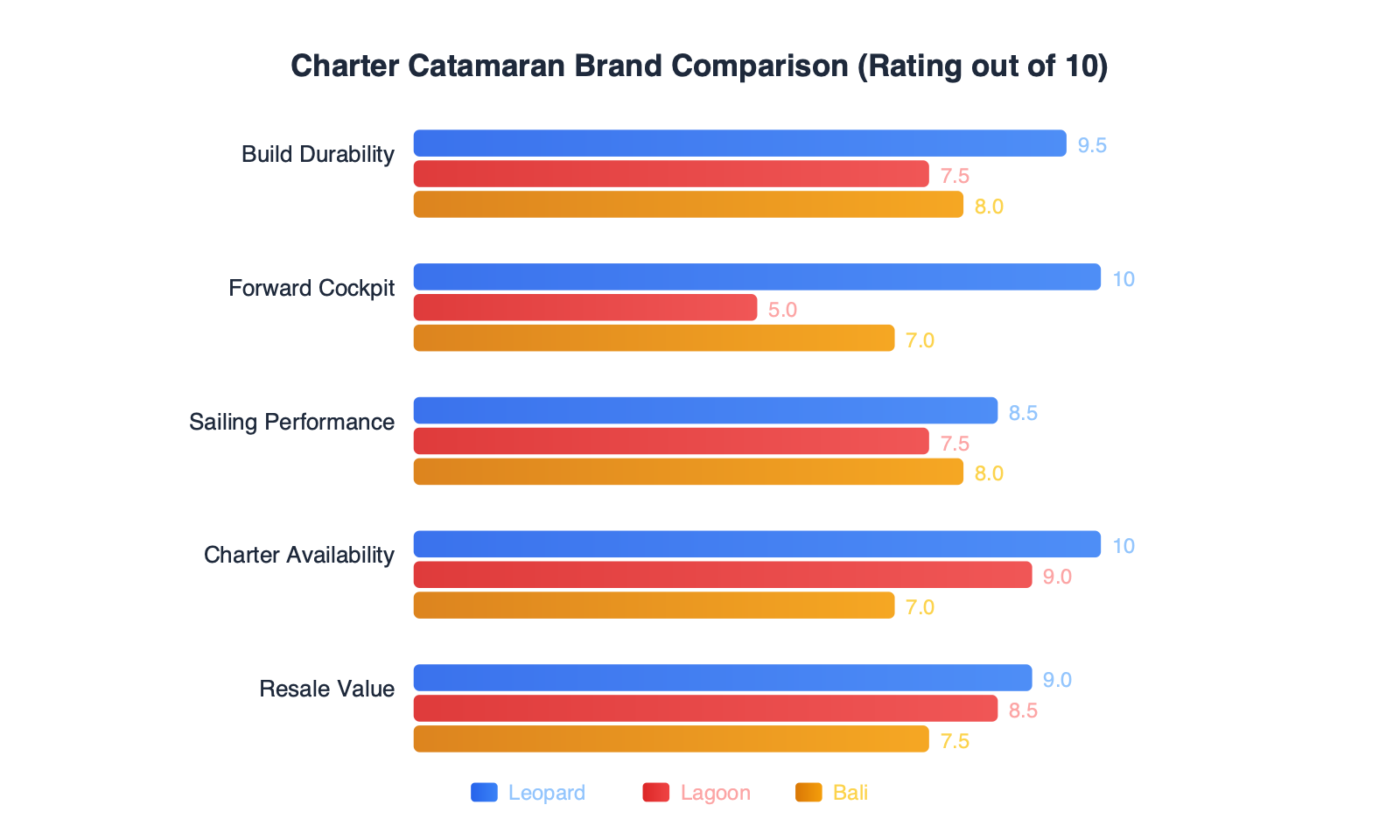
But durability is only part of the story. Here’s how Leopard compares across key categories charter guests care about:
View data table
| Category | Leopard | Lagoon | Bali |
|---|---|---|---|
| Build Durability | 9.5 | 7.5 | 8.0 |
| Forward Cockpit Design | 10 | 5.0 | 7.0 |
| Sailing Performance | 8.5 | 7.5 | 8.0 |
| Charter Fleet Availability | 10 | 9.0 | 7.0 |
| Resale Value | 9.0 | 8.5 | 7.5 |
Source: Composite ratings based on charter operator feedback, Cruisers Forum discussions, and industry reviews (2024-2025)
The comparison isn’t even close in some categories. Leopard’s forward cockpit — a feature no other major charter brand matches at the same level — creates an entirely different living experience aboard. And when it comes to charter fleet availability, Leopard’s exclusive relationship with The Moorings and Sunsail means you’ll find them at virtually every Caribbean base.
Compared to Bali Catamarans, which have gained ground with their open-space philosophy, Leopard maintains an edge in blue-water construction. The stepped hull design and heavier layup schedule give Leopard hulls a solidity you can feel when crossing from the BVI to St. Martin in 6-foot seas.
What Is the Signature Forward Cockpit — and Why Does It Matter?
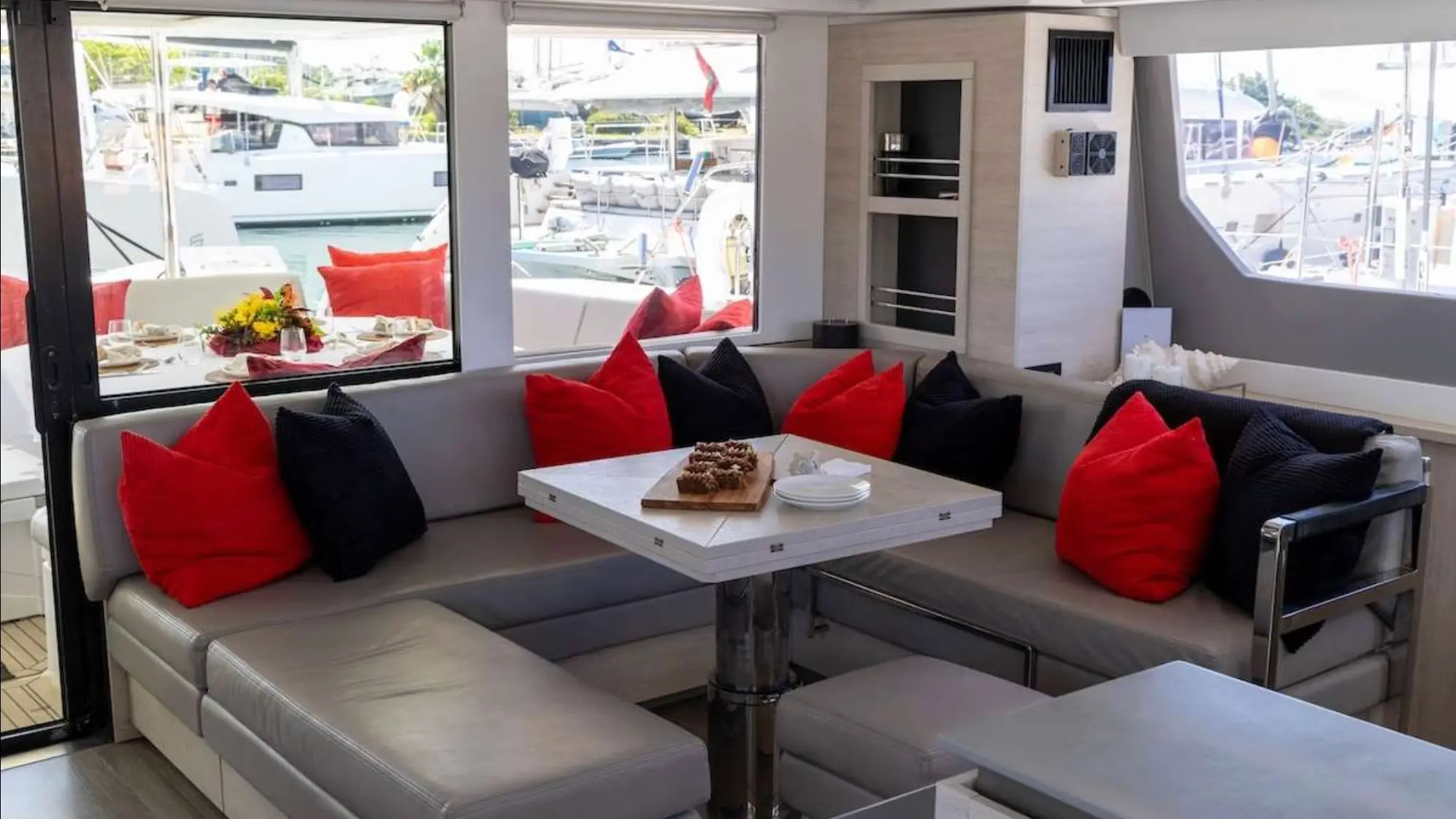
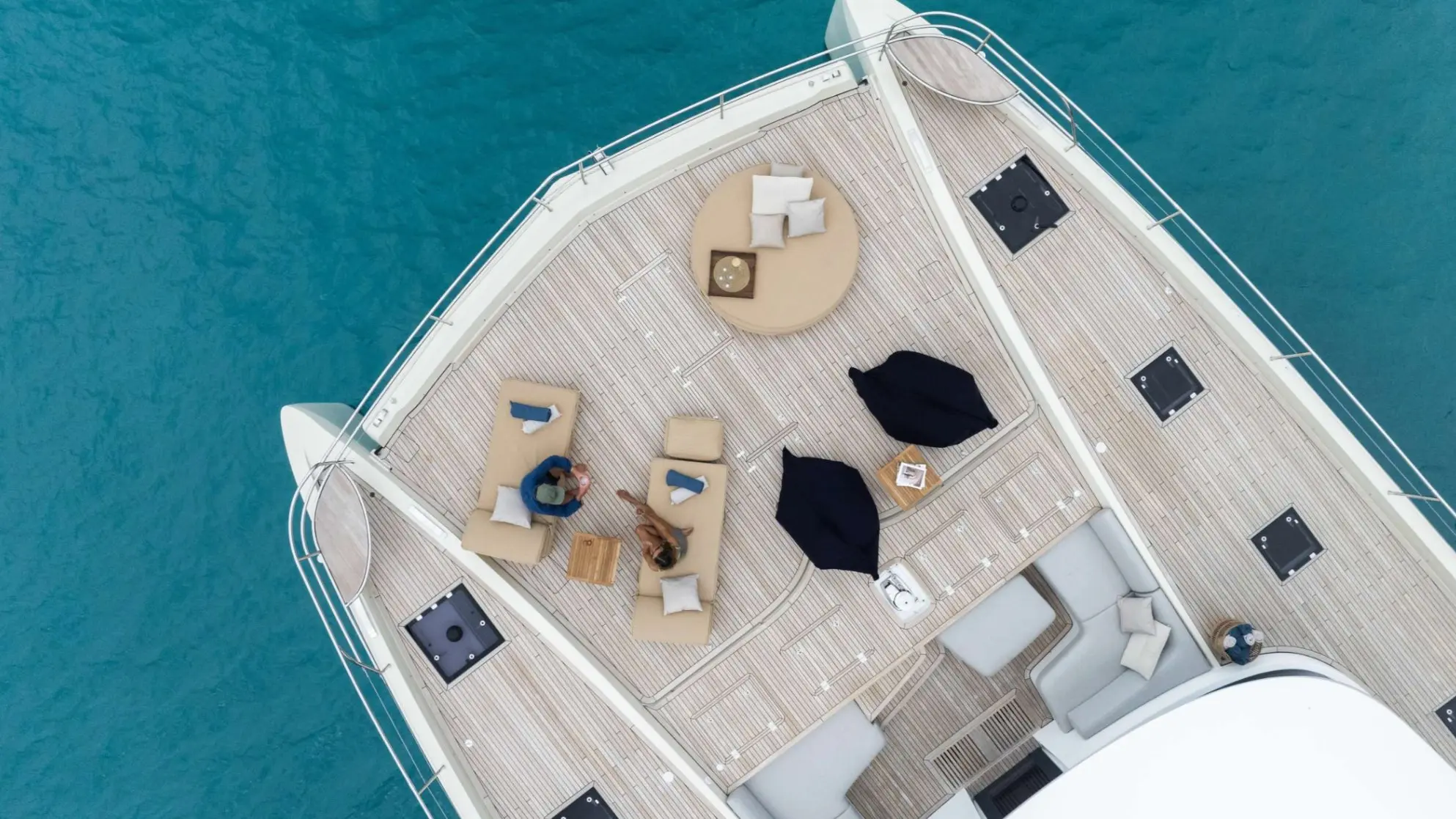
The forward cockpit is Leopard’s most recognizable design feature, first introduced on the Morrelli & Melvin-designed Leopard 44. It’s a fully enclosed, watertight lounge connected to the main saloon through a glass door (Leopard Catamarans, 2025). No other major production catamaran brand offers anything quite like it.
Why do charter guests love it? Three reasons. First, it creates natural airflow through the entire vessel when anchored — the trade winds funnel from the forward cockpit straight through the saloon to the aft cockpit. On a 90-degree day in the Bahamas, that cross-ventilation is worth more than any air conditioning unit.
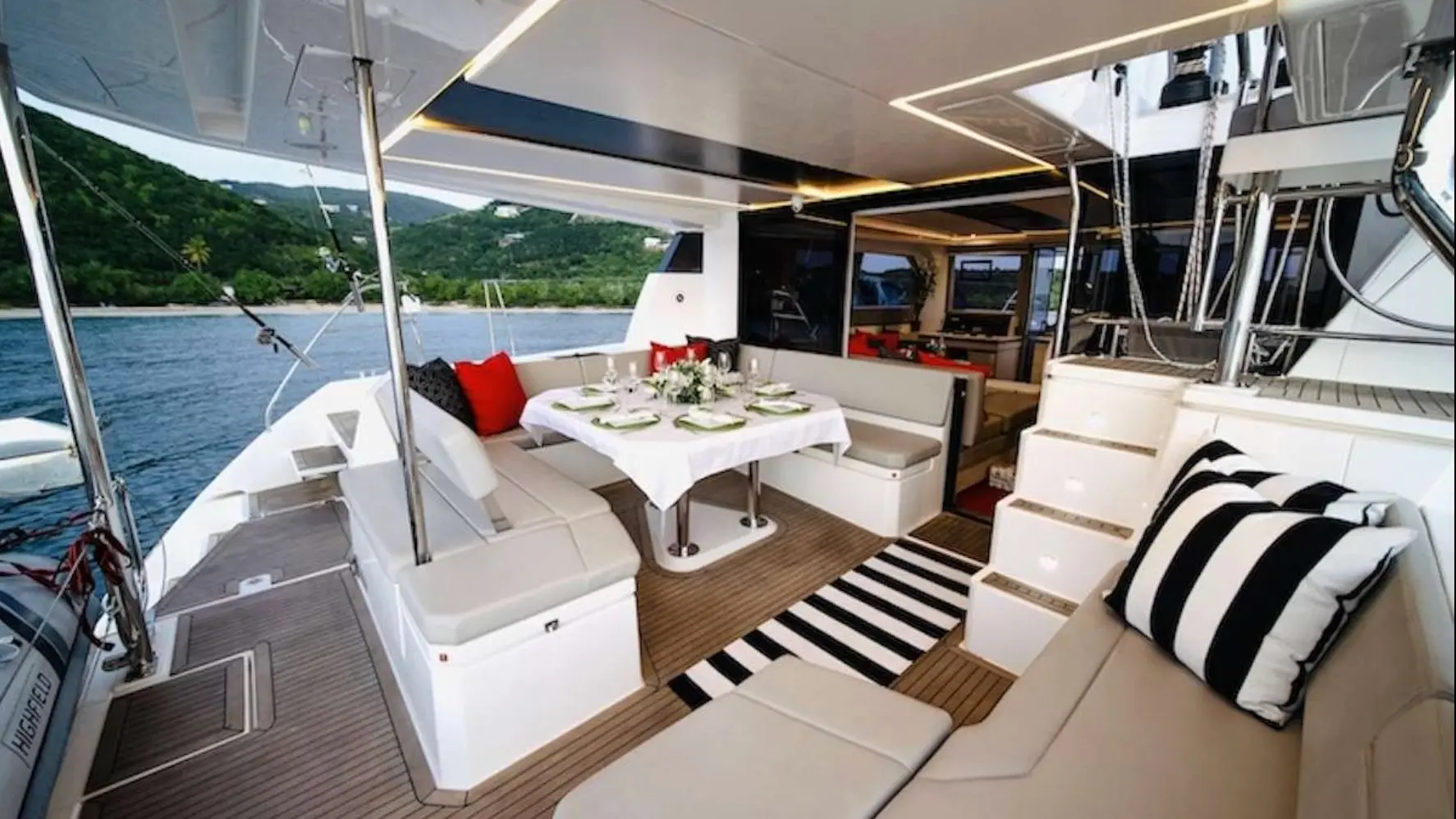
Second, it’s a private retreat. While the aft cockpit is where meals and socializing happen, the forward cockpit becomes a quiet space for morning coffee, sunset cocktails, or reading. On a charter with eight guests, having two separate outdoor living areas transforms the experience.
Third, it provides direct foredeck access without navigating narrow side decks. Getting to the anchor, adjusting a snubber, or setting up a trampolining spot for kids becomes faster and safer — something charter crews appreciate just as much as guests.
What most reviews miss: The forward cockpit isn’t just a comfort feature — it’s a safety feature. On charter catamarans, guests unfamiliar with boats often need to move around the vessel. The forward cockpit door eliminates the most dangerous passage on any catamaran: the narrow walk along the side decks between aft cockpit and foredeck. That’s a design choice born from decades of watching charter guests use the boat.
Which Leopard Catamaran Models Are Most Popular for Charter?
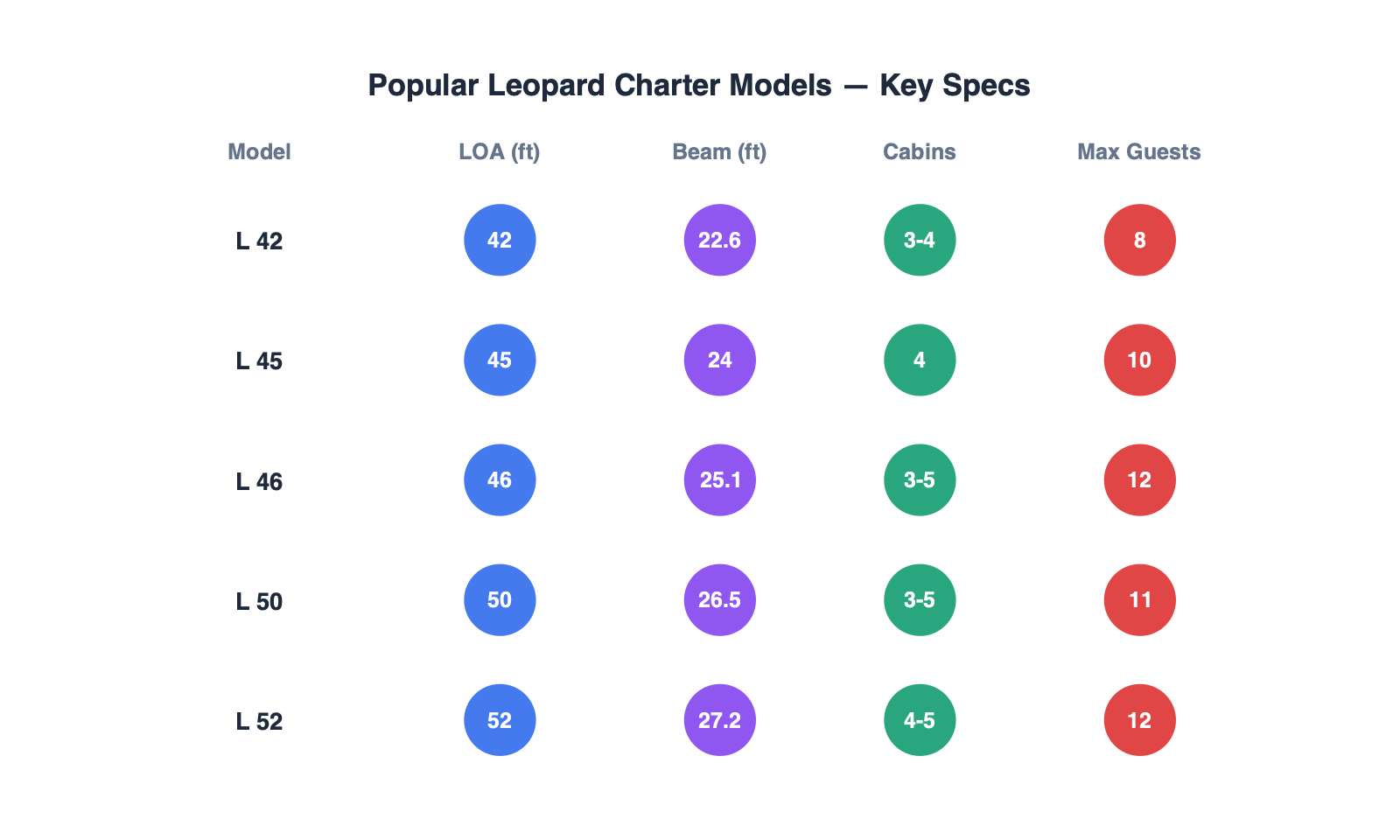
Robertson & Caine has produced a dozen model variations since 1997, but five models dominate current Caribbean and Bahamas charter fleets. The Leopard 45 alone has seen 379 hulls built since its 2017 introduction, and it won Cruising World’s “Charter Boat of the Year” (Cruising World, 2022). Here’s what you’ll find on the water today:
Leopard 42
The workhorse of the charter fleet. The Leopard 42 brought the forward cockpit concept down to a more accessible size when charter companies requested smaller multihulls for their fleets. German sailing magazine YACHT noted the 42 “surprises with good sailing characteristics” in their sea trial, praising its handling under sail (YACHT Magazine, 2024). With a 3-4 cabin layout, it’s ideal for couples or small families who want Leopard build quality without the price tag of the 50-footers. You’ll find the 42 across BVI, Bahamas, and Leeward Islands bases.
Leopard 45
The fleet favorite. With 379 hulls produced, the Leopard 45 is the most-built model in the lineup. It strikes the sweet spot between space and maneuverability — four cabins with en-suite heads, a spacious saloon, and that trademark forward cockpit. Charter companies love it because it’s large enough for 8-10 guests but still manageable for bareboat certification.
Leopard 46 (Current Flagship)
The newest star. The Leopard 46 won both SAIL Magazine’s Top 10 Best Boats 2025 and Cruising World’s Boat of the Year (SAIL Magazine, 2025). It replaces the 45 with a taller mast (3 feet higher for better performance), 1,512 square feet of upwind sail area, and an optional hybrid electric drive — two 25kW electric pods paired with a 24kW range-extending generator and lithium-iron phosphate battery banks (Cruising World, 2025).
The 46 offers three to five stateroom configurations, all with en-suite heads. A utility room in the port forward hull can serve as gear storage, an office, laundry room, or — for charter operators — a sixth guest cabin. Testing showed consistent speeds of 7 knots in 14 knots of true wind on a beam reach.
Leopard 50
The spacious cruiser. Available in hardtop or flybridge configurations, the Leopard 50 manages 9 knots on a beam reach in 15 knots of wind with its standard 2x Yanmar 57hp diesels (Cruising World, 2022). With 3-5 cabin layouts accommodating up to 11 guests, it’s the go-to choice for larger charter groups exploring the Caribbean’s best crewed charter destinations.
Owners who’ve crossed the Atlantic in a Leopard 50 — 19 days of open ocean — report never questioning the boat’s capability (Katamarans, 2024). That’s the kind of confidence you want beneath your feet, whether you’re island-hopping in the Abacos or making the passage from St. Thomas to Anegada.
Leopard 52
The newest addition to the lineup, the Leopard 52 is positioned as the most versatile cruising catamaran Robertson & Caine has ever built (Leopard Catamarans, 2025). It builds on everything the 50 established — the forward cockpit, the stepped hulls, the blue-water construction — while adding more interior volume and the latest Simonis Voogd hull design for improved performance and stability.
View data table
| Model | LOA (ft) | Beam (ft) | Cabins | Max Guests |
|---|---|---|---|---|
| Leopard 42 | 42 | 22.6 | 3-4 | 8 |
| Leopard 45 | 45 | 24 | 4 | 10 |
| Leopard 46 | 46 | 25.1 | 3-5 | 12 |
| Leopard 50 | 50 | 26.5 | 3-5 | 11 |
| Leopard 52 | 52 | 27.2 | 4-5 | 12 |
Source: Leopard Catamarans official specifications, 2025
Why Do Charter Companies Choose Leopard Over Other Brands?
Charter companies are businesses, and their vessel choice comes down to total cost of ownership. Leopard Catamarans win on this metric for several reasons that go beyond initial purchase price.
Robertson & Caine finishes the edges on laminated cabinetry to prevent water intrusion — a step Lagoon and several other builders skip (Cruisers Forum, 2024). On a boat that sees 40+ charter turnovers per year, that single detail prevents thousands of dollars in cabinet replacement costs over the vessel’s life. Multiply that across every piece of joinery, every hinge, every through-hull fitting, and the savings compound.
The exclusive supply relationship with THL Marine (Moorings and Sunsail) also means standardized maintenance programs. Parts availability, crew training, and service protocols are consistent across bases from Tortola to Nassau to Antigua. When a charter guest reports an issue, the base team already knows the boat inside and out — because every Leopard shares the same systems architecture.
There’s also a less obvious advantage: resale value. Leopard catamarans that exit charter fleets after 5-7 years command strong prices on the brokerage market. Moorings Brokerage maintains a large inventory of ex-charter Leopards, and buyers seek them out specifically because fleet maintenance records provide a documented service history that private-sale boats rarely match.
Where Can You Charter a Leopard Catamaran in the Caribbean and Bahamas?
Leopard Catamarans are available at virtually every major charter base in the Caribbean, thanks to the Moorings and Sunsail network. The British Virgin Islands remain the largest concentration point, with dozens of Leopard 42s, 45s, and 50s based out of Tortola’s Wickham’s Cay marina.
In the Bahamas, you’ll find Leopards operating out of Nassau and the Abacos — ideal for exploring the Exuma Cays, swimming with the famous Staniel Cay pigs, and anchoring in waters so clear you can count the starfish 15 feet below your hulls. The Bahamas charter fleet skews toward the larger models (Leopard 50 and 52) because the longer passages between island groups benefit from more waterline length and tankage.
Other popular Caribbean bases with Leopard fleets include St. Martin (gateway to Anguilla, St. Barths, and the Leeward Islands), Antigua, Grenada, and St. Lucia. Whether you’re booking a bareboat or an all-inclusive crewed charter, chances are a Leopard will be among your top vessel options.
For premium charter experiences, the Sunreef brand occupies the ultra-luxury tier. But for the intersection of quality, availability, and value — the sweet spot most charter guests are looking for — Leopard consistently delivers.
Is the Leopard 46 Hybrid Worth the Premium?
The Leopard 46’s optional hybrid electric drive represents the most significant propulsion shift in the charter catamaran market. The system pairs two 25kW electric pods with a 24kW range-extending generator and two 27kWh lithium-iron phosphate battery banks (Cruising World, 2025). In practice, this means silent anchoring, zero-emission motoring in sensitive marine areas, and reduced fuel costs on shorter passages.
For charter operators, the hybrid system addresses two emerging demands. Guests increasingly expect eco-conscious options — particularly those booking premium Caribbean itineraries. And marine protected areas in the BVI, Bahamas, and USVI are tightening emissions regulations. A hybrid Leopard 46 future-proofs the fleet investment.
The standard Leopard 46 runs on 45-hp or 57-hp Yanmar diesels, which remain the workhorse choice for most charter operations. But as battery technology improves and charter costs evolve, expect the hybrid premium to narrow — and demand to grow.
Frequently Asked Questions
Who makes Leopard Catamarans?
Robertson & Caine, a South African shipyard founded in 1991 in Cape Town, builds every Leopard Catamaran. The yard employs over 2,500 craftsmen across five production facilities and produces more than 200 catamarans annually (Robertson and Caine, 2025). The brand is distributed globally through a partnership with Travelopia, which owns The Moorings and Sunsail charter companies.
What is the most popular Leopard catamaran for charter?
The Leopard 45 is the most-produced model, with 379 hulls built since its 2017 launch. It won Cruising World’s “Charter Boat of the Year” and remains a fleet staple across Caribbean bases (Cruising World, 2022). The newer Leopard 46, which won SAIL Magazine’s Top 10 Best Boats 2025, is rapidly replacing the 45 in charter fleets.
How much does it cost to charter a Leopard catamaran?
Bareboat Leopard charters in the Caribbean typically range from $5,000 to $12,000 per week depending on model size and season. Crewed Leopard 50 charters run $15,000 to $30,000+ per week with captain, chef, and all-inclusive provisions. Peak season (December through April) commands premium rates.
Are Leopard Catamarans good for ocean crossings?
Yes. Leopard Catamarans are classified as blue-water vessels, and owners have completed Atlantic crossings in as few as 19 days aboard a Leopard 50 (Katamarans, 2024). The stepped hull design, robust fiberglass layup, and South African sea-trial testing protocol — where every model is tested off the Cape of Good Hope — ensure genuine offshore capability.
What’s the difference between a Leopard 45 and Leopard 46?
The Leopard 46 replaces the 45 with a mast that’s 3 feet taller, 1,512 square feet of upwind sail area with an overlapping genoa, and an optional hybrid electric propulsion system. It offers three to five stateroom layouts versus the 45’s fixed four-cabin configuration, and it won both SAIL Magazine and Cruising World awards in 2025 (SAIL Magazine, 2025).
Where can I charter a Leopard Catamaran in the Bahamas?
Leopard Catamarans are available for charter in the Bahamas primarily through The Moorings base in Nassau and independent operators in the Abacos. The Exuma Cays are the most popular Bahamas itinerary, offering pristine anchorages, swimming pigs at Staniel Cay, and some of the clearest water in the Western Hemisphere. Most Bahamas-based Leopards are the 50 or 52 models suited for the longer inter-island passages.
The Bottom Line on Leopard Catamarans
Leopard Catamarans didn’t become the backbone of Caribbean charter fleets by accident. Three decades of building boats specifically for the demands of charter — high guest turnover, salt air corrosion, tropical heat, and varied skill levels at the helm — produced a vessel that’s genuinely optimized for the job. The signature forward cockpit, the charter-grade build quality, and the exclusive pipeline to The Moorings and Sunsail create a brand that’s nearly impossible to avoid when you’re planning a Caribbean sailing vacation.
Whether you’re considering a bareboat week in the BVI on a Leopard 42 or a crewed luxury charter aboard a Leopard 50 in the Bahamas, you’re stepping onto a boat with a proven pedigree. And with the hybrid-electric Leopard 46 pointing toward the future of sustainable charter sailing, the brand isn’t standing still.
Key takeaways:
- Robertson & Caine has supplied over 3,000 Leopard Catamarans to charter fleets worldwide
- The signature forward cockpit remains unmatched by any major competitor
- The Leopard 45 (379 hulls) and award-winning Leopard 46 dominate current charter fleets
- Leopard builds the majority of its production for charter — the design philosophy reflects it
- Available at virtually every major Caribbean and Bahamas charter base
Ready to experience a Leopard Catamaran firsthand? Contact Vital Charters to find the right Leopard for your next Caribbean or Bahamas sailing vacation.
Jason Acosta is the co-founder and principal broker of Vital Charters. He is an avid sailor and yacht charterer. Jason is also a Master Diver and certified ASA 104 sailor.