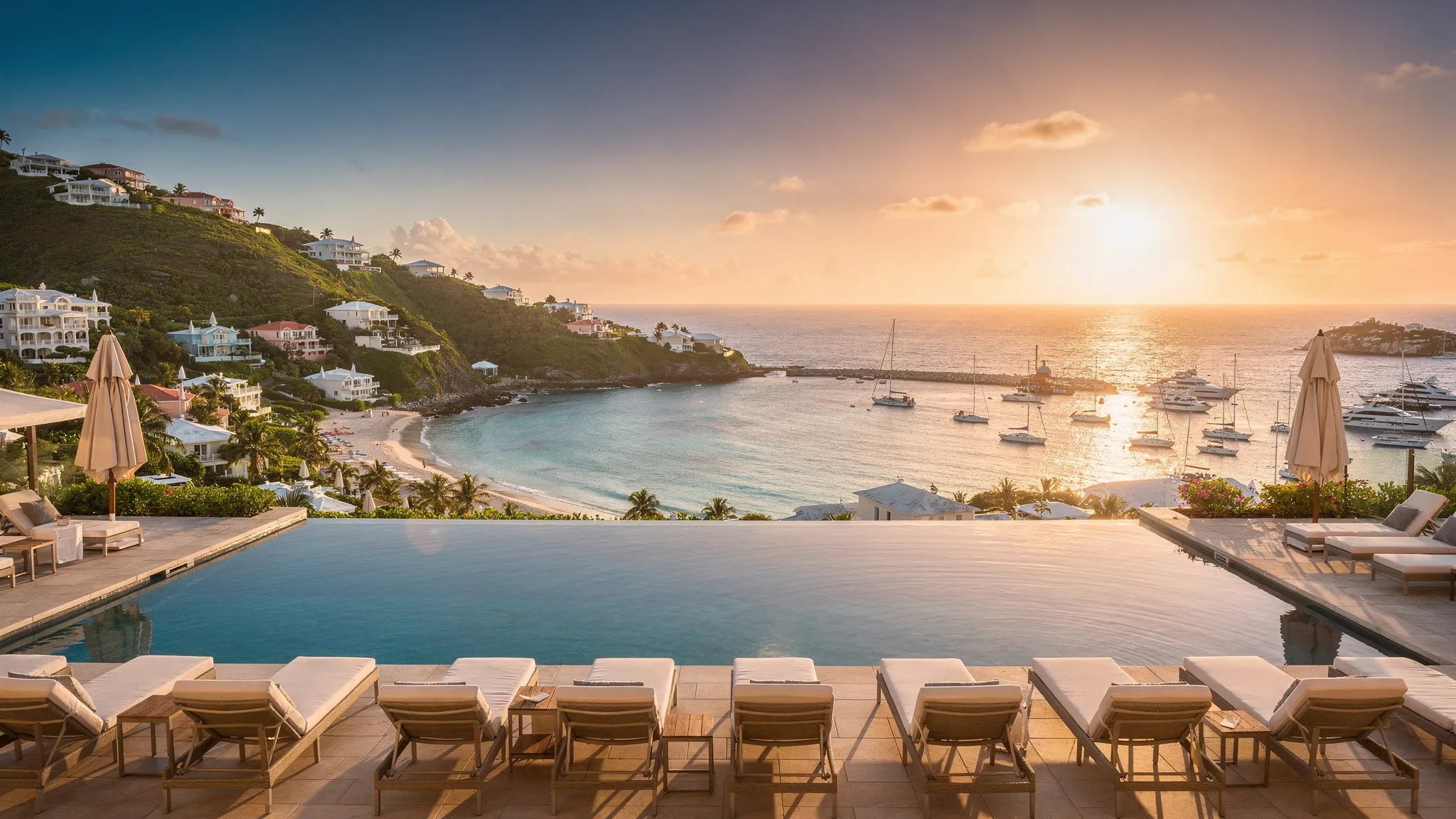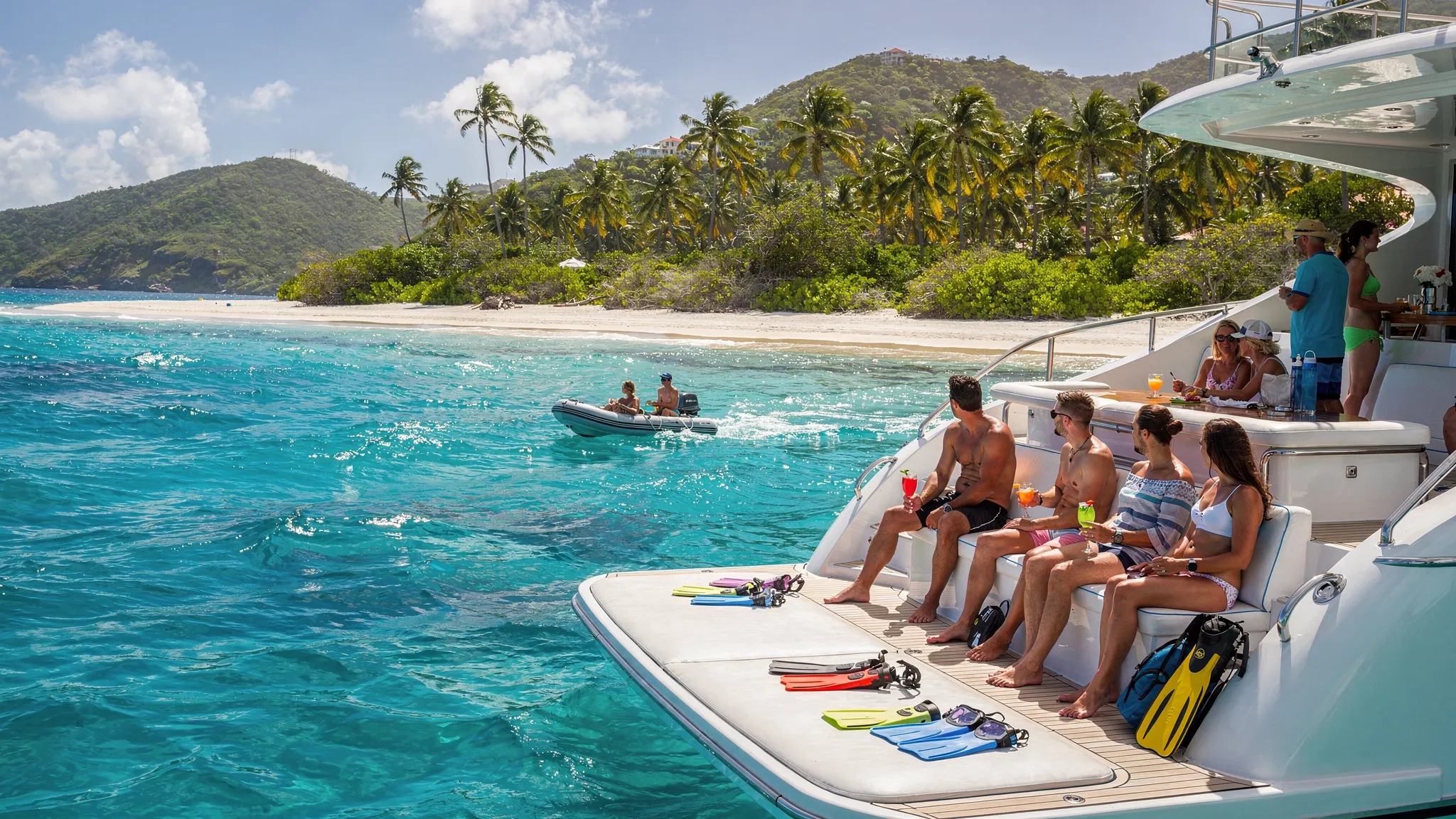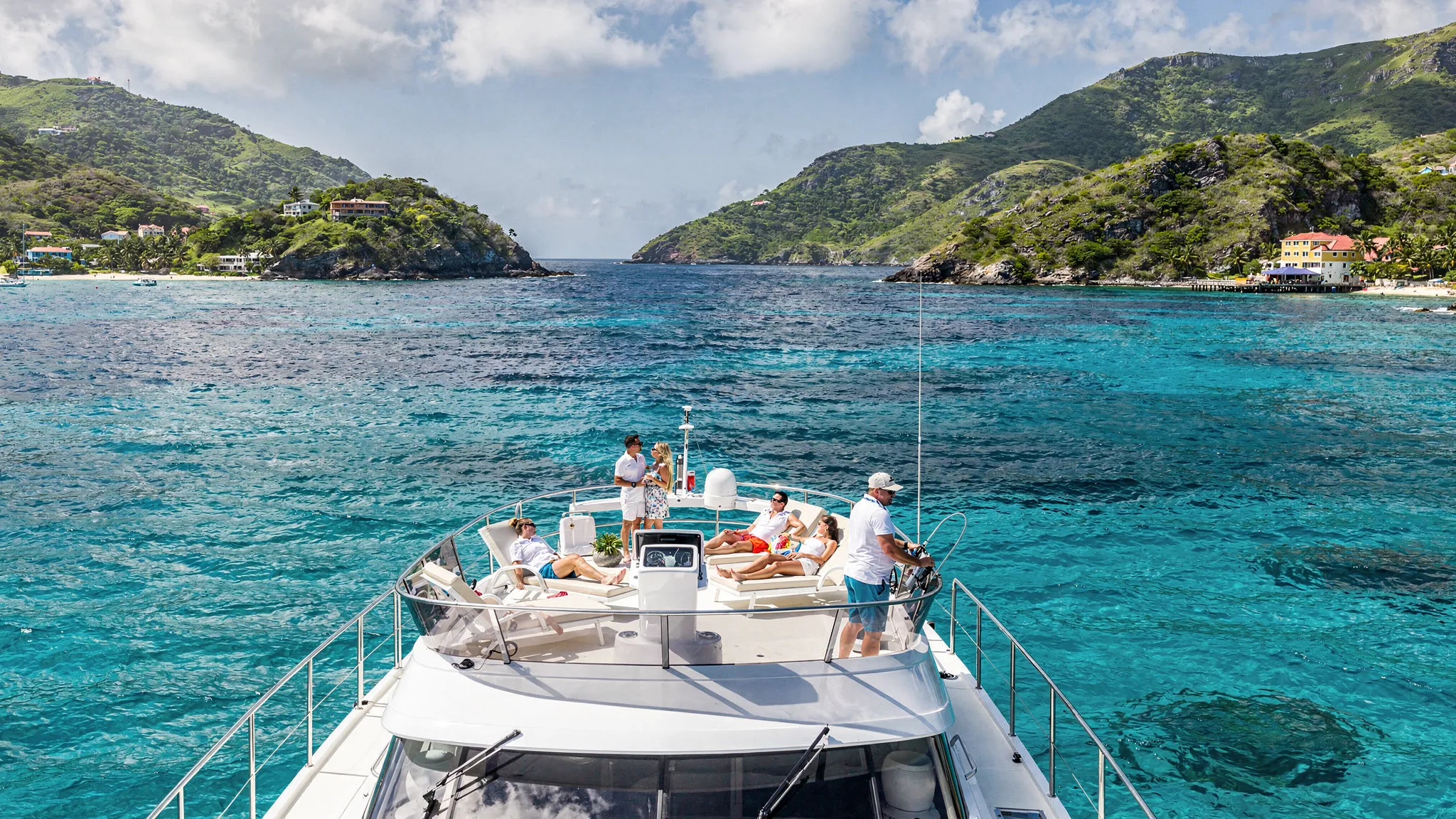

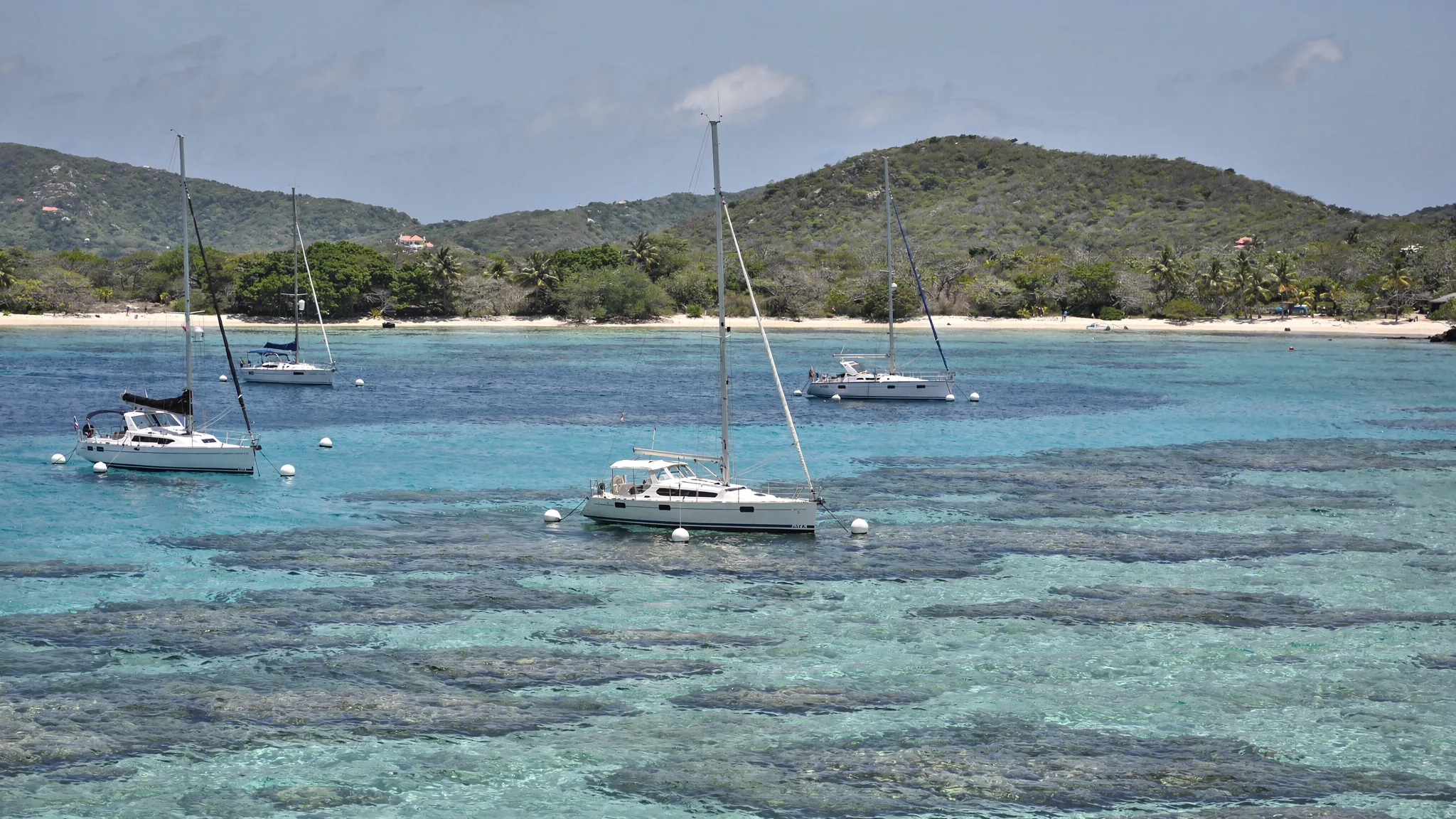
The British Virgin Islands (BVI) are often described as one of the world’s most approachable sailing destinations, and for good reason. You get warm, clear water, short hops between islands, and plenty of sheltered bays where you can tie to a mooring ball and be swimming within minutes. For first-timers, that combination reduces stress and increases what you actually came for: effortless island-hopping, beach time, and memorable dinners ashore.
This guide breaks down what you need to know before sailing the British Virgin Islands, from choosing the right charter style to planning a realistic route, understanding moorings and local fees, and avoiding the common mistakes that can turn an easy week into a rushed one.
TL;DR: Sailing the British Virgin Islands for the First Time
- The British Virgin Islands offer short sailing legs, protected waters, and easy island-hopping ideal for first-time charterers.
- Choosing the right charter style (bareboat, skippered, or crewed) shapes your entire experience.
- Moorings, timing, and provisioning matter more than most first-timers expect.
- A relaxed 7-day loop with short passages creates a smoother, more enjoyable week.
- Why the BVI works so well for first-time sailors
Not every “tropical sailing” destination is beginner-friendly. The BVI stands out because the sailing is typically straightforward and forgiving, especially when compared with more exposed island chains.
Here’s what makes the BVI such a strong first-timer pick:
- Short distances: Many classic legs are 3 to 12 nautical miles, which means you can sail for a couple of hours and still have a full afternoon to snorkel and explore.
- Line-of-sight navigation: Islands are usually visible from each other, which is comforting when you are learning the rhythm of Caribbean cruising.
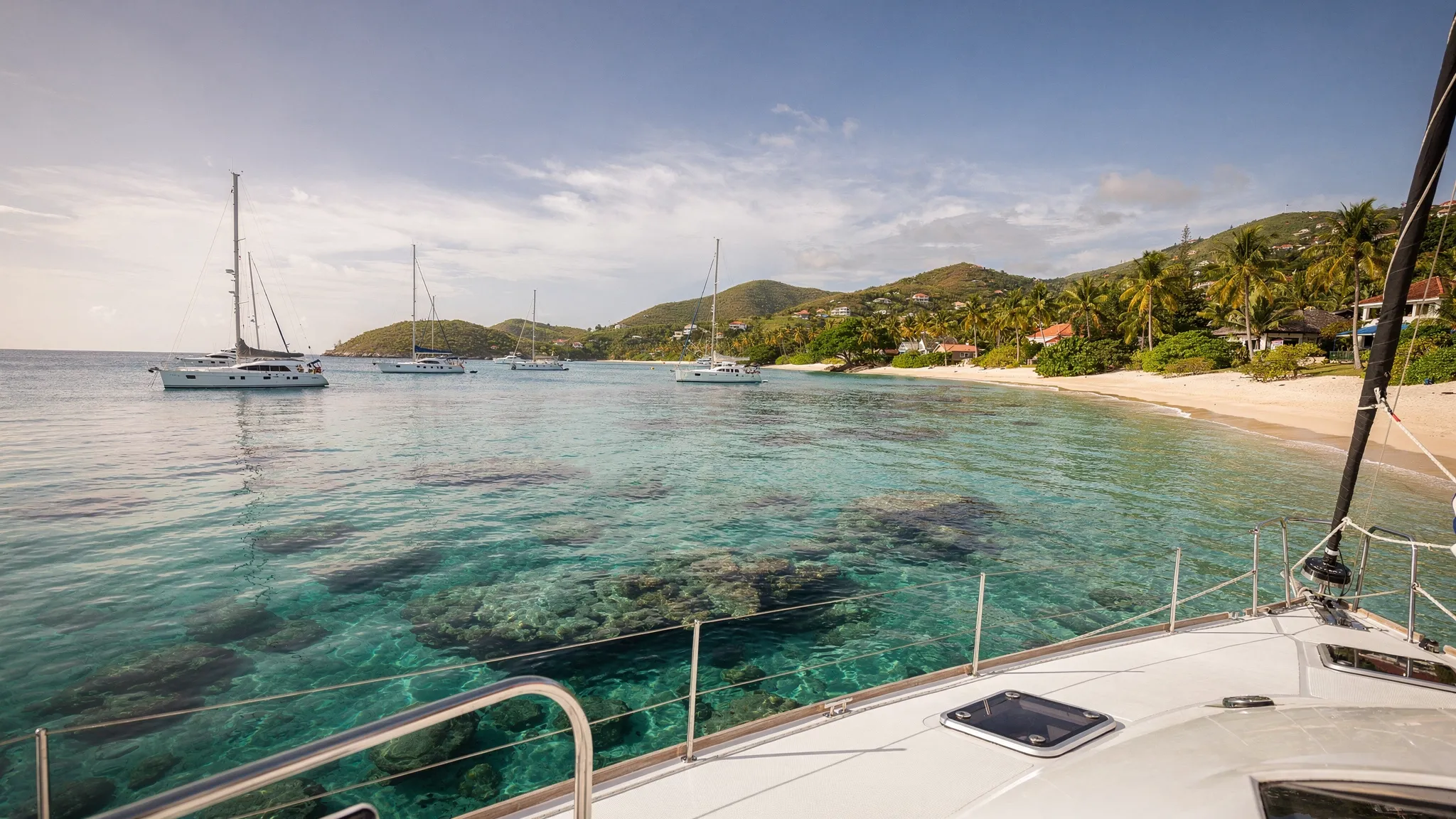
- Protected waters: Much of the sailing is in the Sir Francis Drake Channel, where seas are often more moderate.
- Mooring-ball culture: In popular bays, you can often pick up a mooring rather than anchor, which simplifies nights for newer crews.
That said, “easy” does not mean “effortless.” The BVI has reefs, busy anchorages, and peak-season competition for moorings. Your trip will feel dramatically smoother if you plan with those realities in mind.
Step 1: Choose the right charter style for your experience level
Your first big decision is not the route, it’s the kind of charter that matches your skills and the trip you want.
Bareboat (you skipper)
Bareboat can be a great fit if you have recent, relevant sailing experience and are comfortable with:
- Close-quarters maneuvering (marinas, mooring fields)
- Reef awareness and eyeball navigation in bright sun
- Coordinating provisioning, water use, and daily planning
If you are unsure, be honest with yourself. A “learning week” is possible, but it is more enjoyable when the learning is guided.
Skippered (professional captain, you still participate)
For many first-timers, a skippered charter is the sweet spot. You can:
- Sail as much as you want, without bearing full responsibility
- Learn local best practices (approaches, moorings, timing)
- Relax knowing someone experienced is handling tight moments
Crewed (captain plus additional crew)
If your priority is a truly hands-off vacation, a crewed charter is the luxury option. It is especially strong for:
- Families who want maximum swimming and minimum logistics
- Multi-couple groups where “who’s on duty?” can get tense
- Celebrations and corporate retreats where service matters
If you want help matching the right yacht and crew setup to your group, you can start with Vital Charters and build an itinerary around your pace, preferences, and comfort level. We specialize in crewed yacht charters.
Step 2: Pick the best time of year (and set expectations)
The BVI is a year-round destination in the sense that boats run year-round, but the experience changes depending on wind, rain, and crowds.
Here is a practical, first-timer-oriented overview.
| Season (typical) | What it feels like | Why first-timers like it | Trade-offs to plan for |
|---|---|---|---|
| Dec to Apr (peak) | Drier, steadier trade winds, lively scene | Comfortable sailing weather and lots of open businesses | Higher prices, more competition for moorings and dinner reservations |
| May to Jun (shoulder) | Warmer, slightly quieter | More availability while still feeling “in season” | More variable showers, some venues reduce hours |
| Jul to Oct (hurricane season) | Hotter, humid, quieter | Potentially good value and less crowded anchorages | Weather risk, some closures, you need flexibility and good insurance |
| Nov (early winter) | Transition month | Can be a good balance before peak crowds | Weather can be unsettled as patterns shift |
Conditions in the British Virgin Islands vary by season, affecting pricing, crowd levels, wind strength, and availability.
Two timing tips that matter more than most people think:
- Spring break and holiday weeks can make the BVI feel “booked out” even if the water is calm and the sun is shining.
- Arrival day matters. If you embark on a Friday or Saturday in peak season, marinas, provisioning stores, and mooring fields can feel noticeably busier.
Step 3: Understand the BVI’s “rhythm” of sailing days
A great first BVI charter usually follows a simple daily pattern:
- Morning swim and breakfast
- Short sail to the next island
- Afternoon beach, snorkel, paddleboard, or hike
- Sunset drinks and dinner (onboard or ashore)
What surprises some first-timers is how early the best days start. If you wait until late morning to leave a popular bay, you can arrive to the next one when moorings are scarce and the sun is already dropping.
A reliable rule of thumb: sail in the morning, play in the afternoon.
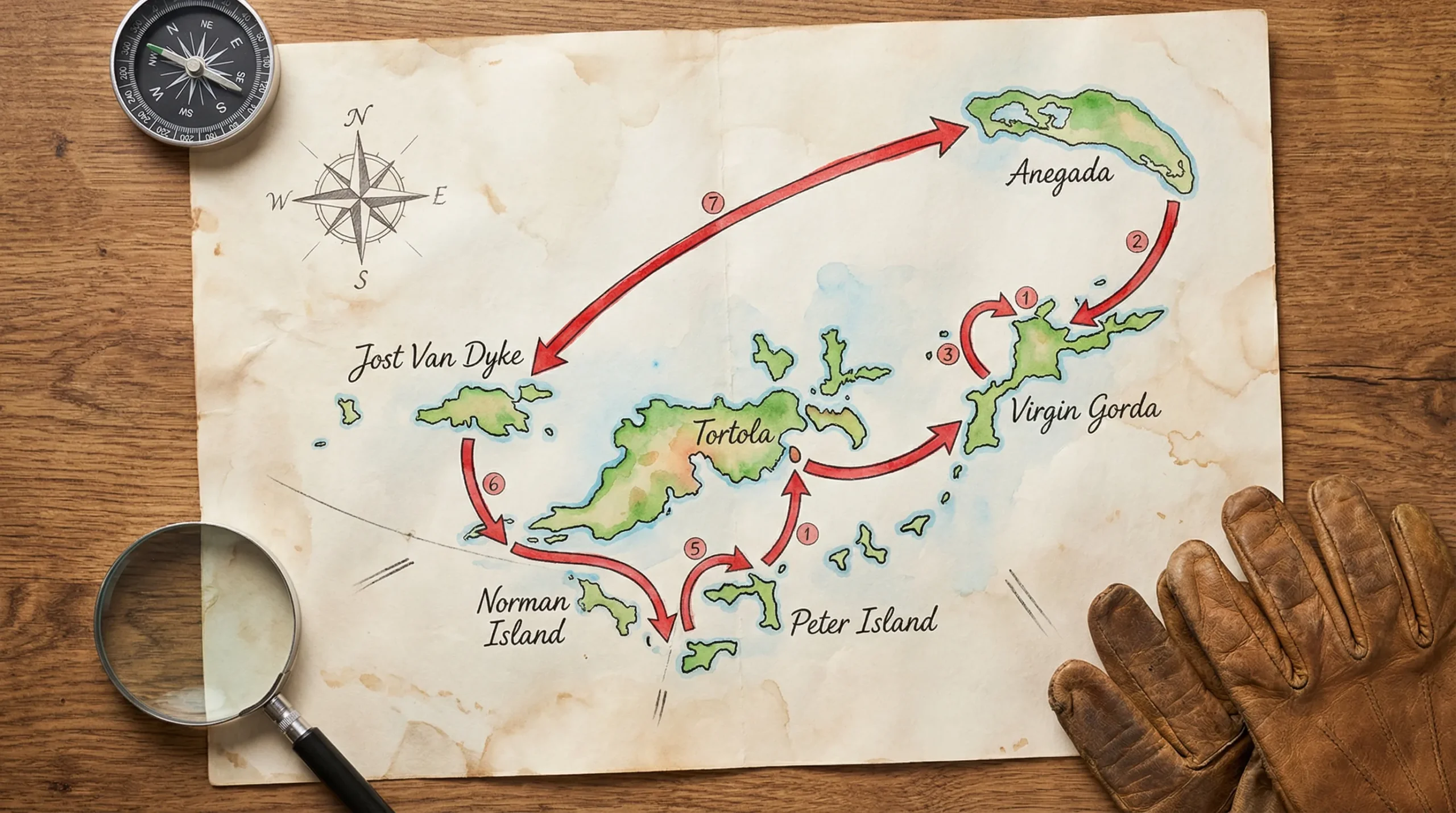
Step 4: Plan a realistic first-timer itinerary (7 days)
There are many ways to do the BVI, but first-timers tend to enjoy a loop that mixes iconic spots with calmer bays.
Below is a classic 7-day outline that keeps sailing legs short and builds in “wow” moments.
How to tailor that itinerary to your group
The best BVI routes are built around your people, not a checklist.
- Families often do better with fewer stops, more early afternoons, and repeat nights in a calm bay.
- Groups typically want a mix of social anchorages and quieter recovery nights.
- Corporate retreats benefit from predictable logistics (reliable dinner plans, good comms, and enough downtime for informal conversations).
If you are planning a corporate trip and your company also tracks operational efficiency and sustainability beyond travel, some organizations look to specialist resources for broader planning, for example business energy procurement and management guidance in Europe. It is not “charter planning,” but it is the same mindset of reducing friction, cost surprises, and last-minute scrambling.
Step 5: Learn the mooring and anchoring basics (this is where first-timers feel pressure)
In the BVI, moorings are a major part of the cruising experience. Many popular bays have large mooring fields, and it is common for charter crews to take a ball rather than anchor.
What to know about mooring balls
- Arrive earlier than you think in peak season, especially for the most famous bays.
- Assign roles before you enter the field (helm, pickup line handler, spotter). Confusion at the bow is the #1 source of stressful moments.
- Inspect lines visually when possible. If something looks worn, choose a different ball or anchor.
Anchoring in the BVI
You can still anchor in many places, and sometimes it is the quieter, more spacious option. The trade-off is that anchoring well in crowded tropical bays takes practice.
First-timer anchoring tips:
- Favor daylight arrivals so you can read the water color and avoid coral heads.
- Leave extra room. Boats swing, especially if wind and current disagree.
- Use a snorkel check if conditions allow (and if you are comfortable). It is a confidence booster.
Fees and “small rules” that are easy to miss
Local rules and fees can change, and they vary by site (especially inside national park areas). Your charter company or broker can explain what is current for your itinerary, including any permits, park fees, or customs procedures if your route crosses into nearby waters.
Practical advice: build a small “admin buffer” into your budget so fees do not feel like surprises.
Step 6: Provisioning and onboard logistics (the unglamorous part that makes the trip)
A first-time sailing vacation goes best when you plan food and water like you would for a remote cabin, not a resort.
Provisioning strategy that keeps everyone happy
- Plan 2 to 3 “must-cook” dinners onboard for the week, then keep the rest flexible.
- Stock simple lunches (wraps, salads, fruit) so nobody is stuck cooking when the anchorage is perfect.
- Bring easy breakfast staples that do not create dishes drama.
If you have a crewed charter, you can be far more ambitious because provisioning and meal execution are handled for you.
Water, power, and comfort
Even on luxury yachts, some resources are finite.
- Be mindful of freshwater use, especially long showers.
- Charge devices during generator or engine times if that is part of the boat’s routine.
- Keep cabins comfortable by using hatches and fans intelligently when conditions allow.
Step 7: What to pack for sailing the British Virgin Islands
Overpacking is common on first charters. The BVI is casual, and soft luggage matters.
Bring:
- Soft-sided bag (duffel), not a hard suitcase
- Reef-safe sunscreen and after-sun care
- Light rain layer (even in dry season)
- Snorkel gear if you prefer your own fit
- Water shoes for rocky entries
- A hat that stays on in wind, plus polarized sunglasses
- Motion sickness meds if anyone is unsure (even experienced travelers can be surprised)
Skip:
- Heavy jeans and bulky shoes
- “Just in case” outfits you will never wear
Step 8: Safety and seamanship tips that prevent 90% of problems
Most BVI charter issues are not dramatic emergencies. They are avoidable stressors: arriving late, getting pinned in a crowded mooring field, or discovering you misjudged a leg.
Keep these habits:
- Sail early, dock early: Your best safety tool is daylight.
- Watch the forecast daily and ask locals what they are seeing.
- Keep passages short if anyone is nervous, tired, or seasick.
- Protect the reef: Avoid anchoring on coral, go slow in shallow areas, and follow no-wake zones.
What first-timers usually get wrong (and how to get it right)
Trying to do too many islands
If you change scenery every day, it can feel productive, but it often reduces the best parts of the BVI: slow afternoons, spontaneous swims, and relaxed dinners.
A better goal for a first week is a route that leaves room for:
- A second swim stop
- A nap
- A sunset you do not have to race for
Underestimating how busy the “iconic” spots can be
The BVI is popular for a reason. If your dream night is a quiet bay with just a few boats, plan at least one or two less-famous stops. Your broker can recommend alternatives based on wind direction and your vibe.
Not planning for one “weather pivot” day
Even in beautiful weather, conditions can shift. Having one flexible day in the middle of the week makes you feel in control rather than forced into a plan.
People Also Asked (FAQ Section)
Is the British Virgin Islands a good place for a first yacht charter?
Yes. The British Virgin Islands are widely considered one of the most beginner-friendly sailing destinations in the Caribbean due to short distances between islands, protected waters in the Sir Francis Drake Channel, and extensive mooring fields that simplify overnight stops.
How much does a first-time BVI yacht charter typically cost?
Costs vary by yacht type and season. Bareboat charters generally start in the mid four figures per week plus expenses, while crewed luxury charters can range significantly higher depending on yacht size, crew, and time of year. Peak season from December to April carries the highest rates.
Is it better to book a bareboat or crewed charter in the BVI for your first time?
For experienced sailors, bareboat can work well. For most first-time visitors, a skippered or fully crewed charter reduces stress, improves safety, and allows the group to focus on swimming, dining, and relaxing rather than logistics and navigation.
Are mooring balls mandatory in the British Virgin Islands?
Mooring balls are not mandatory everywhere, but they are strongly encouraged and often required in national park areas. In popular bays, they are the standard overnight option and significantly simplify anchoring for newer crews.
Making your first BVI charter feel effortless
If you want your first time sailing the British Virgin Islands to feel like a vacation, not a test, focus on three things:
- Choose the charter style that matches your confidence
- Build a route with short legs and slack in the schedule
- Treat moorings, provisioning, and timing as core parts of the plan
A well-designed BVI itinerary is not about maximizing miles. It is about maximizing moments, with just enough structure to keep everything smooth. If you want help selecting the right yacht and shaping a route around your group, Vital Charters can support you from yacht search to a personalized charter experience, so your first BVI week feels calm, curated, and unmistakably yours.