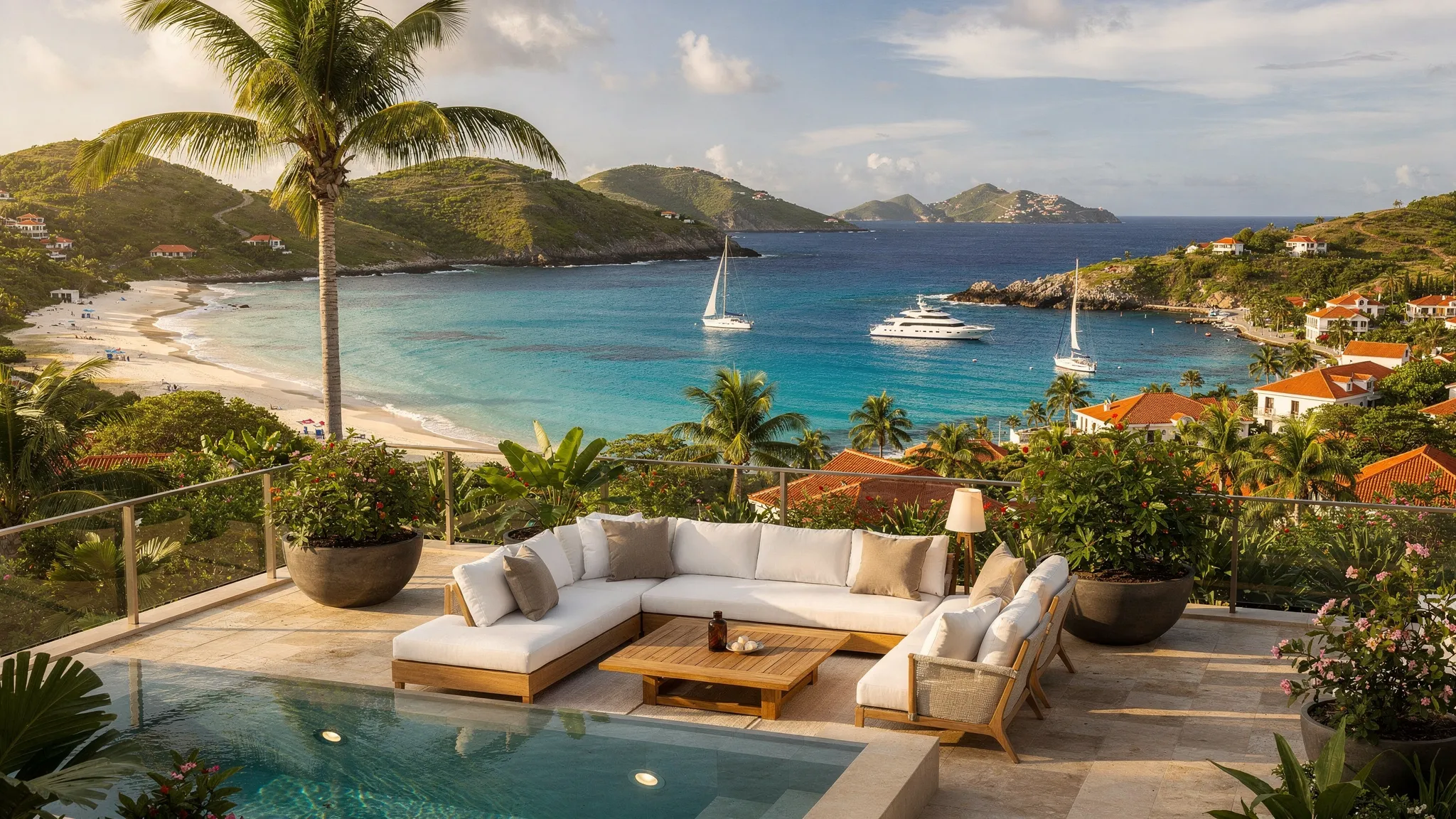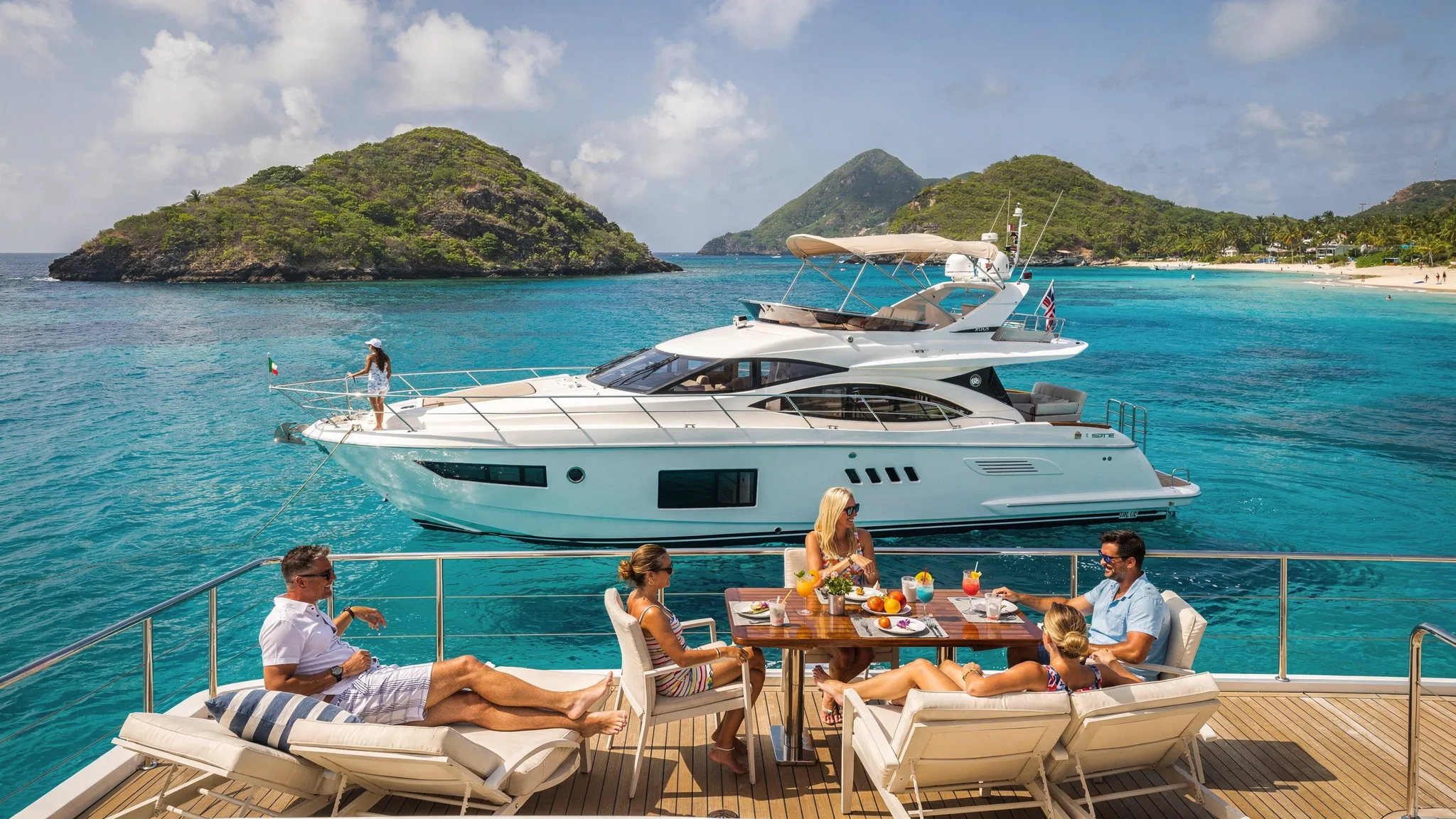

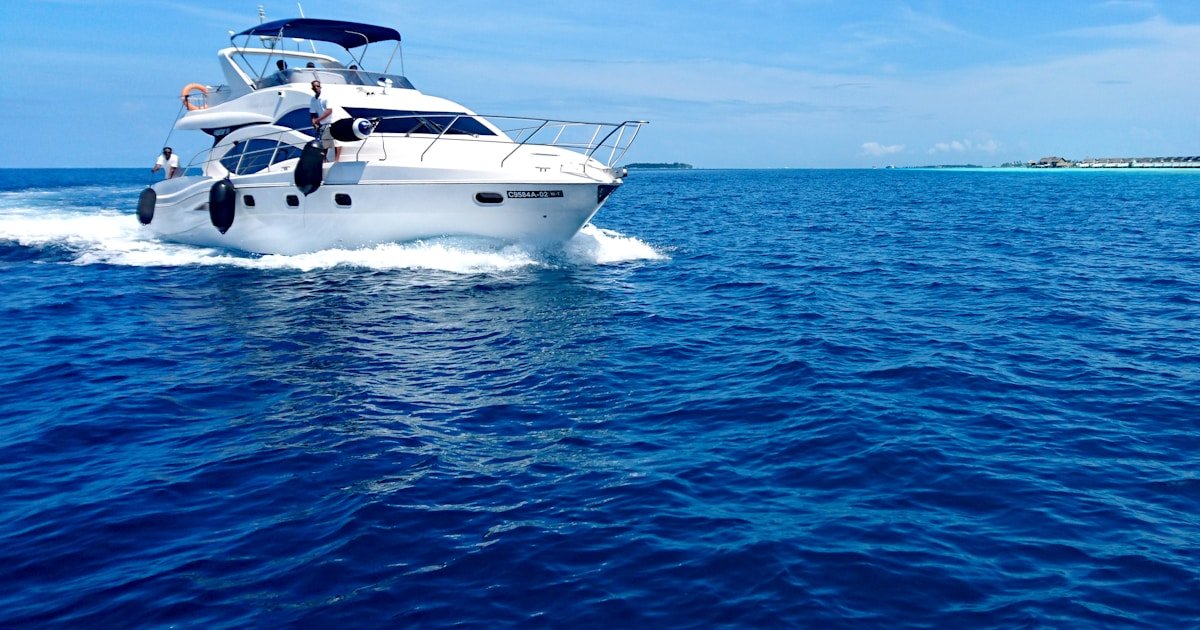
Most families assume a crewed yacht charter is an exotic luxury — something reserved for the ultra-wealthy or the nautically adventurous. A luxury resort feels safer. Familiar. Easier to budget. But that assumption deserves a second look, especially when you’re planning a trip for 8, 10, or 12 people.
Seventy percent of ultra-affluent travelers say they’re dissatisfied with standardized luxury hotels that lack distinctive character (Preferred Hotels & Resorts / Harris Poll, 2025). That number is rising. So is yacht charter demand — bookings grew 70% from 2021 to 2024 (Newsweek, 2025). Something’s shifting.
This article breaks down the real, all-in costs of both options for families, does the actual math for groups of 6 to 12 people, and examines what you genuinely get for your money. The answer might surprise you.
TL;DR: For a group of 10, a crewed Caribbean charter runs about $500/person/day before crew tip — less than what a luxury all-inclusive actually costs once you add excursions, transfers, taxes, and tips. At 12 people, charter is definitively cheaper per person. And it includes a private chef, multiple destinations, and your own crew. (Songs in the Sails, 2024/2025; Retallack Self-Catering, 2025)
What Does a Crewed Yacht Charter Actually Cost?
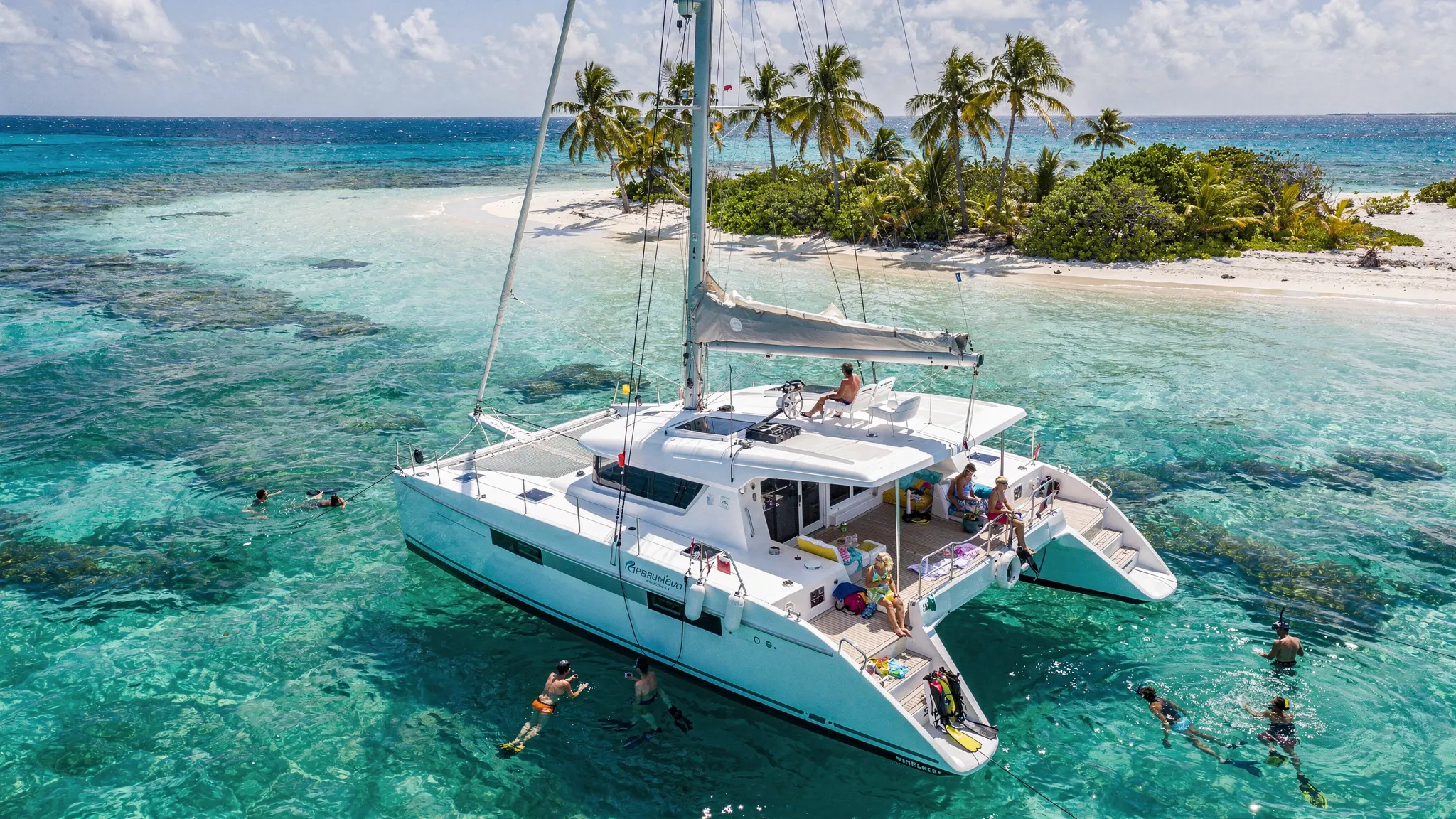
A Caribbean crewed catamaran for 8 to 10 guests runs $30,000 to $45,000 per week, all-inclusive (Songs in the Sails, 2024/2025). That number can feel alarming until you understand what’s packed inside it — and how it divides across a group.
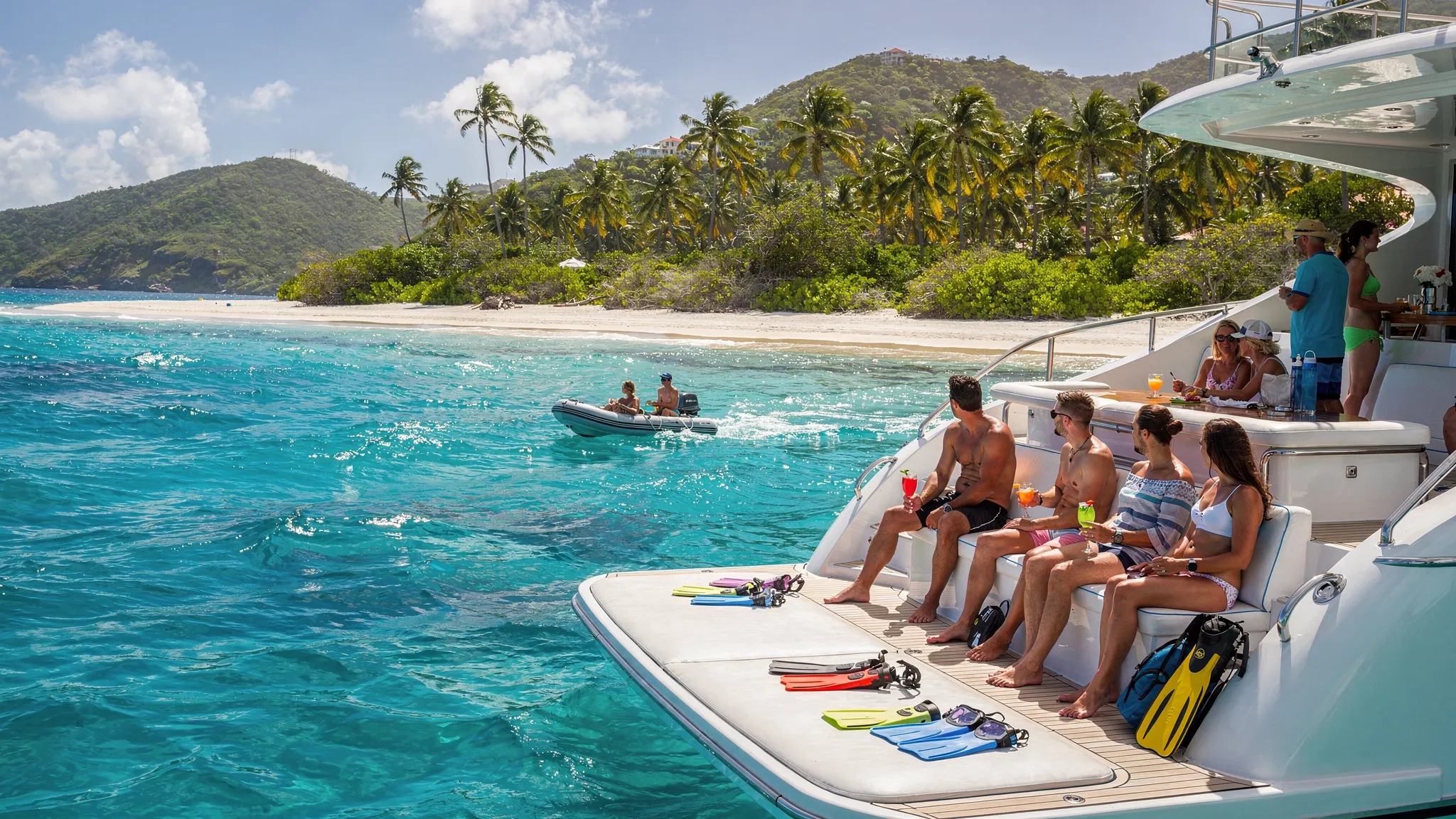
Most Caribbean crewed charters operate as true all-inclusive packages. That means a licensed captain, a dedicated chef preparing three meals daily, an open bar stocked before you board, fuel, water sports equipment (paddleboards, snorkeling gear, kayaks), mooring fees, cruising permits, and dinghy service to shore. You don’t reach for your wallet once you’re on the water. No incidental charges. No resort credit that expires. No “not included” small print buried at the bottom of the amenities list.
The Advance Provisioning Allowance — APA — sometimes causes confusion on charters booked in the Mediterranean. It’s an advance deposit, typically 20-25% of the charter fee, that covers fuel, food, and port fees, with any unused portion refunded at the end of the trip (Songs in the Sails, 2024/2025). Caribbean charters often skip the APA structure entirely in favor of flat all-inclusive pricing — simpler and more predictable for families.
Crew gratuity runs 15-20% of the charter fee, paid at the end. Think of it like hotel tipping — it’s expected, it matters, and it’s separate from the charter rate. Budget for it, but don’t let it distort your comparison with resorts, where daily tipping for housekeeping, bartenders, and service staff adds a similar amount.
For a $35,000 charter divided among 10 guests over 7 nights: $500/person/day before tip. That’s where things get interesting.
According to per-person pricing data from the British Virgin Islands charter market, most all-inclusive Caribbean crewed charters fall in the $400-$700 per person per day range depending on vessel size and group composition (Ocean Getaways, 2025). The bigger your group, the lower that number goes.
A mid-range Caribbean crewed catamaran for 8-10 guests runs $30,000-$45,000 per week all-inclusive — roughly $400-$700 per person per day depending on vessel size and group size. That single figure covers the captain, a dedicated chef, all meals from scratch, an open bar stocked to your preferences, water sports equipment, fuel, and mooring fees. Nothing billed on checkout. (Songs in the Sails, 2024/2025; Ocean Getaways, 2025)
How Much Does a Luxury Resort Really Cost for a Family?
A Mexican all-inclusive runs $3,200-$4,200 per week for a family of four (Retallack Self-Catering, 2025). That’s roughly $114-$150 per person per night — which looks like a bargain compared to a charter. It isn’t, once you add everything that’s not included.
Hidden resort costs are significant and predictable. Excursions run $50-$200 per person per outing, and families typically book four to six over the course of a week. Room upgrades — villa suites, ocean views, connecting rooms for larger families — add $150-$500 per night above base rate. Local tourism taxes tack on 5-12% on top of quoted prices. Tips for housekeeping, bartenders, and concierge staff accumulate quietly throughout the stay. Airport transfers and shuttle services are rarely covered. Premium dining experiences and spa treatments sit outside most all-inclusive packages.
What does a true 5-star family comparison actually cost? Room rates at luxury Caribbean resorts run $400-$600 per night for a family suite. Add three daily meals at resort pricing, two group excursions per person, daily housekeeping gratuity, airport transfers for the group, and local taxes — and you’re at $500-$550 per person per day for a genuine luxury all-inclusive experience, fully loaded.
The Maldives illustrates the ceiling. Family suites at top-tier Maldivian resorts start at $1,700-$1,944 per night for the room alone (TripAdvisor pricing data, 2025). Food, activities, and boat transfers push that toward $2,500-$3,500 per night before excursions. That’s one data point, but it anchors the category honestly.
The average American family spent $8,052 on travel in 2024, roughly a 20% increase year-over-year (NYU SPS Tisch Center / Family Travel Association, 2025). Families are spending more — and still finding that budgets run over once the trip actually starts.
Hidden costs at luxury resorts typically add $150-$500 per night in room upgrades, $50-$200 per person per excursion, and local tourism taxes of 5-12% — all excluded from the advertised all-inclusive rate. A family of four in a Mexican all-inclusive spends $3,200-$4,200 per week before any of these extras are counted (Retallack Self-Catering, 2025). For a group of 10 at a genuine 5-star property, the true all-in cost regularly reaches $500-$550 per person per day.
Does the Math Actually Work Out?
A $35,000 Caribbean charter for 10 guests works out to $500/person/day before crew tip — while an equivalent 5-star resort, once excursions, transfers, taxes, and daily gratuities are included, runs $520-$550 (Songs in the Sails, 2024/2025; Retallack Self-Catering, 2025). For groups of 8 or more, the per-person daily cost of a crewed charter either matches or beats the resort — once both are calculated fully all-in. Here’s the comparison across group sizes, with both options calculated at the true all-in level (resort includes base rate plus excursions, transfers, taxes, and daily tips; charter reflects mid-range Caribbean catamaran pricing with crew gratuity treated separately, matching how resort tip structures work).

The crossover happens between 8 and 10 guests. At 10 people, charter is $25 cheaper per person per day than the resort — and that’s before you account for what’s included. Is $25 per person per day worth a private chef, a different anchorage every morning, and unlimited water sports? Most families who’ve done both don’t take long to answer that. The water sports gear, the chef-prepared meals for every dietary need in your group, the ability to anchor somewhere entirely different each morning: none of that shows up in a resort’s all-in figure, because a resort simply can’t offer it.
The group economics calculation: A $35,000 Caribbean charter for 10 guests works out to $500/person/day. A luxury all-inclusive resort — once you add two group excursions per person ($150 average), daily tips ($30), round-trip airport transfers ($50/person), and local tourism taxes ($40/person) — lands at approximately $520-$550/person/day for the equivalent experience tier. The per-person daily gap, at scale, is effectively zero. What you’re choosing between isn’t cost — it’s what kind of vacation you want.
What Do You Actually Get? The Experience Gap
Ninety percent of affluent travelers agree that the finest journeys feel effortless but meticulously curated — and equally that they prefer immersive experiences that engage them with local traditions and destination stories (Preferred Hotels & Resorts / Harris Poll, 2025). A resort can deliver excellent service. A charter delivers something harder to manufacture: genuine access, from a different angle every morning.
The experience gap between a crewed charter and a resort is structural, not superficial.
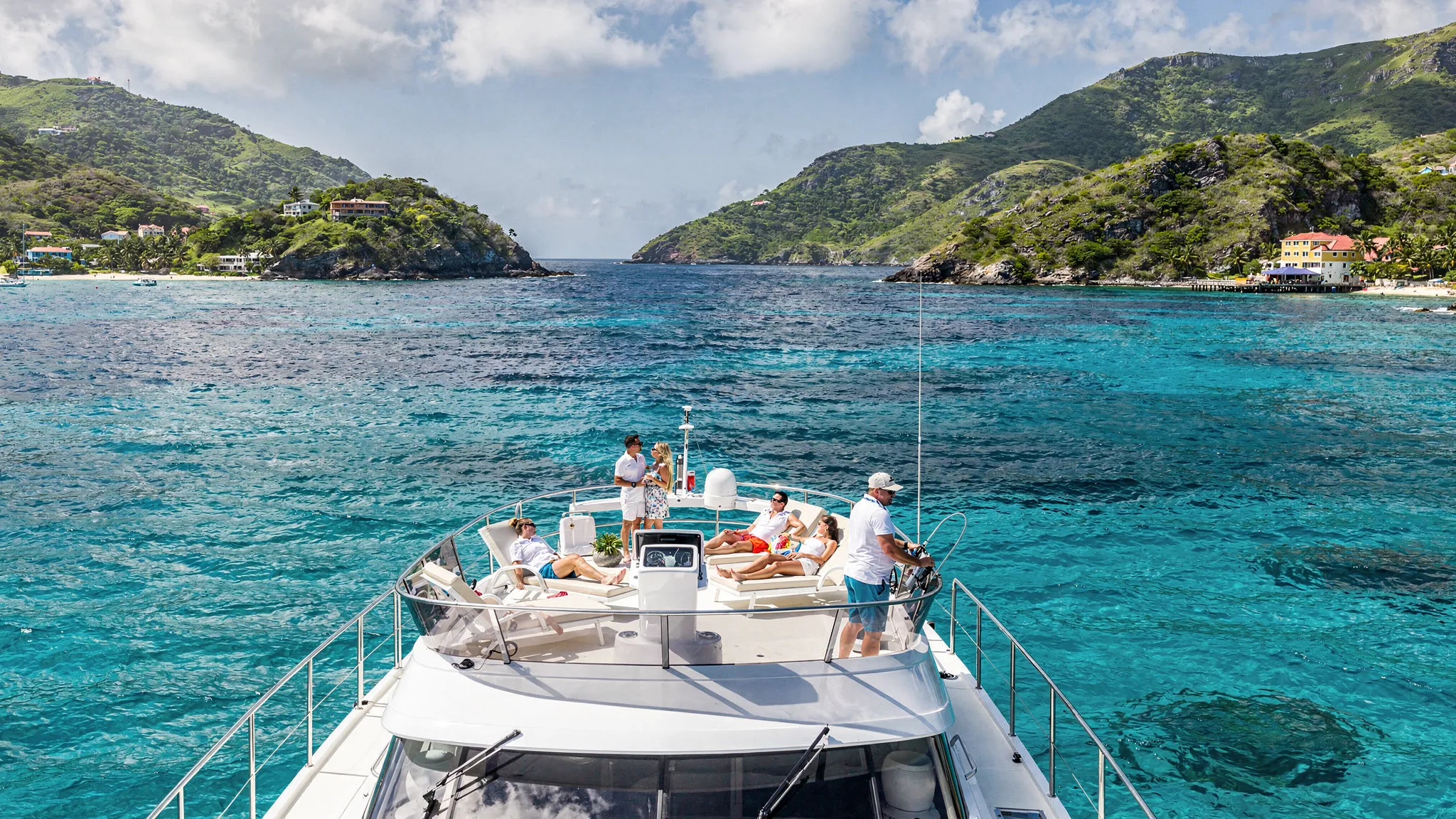
On a yacht, you wake up in a different anchorage each day. Monday: a secluded cove accessible only by sea, the water clear enough to see the reef from the deck. Tuesday: a fishing village where your chef picks up whatever the morning catch delivers. Wednesday: a snorkeling site you’d never find on a tour operator’s list. The itinerary is yours. You’re not competing for the water sports hut or waiting for a reef tour that’s already booked. There’s no shared pool deck stretching to the horizon.
Resort luxury is fixed — everything lives on one property, one island, one set of GPS coordinates for seven days. Charter luxury moves. Multiple destinations, multiple environments, and direct access to each. You’re not visiting a region; you’re living inside it.
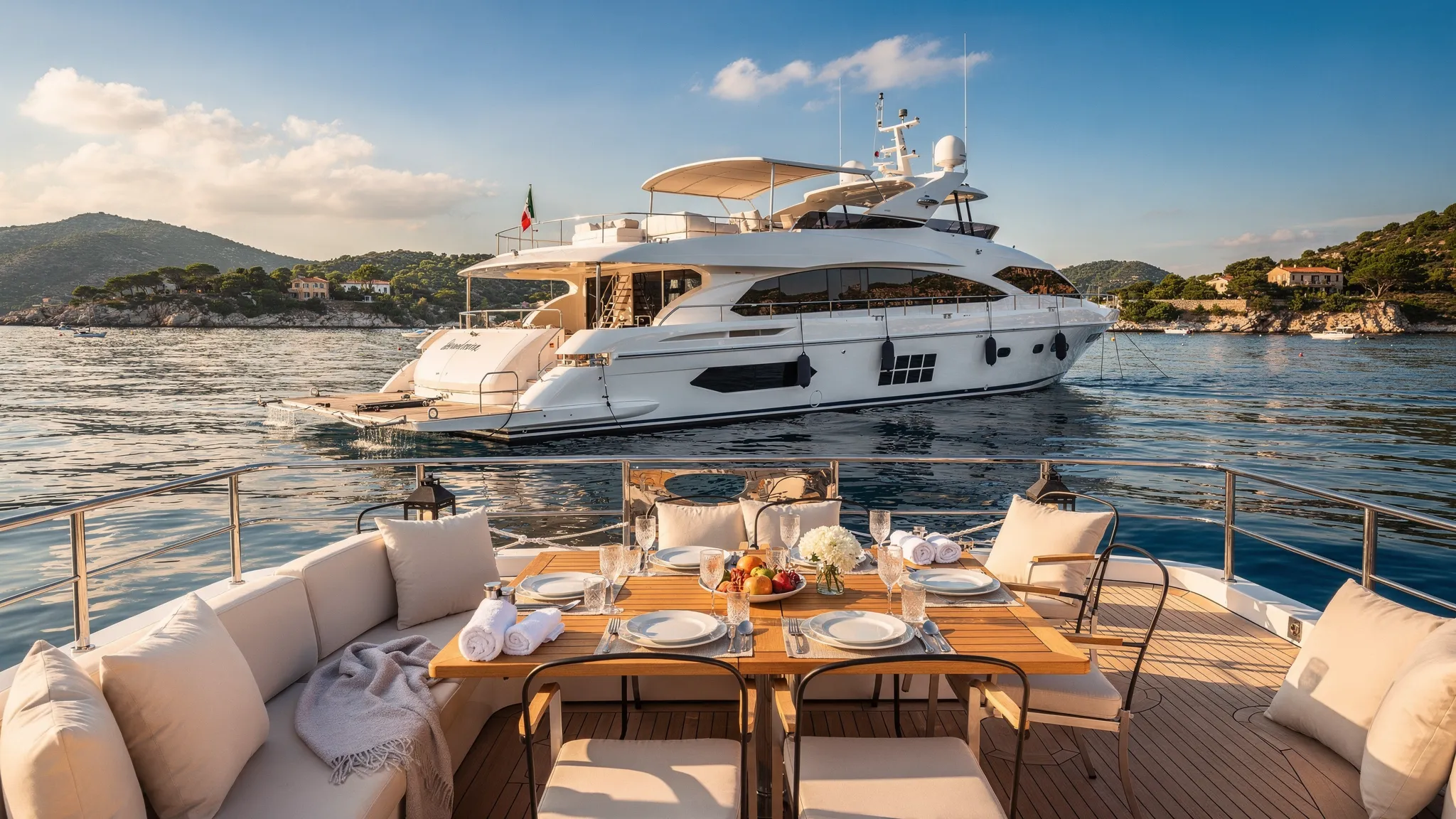
Privacy matters too, especially for families with young children or multi-generational groups. On a crewed charter, the entire crew — typically two to three people — is dedicated exclusively to your group. The captain manages the boat and shapes the itinerary around your preferences. The chef plans menus around your family’s dietary needs, allergies, and tastes, from scratch, every meal. There’s no shared dining room. No resort buffet. No strangers at the next table.
According to the 2026 Virtuoso Luxe Report — compiled from 2,485 travel advisors across 50+ countries — privacy is now a primary driver of ultra-luxury travel decisions, with clients actively seeking private islands and remote retreats (Virtuoso, 2025). A crewed yacht delivers exactly that — repeatedly, in a different location every day.
How many vacation photos from a resort are genuinely distinctive? A pool, a beach, a restaurant — beautiful, but not exclusive. The charter’s structural advantage is access.
What no resort can replicate: National parks, protected marine reserves, and uninhabited cays don’t have hotels — they have moorings. A skilled captain knows which ones to use and when. Families on a crewed charter anchor in places that aren’t on any tour operator’s standard itinerary, snorkeling reefs with no other boats in sight. That’s access, not just amenity — and it’s available every day of the trip. (Virtuoso, 2025)

Which Is Better for Multi-Generational Family Travel?
Fifty-seven percent of families are now planning grandparent-inclusive trips — up from 55% in 2023 — and 48% are planning extended family travel involving cousins, aunts, and uncles (NYU SPS Tisch Center / Family Travel Association, 2025). Multi-generational travel is growing fast, and a crewed charter handles it in a way resorts structurally can’t.
Here’s the problem with resorts and large family groups: everyone scatters. The teenagers disappear to the pool. The grandparents book a spa morning. The parents are at the beach bar. The young kids are enrolled in the kids’ club. You’re all on the same property — but you’re not actually together. You reconvene at dinner, sometimes, and count that as a family vacation. Sound familiar?
On a charter, the boat is the shared environment. The morning swim off the stern isn’t optional — it happens because you’re all living on sixty feet of catamaran together. The evening sundowner on the foredeck is a natural gathering point, not a scheduled event. Snorkeling a reef becomes a group adventure. A charter creates shared experiences by design, not by schedule.
Eighty-four percent of travelers in 2026 say they’ll actively seek opportunities for the entire family to play together (Hilton 2026 Trends Report, 2025). That’s the dominant trend in family travel right now, and it’s precisely what charter format delivers.
Across generations, the activities scale naturally. Grandparents sit on deck with a drink while grandkids snorkel directly off the stern. Teenagers can learn to read charts with the captain. Toddlers can splash in the cockpit with a parent two feet away. The chef adjusts every meal — softer textures for older guests, no allergens for younger ones — without the coordination overhead you’d manage at a resort.
What repeat charter guests consistently report: Multi-generational families cite the “forced togetherness” of a charter as the element they didn’t expect to love. On a resort, it’s easy to drift into separate routines. On a boat, you’re building shared memories whether you planned to or not — and those memories are specific. Not “we went to the Caribbean.” But “the morning we found that reef off the northern point with no one else around.”
When Should You Choose a Resort Instead?
92% of parents say they plan to travel with their children in the next 12 months — but not every trip belongs on the water (NYU SPS Tisch Center / Family Travel Association, 2025). So who’s the right candidate for a charter — and who isn’t? Resorts win in specific situations, and it’s worth being direct about them.
Small groups (fewer than 6 people). The math doesn’t work below six guests. Dividing a $30,000 charter four ways produces a per-person cost that’s well above a comparable resort. If you’re traveling as a couple or a single nuclear family without extended group, a resort delivers significantly better value at this scale.
Very young children (under 5). Toddlers on a moving boat require constant vigilance in ways that can exhaust parents rather than relax them. Most charter operators welcome young children and vessels can be equipped appropriately, but a resort’s structured kids’ programming offers a level of containment and programming that a charter can’t replicate. Charter is genuinely better for families with children aged 6 and up.
Motion sensitivity. Caribbean and Mediterranean sailing is typically calm-water navigation, but swells happen. If any member of your group has a history of motion sickness, a resort removes that variable entirely. Scopolamine patches help, but they’re not a guarantee.
Stays under five nights. The logistics and cost of a crewed charter amortize best across a full week. For a long weekend or a four-night trip, the per-day economics tilt firmly toward a resort.
For everyone else — particularly groups of 8-12 seeking something genuinely different and memorable — the charter case is strong, and the numbers back it up.
Frequently Asked Questions
How far in advance should you book a crewed yacht charter?
For peak Caribbean season (December through April) and Mediterranean summer (June through September), book 6-12 months ahead. Popular vessels in the right size range for large families fill quickly. Last-minute bookings within 30 days can sometimes yield 20-30% discounts on unsold inventory, but selection is thin and preferred dates are gone.
Is a crewed yacht charter safe for young children?
Yes, with the right vessel and preparation. Reputable charter operators outfit catamarans with life jackets for all ages, cockpit netting, harness tethers, and high freeboard for safety margin. Most captains are experienced with family groups and will walk you through safety protocols before departure. Children under 3 require additional adult supervision; discuss this specifically with your broker before selecting a vessel.
What exactly is included in an “all-inclusive” Caribbean charter?
Standard all-inclusive Caribbean charters include: captain, chef, all meals and standard beverages, fuel, mooring fees, cruising permits, water sports equipment (snorkeling gear, paddleboards, kayaks), and dinghy transfers to shore. Not typically included: premium alcohol beyond the house selection, SCUBA diving with a guide, specialty land excursions, and crew gratuity (budget 15-20% of the charter fee). Always confirm inclusions in writing with your broker before signing.
Can a yacht chef realistically accommodate dietary restrictions?
This is one of the genuine advantages of chartering over a resort. Your chef prepares every meal specifically for your group. Before departure, the charter broker collects a detailed dietary preference form — allergies, intolerances, preferences, dislikes, and medical requirements. A skilled charter chef treats this as a culinary brief. Vegan, gluten-free, nut-free, and multi-allergy households are all manageable in ways a resort kitchen serving hundreds of guests simply cannot match.
How does a crewed charter compare to a bareboat charter for families?
A bareboat charter rents you the vessel only — no captain, no chef. You’re responsible for navigation, provisioning, cooking, and boat management. Bareboat pricing is dramatically lower ($3,000-$10,000/week for the boat), but it’s a sailing holiday that requires an experienced skipper in your group. A crewed charter is the hands-off version: you arrive, the crew manages everything, and your only job is to enjoy it. For families without sailing credentials who want genuine relaxation, crewed is unambiguously the right choice.
The Verdict
Yacht charter bookings grew 70% from 2021 to 2024, and the families driving that growth aren’t all hedge fund managers (Newsweek, 2025). So why does the “too expensive” assumption persist? The conventional wisdom — that a crewed charter is prohibitively expensive compared to a luxury resort — doesn’t survive contact with actual numbers.
For a group of 10, all-in costs land within 5% of each other. For 12 people, charter is cheaper per person. In both cases, charter delivers what the resort doesn’t: a private chef preparing every meal to your group’s exact specifications, the ability to sleep somewhere different every night, direct access to protected reefs and uninhabited anchorages, and the kind of close-quarters family time that produces memories that actually stick.
Key takeaways:
- For groups of 8-12, crewed charter is cost-competitive with luxury all-inclusive resorts when all expenses are honestly counted on both sides
- Charter includes significant value that resorts charge extra for: chef-prepared meals, water sports, mooring access, and multiple destinations
- Multi-generational groups benefit disproportionately from the shared-experience structure that charter delivers by design
- Resorts remain the better choice for small groups under 6, children under 5, and stays shorter than five nights
Seventy percent of affluent travelers are done with generic luxury. If your family is part of that growing majority — and the group is 8 or larger — the water is worth a serious look.